#BookReview – Rain of Ruin: Tokyo, Hiroshima and the Surrender of Japan

#BookReview – Rain of Ruin: Tokyo, Hiroshima and the Surrender of Japan

Reviewed by Dr Ross Mahoney

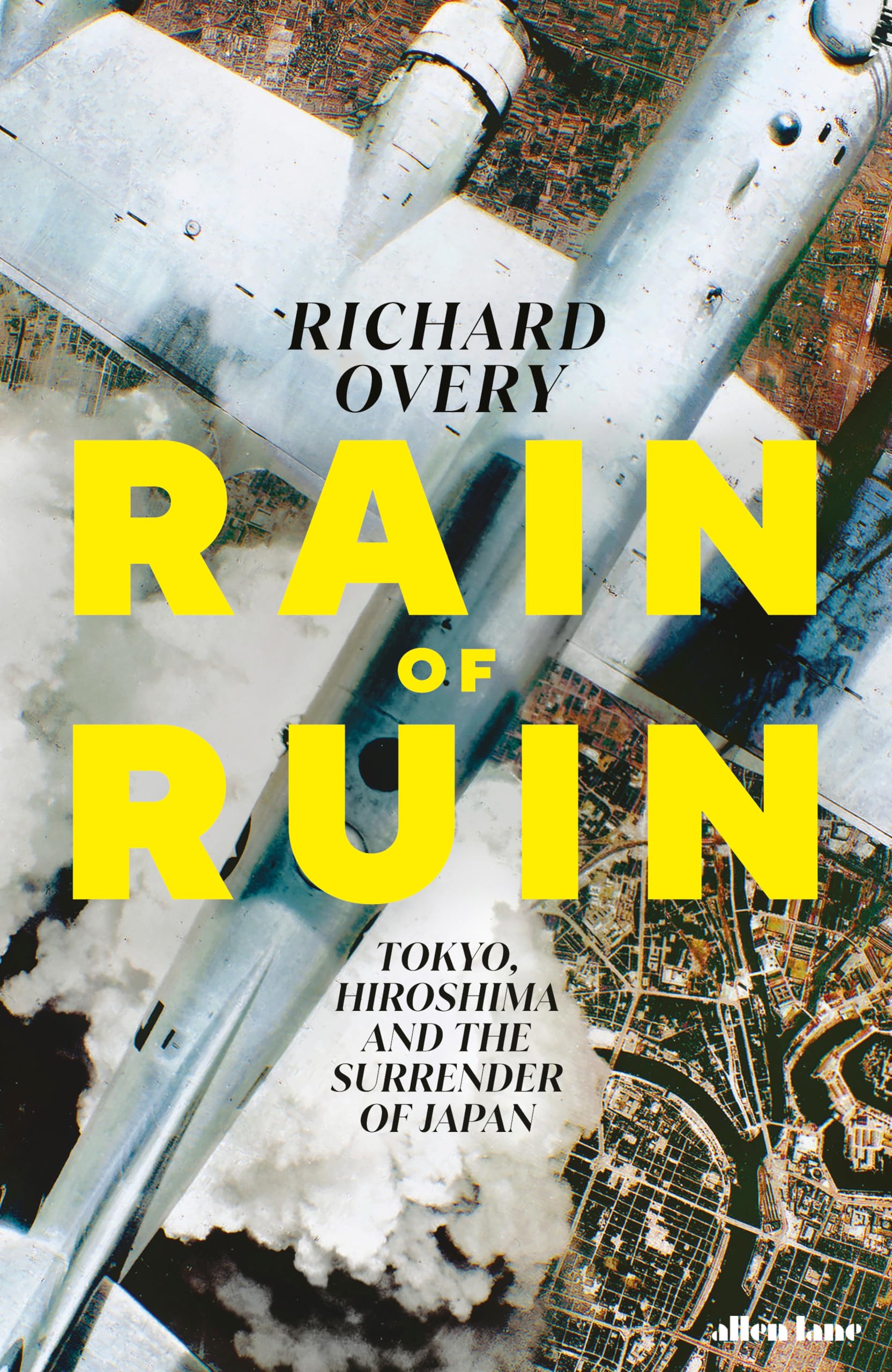
Richard Overy, Rain of Ruin: Tokyo, Hiroshima and the Surrender of Japan. London: Allen Lane, 2025. Hbk. Images. Notes. Further readings. Index. xiii + 206 pp.

The decision to use the atomic bomb in the Second World War is one of the most written-about episodes in modern military history. As Richard Overy (p. xi) identifies in this work:

[n]o single subject in the history of the United States war effort has prompted so much historical, political, and philosophical writing. No set of surviving records has been subjected to so much close forensic scrutiny.

Broadly speaking, debates over its use range from the argument that they were used to save American lives to the view that they were used to forestall Soviet ambition in the Far East and prevent the division of Japan. As exemplified by the controversy in 1994 surrounding the planned script for what became the ‘Enola Gay’ exhibition at the Smithsonian National Air and Space Museum in 1995, debates over how we interpret the decision to use the atomic bomb have been subject to intense scrutiny and disagreements. Into this milieu comes Overy, one of the world’s leading authorities on the history of the Second World War and an expert on the history of air power.

Overy had previously written the voluminous The Bombing War (2013), which dealt with debates surrounding bombing in the European theatre of war; however, in this volume, he turns his attention to the US strategic bombing campaign against Japan in 1945 and the decision to use the atomic bomb. In Rain of Ruin, Overy deals with three separate but indelibly linked areas, which form the core of the book’s key chapters. Indeed, each chapter provides the necessary context for the next. For example, in Chapter Two, Overy explores the reason why the US shifted from precision targeting to a strategy of indiscriminate firebombing from March 1945 onwards. As Overy notes, the US had abhorred British ‘area bombing’ techniques. However, they were willing to adopt similar methods in the Far East against Japan because of a shift in thinking about the use of incendiary raids influenced by the character of the war in the Far East, ‘the demonisation of the Japanese enemy, and the effort to define area targets as legitimate military-economic ones.’ (p.40). Furthermore, they were supported in this shift in strategy by appointing an officer, General Curtis LeMay, who showed no ‘compunction about bombing and killing civilians if it helped shorten the war’ (p. 22).

Following on from the shift in US air power strategy, Chapter Three deals with the development and decision to use the atomic bomb. Indeed, Overy highlights that in accepting the change in air power strategy, it became easier for the US to normalise the use of the atomic bombs. As he argued, the shift in strategy ‘prepared the way for the apotheosis of indiscriminate destruction in the two atomic attacks’ (p. 18). Moreover, Overy also adeptly illustrates the role that civilian scientists played in the development of the atomic bomb, arguing that ‘[w]ere it not for the maximum effort by a cohort of the world’s most distinguished physicists, the bomb would not have been ready by 1945’ (p.54). As such, it is essential to remember that the use of the atomic bombs was a whole-of-government affair that not only required a shift in US air power strategy but also the willingness of other stakeholders to buy into the project and their eventual use. This also included government officials in key decision-making roles and illustrates that military strategy, such as the decision to use the atomic bomb, does not develop in a vacuum.

Finally, in Chapter Four, Overy examines the reasons for the Japanese surrender in 1945 and the role that the dropping of the atomic bombs played in that decision. In doing so, Overy does an excellent job in comparing the various arguments related to Japan’s decision to surrender, most notably, the role played by the Soviet invasion of Manchuria that started between the dropping of the two atomic bombs. Indeed, as Overy illustrates, drawing on Japanese sources, the Japanese decision to surrender – the so-called ‘Sacred Decision’ – was complex and not readily accepted. For example, towards the end of August, a Japanese Kamikaze unit dropped propaganda leaflets over Tokyo, warning residents not to surrender and stating that the imperial rescript had been a false document (p. 126). Despite this, Overy makes clear that the decision to surrender was complex. Both conventional and atomic attacks on Japan played a role in the decision-making process, though whether they were decisive, as many have argued, remains open to question. Indeed, Japanese leaders viewed the atomic bombings simply as an ‘extension of LeMay’s campaign’ (p. 110).

Overall, Overy has, in the course of just 150 pages, placed the decision to use the atomic bomb in its essential context, the shift in US air power strategy that occurred in the Far East in 1945 and assessed their role in the Japanese decision to surrender. The book is supported by copious referencing to sources not just from the US but also from Britain and Japan. It is necessary reading for anyone interested in the decision to use the atomic bomb, how the Second World War ended, or US air power strategy. However, perhaps the greatest strength of Overy’s analysis is that he does not ‘judge the past’ but allows the evidence to tell its story and allows the reader to ‘understand it better on its own terms’ (p. xiii). In this, Overy has been successful.

Dr Ross Mahoney is an independent scholar specialising in the history of war, with a particular focus on the use of air power and the history of air warfare. He is the Editor-in-Chief of From Balloons to Drones and currently the Senior Historian within the Heritage Policy team at Brisbane City Council in Australia. He has nearly 20 years of experience in the education, museum, and heritage sectors in Australia and the United Kingdom, including serving as the inaugural Historian at the Royal Air Force Museum from 2013 to 2017. His other research interests are military leadership and command, military culture, and the history and development of professional military education. He also maintains an interest in transport history. He has published numerous articles, chapters and encyclopedia entries, edited two books, and delivered papers on three continents.

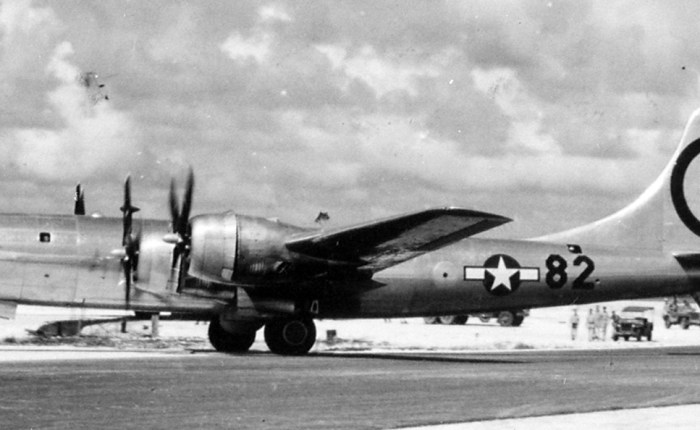
Header image: The Boeing B-29 Superfortress Enola Gay on Tinian just after the attack on Hiroshima on 6 August 1945. (Source: Wikimedia)

#ReviewArticle – Bomber Command at War

#ReviewArticle – Bomber Command at War

Reviewed by Dr Dan Ellin

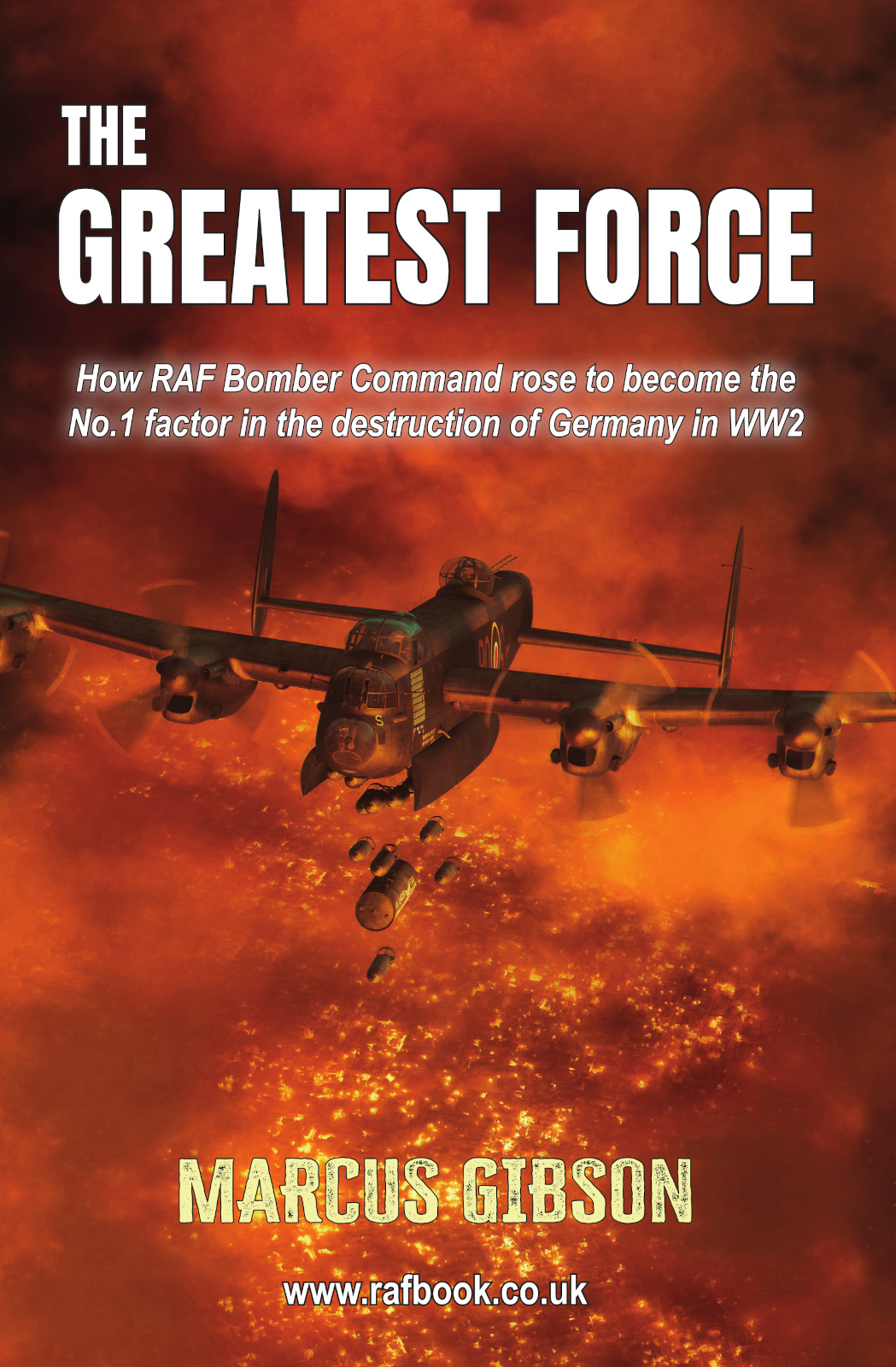
Marcus Gibson, The Greatest Force: How RAF Bomber Command became the No.1 factor in Britain’s total, destructive defeat of Nazi Germany. York: Marcus Gibson, 2025. Illustrations. Bibliographic Notes. xv + 537 pp.

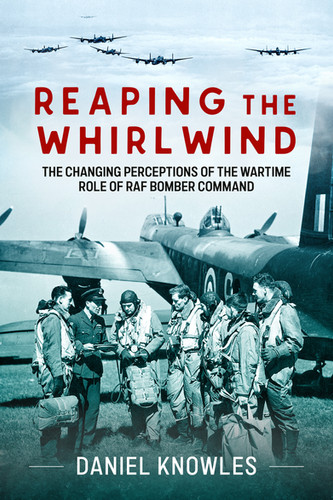
Daniel Knowles, Reaping the Whirlwind: The Changing Perceptions of the Wartime Role of RAF Bomber Command. York: Barnthorn, 2025. Illustrations. Appendices. Bibliographic Notes. Index. 281 pp.

The history of RAF Bomber Command is a difficult heritage. Since the war itself, questions about area bombing have divided opinion, and today the bombing war is frequently remembered through the divisive, binary lenses of the ‘Dams or Dresden’.[1] Both books consider the public perception of the actions of RAF Bomber Command. However, while Reaping the Whirlwind examines the subject critically and objectively, The Greatest Force passionately argues for further recognition for Bomber Command. On his website, Gibson claims that the book aims to ‘fundamentally change our view, once and for all, of the immensity of their contribution.’[2]

In The Greatest Force, Gibson claims to answer the ‘outstanding questions’ (Rear cover) he has identified about RAF Bomber Command’s war, including why ‘Harris was right to bomb city centres’, how ‘Bomber Command became the No.1 factor in Britain’s total, destructive defeat of Nazi Germany’, and how the force ‘gave little-known but vital support to the Royal Navy against the U-boats and to Allied armies.’ He also maintains that the ‘book is the first-ever full analysis of the impact of RAF Bomber Command on Nazi Germany’. He claims that his research finally ‘dispels the many myths about Bomber Command’s true effectiveness,’ and proves that ‘it was the foremost military force in securing victory.’[3] The Greatest Force massively overpromises and underdelivers.

The book makes a couple of legitimate points, notably the importance of small industrial production to the Nazi war effort. However, it lacks proper evidence to support these ideas, and Gibson’s claims are largely unsubstantiated. The book fails to live up to the promise of the title, the blurb on the back cover, and its marketing. In the introduction, he back-pedals from the title’s claim, concluding ‘that the RAF’s bombing was the principal reason for Germany’s early military defeat in the West – a destructive force equalled in effectiveness only by the victories of the Red Army on the Eastern Front’. (p. xiv) More importantly, the questions he asks are not ‘outstanding’. For example, we already know that materiel was diverted from elsewhere to defend against Allied air power (p. 163). 

He resolutely buys into the big man of history concept, citing Harris, Churchill, and his namesake with the dog, while making his disdain for Atlee very clear. (p. 470) His political stance and agenda are also revealed by phrases like ‘group think’ (p. 461) and ‘betrayal’ (p. 465, 469), as well as his wish for a column for Harris to rival that of Nelson. (p. 465) He tries so hard to clear the name of Bomber Command that he avoids the complexity of the subject and includes so much that is irrelevant. Rather than debunking certain myths about the role of Bomber Command, the book reinforces those on one side of the debate over the difficult heritage of the bombing war. His wish for a monumental column taller than that of Nelson firmly positions him in this. Gibson is a journalist with an axe to grind; he is not a historian.

The book is poorly referenced, many claims are unsupported, and the sources used are often cherry-picked without analysis. Most references are to the secondary literature, such as Adam Tooze’s Wages of Destruction (2006), rather than to the primary sources he claims to have used. The book overlooks the cultural context of the historiography he cites, as well as the nuances of working with veteran testimony 80 years after the events. One moment, he’s talking about Allied air power; the next, he is attributing all success solely to RAF Bomber Command (p. 159, 163).[4]  Reading it made me realise that ‘yes and’ can be a negative comment.

Conversely, in Reaping the Whirlwind, Daniel Knowles acknowledges that the bomber has been in ‘the shadow of Fighter Command’ since Churchill’s speech about ‘the few’ in 1940, and like Gibson, argues that since the end of the war, Bomber Command has occasionally been regarded ‘with great distaste’ (p. 100). However, unlike Gibson, he traces how the ‘perceptions of, and attitudes to the role played by Bomber Command’ have fluctuated between 1945 and today, and he advances explanations for their changing favour (p. 5).[5]

Unlike Gibson, Knowles is historically minded, having a degree in History and Politics. The difference is highlighted in their approach to their subject. He critically examines the historiography, and how literature, film and TV, novels and comics, political discourse and contemporary events, the popular press, and even representations in school textbooks, have played their part in the construction of the popular memory of Bomber Command. He goes into some detail describing the capabilities of different bombsights, and navigation aids including Gee, H2S and Oboe, before he considers how the tactical differences between RAF and USAAF bombing policies have been remembered as area or precision bombing. In doing so, unlike Gibson, Knowles engages with the complexity and the nuance of evolving attitudes to the bombing war in the context of changing politics and worldwide events over the last eight decades.

Reaping the Whirlwind has a logical structure; it is well-referenced and includes 70 pages of appendices with transcripts of important primary sources, including the Butt Report and Churchill’s speeches and correspondence. I would argue that it is worth buying to have these sources accessible on a bookshelf. The book flounders a little by oversimplifying the discussion around censorship of films and the removal of statues (pp. 130-1), but the reader can forgive this and the occasional typo. Although he perhaps incongruously claims ‘little concern has been given to the aircrews of Bomber Command’, (p. 79) Knowles examines the decorations awarded to veterans, and comments that the issue of the Bomber Command Clasp in 2013 would not have occurred if ‘perceptions and attitudes of Bomber Command’s role within the Second World War had not changed’ (p. 97).

Knowles summarises the historiographical and current perspectives on the bombing war, whereas the thinking behind The Greatest Force remains rooted in the late 1990s or early 2000s. Although his book is half as long, Knowles is more effective than Gibson at arguing that the ‘hostility’ to Bomber Command’s position in public memory has been ‘unfair’. (p. 162) He concludes that while their role still divides opinion, perceptions have altered, and Bomber Command is now recognised by the memorials in London and by the International Bomber Command Centre in Lincoln. (p. 179)  

Dr Dan Ellin is the archivist for the International Bomber Command Centre Digital Archive housed at the University of Lincoln. A Social and Cultural historian, his research examines the lives, emotions and medical treatment of the men and women who served with Bomber Command during the Second World War, and how the bombing war is remembered.

Header image: An Avro Lancaster MkIII of No. 103 Squadron at Elsham Wolds, Lincolnshire, early March 1943. As part of the publicity for ‘Wings For Victory Week’ (6-13 March), the station photographer was required to supply photographs of the men and machines of the squadron for inclusion in local newspapers. (Source: IWM (CH 8965))

[1] Mark Connelly Reaching for the Stars: A New History of Bomber Command in World War II (London: I.B. Tauris, 2001), p. 147.

[2] Marcus Gibson, ‘The Greatest Force – New Book by Marcus Gibson’ 2025. Accessed 15/08/2025 https://rafbook.co.uk/

[3] Marcus Gibson, ‘The Greatest Force – New Book by Marcus Gibson’ 2025. Accessed 15/08/2025 https://rafbook.co.uk/

[4] Paul Woodadge and Marcus Gibson, ‘How RAF Bomber Command became the No.1 factor in Britain’s total, destructive defeat of Nazi Germany’, WW2TV (2025). Accessed 15/08/2025 

[5] Ashley Barnett and Daniel Knowles, Barnthorn Publishing, ‘Reaping the Whirlwind by Daniel Knowles.’ Accessed 15/08/2025 

#FilmReview – Episodes 1 and 2 of Masters of the Air

#FilmReview – Episodes 1 and 2 of Masters of the Air

By Dr Brian Laslie

Friday, 26 January, the long-awaited first and second episodes of Masters of the Air, based on the excellent eponymous book by Don Miller, premiered on Apple TV+. When I say long-awaited, rumours and articles have swirled around the series for over a decade, dating back to 2012.

I was lucky to see the first episode early last week as part of pre-screening at the US Air Force Academy. As From Balloons to Drones was created to discuss just such a series in the public realm, I wanted to provide a quick commentary with my thoughts from the first episode.

The oft-watched, oft-quoted, and something of related series that Masters of the Air will be inevitably compared to is 2001’s Band of Brothers. When Band of Brothers released on 09 September 2001 (yes, at its first showing on the evening of the ninth, the world was less than 48 hours away from the events of 11 September), 57 years had passed since the events of the show. Many unit members were still alive in their late seventies or early eighties. As most remember, each episode either began or ended with the veterans telling their stories. This is, sadly, impossible for Masters of the Air. I do ponder how Major Gale ‘Buck’ Cleven, Major John Egan, or Lieutenant Colonel Robert ‘Rosie’ Rosenthal might have reacted to having themselves portrayed in the series. These real-life men never lived to see themselves portrayed in film, another bitter reminder that the Second World War generation is all but gone now.

342-FH_001236
Bombs being dropped on enemy installations at Wessling, Germany by Boeing B-17 Flying Fortresses of the US 100th Bomb Group, 12 August 1943. (Source: US National Archives and Records Administration)

In my two viewings of episode one so far, two words continually play in my mind: Poignant and terrifying. Masters of the Air has succeeded where other more recent films have failed – at least for me –  the actors portraying these real men (I cannot bring myself to refer to them as ‘characters’) do so without entering the realm of parody. The protagonists thus far, Buck and Bucky, seem like mid-twenties officers of the time, and I hope their character development continues in future episodes.

So far, the attention to detail seems well in hand. The men gearing up for the missions, the checklist, and the startup process for the Boeing B-17 Flying Fortresses is something too oft missed in other aerial films where pilots and crews hop in and zoom off to the wild blue yonder with nary a wave at the ground crews. The maintainers and mechanics also have their moments so far, and it is nice to see some recognition for the men who kept the planes in the air.

Obviously, the series uses CGI for the aerial battles but has used existing B-17s where possible. With only one episode down and knowing that the air battles are to increase in size with the number of aircraft and defenders, it has, thus far, demonstrated well the speed of attacking aircraft. Some critics have noted that the air battles are chaotic and difficult to follow. It is hard to tell who is who with the masks up and gear on, and the enemy fighters fly by in a blur with the gunners twisting to get off a few shots, but to my eye, there is realism here: the speed and chaos of air combat amongst the bomber crews is well done.

I cannot tell as of yet if Masters of the Air will live up to the hype, but as a historian, I have already found myself enjoying the series both for its storytelling and its accuracy. I also note that my air power colleagues have talked of little else this week and spent an inordinate amount of time talking to other interested parties, including media outlets (it’s a good time to be an air power historian). Knowing that the Tuskegee Airmen and Stalag Luft prison camps will be seen in future episodes only heightens my eagerness for more.

Thus far, I commend all parties involved in bringing the show to the screen. If this series inspires a younger generation to explore their past, ask questions about history, and look to learn more, it will have done its job.

Meanwhile, those of us already immersed in reading, researching, and publishing should use the series as a moment in time to explain what went on in the skies over Europe – and all over the world – during the Second World War: both the good and the bad, the glory and the horror, the rhetoric and the reality of the Masters of the Air.

Dr Brian Laslie is a US Air Force Historian and Command Historian at the United States Air Force Academy. Formerly he was the Deputy Command Historian at North American Aerospace Defense Command (NORAD) and United States Northern Command (USNORTHCOM). A 2001 graduate of The Citadel and a historian of air power studies, he received his Masters’ from Auburn University Montgomery in 2006 and his PhD from Kansas State University in 2013. He is the author of Air Power’s Lost Cause: The American Air Wars of Vietnam (2021),  Architect of Air Power: General Laurence S. Kuter and the Birth of the US Air Force (2017) and The Air Force Way of War (2015). The latter book was selected for the Chief of Staff of the Air Force’s 2016 professional reading list and the 2017 RAF Chief of the Air Staff’s reading list. He can be found on Twitter at @BrianLaslie.

Header image: A formation of Boeing B-17 Flying Fortresses of the 100th Bomb Group flies over a blanket of clouds en route to their target at Warnemunde, Germany, 29 July 1943. The aircraft shown is the  B-17 ‘Alice From Dallas’. Source: US National Archive and Records Administration)

#ResearchNote – It is time for another Biography of Ira Eaker

#ResearchNote – It is time for another Biography of Ira Eaker

By Luke Truxal

For those who study the history of the United States Air Force and its forebears, there is a noticeable gap in the historiography regarding biographies of Second World War air force commanders. There are several biographies for men such as General Carl Spaatz, General of the Air Force Henry H. Arnold, General James Doolittle, General Curtis LeMay, and even Major General Haywood Hansell. Yet, many other prominent commanders, staff officers, and theorists do not have their own biographies. However, this research note solely focuses on General Ira Eaker, who, in 1943, commanded what became the US Eighth Air Force, the Mediterranean Allied Air Forces in 1944 and was deputy Chief of the Air Staff for the United States Army Air Forces in 1945.

md31091934332

James Parton has largely written Eaker’s history in “Air Force Spoken Here”: General Ira Eaker and the Command of the Air. Parton’s biography is a strong defence of Eaker. In many cases, he has created much of the narrative that we accept regarding Eaker’s performance as a commander during the Second World War. However, there is one problem with Parton’s book; he was Eaker’s staff officer. Given this, Parton’s book jumps between biography and personal memoir in several places. For example, when writing about Eaker’s defence of daylight precision bombing at the Casablanca Conference in 1943, Parton slips into a personal memoir. In a paragraph, he describes the trip to Spaatz’s headquarters, the poker game he played with Eaker and Spaatz, and how he edited Eaker’s proposals for the Casablanca Conference.[1] It is unclear whether this can be classified as a biography since it is unclear if Parton is writing about himself or Eaker. Also, as a staff officer deeply devoted to Eaker, Parton may not be the general’s best or most objective biographer. Simply put, Eaker needs a new biography.

For those interested in writing a biography on Eaker, there are several places to start. First, Parton’s biography is a great place to get background information on Eaker, even if the analysis is sometimes questionable. Another series of sources that need to be examined are the books that Eaker published with Arnold before the Second World War. Arnold and Eaker wrote: Army Flyer, Winged Warfare, and This Flying Game.[2] These books lay out their vision for the future of air power and, in some cases, offer analysis of air campaigns during the Second World War before the entrance of the United States into the conflict. These books give some insight into Eaker as an air power theorist and precision bombing advocate before the war. Three major archives should be consulted for wartime records. First, the Library Congress has Ira Eaker’s papers. Speaking from personal experience, they are well-organised and easy to work through. Even better, several vital figures whom Eaker corresponded with also deposited their papers at the Library of Congress. Another archive to consult is the Air Force Historical Research Agency, where you can find records on the Eighth Air Force and Mediterranean Allied Air Forces. Finally, the National Archives and Records Administration has more records and correspondence.

media-456676
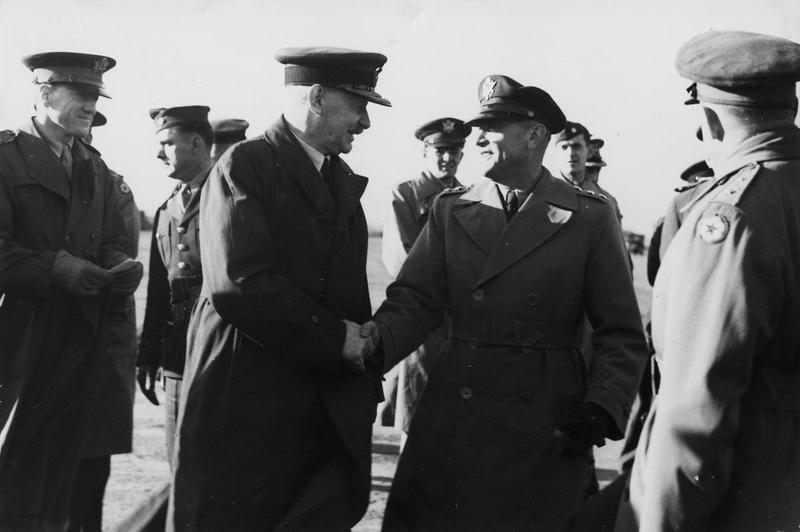
Air Chief Marshal Sir Arthur Harris shakes hands with Lieutenant General Ira Eaker at a handover ceremony of a US Army Air Force airfield into RAF control, c. November 1943. (Source: IWM)

Research is not the problem with writing a biography on Eaker. He wrote a lot about air power before, during, and after the Second World War. There is much research readily available on Eaker. This is purely speculation, but the reason why there is not a biography on Eaker is most likely that it is a hard biography to write. Eaker is not a polarising figure. Biographers note that they either fall in love with or hate the person they are writing about. It is hard to do that with Eaker. He is a likeable person and, at times performs quite well as a commanding officer. Yet, he also makes several significant mistakes during the war as well. It is hard to write a book analysing an officer whom both deserves blame for the failures of the 1943 air offensives against Germany and, in the same breath, say he played a major role in the success of the air war in 1944 and 1945.

In conclusion, it is time to put the James Parton book on Eaker aside and write a new biography on Eaker to start a proper historical debate on his career. There is ample archival material available to sift through and analyse. The challenge will be how to assess his performance during the war. Here is a thought to possibly hang onto for those who might want to take up this project. Maybe the challenge of writing a biography about Eaker is that he is representative of the struggles that early American air commanders faced during the strategic bombing of Germany in 1942 and 1943. Eaker was testing new ideas in a new form of warfare and without ample resources as the commander of the Eighth Air Force. He made several errors in 1943 that was amplified by his lack of resources. Yet, with more resources and experience, his performance improved over time. In many ways, Eaker represents the struggles that many American officers faced during the air war against Germany.

Dr Luke Truxal is the Book Review Editor at From Balloons to Drones and an adjunct at Columbia State Community College in Tennessee. He completed his PhD in 2018 from the University of North Texas with his dissertation ‘Command Unity and the Air War Against Germany.’ His previous publications include ‘Bombing the Romanian Rail Network’ in the Spring 2018 issue of Air Power History. He also wrote ‘The Politics of Operational Planning: Ira Eaker and the Combined Bomber Offensive in 1943’ in the Journal of Military Aviation History. In addition, Truxal is researching the effectiveness of joint air operations between the Allied air forces in the Second World War.

Header image: Major General Ira C. Eaker presents an award to an enlisted man of the 479th Anti-Submarine Group during a ceremony at an air base in St Eval, United Kingdom, c. 1943. (Source: NARA)

[1] James Parton, “Air Force Spoken Here”: General Ira Eaker & the Command of the Air (Bethesda, MD: Adler & Adler Publishers Inc., 1986), p. 220.

[2] Henry H. Arnold and Ira C. Eaker, Army Flyer (New York: Harper & Brothers Publishers, 1942); Henry H. Arnold and Ira Eaker, Winged Warfare, (New York: Harper & Brothers Publishers, 1941); Henry H. Arnold and Ira Eaker, This Flying Game, (Ramsey, New Jersey: Funk and Wagnalls Company, 1938).

#BookReview – Black Snow: Curtis LeMay, the Firebombing of Tokyo, and the Road to the Atomic Bomb

#BookReview – Black Snow: Curtis LeMay, the Firebombing of Tokyo, and the Road to the Atomic Bomb

James M. Scott, Black Snow: Curtis LeMay, the Firebombing of Tokyo, and the Road to the Atomic Bomb. W.W. Norton: New York, NY, 2022. Hbk. 420 pp.

Reviewed by Dr Brian Laslie

9781324002994

There will always be an inevitable struggle between popular historians writing for the general public and academic authors whose writing is often aimed at those working in the so-called ‘ivory tower’ of academia. However, the work of academic historians inform that of popular historians whose work reaches a wider audience of readers, some of whom are thus, in turn, inspired to become academics. This was certainly how I became interested in the profession of being a historian. Nevertheless, every so often, an author comes along who is that rarest of creatures: the unicorn, or that rare writer who blends academic credentials and methodology and the ability to spin a readable tale. James Scott is that unicorn with his new book, Black Snow: Curtis LeMay, the Firebombing of Tokyo, and the Road to the Atomic Bomb. Scott, a journalist and former Nieman Fellow at Harvard University, is the author of several best-selling history books, including Rampage: MacArthur, Yamashita, and the Battle of Manila and Target Tokyo: Jimmy Doolittle and the Raid That Avenged Pearl Harbor, which was a finalist for the Pulitzer Prize in history.

The history of America’s strategic bombing during the Second World War has recently been sensationalized with the publication of Malcolm Gladwell’s The Bomber Mafia (2021). However, Black Snow is, in reality, the Bomber Mafia book you have wanted to read. Indeed, if Gladwell’s book was an appetizer, then this is the main course and dessert. Scott more fully explores the background and motivations of Generals Haywood Hansell and Curtis LeMay and, given the length of Scott’s work, produces a much more coherent explanation of how and why each man acted in accordance with their desires to end the war. Black Snow, focusing on the experience of Japan’s civilian population on the ground, is also reminiscent of Stephen Bourque’s Beyond the Beach (2018) and Richard Overy’s The Bombers and the Bombed (2014). Each of these volumes provides well-needed reminders of the horrific suffering faced by those on the receiving end of bombings. Moreover, Scott is at his best when describing the situation on the ground from the perspective of the Japanese who lived through the bombing. To achieve that end, Scott interviewed 11 survivors and spent research time at archives in the United States and the Center for the Tokyo Air Raids and War Damage, the Kyoto Museum for World Peace, and other institutions in Japan.

39th_Bombardment_Group_B-29_bombing_to_Hiratsuka_19450716
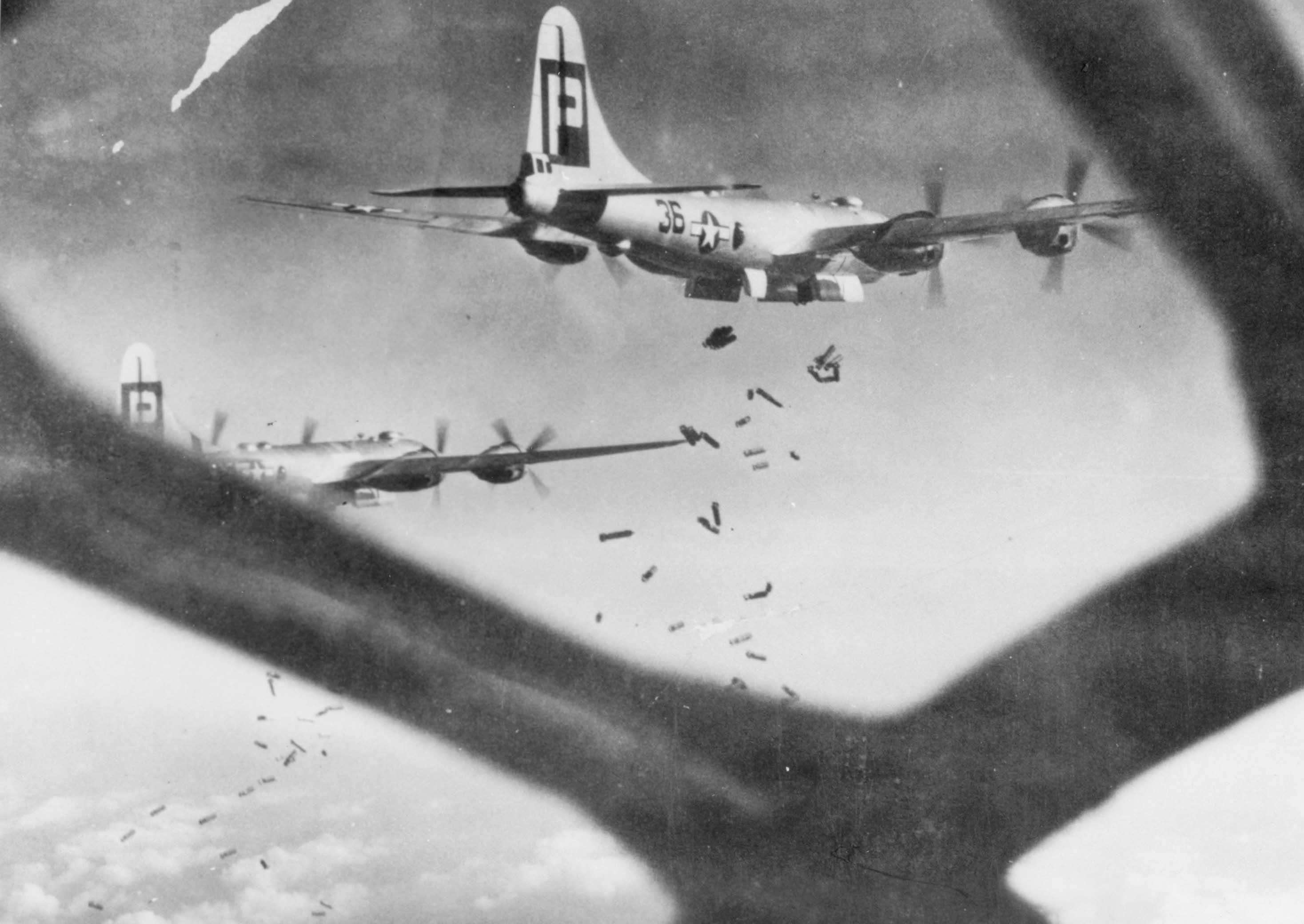
A cockpit view of two 39th Bomb Group B-29s out of North Field (Andersen) on a mission to Hiratsuka, Japan, 16 July 1945. (Source: Wikimedia)

While other books have focused on the strategic bombing campaigns against Japan, such as Herman S. Wolk’s Cataclysm (2010), Barrett Tillman’s Whirlwind (2010), Daniel Schwabe’s Burning Japan (2015), and Kenneth Werrell’s Blankets of Fire (1996), few have done as well as Scott has in presenting a comprehensive treatment. Once again, Scott’s focus on those on the ground is where this book truly adds to the conversation and the historical record. While the morality of the bombing of Japan is not the subject of this review, and there is, again, a wide literature on the subject, Scott’s ability to detail and compare the actions of some of Japan’s citizens against those wing commander – and future commander of the United States Air Force’s Strategic Air Command – Thomas Power is thought-provoking rather one is an expert in the field or coming to this area fresh. Power called the bombing of Japan ‘the greatest show on earth’ (p. 248).

Black Snow is geared towards a wide audience and not for the expert in the field. Given this, one area where the book may be seen to fall down to those with more detailed knowledge of the subject is in the book’s biographies of Generals Henry “Hap” Arnold (pp. 13-9) and LeMay (pp. 97-109). These are slightly overextended to someone who is not approaching the subject for the first time. However, this is really a minor critique.

Overall, Black Snow is a terrific addition to the historiography of the use of air power in the Pacific War of the Second World Ward. As mentioned, the work will appeal to both buffs and scholars alike, and both will find much to engage within these pages. Black Snow is a needed addition to the conversation of what air power can and cannot do, but more importantly, what air power can do when restraints are removed and why the United States must guard against unrestricted aerial warfare in future conflicts.

Dr Brian Laslie is a US Air Force Historian and is the Command Historian at the United States Air Force Academy. Formerly he was the Deputy Command Historian at North American Aerospace Defense Command (NORAD) and United States Northern Command (USNORTHCOM). A 2001 graduate of The Citadel and a historian of air power studies, he received his Masters’ from Auburn University Montgomery in 2006 and his PhD from Kansas State University in 2013. He is the author of Air Power’s Lost Cause: The American Air Wars of Vietnam (2021),  Architect of Air Power: General Laurence S. Kuter and the Birth of the US Air Force (2017) and The Air Force Way of War (2015). The latter book was selected for the Chief of Staff of the Air Force’s 2016 professional reading list and the 2017 RAF Chief of the Air Staff’s reading list. He can be found on Twitter at @BrianLaslie. 

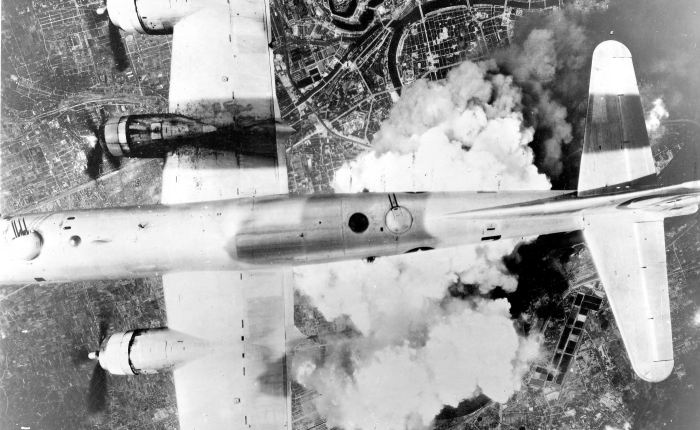
Header image: A Boeing B-29A Superfortress of the 6th Bombardment Group on a mission to Osaka, Japan, 1 June 1945. (Source: Wikimedia)

#ResearchResources – Recent Articles and Books

#ResearchResources – Recent Articles and Books

Editorial note: In this series, From Balloons to Drones highlights research resources available to researchers. Contributions range from discussions of research at various archival repositories to highlighting new publications. As part of this series, we are bringing you a monthly precis of recent articles and books published in air power history. This precis will not be exhaustive but will highlight new works published in the preceding month. Publication dates may vary around the globe and are based on those provided on the publisher’s websites. If you would like to contribute to the series, please contact our Editor-in-Chief, Dr Ross Mahoney, at airpowerstudies@gmail.com or via our contact page here.

Articles

Kristen Alexander and Kate Ariotti, ‘Mourning the Dead of the Great Escape: POWs, Grief, and the Memorial Vault of Stalag Luft III,’ Journal of War & Culture Studies (2022), DOI: 10.1080/17526272.2022.2097774.

In March 1944 seventy-six Allied prisoners of war escaped from Stalag Luft III. Nearly all were recaptured; fifty were later shot. This article examines what happened in the period between recapture and the interment of the dead prisoners’ cremated remains at Stalag Luft III. It positions what came to be known as ‘the Great Escape’ as an event of deep emotional resonance for those who grieved and reveals the dual narrative they constructed to make sense of their comrades’ deaths. In discussing the iconography of the vault constructed by the camp community to house the dead POWs’ ashes, this article also suggests a dissonance in meaning between that arising from personal, familial grief and the Imperial War Graves Commission’s standardised memorial practice. Focusing on the Great Escape’s immediate aftermath from the perspective of the POWs themselves provides a more nuanced understanding of the emotional impact of this infamous event.

Susan Allen, Sam Bell and Carla Machain, ‘Air Power, International Organizations, and Civilian Casualties in Afghanistan,’ Armed Forces & Society (2022), doi:10.1177/0095327X221100780.

Can the presence of international organizations reduce civilian deaths caused by aerial bombing? This commentary examines this question in the specific context of the U.S.-led war in Afghanistan. We evaluate this based on interviews conducted with members of international organizations that were present in Afghanistan during the conflict, existing intergovernmental organizations, nongovernmental organizations, and government reports, and with quantitative data on civilian casualties between 2008 and 2013. We conclude that there is tentative evidence from Afghanistan that international organizations can in fact reduce the severity of civilian killings that result from the use of air power. However, there is much need for greater data sharing to more fully answer this important question.

Derek Lutterbeck, ‘Airpower and Migration Control,’ Geopolitics (2022), DOI: 10.1080/14650045.2022.2094776.

Migration scholarship has thus far largely neglected the role of aircraft in both (irregular) migration and state policies aimed at controlling migration. Drawing inspiration from the field of strategic studies, where ‘airpower’ has been a key theoretical concept, this article explores the role of aerial assets in states’ migration control efforts. The article discusses three main dimensions of the use of airpower in controlling migration: the increasing resort to aircraft for border enforcement purposes – or what can be referred to as ‘vertical border policing’ –, states’ tight monitoring of the aerial migration infrastructure, and the use of aircraft in migrant return operations. As a core element of state power, it is airpower’s key features of reach, speed and height which have made it a particularly useful migration control instrument.

Priya Mirza “Sovereignty of the air’: The Indian princely states, the British Empire and carving out of air-space (1911–1933),’ History and Technology (2022), DOI: 10.1080/07341512.2022.2079370.

Who owns the skies? Under British colonialism, the ownership of the skies of India was a contested matter. The onset of aviation presented a challenge to the territorial understanding between the British and semi-sovereign Indian princes, Paramountcy (1858–1947). Technology itself was a tricky area: roadways, railways, telegraphs, and the wireless were nibbling away at the sovereign spheres which Paramountcy had put in place. This paper looks at the history of aviation in princely India, from aviation enthusiasts such as the rulers of Kapurthala, Jodhpur and Bikaner to subversive princes like the Maharaja of Patiala who worked towards a military air force. The paper tracks the three stages of the journey of aviation in princely India, from individual consumption, to the historical context of World War One which aided its access and usage, and finally, the collective princely legal assertion over the vertical air above them in the position, ‘sovereignty of air’. The government’s civil aviation policy in India remained ambiguous about the princes’ rights over the air till 1931 when their sovereignty of the sky was finally recognised. The paper focuses on the Indian princes varied engagement with aviation, modernity and their space in the world.

Ayodeji Olukoju ‘Creating ‘an air sense:’ Governor Hugh Clifford and the beginnings of civil aviation in Nigeria, 1919-1920,’ African Identities (2022), DOI: 10.1080/14725843.2022.2096566.

This paper focuses on the neglected subject of the beginnings of civil aviation in Nigeria in the aftermath of World War I. Until now, the literature on civil aviation in British colonial Africa had focused largely on Kenya, Central and South Africa and on post-World War II West Africa. This paper, relying on previously unexploited archival material, examines policy debates and options considered by the Colonial Office, the Air Ministry and the Nigerian colonial government. The unique, pioneering aviation drive of Nigeria’s Governor Hugh Clifford took place in the context of immediate post-World War I dynamics: economic vicissitudes, Anglo-French rivalry in West Africa and the policy interface between London and the colonies. This paper demonstrates that aviation development in Nigeria had roots in the early 1920s, and that the initiative was not a metropolitan monopoly, thereby illustrating the extent of colonial gubernatorial autonomy vis-à-vis London.

S. Seyer, ‘An Industry Worth Protecting? The Manufacturers Aircraft Association’s Struggle against the British Surplus, 1919–1922,’ Journal of Policy History 34, no. 3 (2022), pp. 403-39.

The American aircraft industry’s important role in the economic, military, and cultural expansion of the United States over the past one hundred years has been well documented by historians. But America’s twentieth century aerial dominance was not preordained. After World War I, the nascent American aircraft industry faced a concerted British effort to dump thousands of war surplus machines on the U.S. market. With aircraft outside of the nation’s tariff regime, members of the Manufacturers Aircraft Association turned to Congress for emergency protections in the face of what they considered an existential threat. Despite efforts to equate a strong industrial base for aviation with the national defense, aircraft antidumping legislation became mired in partisan debates over tariff policy and accusations of wartime corruption. In the absence of relief from Congress, the Wright patent served as a barrier against the importation of foreign surplus machines.

Ameya Tripathi, ‘Bombing Cultural Heritage: Nancy Cunard, Art Humanitarianism, and Primitivist Wars in Morocco, Ethiopia, and Spain,’ Modernist Cultures 17, no. 2 (2022), pp. 191-220.

This article examines Nancy Cunard’s later writing on Spain as a direct legacy of her previous projects as a modernist poet, publisher and black rights activist. Cunard was a rare analyst of the links between total war, colonial counter-insurgency, and cultural destruction. Noting the desire of both the air power theorist and art collector to stereotype peoples, from Morocco to Ethiopia to Spain, as ‘primitive’, the article brings original archival materials from Cunard’s notes into dialogue with her journalism, and published and unpublished poetry, to examine how she reclaimed and repurposed primitivism. Her poems devise a metonymic and palimpsestic literary geopolitics, juxtaposing fragments from ancient cultures atop one another to argue, simultaneously, for Spain’s essential dignity as both a primitive and a civilised nation. Cunard reconciles Spain’s liminal status, between Africa and Europe, to argue for Spain’s art, and people, as part of a syncretic, universal human cultural heritage, anticipating the art humanitarianism of organisations such as UNESCO.

Books

Stephen Bourque, D-Day 1944: The Deadly Failure of Allied Heavy Bombing on June 6 (Osprey: Osprey Publishing, 2022).

D-Day is one of the most written-about events in military history. One aspect of the invasion, however, continues to be ignored: the massive pre-assault bombardment by the Allied Expeditionary Air Force (AEAF), reinforced by RAF Bomber Command and the US Eighth Air Force on June 6 which sought to neutralize the German defenses along the Atlantic Wall. Unfortunately, this failed series of attacks resulted in death or injury to hundreds of soldiers, and killed many French civilians.

Despite an initial successful attack performed by the Allied forces, the most crucial phase of the operation, which was the assault from the Eighth Air Force against the defenses along the Calvados coast, was disastrous. The bombers missed almost all of their targets, inflicting little damage to the German defenses, which resulted in a high number of casualties among the Allied infantry. The primary cause of this failure was that planners at Eighth Air Force Headquarters had changed aircraft drop times at the last moment, to prevent casualties amongst the landing forces, without notifying either Eisenhower or Doolittle.

This book examines this generally overlooked event in detail, answering several fundamental questions: What was the AEAF supposed to accomplish along the Atlantic Wall on D-Day and why did it not achieve its bombardment objectives? Offering a new perspective on a little-known air campaign, it is packed with illustrations, maps and diagrams exploring in detail the features and ramifications of this mission.

Laurence Burke II, At the Dawn of Airpower: The U.S. Army, Navy and Marine Corps’ Approach to the Airplane 1907–1917 (Annapolis, MD: Naval Institute Press, 2022).

At the Dawn of Airpower: The U.S. Army, Navy, and Marine Corps’ Approach to the Airplane, 1907-1917 examines the development of aviation in the U.S. Army, Navy, and Marine Corps from their first official steps into aviation up to the United States’ declaration of war against Germany in April, 1917. Burke explains why each of the services wanted airplanes and show how they developed their respective air arms and the doctrine that guided them.   His narrative follows aviation developments closely, delving deep into the official and personal papers of those involved and teasing out the ideas and intents of the early pioneers who drove military aviation   Burke also closely examines the consequences of both accidental and conscious decisions on the development of the nascent aviation arms.  

Certainly, the slow advancement of the technology of the airplane itself in the United States (compared to Europe) in this period affected the creation of doctrine in this period.  Likewise, notions that the war that broke out in 1914 was strictly a European concern, reinforced by President Woodrow Wilson’s intentions to keep the United States out of that war, meant that the U.S. military had no incentive to “keep up” with European military aviation.  Ultimately, however, he concludes that it was the respective services’ inability to create a strong, durable network connecting those flying the airplanes regularly (technology advocates) with the senior officers exercising control over their budget and organization (technology patrons) that hindered military aviation during this period.

Jim Leeke, Turtle and the Dreamboat: The Cold War Flights That Forever Changed the Course of Global Aviation (Dulles, VA: Potomac Books, 2022).

The Turtle and the Dreamboat is the first detailed account of the race for long-distance flight records between the U.S. Army and U.S. Navy less than fourteen months after World War II. The flights were risky and unprecedented. Each service intended to demonstrate its offensive capabilities during the new nuclear age, a time when America was realigning its military structure and preparing to create a new armed service – the United States Air Force.

The first week of October 1946 saw the conclusion of both record-breaking, nonstop flights by the military fliers. The first aircraft, a two-engine U.S. Navy P2V Neptune patrol plane nicknamed the Truculent Turtle, flew more than eleven thousand miles from Perth, Western Australia, to Columbus, Ohio. The Turtle carried four war-honed pilots and a young kangaroo as a passenger. The second plane, a four-engine U.S. Army B-29 Superfortress bomber dubbed the Pacusan Dreamboat, flew nearly ten thousand miles from Honolulu to Cairo via the Arctic. Although presented as a friendly rivalry, the two flights were anything but collegial. These military missions were meant to capture public opinion and establish aviation leadership within the coming Department of Defense.

Both audacious flights above oceans, deserts, mountains, and icecaps helped to shape the future of worldwide commercial aviation, greatly reducing the length and costs of international routes. Jim Leeke provides an account of the remarkable and record-breaking flights that forever changed aviation.

Micheal Napier, Flashpoints: Air Warfare in the Cold War (Oxford: Osprey Publishing, 2022).

The Cold War years were a period of unprecedented peace in Europe, yet they also saw a number of localised but nonetheless very intense wars throughout the wider world in which air power played a vital role. Flashpoints describes eight of these Cold War conflicts: the Suez Crisis of 1956, the Congo Crisis of 1960-65, the Indo-Pakistan Wars of 1965 and 1971, the Arab-Israeli Wars of 1967 and 1973, the Falklands War of 1982 and the Iran-Iraq War of 1980-88. In all of them both sides had a credible air force equipped with modern types, and air power shaped the final outcome.

Acclaimed aviation historian Michael Napier details the wide range of aircraft types used and the development of tactics over the period. The postwar years saw a revolution in aviation technology and design, particularly in the fields of missile development and electronic warfare, and these conflicts saw some of the most modern technology that the NATO and Warsaw Pact forces deployed, alongside some relatively obscure aircraft types such as the Westland Wyvern and the Folland Gnat.

Highly illustrated, with over 240 images and maps, Flashpoints is an authoritative account of the most important air wars of the Cold War.

David Nicolle and Gabr Ali Gabr, Air Power and the Arab World – Volume 6: World in Crisis, 1936-March 1941 (Warwick: Helion and Company, 2022).

Volume 6 of the Air Power and the Arab World mini-series continues the story of the men and machines of the first half century of military aviation in the Arab world. These years saw the Arab countries and their military forces caught up in the events of the Second World War.

For those Arab nations which had some degree of independence, the resulting political, cultural and economic strains had a profound impact upon their military forces. In Egypt the Army generally remained quiet, continuing with its often unglamorous and little appreciated duties. Within the Royal Egyptian Air Force (REAF), however, there were a significant number of men who wanted to take action in expectation of what they, and many around the world, expected to be the defeat of the British Empire.

The result was division, widespread mistrust, humiliation, and for a while the grounding of the entire REAF. In Iraq the strains of the early war years sowed the seeds of a yet to come direct armed confrontation with the British.

Volume 6 of Air Power and the Arab World then looks at the first efforts to revive both the REAF and the Royal Iraqi Air Force (RIrAF), along with events in the air and on the ground elsewhere in the Arab world from 1939 until March 1941.

This volume is illustrated throughout with photographs of the REAF, RIrAF and RAF and a selection of specially commissioned colour artworks.

Adrian Phillips, Rearming the RAF for the Second World War: Poor Strategy and Miscalculation (Barnsley: Pen and Sword, 2022).

When the RAF rearmed to meet the growing threat from Nazi Germany’s remorseless expansion in the late 1930s, it faced immense challenges. It had to manage a huge increase in size as well as mastering rapid advances in aviation technology. To protect Britain from attack, the RAF’s commanders had to choose the right strategy and the right balance in its forces. The choices had to be made in peacetime with no guidance from combat experience. These visions then had to be translated into practical reality. A shifting cast of government ministers, civil servants and industrialists with their own financial, political and military agendas brought further dynamics into play. The RAF’s readiness for war was crucial to Britain’s ability to respond to Nazi aggression before war broke out and when it did, the RAF’s rearmament was put to the acid test of battle. Adrian Phillips uses the penetrating grasp of how top level decisions are made that he honed in his inside accounts of the abdication crisis and appeasement, to dissect the process which shaped the RAF of 1940. He looks beyond the familiar legends of the Battle of Britain and explores in depth the successes and failures of a vital element in British preparations for war.

John Quaife, Battle of the Atlantic: Royal Australian Air Force in Coastal Command 1939-1945 (Newport, NSW: Big Sky Publishing, 2022).

At the outbreak of World War II, somewhat by accident — and just as the first shots of the war were fired — young Australian airmen from the Royal Australian Air Force were engaged in operations that would become known collectively as the Battle of the Atlantic. Arguably lesser-known than air campaigns in other theatres, large numbers of Australians who volunteered for service with Royal Australian Air Force, found themselves fighting in this battle. Australians were there at the outbreak and many would go on to fly some of the final missions of the war in Europe.

This book captures some of the experiences of the Royal Australian Air Force members who served with Coastal Command and, through the weight of numbers alone, stories of the Sunderland squadrons and the Battle of the Atlantic dominate the narrative. Being critical to Britain’s survival, the battle also dominated Coastal Command throughout the war but Australians served in a surprising variety of other roles. The nature of many of those tasks demanded persistence that could only be achieved by large numbers of young men and women being prepared to ‘do what it took’ to get a tedious and unrewarding job done. Over 400 did not come home.

Steven Zaloga, The Oil Campaign 1944–45: Draining the Wehrmacht’s Lifeblood (Oxford: OIsprey Publishing, 2022).

With retreating German forces losing their oilfields on the Eastern Front, Germany was reliant on its own facilities, particularly for producing synthetic oil from coal. However, these were within range of the increasingly mighty Allied air forces. In 1944 the head of the US Strategic Air Forces, General Carl Spaatz was intent on a new campaign that aimed to cripple the German war machine by depriving it of fuel.

The USAAF’s Oil Campaign built up momentum during the summer of 1944 and targeted these refineries and plants with its daylight heavy bombers. Decrypted German communications made it clear that the Oil Campaign was having an effect against the Wehrmacht. Fuel shortages in the autumn of 1944 forced the Luftwaffe to ground most of its combat units except for fighters involved in the defense of the Reich. Fuel shortages also forced the Kriegsmarine to place most of its warships in harbor except for the U-boats and greatly hampered German army campaigns such as the Battle of the Bulge in December 1944-45.

This fascinating book packed with key photos and illustrations examines the controversies and debates over the focus of the US bombing campaign in the final year of the war, and the impact it had on the war effort overall.
#BookReview – The Leadership, Direction and Legitimacy of the RAF Bomber Offensive from Inception to 1945

#BookReview – The Leadership, Direction and Legitimacy of the RAF Bomber Offensive from Inception to 1945

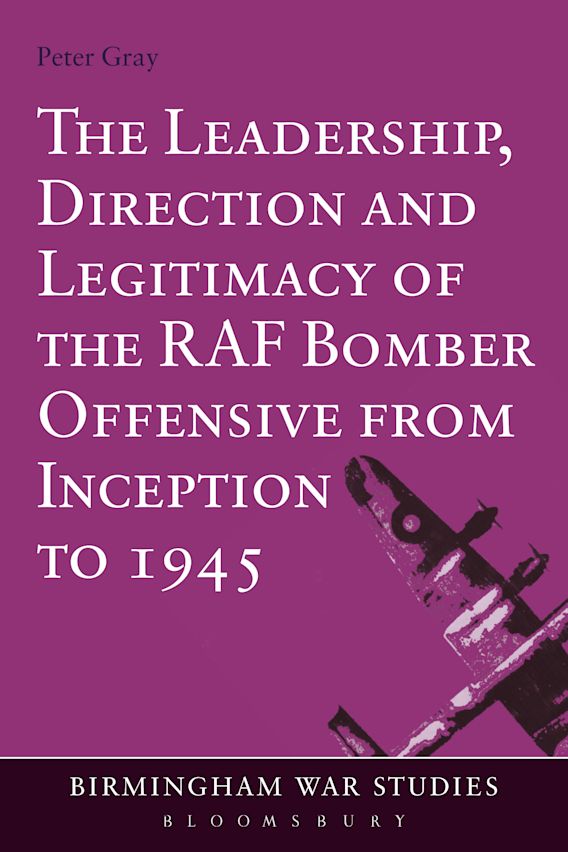
Peter Gray, The Leadership, Direction and Legitimacy of the RAF Bomber Offensive from Inception to 1945. London: Continuum, 2012. Appendices. Bibliography. Index. Hbk. xv + 346pp.

Reviewed by Dr Ross Mahoney

9781472532824

The British Strategic Air Offensive against Germany (SAOG) and the Allied Combined Bomber Offensive (CBO) remain contentious and divisive areas of debate within the historiography of the Second World War and the development of air power, respectively. Essentially the central debate on the bomber offensive has been polarised between discussing the exigencies of military effectiveness – the contribution the campaign made to the overall war effort – and the philosophical view that it was a morally reprehensible act.[1] More recently, the historiographical trend has shifted towards understanding the impact that bombing had upon civilian populations.[2] Into this field in 2012 came a new and important work by Peter Gray that examined the conduct of the SAOG innovatively, namely through a deep understanding of the role of strategic leadership in war and its relationship with the legality and legitimacy of the bombing campaign against Germany.

Gray’s book focuses on strategic leadership and the interface between key senior leaders involved in the direction of the bomber offensive against Germany. Leadership remains an often discussed but little understood area of study within military history. As a result, books are replete with inadequate or ineffective leadership claims without understanding the factors underpinning it and how it interacts with operations. Nevertheless, effective leadership remains the key to understanding military performance at all levels of war.

Gray’s professional experience both as a senior officer in the RAF – he retired as an Air Commodore – and in academia meant that he was well equipped to write this book and the PhD on which it is based. While at the time of writing, Gray is a Professor of Air Power Studies at the University of Wolverhampton; he was previously the Royal Aeronautical Society’s Senior Research Fellow in Air Power Studies at the University of Birmingham and is an acknowledged expert in air power studies and leadership. Before he retired from the RAF, Gray served in several important positions, including Director of Defence Studies (RAF) at the Joint Services Command and Staff College and as Director of the Defence Leadership and Management Centre. However, that Gray is a retired officer does not affect his objectivity towards the subject he studies. Indeed, while it can be easy to suggest that retired senior officers often suffer from what might be described as cultural blindness towards the subjects they write on, this is not the case with Gray, as evidenced by his analysis of the role of Marshal of the Royal Air Force (MRAF) Sir Arthur Harris noted below.

Gray’s work used an interdisciplinary approach grounded in an understanding of leadership theory to examine the direction of the bomber offensive. Utilising his extensive background in the military and his teaching and writing about the subject, Gray explored some of the theoretical aspects of leadership while making it clear that leadership is both complex and ambiguous at the senior/strategic level. For example, in examining the interface between the relationship of the Air Officer Commander-in-C of RAF Bomber Command, Air Chief Marshal Sir Arthur Harris, and the RAF’s Air Staff, in particular Harris’ relationship with the Chief of the Air Staff (CAS), MRAF Sir Charles Portal, it is evident that numerous factors related to the complexity of ambiguity of senior leadership influenced the conduct of SOAG. These factors included relationships with allies, operational commanders, inter-service rivalry, and moral and ethical considerations. Harris does not emerge from this analysis well, with, for example, Gray describing him as ‘naïve’ to expect the lion’s share of the national resources for the bomber offensive. In addition, Harris struggled to ‘accept the vicissitudes of coalition warfare’. Nevertheless, Gray does admit that Harris operated within a problematic area where the ‘operational and strategic levels’ overlapped (p. 291).

There are numerous reasons why Harris arguably struggled in looking up and outside of his operational silo. However, as Gray lamented, Portal probably regretted that Harris never went to the RAF Staff College at Andover and instead attended the British Army’s Staff College at Camberley (p. 43). This is an important cultural point that still requires further examination. Nevertheless, while Harris has often been portrayed as the archetypal advocate of the RAF’s perceived singular focus on bombing in his development as a leader, he lacked the intellectual underpinnings that most future senior RAF commanders shared: attendance at Andover. It should, however, be noted that his attendance at Camberley also illustrated that he was well regarded in the RAF as students attending the other service Staff College’s also acted as representatives of their parent services and sought to inform fellow students about their work. Also, unlike many of his contemporaries operating at the senior level, including Portal, Harris never attended the Imperial Defence College (IDC), where he would have learned to speak the language of a combined military.

Another example of Harris’ inability to look up and out of his silo concerns the debates over relations with the other services. While Harris issued directives and loyally carried out orders, he often soured relations with a poor choice of language for a senior leader. The use of terms such ‘oily boys’ did not aid him or the Air Staff’s ability to explain complicated arguments over the effectiveness of air power to both colleagues within other services and politicians and allies (pp. 255-7). These leadership challenges were a key issue throughout 1944, especially in the lead up to Operation OVERLORD (pp. 215-28). Nevertheless, a vital problem for senior leaders is the maintenance of vision and purpose for an organisation in the face of the leadership challenges that faced both Harris and the Air Staff. Maintaining this vision and purpose had implications for the direction of the bomber offensive.

A 18825
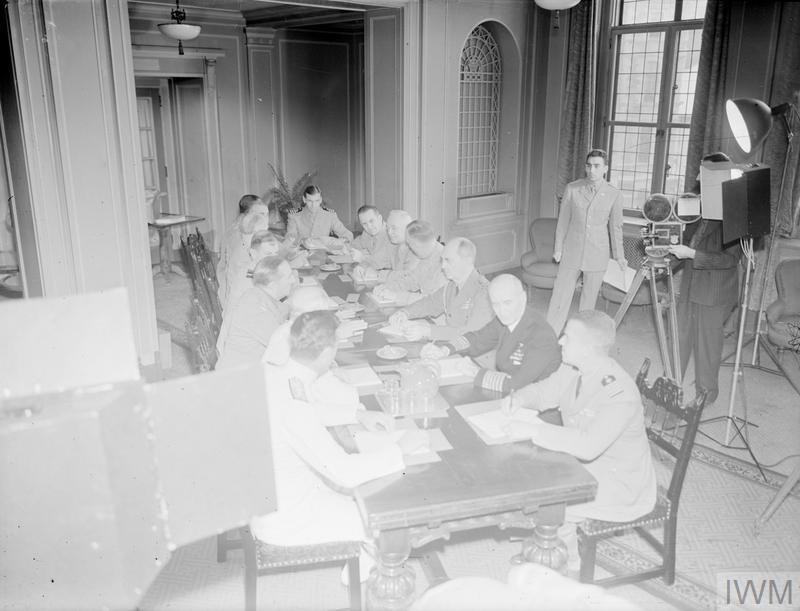
The Quebec Conference, 23 August 1943. Left to right round table: Lord Louis Mountbatten, Admiral of the Fleet Sir Dudley Pound, General Sir Alan Brooke, Air Chief Marshal Sir Charles Portal, Air Marshal L.S. Breadner, Field Marshal Sir John Dill, Lieutenant General Sir Hastings Ismay, Brigadier H. Redman, Commodore R. Coleridge, RN, Brigadier General J.R. Deane, General H.H. Arnold, General G.C. Marshal, Admiral W.D. Leahy, Admiral E.J. King, and Captain Forrest B. Royal (Source: © IWM A 18825)

In comparison to Harris, the RAF was fortunate that, in Portal, they had a CAS who had the vision and ability to see the organisation’s central purpose through to fruition. Portal managed the shift to area bombing, and he was able to work well with both politicians and allies alike. However, Portal was perhaps aided in his work given that his key ally, the United States Army Air Force, placed as much importance as the RAF did on the bomber. However, the decision by the Combined Chiefs of Staff to place Portal in charge of the strategic direction of the Combined Bomber Offensive at the Casablanca Conference of January 1943 (p. 211) highlighted not only an indication of his abilities as a senior leader but also his standing amongst his peers. Unlike Harris, Portal was able to look up and out of his silo and interface with ‘the various organizations that contribute[d] to the greater enterprise […] across the range of Whitehall and into international arenas’ (p. 291).

Gray’s discussion of legitimacy is useful as it helps set the context for the conduct and direction of the bomber offensive and the challenges that confronted the RAF’s senior leadership during the Second World War. The interwar period saw significant discussions over air power in modern warfare. It also saw attempts to codify and limit its role through international law. While the Hague Conference of 1923 produced a report on the Rules of Aerial Warfare with genuine humanitarian intentions, it was not ratified by the nations involved. The attempt to codify laws relating to the use of air power failed most significantly at the Geneva Disarmament Conference, 1932-33. Nevertheless, this failure to agree did not mean that the RAF ignored the implications of the ethics of air power when formulating doctrine and strategy. However, beyond legal discussions, there was, as Gray argued, little in the way of contemporary philosophical debate over war in general. Indeed, the historiography concerning anti-war movements in the interwar period is ‘muddled at best’, thus raising significant questions over interpretations, such as Grayling’s (p. 48).

For Gray, the most influential writer in this period regarding issues surrounding legitimacy and international law was the jurist J.M Spaight (pp. 54-7). The reason for Spaight’s importance stems from his relationship with MRAF Sir Hugh Trenchard during his tenure as CAS, his standing within the Air Ministry and perhaps most importantly, the simple fact that his voluminous works appeared on the reading list for Andover, where future leaders would have been exposed to his writings. Although Gray does not make this point, Spaight wrote for the Royal Air Force Quarterly in the 1930s. This would have seen a broader audience in the RAF exposed his work, though the question remains how much journals such as the Quarterly were read beyond those attending Staff College.[3]

The failure to gain effective international agreement over the use of air power in war led Spaight to note that inevitably ‘cities would be bombed’ (p. 57). Similar ideas pervaded the development of air power doctrine but did not mean that other areas of operations were ignored. The focus on bombing was the logical development of an inherently offensive weapons system. When applied in the strategic sense, the application of bombing was going to raise moral issues. However, the British had a tradition of utilising its other strategic arm, the Royal Navy, to bombard and blockade so that the use of the British Army in continental warfare could be ‘sidestepped’ (p. 59). This, coupled with ineffective international control concerning the laws of war, allowed for the development of an offensively minded doctrine.

Moreover, this did not mean, as Spaight’s own writings indicated, that there was no desire to fight the war as humanely as possible. However, there was a realisation amongst the Air Staff that, as Gray has written elsewhere, ‘The Gloves Will Have to Come Off’ (p. 57).[4] This had clear operational implications for the conduct of the bomber offensive when the decision was taken to shift to both night attacks and area bombing. However, it should be seen as an incremental shift and not the obvious solution as traditionally portrayed. Nonetheless, questions over the humane use of strategic air power became acutely apparent in 1945 when the Prime Minister, Winston Churchill, began to distance himself from the campaign after the raid on Dresden. Concerning this episode, Grey argues it had a degree of logic to it but must be placed within the context of being aware of the growing resilience of Germany’s military in the face of allied advances, and that the Air Staff argued that an early end to the bomber offensive might cause the loss of more lives in the long-term (p. 228).

Overall, this excellent book adds a fresh perspective to a well-trodden path in the historiography of the Second World War. Gray makes clear that before any evaluation can be made on the key areas that have occupied historians of the bomber offensive, namely the issues of effectiveness and morality; we must understand the challenges that confronted those responsible for its conduct and how they sought to deal with the ambiguities and complexities of senior leadership under the stress and strain of global conflict. It also illustrates that historians should not be afraid to learn from allied disciplines. In understanding alternative methodologies, we can bring new light to old subjects.

Dr Ross Mahoney is the Editor-in-Chief of From Balloons to Drones and is an independent scholar specialising in air power and the history of air warfare. He is currently the Senior Historian within the City Architecture and Heritage Team at Brisbane City Council in Australia. He has over 15 years of experience within the heritage and education sectors in Australia and the United Kingdom. He was the inaugural Historian at the Royal Air Force Museum in the UK. In Australia, he has worked as a Historian for the Department of Veterans’ Affairs and taught at the Strategic and Defence Studies Centre at The Australian National University based at the Australian War College. His research interests are focussed on military history, with a specific focus on the history of air warfare, transport history, and urban history. He has published several chapters and articles, edited two books, and delivered papers on three continents. He has a book review website here and can be found on Twitter at @airpowerhistory.

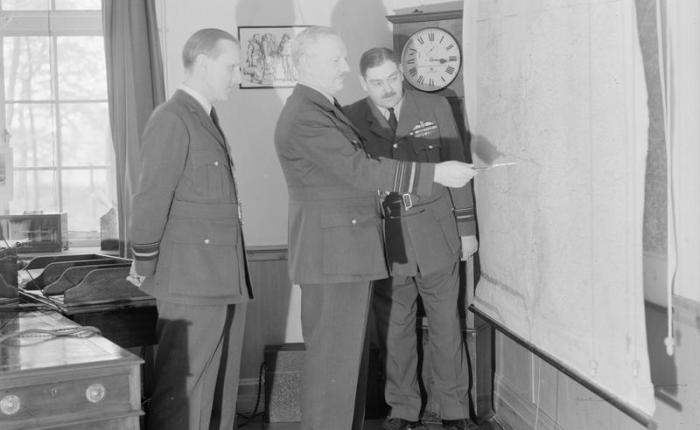
Header image: Air Marshal A.T. Harris, Air Officer Commanding-in-Chief, RAF Bomber Command points to a location on a map of Germany hanging in his office at Bomber Command Headquarters, High Wycombe, Buckinghamshire. On the left stands Air Vice-Marshal R. Graham (left) the Air Officer Administration at BCHQ, and on the right Air Vice-Marshal R.R.M.S. Saundby, Harris’s Senior Air Staff Officer. (Source: © IWM CH 5490)

[1] The view that bombing was morally reprehensible can be summarised by the work of A.C. Grayling. However, this work should be treated with care given the author’s clear lack of understanding of how both the SAOG and CBO were conducted. See A.C. Grayling, Among the Dead Cities: Is the Targeting of Civilians in War ever Justified?, Paperback Edition (London: Bloomsbury, 2007). Within the debate over the effectiveness of the CBO there are several continuing debates on themes such as the question of the bombing techniques employed by the RAF and the USAAF as well as the contribution made by the campaign in achieving air superiority over Europe before Operation OVERLORD. A key work on the debate over precision versus area bombing remains W. Hays Park, “Precision’ and ‘Area’ Bombing: Who did which, and when?,’ Journal of Strategic Studies 18, no. 1 (1995), pp. 145-74. For an examination of the role played in achieving air superiority over Europe, see: Stephen McFarland and Wesley Phillips Newton, To Command the Sky: The Battle for Air Superiority Over Germany, 1942-1944 (Washington DC: Smithsonian Institution Press, 1991). For a discussion of how RAF Bomber Command sought to overcome some of the challenges it faced with reference to the use of operational research techniques, see: Randall Wakelam, The Science of Bombing: Operational Research in RAF Bomber Command (Toronto: University of Toronto Press, 2009).

[2] Important in this shift was the work undertaken by the UK Arts and Humanities Research Council funded project on ‘Bombing, States and Peoples in Western Europe, 1940-1945.’ For some of the work that emerged from this project, see: Claudia Baldoli, Andrew Knapp, and Richard Overy (eds.) Bombing, States and Peoples in Western Europe 1940-1945 (London: Continuum, 2011); Andrew Knapp and Claudia Baldoli, Forgotten Blitzes: France and Italy under Allied Air Attack, 1940-1945 (London: Continuum, 2012).

[3] For example, see: J.M Spaight, ‘An International Air Force: Part I – Fantasy,’ Royal Air Force Quarterly 1, no. 4 (1930); J.M. Spaight, ‘An International Air Force: Part II – Reality ‘, Royal Air Force Quarterly 2, no. 1 (1931).

[4] Peter Gray, ‘The Gloves Will Have to Come Off: A Reappraisal of the Legitimacy of the RAF Bomber Offensive Against Germany’, RAF Air Power Review 13, no. 3 (2010) pp. 9-40.

#HistoricBookReview – The Air War, 1930-1945

#HistoricBookReview – The Air War, 1930-1945

Richard J. Overy, The Air War, 1930-1945. Potomac Edition. Washington DC: Potomac Books, 2005. Appendices. Tables. Photographs. Notes. Bibliographic Note. Bibliography. Index. vii + 267 pp.

Reviewed by Ryan Clauser

41tfIOXZPWL._SY291_BO1,204,203,200_QL40_ML2_

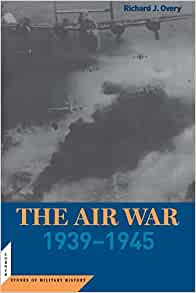
Few historical works have altered the course of a field of study in the way Richard Overy’s The Air War, 1939-1945 did when it was first published in 1980. When the book was published initially, air power history, as a field of academic study, was in its infancy and had been mainly regarded as the ‘Cinderella’ of military history (p. 240). However, Overy’s work transformed the historiography of air power history with his comparative study of the most important air forces of the Second World War.

The importance of Overy’s The Air War is hard to overstate, especially as the book has been reprinted twice in 1987 and 2005. In the most recent edition, that under reviewe here, Overy, now an Honorary Professor at the University of Exeter in the UK, provided the reader with new additions in the form of new statistical figures, updated research, and notes from the author. These new additions illustrate Overy’s dedication to his work and has helped keep The Air War an essential source for historians and remains one of the premier air power history texts. Since the publication of the first edition of The Air War, Overy has continued to write extensively about air power history and the history of the Second World War, including works such as Why the Allies Won (1995), The Battle of Britain: Myth and the Reality (2001), Interrogations: The Nazi Elite in the Allied Hands, 1945 (2001), The Bombing War: Europe 1939-1945 (2013) and most recently Blood and Ruins: The Great Imperial War, 1931-1945 (2021). Potomac Books published the latest edition of The Air War as part of their Cornerstones of Military History collection.

Overy starts his work by proclaiming that ‘this is not a ‘blood and guts’ book about the air war’ (p. xiii), but rather a study that aims to compare and contrast the air forces of the warring nations along with their preparations, strategies, leadership, economics, and development. The Air War sought to provide a greater overview and understanding of the discrepancies between Allied and Axis air forces and fully explain air power’s role throughout the war.

Lancaster_B_MkI_44_Sqn_RAF_in_flight_1942
Three Avro Lancaster BMkIs of No. 44 Squadron, Royal Air Force based at Waddington in Lincolnshire, flying above the clouds, 29 September 1942. Left to right: W4125, ‘KM-W,’ being flown by Sergeant Colin Watt, Royal Australian Air Force; W4162, ‘KM-Y,’ flown by Pilot Officer T.G. Hackney (later killed while serving with No. 83 Squadron); and W4187, ‘KM-S,’ flown by Pilot Officer J.D.V.S. Stephens DFM, who was killed with his crew two nights later during a raid on Wismar. (Source: © IWM TR 197)

The Air War begins with an overview of each combatant nation’s preparations for war and their overall use of air power. Overy wrote that air power theory and doctrine had matured in the years leading up to and throughout the Second World War. These new ideas stated that air power could be used in many ways, such as: protecting naval power, close air support, strategic bombing, and air defence. For example, naval aviation was invaluable for Japan as the Imperial Japanese Navy used it to develop carrier strike forces. The development of Japanese naval air power sought to offset the advantages that western navies, such as the United States and Great Britain, held over Japan. However, for other Axis nations, naval air power was non-existent as Germany and Italy saw no merit in committing resources to build aircraft carriers. Instead, Germany and Italy subscribed to the theory that air power was best suited for a role in supporting their armies. However, the Allies crafted their air power doctrine more holistically to encompass all aspects of military aviation, including naval support, support of armies, strategic bombing, and aerial defence, all of which played critical roles in the Allied air war.

Overy breaks down the Second World War by year and the theatre of operation beginning with the early War in Europe spanning from 1939 to 1941. This section discusses Germany’s and the Axis’ initial success with close air support and air interdiction. However, Germany’s victories were quickly halted following the fall of France and the beginning of the Battle of Britain. Left as the only attacking force capable of striking the United Kingdom from occupied France, the Luftwaffe found itself in a role for which it was wholly unprepared. In contrast, the British utilised a far more general strategy to successfully defend their nation and launch a strategic bombing campaign of their own. Overy stated that, ‘the German rejection of a more general air strategy coincided with shifts in the war itself that made such a strategy more rather than less necessary’ (p. 37). While the air war was still an essential facet of the Second World War in its first two years, it had yet to fully mature on the battlefield.

For the rest of the war in Europe, 1941 to 1945, Overy explains how the allies’ general air strategy put them at a far more significant advantage in the air war compared to their Axis counterparts. As described by Overy, this generalist strategy allowed the allies to combine the many facets of air power, including aerial defence, ground and naval support, and strategic bombing, into one encompassing approach to the war in the air. This perspective also helped mature the Allies use of air power throughout the war. Further, the economics of the air war is also stressed. As Overy pointed out, the United States alone had seen a steady increase in aircraft production every year since 1942, and by 1944 they were outproducing Germany at a rate of nearly three to one in aircraft. Additionally, the Americans suffered less than half the losses of the Germans in the air throughout the war. These factors combined led the allies to victory in the air war and the war in general.

Zero_Akagi_Dec1941
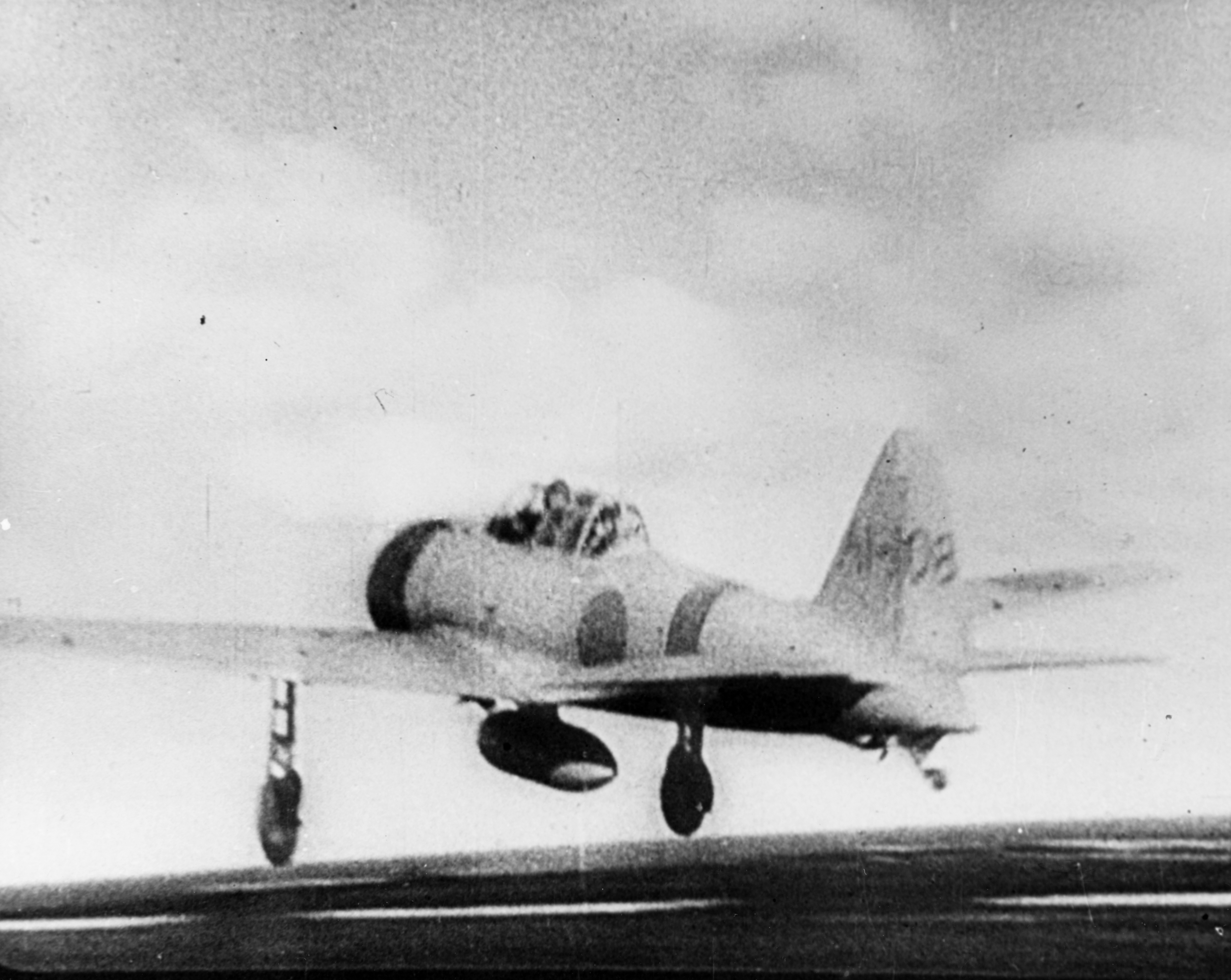
An Imperial Japanese Navy Mitsubishi A6M2 ‘Zero’ fighter takes off from the aircraft carrier ‘Akagi,’ on its way to attack Pearl Harbor during the morning of 7 December 1941. The aircraft was flown by PO2c Sakae Mori, 1st koku kantai, 1st koku sentai, and flew with the second wave. (Source: Wikimedia)

The war in the Pacific was strategically a much different conflict than the one in Europe. Japan’s approach to air power was to use it mainly as a supporting arm of its navy to create a multi-faceted naval strike force. Japan used their war with China to hone this strategy and their aviation technology. This early period of war for Japan allowed them to create a superior fighter aircraft in the Mitsubishi A6M Zero and allowed them to hold the upper hand for a time in their war against the United States and Great Britain following the attack on Pearl Harbor. As the war in the Pacific persisted, the Allies again found multiple roles for airpower and again committed to a generalist strategy in the east. Continuously, like the war in Europe, economics played an essential role in the Pacific, as even by 1941, Japan had begun realising that their economy was in short supply of the raw materials needed to fight a war. This hampered the Japanese war effort and nearly crippled its ability to produce aircraft. By the end of the war, Japan’s aircraft industry could barely replace what was being lost in combat, while the Americans kept producing increasingly better aircraft at staggeringly higher rates. Again, Overy emphasises that the Allied generalist strategies and superior economies were able to win the air war in the east.

While strategy and economics are at the heart of Overy’s work, he also delved into other aspects of the air war, including leadership, training, organisation, science, and research of each nation’s air force, all of which played a crucial role in the air war at large. Each of these additional factors was eventually influenced at some juncture in the war by the strategy and economics of each nation and how they chose to operate their air forces. Nonetheless, each of these additional factors played a significant role in the air war of the Second World War.

Throughout the course of Overy’s research, he relied heavily on official documents, public records, and memoirs of pilots, military commanders, and government officials. Overy was also fortunate to have access to various German records housed with the Imperial War Museum in London while researching the book in the 1970s. That said, while access to some sources was abundant, others, specifically those dealing with the Soviet Air Force, were scant at best and were limited to what the Soviet government saw fit to publish. Another issue in researching this project was the state of air power scholarship, which was in its infancy. Due to this, Overy was forced to depend on more general studies of aircraft, economics, and World War II for secondary sources. A problem that the publication of the book itself began to rectify. Overy also admits that he utilised fictional and popular publications to get a well-rounded perspective of the air war but did not include these works among his cited sources.

In this new edition, Overy has added a new preface in which he claims to have changed very little of his original text, but instead focused his edits on updating the charts and statistics. These illustrations show how economics influenced the air war and exhibit the discrepancies in how Allied and Axis powers produced aircraft. Also, in this newest edition, Overy included a valuable bibliographic note in which he evaluated the development of the historiography of air power and provided the authors and titles of works that have extrapolated further on the ideas laid out in the original Air War text such as tactics and leaderships and economics. Notably, among these works are Richard Davis’s Carl A. Spaatz and the Air War in Europe (1992), John Gooch’s collection of essays Airpower: Theory and Practice (1995), and John Buckley’s Air Power in the Age of Total War (1999). This section was not meant for Overy to vaunt his own influence on the field, but rather to provide readers with a greater historiographic picture of Second World War air power scholarship and show how the field has grown since 1980.

To describe The Air War as notable would be an understatement, as Overy took on the monumental task of comparing and contrasting the primary air forces of the Axis and Allied powers of the Second World War. Even from the outset of this book Overy admitted that he only spent paragraphs on what could be volumes worth of work, yet he was still somehow able to distil mass amounts of information and statistics into only 211 pages of content. From these pages, Overy concluded that the allies were able to gain the upper hand and win the air war largely because of their generalist strategic approach and superior economies. In totality, Overy’s The Air War is still among the preeminent air power works and should continue to be heralded for ushering air power history into the mainstream of academic study.

Ryan Clauser is an Adjunct Professor of History at DeSales University. He received his MA from East Stroudsburg University where he wrote his master’s thesis on restored airworthy Second World War aircraft as important pieces of historical memory that should be preserved as living monuments. He specialises in air power history and memory of the Second World War.

Header image: The Boeing B-29 Superfortress was the long range strategic bomber used be the United Sates to bomb Japan. It was the largest aircraft to have a significant operational role in the war, and remains the only aircraft in history to have ever used a nuclear weapon in combat. (Source: Wikimedia)

#ResearchResources – Recent Articles and Books (December 2021)

#ResearchResources – Recent Articles and Books (December 2021)

Editorial note: In this series, From Balloons to Drones highlights research resources available to researchers. Contributions range from discussions of research at various archival repositories to highlighting new publications. As part of this series, we are bringing you a monthly precis of recent articles and books published in air power history. This precis will not be exhaustive but will highlight new works published in the preceding month. Publication dates may vary around the globe and are based on those provided on the publisher’s websites. If you would like to contribute to the series, please contact our Editor-in-Chief, Dr Ross Mahoney, at airpowerstudies@gmail.com or via our contact page here.

Articles

Donald Bishop and Erik R. Limpaecher, ‘Looking Bakc from the Age of ISR: US Observation Balloons in the First World War,’ Air Power History 68, no. 3 (2021).

No abstract provided.

Patrick Luiz Sullivan De Oliveira, ‘Transforming a Brazilian aeronaut into a French hero: Celebrity, spectacle, and technological cosmopolitanism in the turn-of-the-century Atlantic,’ Past & Present (2021). https://doi.org/10.1093/pastj/gtab011

This article explains how the Brazilian Alberto Santos-Dumont, who at the turn of the twentieth century became the first global celebrity aeronaut, operated as a symbol of ‘technological cosmopolitanism’ — a world view that ostensibly promoted a vision of global unity through technology-enabled exchanges while simultaneously reproducing a core-periphery imagined geography that threatened to erase marginalized populations. Technological cosmopolitanism fitted snugly within the rubric of the Third Republic’s aspiring universalism, which assumed that France offered a model to be emulated around the world, but it was not hegemonic. If for the French appropriating Santos-Dumont meant safeguarding France’s leadership in aeronautics and assuaging their claims of universality, for Brazilians the elision was marked by ambiguity. Brazil’s First Republic hungered for heroes, and authorities saw Santos-Dumont as a symbol of modernity that showed that its place in world history was more than peripheral, even though that very vision was shaped by a Paris-centric world view. But marginalized Afro-Brazilians also found ways to appropriate a white ‘Frenchified’ Brazilian and reimagine their place in a cosmopolitan order. Technological cosmopolitanism evoked a world united by transportation, communication and exchange, but imagining who got to construct and partake in that community was a process continuously marked by erasures and reinsertions.

A. Garcia, ‘The South African Air Force in Korea: an evaluation of 2 Squadron’s first combat engagement, 19 November until 2 December 1950,’ Historia 66, no. 2 (2021).

South African participation in the Korean War (1950–1953) in direct support of an international military offensive led by the United States of America demonstrated the National Party administration’s commitment to opposing Communism. This article details how the deployment of South African Air Force 2 Squadron achieved the strategic objectives of the South African government in supporting the anti-communist United States-led United Nations coalition in the Korean War. It evaluates the performance of South Africa’s Air Force in their first operational test since the Second World War. The combat operations discussed under the scope of this article include the first tactical engagement of 2 Squadron in support of the initial advance (19 November to 21 December) 1950 and then later, the retreat of the United Nations force.

William Head, ‘The Berlin Airlift: First Test of the U.S. Air Force,’ Air Power History 68, no. 3 (2021).

No abstract provided.

N.R. Jenzen-Jones and Jack Shanley, ‘Precision Strike,’ The RUSI Journal (2021) DOI: 10.1080/03071847.2021.2016208

This article examines the development of precision guided munitions (PGMs) from the earliest proto-PGMs of the late 18th century to the miniaturised, semi-autonomous forms in present service. N R Jenzen-Jones and Jack Shanley trace the history of these revolutionary weapons and examine how their battlefield roles and real-world use cases have evolved over time.

T.B. Kwan, ‘“The effects of our bombing efforts”: Allied Strategic Bombing of the Japanese Occupied Territories during World War II,’ Air Power History 68, no. 3 (2021).

No abstract provided.

Wyatt Lake, ‘Origins of American Close Air Support,’ Air Power History 68, no. 3 (2021).

No abstract provided.

John G. Terino Jr., ‘Cultivating Future Airpower Strategists: On “Developing Twenty-First-Century Airpower Strategists”,’ Strategic Studies Quarterly 15, no. 4 (2021).

In 2008, Major General R. Michael Worden forecast specific challenges for airpower strategists including emerging technology, transnational terrorist organizations, an explosion of information power, budgets, and resourcing. His predictions have borne out in what the Air Force faces today, and Air University is responding, providing the next generation of airpower strategists.

Joseph B. Piroch and Daniel A. Connelly, ‘Six Steps to the Effective Use of Airpower: On “The Drawdown Asymmetry: Why Ground Forces Will Depart Iraq but Air Forces Will Stay”,’ Strategic Studies Quarterly 15, no. 4 (2021).

Then-Lieutenant Colonel Clinton S. Hinote’s 2008 analysis of the Iraq drawdown and the continued role of airpower in that conflict serves as a foundation for six steps to the effective use of airpower today.

Thomas Wildenberg, ‘Col. Thomas L Thurlow and the Development of the A-10 Sextant,’ Air Power History 68, no. 3 (2021).

No abstract provided.

Books

Phil Haun, Colin Jackson, and Tim Schultz (eds.), Air Power in the Age of Primacy: Air Warfare since the Cold War (Cambridge: Cambridge University Press, 2021).

Since the end of the Cold War the United States and other major powers have wielded their air forces against much weaker state and non-state actors. In this age of primacy, air wars have been contests between unequals and characterized by asymmetries of power, interest, and technology.  This volume examines ten contemporary wars where air power played a major and at times decisive role. Its chapters explore the evolving use of unmanned aircraft against global terrorist organizations as well as more conventional air conflicts in Bosnia, Kosovo, Afghanistan, Iraq, Lebanon, Libya, Yemen, Syria, and against ISIS. Air superiority could be assumed in this unique and brief period where the international system was largely absent great power competition. However, the reliable and unchallenged employment of a spectrum of manned and unmanned technologies permitted in the age of primacy may not prove effective in future conflicts.

Mark Lardas, Truk 1944–45: The Destruction of Japan’s Central Pacific Bastion (Oxford: Osprey Publishing, 2021).

A fully illustrated history of how the US Navy destroyed Truk, the greatest Japanese naval and air base in the Pacific, with Operation Hailstone, and how B-29 units and the carriers of the British Pacific Fleet kept the base suppressed until VJ-Day.

In early 1944, the island base of Truk was a Japanese Pearl Harbor; a powerful naval and air base that needed to be neutralized before the Allies could fight their way any further towards Tokyo. But Truk was also the most heavily defended naval base outside the Japanese Home Islands and an Allied invasion would be costly. Long-range bombing against Truk intact would be a massacre so a plan was conceived to neutralize it through a series of massive naval raids led by the growing US carrier fleet. Operation Hailstone was one of the most famous operations ever undertaken by American carriers in the Pacific.

This book examines the rise and fall of Truk as a Japanese bastion and explains how in two huge raids, American carrier-based aircraft reduced it to irrelevance. Also covered is the little-known story of how the USAAF used the ravaged base as a live-fire training ground for its new B-29s — whose bombing raids ensured Truk could not be reactivated by the Japanese. The pressure on Truk was kept up right through 1945 when it was also used as a target for the 509th Composite Squadron to practise dropping atomic bombs and by the British Pacific Fleet to hone its pilots’ combat skills prior to the invasion of Japan.

David Nicolle and Gabr Ali Gabr, Air Power and the Arab World – Volume 5: The Arab Air Forces and the Road to War 1936-1939 (Warwick: Helion and Company, 2021).

The years immediately prior to the outbreak of the Second World War saw the earliest and the more recently established Arab Air Forces attempting to play a role on the regional if not yet on the world stage for the first time. It was a period when those Arab states which had real or merely theoretical independence were more or less allied with European countries that were gearing up to face the growing Fascist and Nazi threats. Unfortunately, these anti-Fascist and anti-Nazi countries were themselves the imperial powers, France and the United Kingdom, which were still seeking to maintain their domination of the greater part of the Arab World. To say that this complicated the situation, and strained the loyalties of the men of the newly emergent Arab air forces would be an understatement.

Volume 5 of the Air Power and the Arab World series, therefore, seeks to shed light on a difficult and widely misunderstood time.  It draws upon decades of research, including previously unpublished interviews with men now dead, archive sources than have never before been translated into a European language, and material which, though available in obscure Arabic publications, has been almost entirely neglected by aviation historians. 

This volume is richly illustrated with specially commissioned colour artworks illustrating the aircraft flown by the air forces in the Arab world during this dynamic period of time.

#ResearchResources – Recent Articles and Books (October 2021)

#ResearchResources – Recent Articles and Books (October 2021)

Editorial note: In this series, From Balloons to Drones highlights research resources available to researchers. Contributions range from discussions of research at various archival repositories to highlighting new publications. As part of this series, we are bringing you a monthly precis of recent articles and books published in air power history. This precis will not be exhaustive but will highlight new works published in the preceding month. Publication dates may vary around the globe and are based on those provided on the publisher’s websites. If you would like to contribute to the series, please contact our Editor-in-Chief, Dr Ross Mahoney, at airpowerstudies@gmail.com or via our contact page here.

Articles

Mateusz Piątkowski, ‘War in the Air from Spain to Yemen: The Challenges in Examining the Conduct of Air Bombardment,’ Journal of Conflict and Security Law, 2021; https://doi.org/10.1093/jcsl/krab017 

Air power is a dominant factor in both past and modern battlespace. Yet, despite its undisputed importance in warfare, its legal framework did not correspond with the significance of the air military operations, especially before the adoption of the Additional Protocol I to the Geneva Conventions of 1977. Even after this date, not all the particulars of air warfare are regulated by the positive rules, as the law is scattered in norms of customary character. Even more challenging process than reconstruction of the legal architecture of the air warfare is the evaluation of the specific incidents containing the elements of military aviation activity. The aim of the article is to present possible challenges arising from very complex normative and operational background of the air warfare and air bombardments in particular. The pivotal point in considerations is the forgotten inquiry conducted by the military experts operating within the established by the League of Nations commission reviewing the conduct of air bombardment during the Civil War in Spain. The adopted methodology of the commission could be considered as a reasonable and balanced approach of analyzing the cases including the involvement of the air power and a relevant reference in contemporary investigations.

Jasmine Wood (2021) ‘Lashings of Grog and Girls’: Masculinity and Sexuality in the Rehabilitation of Facially Disfigured Servicemen in the Second World War, War & Society, DOI: 10.1080/07292473.2021.1969172 

This article explores the importance of masculinity in the rehabilitation experience of members of the Royal Air Force who were facially disfigured during the Second World War. Other historical work has highlighted the significance of masculinity in the rehabilitation of other groups of disabled veterans, but the experience of the facially disfigured is somewhat neglected. This article investigates the methods employed at Rooksdown House and East Grinstead Hospital where men suffering from burns injuries and disfigurements were both physically and psychologically rehabilitated. It explores the key themes of hospital environment, occupational therapy and relationships. In using oral histories and memoirs this article argues that masculinity and sexuality were key aspects of servicemen’s identity that had to be restored through rehabilitation to ensure their successful reintegration into society.

Books

Thomas McKelvey Cleaver, The Tonkin Gulf Yacht Club: Naval Aviation in the Vietnam War (Oxford: Osprey Publishing, 2021).

On August 2, 1964, the USS Maddox became embroiled in the infamous Gulf of Tonkin incident that led directly to America’s increased involvement in the Vietnam War. Supporting the Maddox that day were four F-8E Crusaders from the USS Ticonderoga, and this was the very start of the US Navy’s commitment to the air war over Vietnam.

The Tonkin Gulf Yacht Club is titled after the nickname for the US Navy’s Seventh Fleet which was stationed off the coast of Vietnam, and it tells the full story of the US Navy’s war in the air. It details all the operations from the USS Maddox onwards through to the eventual withdrawal of the fleet following the collapse of South Vietnam in 1975.

The Seventh Fleet’s Task Force 77, which at points during the war had as many as six carriers on station at any one time with 70-100 aircraft on each, provided vital air support for combat troops on the ground, while at the same time taking part in the major operations against North Vietnam itself such as Rolling Thunder, Linebacker I and II. All of these operations took place in a hostile environment of flak, missiles and MiGs.

The story is told through the dramatic first-hand accounts of those that took part in the fighting, with many of the interviews carried out by the author himself. The Vietnamese perspective is also given, with the author having had access to the official Vietnamese account of the war in the air. The author also has a personal interest in the story, as at the age of 20 he served with the US Seventh Fleet off the coast of Vietnam and was personally involved in the dramatic history of The Tonkin Gulf Yacht Club.

Kenneth Jack, Eyes of the Fleet Over Vietnam: RF-8 Crusader Combat Photo-Reconnaissance Missions (Havertown, PA: Casemate Publishers, 2021). 

Photo reconnaissance played a significant role during the Cold War, however, it remained unknown to the public for many years because its product and methods remained classified for security purposes. While the U-2 gets most of the credit, low-level photo reconnaissance played an equally important role and was essential to target selection and bomb damage assessment during the Vietnam War. Moreover, the contribution of naval aviation photo-reconnaissance to the bombing effort in Vietnam is largely an untold story. This book highlights the role of the unarmed supersonic RF-8A/G photo-Crusader throughout the war, and also the part played by its F-8 and F-4 escort fighters.

Veteran and historian Kenneth Jack pieces together the chronological history of photo recon in the Vietnam War between 1964 and 1972, describing all types of missions undertaken, including several Crusader vs. MiG dogfights and multiple RF-8 shootdowns with their associated, dramatic rescues. The narrative focuses on Navy Photo Squadron VFP-63, but also dedicates chapters to VFP-62 and Marine VMCJ-1. Clandestine missions conducted over Laos began in 1964, becoming a congressionally authorized war after the Tonkin Gulf incident in August 1964. VFP-63 played a role in that incident and thereafter sent detachments to Navy carriers for the remainder of the war. By the war’s end, they had lost 30 aircraft with 10 pilots killed, six POWs, and 14 rescued. The historical narrative is brought to life through vivid first-hand details of missions over intensely defended targets in Laos and North Vietnam. While most books on the Vietnam air war focus on fighter and bombing action, this book provides fresh insight into the air war through its focus on photo-reconnaissance and coverage of both versions of the Crusader.

Mark Lax, Malayan Emergency and Indonesian Confrontation, 1950-1966 (Newport, NSW: Big Sky Publishing, 2021).

Australia’s involvement in the Malayan Emergency from 1950 to 1960 and later in a Confrontation with Indonesia in the 1960s is little remembered today. Yet the deployment of over a third of the RAAF to support the British and Malayan governments in what became a long war of attrition against communist insurgents in the former case, and against Indonesian regulars and militia in the latter, kept the RAAF engaged for over 15 years. Wars by another name, these two events led to the birth of Malaysia and the establishment of an ongoing RAAF presence in South East Asia. Until recent operations in Afghanistan, the Malaya Emergency was Australia’s longest conflict. Malayan Emergency and Indonesian Confrontation recounts the story of the politics, strategies and operations that brought these two conflicts to a close.

Ian Pearson, Cold War Warriors: Royal Australian Air Force P-3 Orion Operations 1968-1991 (Newport, NSW: Big Sky Publishing, 2021).

Cold War Warriors tells the little-known story of the operations by the Royal Australian Air Force’s P-3 Orions during the latter years of the Cold War. The aircraft’s largely low-profile missions, usually flown far from their base, were often shrouded by confidentiality. Now, access to declassified documents has allowed this story to be told. From the lead-up to their delivery in 1968, to the end of the Cold War in 1991; from the intrigues associated with the procurement of the aircraft and subsequent upgrades, to perilous moments experienced by the aircraft and their crews while conducting operations; and from triumphs to tragedies; Cold War Warriors documents the P-3’s service in the RAAF in the context of the unfolding domestic and international events that shaped the aircraft’s evolving missions. As well as being a story of the RAAF Orions and their growing capabilities, Cold War Warriors is also the story of the crews who flew the aircraft. Using their words, Cold War Warriors faithfully describes a number of incidents, both on the ground, and in the air, to provide a sense of the enormous breadth of service the P-3 Orion has provided to the Royal Australian Air Force, to Australia and to our allies.

John Shields, Air Power in the Falklands Conflict: An Operational Level Insight into Air Warfare in the South Atlantic (Barnsley: Air World, 2021).

From the television footage shown in all its stark reality and the daily coverage and subsequent memoirs, the impression delivered from the air battles in the Falklands Conflict was that of heroic Argentine pilots who relentlessly pressed home their attacks against the British. While, by contrast, there is a counter-narrative that portrayed the Sea Harrier force as being utterly dominant over its Argentine enemies. But what was the reality of the air war over the Falkland Islands?

While books on the air operations have published since that time, they have, in the main, been personal accounts, re-told by those who were there, fighting at a tactical level, or back in their nation’s capital running the strategic implications of the outcome. But a detailed analysis of the operational level of the air war has not been undertaken – until now. At the same time, some analysts have inferred that this Cold War sideshow offers little insight into lessons for the operating environment of future conflicts. As the author demonstrates in this book, there are lessons from 1982 that do have important and continued relevance today.

Using recently released primary source material, the author, a serving RAF officer who spent two-and-a-half years in the Falklands as an air defence navigator, has taken an impartial look at the air campaign at the operational level. This has enabled him to develop a considered view of what should have occurred, comparing it with what actually happened. In so doing, John Shields has produced a comprehensive account of the air campaign that has demolished many of the enduring myths.

This is the story of not why, but how the air war was fought over the skies of the South Atlantic.

Mark Stille, Pacific Carrier War: Carrier Combat from Pearl Harbour to Okinawa (Oxford: Osprey Publishing, 2021).

The defining feature of the Pacific Theatre of World War II was the clash of carriers that ultimately decided the fate of nations. The names of these battles have become legendary as some of the most epic encounters in the history of naval warfare. Pre-war assumptions about the impact and effectiveness of carriers were comprehensively tested in early war battles such as Coral Sea, while US victories at Midway and in the waters around Guadalcanal established the supremacy of its carriers. The US Navy’s ability to adapt and evolve to the changing conditions of war maintained and furthered their advantage, culminating in their comprehensive victory at the battle of the Philippine Sea, history’s largest carrier battle, which destroyed almost the entire Japanese carrier force.

Examining the ships, aircraft and doctrines of both the Japanese and US navies and how they changed during the war, Mark E. Stille shows how the domination of American carriers paved the way towards the Allied victory in the Pacific.

Richard Worrall, The Ruhr 1943: The RAF’s Brutal Fight for Germany’s Industrial Heartland (Oxford: Osprey Publishing, 2021).

Between March and July 1943, RAF Bomber Command undertook its first concentrated bombing campaign, the Battle of the Ruhr, whose aim was nothing less than the complete destruction of the industry that powered the German war machine. Often overshadowed by the famous ‘Dambusters’ single-raid attack on the Ruhr dams, the Battle of the Ruhr proved much larger and much more complex. The mighty, industrial Ruhr region contained not only some of the most famous and important arms makers, such as the gunmakers Krupp of Essen, but also many other industries that the German war economy relied on, from steelmakers to synthetic oil plants. Being such a valuable target, the Ruhr was one of the most heavily defended regions in Europe.

This book examines how the brutal Ruhr campaign was conceived and fought, and how Bomber Command’s relentless pursuit of its objective drew it into raids on targets well beyond the Ruhr, from the nearby city of Cologne to the Skoda works in Czechoslovakia. Drawing on a wide-range of primary and secondary sources, this is the story of the first titanic struggle in the skies over Germany between RAF Bomber Command and the Luftwaffe.