#BookReview – A Reluctant Icon: Letters to Neil Armstrong

#BookReview – A Reluctant Icon: Letters to Neil Armstrong

Reviewed by Dr Brian Laslie

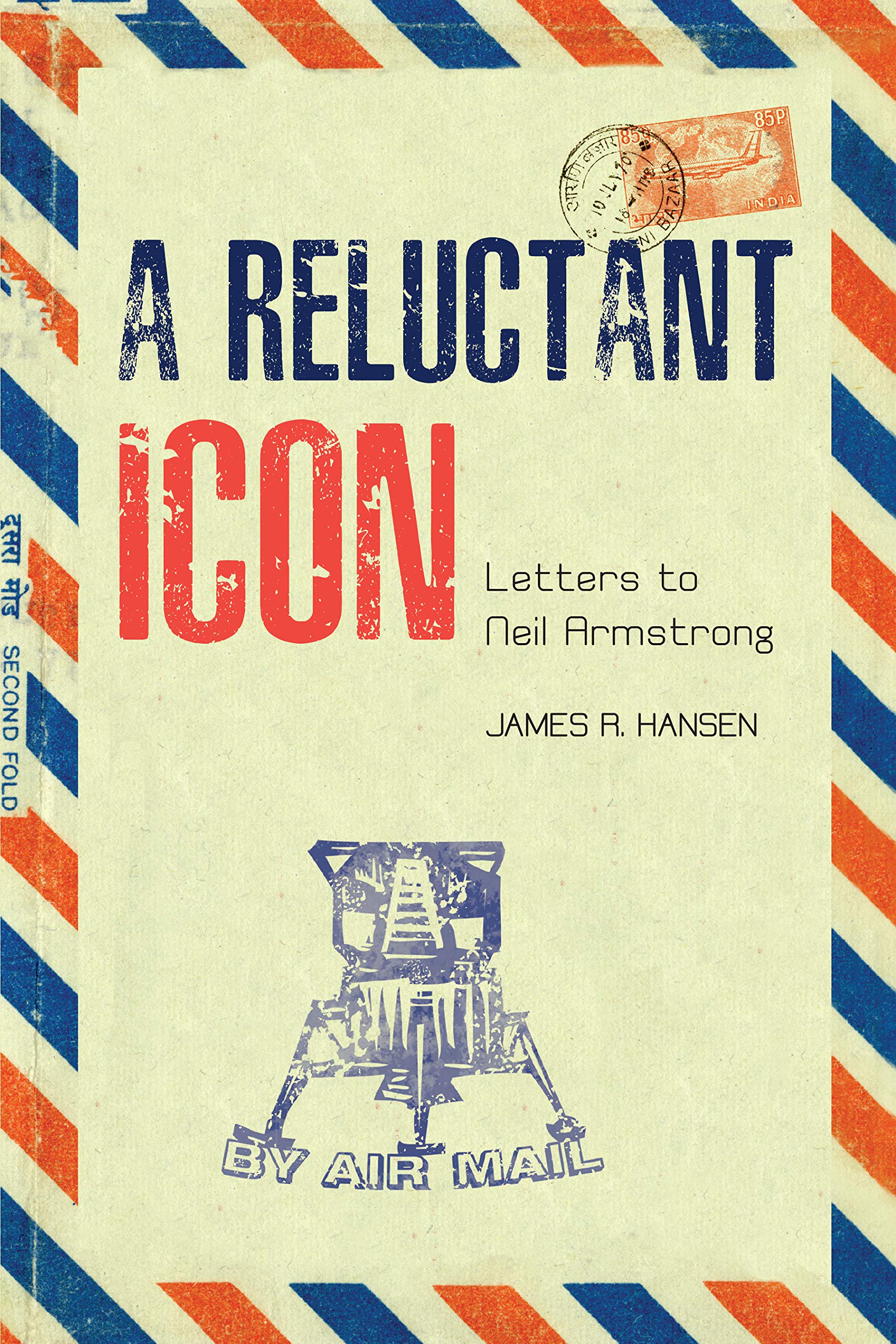
James R. Hansen, A Reluctant Icon: Letters to Neil Armstrong. West Lafayette, IN: Purdue University Press, 2020. Notes. Hbk. 384 pp.
There are new air power scholarship releases all the time. One need look no further than the academic press catalogues for the University Press of Kentucky, University of North Texas Press, and Naval Institute Press (to name a few) to see what is up and coming. As the book reviews editor for From Balloons to Drones, I often receive books or ask for them in advance with promises of a ‘review forthcoming,’ it is all too easy to fall behind. Thus, this book review comes several years in arrears. So, please note that the book covered below was published in the year following the 50th anniversary of Apollo 11.

Now that the hype for #Apollo11, #Apollo50, and all things Apollo program has died following the 50-year celebrations from 2018-2023 (coinciding with Apollo 7-17), there is time for reflection on the Golden Age of Spaceflight. Even as the Space Shuttle moves into distant memory, there continues to be a deep draw towards America’s space pioneers, and no one individual better encapsulates that draw than Neil Armstrong, the enigmatic first man on the moon, and no one better understands Armstrong than his biographer Dr James R. Hansen. Hansen spent hundreds of hours with Armstrong in writing the biography First Man: The Life of Neil A. Armstrong. His second book (from Purdue University Press) on Armstrong was Dear Neil Armstrong: Letters to the First Man from All Mankind, reviewed here. This is Hansen’s third book about Armstrong, and he has not ruled out writing more. This most recent volume, A Reluctant Icon: Letters to Neil Armstrong, is part of the Purdue University Press series: Purdue Studies in Aeronautics and Astronautics.

Since he published First Man in 2005, there has been an explosion of books, podcasts, magazines, toys, and other ephemera available to purchase as a memory or remembrance of the end of the golden age of spaceflight. Books include Jay Barbree’s 2014 Neil Armstrong: A Life of Flight. The Lego Brick Company produced a hugely successful series of building sets, including the Saturn V, Lunar Rover, and Lunar Lander. All this falls under what Hansen calls the ‘Iconography and myth’ of Armstrong and what I have labelled as ‘The Cottage Industry of Neil Armstrong’ culminating in one of the most sought-after signatures in history for collectors, running from $2,000 to $10,000 depending on the medium.

In writing his two ‘Letters to…’ works, Hansen had, for the first time, complete access to Armstrong’s papers now housed in the archives at Purdue University (p. xi). This second book is broken down into six chapters. It contains letters, and sometimes responses, concerning first, religion and belief; second, anger, disappointment and disillusionment; third, quacks, conspiracy theories, and Ufologists; fourth, fellow astronauts and the world of flight; fifth, the corporate world; sixth, celebrities, stars, and notables, and finally, letters from a grieving world.

In ‘Religion and Belief,’ most of the letters projects onto Neil being a devout Christian – Armstrong was a Deist. Neil responded by ‘ignoring their questions or sidestepping the issue of religion altogether’ (p. 5). While most of the letters in this chapter are benign, Armstrong did receive some bizarre and ‘kooky’ letters over many years.

Chapters two and three, ‘Anger, disappointment and disillusionment’ and ‘Quacks, conspiracy theories, and, Ufologists’ complement each other in that the letters Armstrong received (Hanson notes these represented less than one per cent of all letters he received) read like online comment sections: sometimes interesting, rarely thought-provoking, often ad hominem. Hansen includes a selection here: ‘Without taking such letters into account, the iconography involving Neil Armstrong, sadly, is incomplete.’

Of most interest to the readers of this website are the many letters found in the chapter ‘Fellow Astronauts and the World of Flight.’ Armstrong received numerous letters from his fellow astronauts, but he remained close, with very few of them, Jim Lovell and Gene Cernan being the notable exceptions. Hansen shows Jim Irwin’s request for a gathering of moonwalkers that never came to fruition, Al Bean passing along pieces of the Apollo Saturn V, which fell to Earth, and correspondence with Al Shepard and Jim Lovell attempting to enlist Armstrong’s involvement in ventures including the Astronaut Scholarship fund. Even amongst friends and colleagues, Armstrong remained an intensely private person.

The rest of the work, including the corporate world, celebrities, stars, and notables, and letters from a grieving world, all help to put into perspective who Armstrong was and not just the man who made the one giant leap. In many of the above, people wanted something from Armstrong: an autograph, a response, or some enigmatic comfort. Studying Armstrong is something akin to the study of Jefferson; one biography is not enough, and proper understanding can only come through diligent study of correspondence and letters, so Hansen is to be commended for providing a glimpse here and providing access to that which is otherwise available only in archives and special collections. The two volumes of Armstrong’s letters will surely appeal to those interested in Armstrong, the Apollo program, and those looking for something beyond the regular biography, a taste of source documentation in book form. Hansen is not only the best source to begin and end with if one is interested in studying the life of Neil Armstrong, but he is also one of the most outstanding living scholars of aeronautics and astronautics.

Dr Brian Laslie is a US Air Force Historian and Command Historian at the United States Air Force Academy. Formerly, he was the Deputy Command Historian at the North American Aerospace Defense Command (NORAD) and United States Northern Command (USNORTHCOM). A 2001 graduate of The Citadel and a historian of air power studies, he received his Masters’ from Auburn University Montgomery in 2006 and his PhD from Kansas State University in 2013. He is the author of Air Power’s Lost Cause: The American Air Wars of Vietnam (2021), Architect of Air Power: General Laurence S. Kuter and the Birth of the US Air Force (2017) and The Air Force Way of War (2015). The latter book was selected for the Chief of Staff of the Air Force’s 2016 professional reading list and the 2017 RAF Chief of the Air Staff’s reading list.

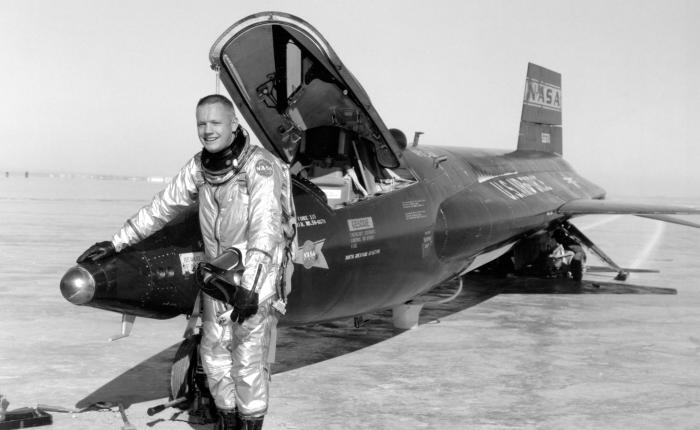
Header Image: Neil Armstrong is seen here next to the X-15 ship #1 after a research flight. Armstrong made his first X-15 flight on November 30, 1960, in the #1 X-15. He made his second flight on December 9, 1960, in the same aircraft. This was the first X-15 flight to use the ball nose, accurately measuring airspeed and flow angle at supersonic and hypersonic speeds. The servo-actuated ball nose can be seen in this photo in front of Armstrong’s right hand. The X-15 employed a non-standard landing gear. It had a nose gear with a wheel and tyre, but the main landing consisted of skids mounted at the vehicle’s rear. The left skid is visible in the photo, as are marks on the lakebed from both skids. Because of the skids, the rocket-powered aircraft could only land on a dry lakebed, not on a concrete runway. (Source: NASA)
 

#BookReview – Photographing America’s First Astronauts: Project Mercury Through the Lens of Bill Taub

#BookReview – Photographing America’s First Astronauts: Project Mercury Through the Lens of Bill Taub

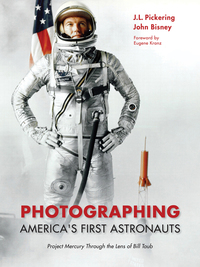
J.L. Pickering and John Bisney, Photographing America’s First Astronauts: Project Mercury Through the Lens of Bill Taub. West Lafayette, IN: Purdue University Press, 2023. Images. Bibliography. Hbk. 340 pp.

Reviewed by Dr Brian Laslie

9781612498560

In 2019, I wrote a book review for From Balloons to Drones, where I began the review by saying:

A different type of book necessitates a different type of book review. Herein you will not find an author’s argument or a critique thereof since the book being discussed today is a collection of photographs and an extremely fine one at that.

That particular review was for J.L. Pickering and John Bisney’s Picturing Apollo 11: Rare Views and Undiscovered Moments. I followed that specific review a few years later with the same author’s Picturing the Space Shuttle: The Early Years, another excellent collection of photographs and vignettes from the late 1970s and early 1980s.

Pickering and Bisney’s newest work, Photographing America’s First Astronauts: Project Mercury Through the Lens of Bill Taub, from Purdue University Press, claims to be the ‘most complete photographic account of Project Mercury ever published.’ With more than 600 photographs across 340 pages, it is hard to argue that they have not accomplished this. This is the sixth space-related photography book from Pickering and Bisney, which is clearly a life-long passion for both. Pickering has explored the photos of the US crewed space program for nearly 50 years, and journalist Bisney, a retired national news correspondent, covered the US space program for more than 30 years. Their combined 80+ years of experience is clearly demonstrated in how they choose their photos and, more importantly, in how they describe every image providing a photographic journey and an excellent history.

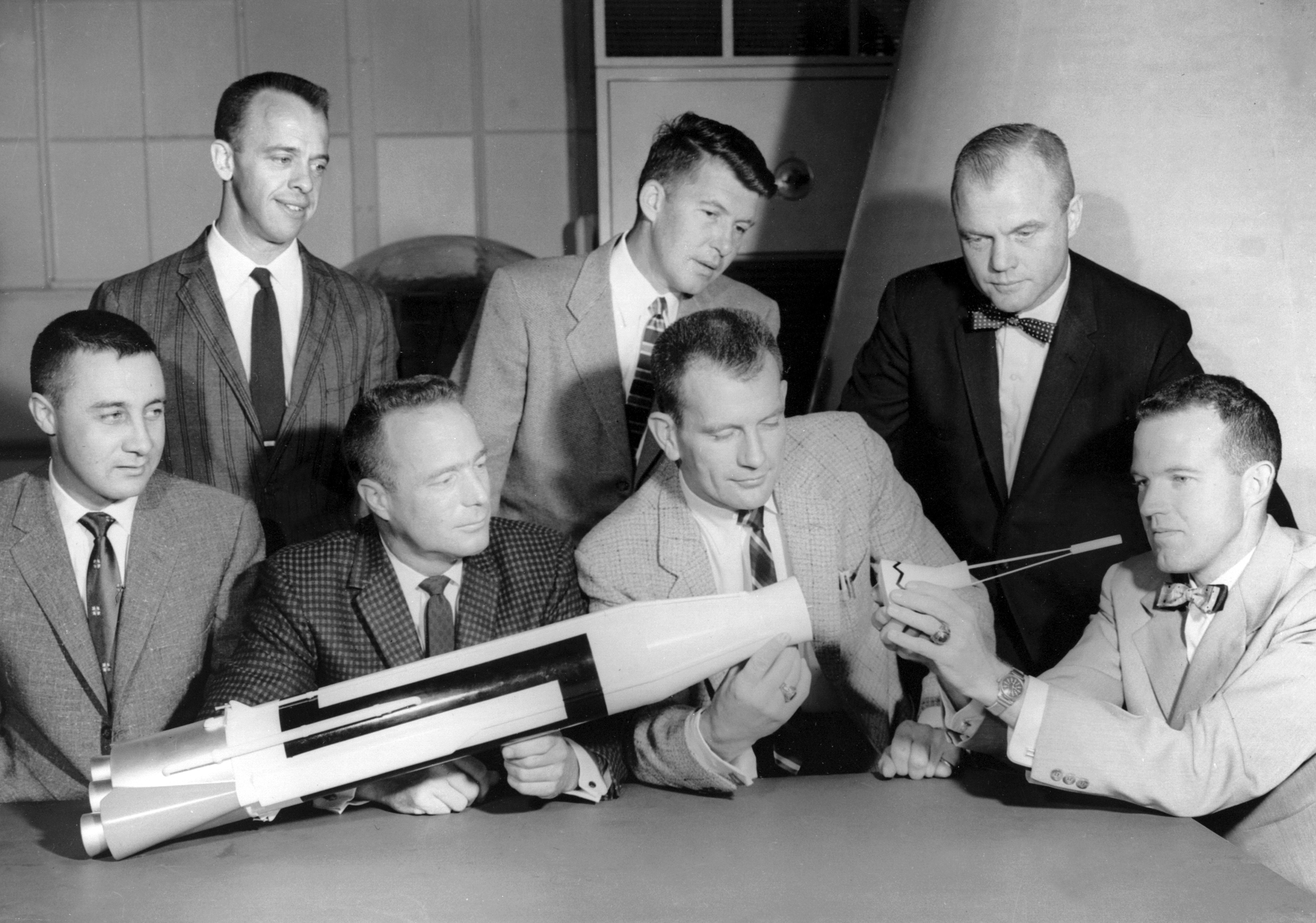
Project_Mercury-Mercury_Seven-Astronauts
The ‘Mercury Seven’ astronauts pose with an Atlas model in 1959. Front row, left to right: Gus Grissom, Scott Carpenter, Deke Slayton and Gordon Cooper. Back row: Alan Shepard, Wally Schirra and John Glenn. (Source: Wikimedia)

There can be little doubt that Project Apollo has garnered more photography books than Project Mercury or Project Gemini – Apollo Remastered: The Ultimate Photographic Record (2022) and Apollo: VII – XVII (2018) are two recent excellent examples. However, it is refreshing to see a new approach to a space photography book and the documentation of the Mercury 7 program. This book features the photography of William (Bill) Taub, NASA’s first staff photographer. Previously Taub served as a photographer for NASA’s predecessor organisation, the National Advisory Committee for Aeronautics. Taub travelled extensively with the Mercury astronauts. Taub followed the astronauts on many of their travels, capturing thousands of photographs of the Mercury 7 between 1959 and 1963. These photos are both official and candid from an individual who was truly a fly-on-the-wall of Project Mercury from start to finish.

Where many might claim to be publishing ‘never-before-seen images,’ in this case, it is true, as the authors gained access to Taub’s collection of photos, slides, and negatives after his passing. What they discovered and published is – without fear of hyperbole on my part – truly the greatest collection of photos of America’s first crewed space program and its famous seven members. Herein, each of the Mercury 7 get their own chapter, but the supporting cast is not ignored either, as the NASA leaders and support members also find themselves highlighted. Chapters one and two focus on the ‘Steps to Space’ and ‘The People of Mercury,’ (it was a great pleasure to see Astronaut Nurse Lieutenant Dee O’Hara highlighted). Chapters three through nine are dedicated to the originals themselves: Alan Shepard/Mercury-Redstone 3, Gus Grissom/Mercury-Redstone 4, John Glenn/Mercury-Atlas 6, Deke Slayton/Destiny Delayed, Scott Carpenter/Mercury-Atlas 7. Wally Schirra/Mercury-Atlas 8, and Gordon Cooper/Mercury-Atlas 9. Although a photographic record of the astronauts and Project Mercury, Pickering and Bisney also included many family photos as well continuing the tradition of the focus on the ones who remained on the ground and supported the astronauts the most: Louise Shepard, Betty Grissom, Annie Glenn, Marge Slayton, Rene Carpenter, Lo Schirra, and Trudy Cooper and their children.

Photographing America’s First Astronauts is another stunning success in a series of works that will undoubtedly be found on the bookshelf of everyone who loves the golden age of spaceflight. Since the authors have so adroitly covered the first astronauts, might this reviewer suggest a book on the NASA Astronaut Group 8 which included the first female and minority astronauts?

Dr Brian Laslie is an Air Force Historian and currently the Command Historian at the United States Air Force Academy. A 2001 graduate of The Citadel and a historian of air power studies, he received his PhD from Kansas State University in 2013. He is the author of  The Air Force Way of War, Architect of Air Power: General Laurence S. Kuter and the Birth of the US Air Force, and Air Power’s Lost Cause: The American Air Wars of Vietnam. He lives in Colorado Springs. He can be found on Twitter at @BrianLaslie.

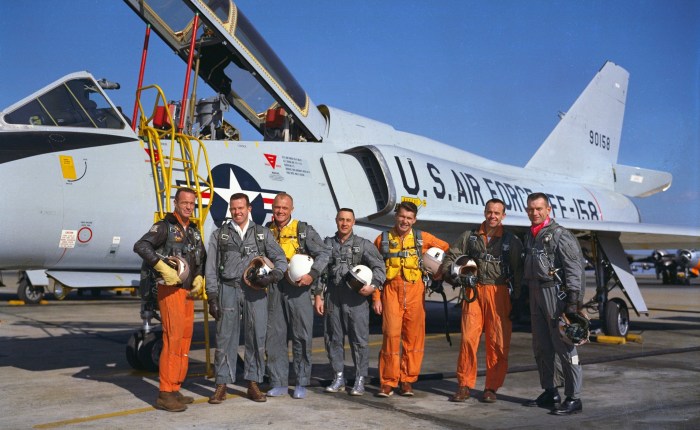
Header image: The Mercury Seven astronauts with a US Air Force Convair F-106B Delta Dart aircraft at Langley Air Force Base. From left to right: Scott Carpenter, Gordon Cooper, John Glenn, Gus Grissom, Wally Schirra, Alan Shepard and Deke Slayton, 26 January 1961. (Source: Wikimedia)

#BookReview – British Imperial Air Power: The Royal Air Forces and the Defense of Australia and New Zealand Between the World Wars

#BookReview – British Imperial Air Power: The Royal Air Forces and the Defense of Australia and New Zealand Between the World Wars

Alex M. Spencer, British Imperial Air Power: The Royal Air Forces and the Defense of Australia and New Zealand Between the World Wars. West Lafayette: Purdue University Press, 2020. Illustrations. Notes. Bibliography. Pbk. 307 pp.

Reviewed by Ashleigh Brown

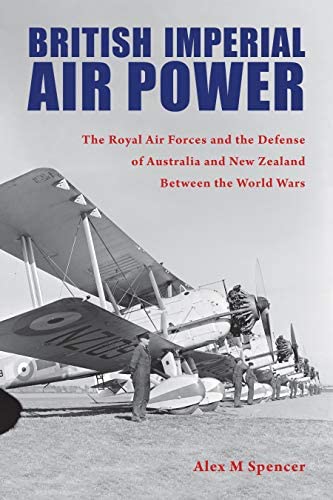
519j3Rr4RvL._AC_SY1000_

The First World War was a catalyst for the development of aviation. At the outbreak of war in 1914, the British Army and Royal Navy air arms, the Royal Flying Corps (RFC) and Royal Naval Air Service (RNAS), acted purely as auxiliaries to the British Army and Royal Navy. By 1918, although still predominantly considered a support function for the other services, aviation had taken on an increased level of importance, as illustrated by establishing the independent Royal Air Force (RAF) on 1 April 1918. The importance of aviation and air power was not lost on the self-governing Dominions of the British Empire. Inspired by the experience of the Australian Flying Corps and the creation of the RAF, Australia began looking toward an independent air force during the closing stages of the First World War. This vision was soon realised with the creation of the Australian Air Force (RAAF) on 31 March 1921 (the ‘Royal’ prefix was added in May). New Zealand, the smaller dominion, was understandably slower during the interwar period. The New Zealand Permanent Air Force came into being on 14 June 1923 and grew slowly, much to the frustration of the United Kingdom (pp. 70-1). It is the experience of these two forces that Alex Spencer, a Curator at the Smithsonian National Air and Space Museum in the United States, discusses in his new book, British Imperial Air Power.

Focussing on the Australian and New Zealand experience, British Imperial Air Power, derived from Spencer’s 2009 PhD thesis from Auburn University, offers one of the few contributions about military aviation developments in the Pacific dominions during the interwar period. Although the Australian and New Zealand experience of air power during has been examined, the interwar period is decidedly less studied. This is unfortunate; a far more comprehensive understanding of the air war during the Second World War can be gained by understanding the many steps taken between the wars. The immense technological, tactical, and organisational developments made during this period, as a direct result of First World War experiences, undeniably affected how air power was used in the next war. As such, as well as being an essential contribution to the discussion over the development of air power in Australia and New Zealand specifically, Spencer’s work is more generally a vital contribution to air power history of the interwar period. Spencer takes a thematic approach to the topic, beginning with the imperial air defence schemes of 1918 and 1919, which leveraged the progress made in military aviation during the war (pp. 11-36). Other themes investigated include the Empire’s air defence, post-war air transport, airships, disarmament and eventual rearmament, and the final preparations for war.

Looking at the development of the air forces of Australia and New Zealand through the imperial lens, Spencer places the dominions within the context of the British Empire. This includes a discussion of the RAF’s own struggles, namely, its fight to remain an independent service and its battle for resources throughout the interwar period. Wider economic and political issues are also discussed, including the Great Depression and the Geneva disarmament discussions, which had the potential to make building and modernising air forces more difficult (pp. 173-94). Spencer’s analysis of the broader economic, political, and imperial context is valuable. The dominions’ air forces were not created and developed in a vacuum; external factors inevitably influenced them. Additionally, Australia and New Zealand faced problems in developing their air forces – including interservice rivalry, difficulty obtaining resources, and economic restrictions – which were not unique to these dominions. Rather, they were problems faced worldwide, not least in Britain itself. Therefore, the RAF’s imperial context and experience are valuable inclusions in Spencer’s work.

4148794
Two unidentified Royal Australian Air Force (RAAF) aircrew wearing flying clothing and standing in front of an Airco (de Havilland) DH9 two-seat light bomber. This is one of 29 DH9 models that the British government gave to the fledgling RAAF as an Imperial Gift to Australia in 1920. (Source: Asutalian War Memorial)

In addition to these broader considerations, Spencer discusses the emergence of a more immediate threat to Australia and New Zealand: Japan (p. 38). Given the dislocation of the Pacific dominions from Britain, it is not surprising that fears of attacks by Japan influenced their plans for local air defence (p. 149). Spencer also discusses the renewal of Britain’s alliance with Japan (the Anglo-Japanese Alliance), which occurred to the consternation of Australia and New Zealand (p. 52). This demonstrated some cracks that were beginning to form between Britain and the Pacific dominions. Britain appeared less interested in the Japanese threat, in some instances appearing to completely disregard it as a threat despite the concerns of the dominions. Spencer adds to this issue by discussing the movement away from complete dependence on Britain and forging a closer relationship with the United States as an ally. Under the assumption that the United States had a greater interest in the Pacific area than Britain, Australia increasingly aligned itself with America. Additionally, with supply issues in Britain inhibiting the RAAF’s ability to acquire aircraft, Australia turned to the United States for new aircraft (p. 207). Spencer’s discussion of this provides essential context for the close relationship between the United States and Australia, which was apparent from the Second World War.

Spencer takes his work a step further by incorporating civil aviation’s development in Britain and the dominions, albeit on a much smaller scale. Importantly, he links this to the concurrent development of military aviation (p. 86). This is rare; military and civil aviation are usually treated quite separately. As Spencer points out, however, they were not entirely separate efforts. In addition to proving the value of aircraft in a military capacity, the First World War also opened the door for the possibility of civil aviation. For Australia, both veterans of the air war propelled spheres of aviation. While some Australians – such as Richard Williams and Stanley Goble – continued in the military and were instrumental in the RAAF’s early years, others – including Hudson Fysh, Paul McGinness, and Charles Kingsford Smith – pursued careers in civil aviation upon returning home. Fysh and McGinness, along with Fergus McMaster, founded the Queensland and Northern Territory Aerial Services (QANTAS), while Smith completed a series of daring long-distance flights. With developments in military and civil aviation taking place parallel to one another during the interwar period, it is entirely appropriate to discuss the latter in Spencer’s work. Spencer explains that civil aviation of the era included mapping routes to connect Britain and the dominions, which was undoubtedly an important effort in terms of aerial defence (p. 249-50).

Spencer’s work is not without its problems. On a surface level, an unfortunate typographical error (Jan Smuts is incorrectly referred to as ‘Ian Smuts’) within the first 15 pages leaps out at the reader (p. 15). Additionally, large block quotes are frequently used, often becoming a distraction from the main text. In many cases, the author could have effectively summarised these and added little to no value by being quoted in full. More significantly, there is an uneven focus throughout the book: the bulk of Spencer’s analysis is dedicated to Australia, with New Zealand’s experience receiving less attention. This is understandable given the disparity in the size of the air forces and the advancements each made. However, Spencer should have explained this in the introduction to avoid the reader expecting to see an even comparative study of the two.

With these minor issues aside, Spencer presents a thoroughly researched and well-reasoned account of the formation of Australia and New Zealand’s air forces and the developments and challenges they faced during the lead-up to the Second World War. This includes archival research in Australia, New Zealand, the United Kingdom, and the United States, focusing on air ministry and air department records and political decisions. Importantly, this is placed within the context of the Empire and international events, providing a broader view of the various difficulties faced during the interwar period. As such, Spencer’s work is an important contribution to this underserved period in military history.

N.B. You can listen to an interview with Dr Alex Spencer about his book here.

Ashleigh Brown is a PhD candidate at the University of New South Wales, Canberra. Her thesis focuses on the creation and interwar development of the Royal Australian Air Force. Ashleigh is a researcher for the Official History of Australian Operations in Iraq & Afghanistan and Australian Peacekeeping Operations in East Timor, where her focus is Australia’s commitment to Afghanistan between 2005 and 2010. She is also an editor at From Balloons to Drones. Her research interests include the First World War, the interwar period, recent conflicts, air power, and military command. Ashleigh can be found on Twitter at @ash__brown.

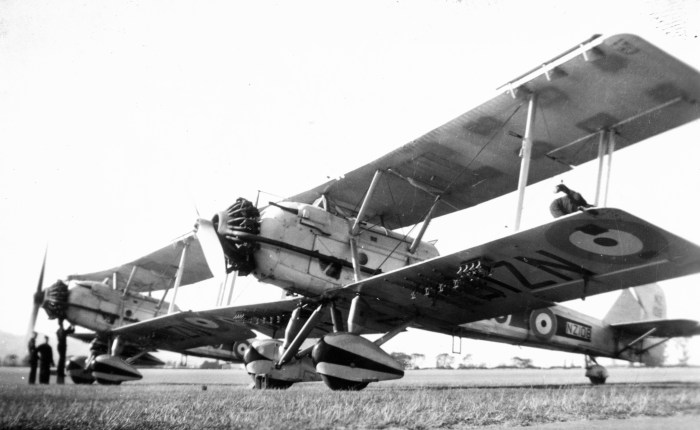
Header Image: A Line up of two Vickers Vildebeests of the Royal New Zealand Air Force at RNZAF Station Wigram in the late-1930s. Vildebeest NZ108 is in the foreground. The flashes on the fuselage and wheel spats are blue. (Source: Air Force Museum of New Zealand)

#BookReview – John Houbolt: The Unsung Hero of the Apollo Moon Landings

#BookReview – John Houbolt:  The Unsung Hero of the Apollo Moon Landings

Reviewed by Dr Brian Laslie

William F. Causey, John Houbolt:  The Unsung Hero of the Apollo Moon Landings. West Lafayette, Indiana: Purdue University Press, 2020. Notes. Bibliography. Index. Hbk. 347 pp.

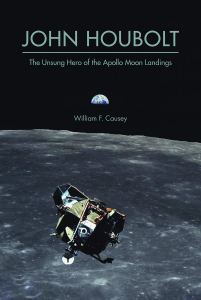
81lFIEb7VBL

There has been no cooling in the publication of space-related material in the aftermath of the Apollo 11 50th Anniversary. Partially in response to NASA’s returning astronauts to space from American soil this year and partially in response to an undeniable zeitgeist, NASA is enjoying renewed popular support. This provides an excellent opportunity for the publication of further scholarship about the history of the organisation. Academic presses (Florida, Nebraska, and Purdue) have been working hard to expand, and further our understanding of not only crewed exploration of the cosmos, but also the choices made in advance of rockets leaving the launch pad. To that end, Purdue University has recently published John Houbolt:  The Unsung Hero of the Apollo Moon Landings by William F. Causey. Causey’s Houbolt examines NASA’s decision-making process through the lens of an individual. This approach places emphasis on the members of NASA–this is their story and not the story of the astronauts riding rockets. That being said, Causey’s book is no less amazing than the stories of the astronauts themselves and by pulling back the curtain, Causey deftly reveals the backstory and offers a fresh look at how NASA ultimately decided the method that would lead to footprints on the moon.

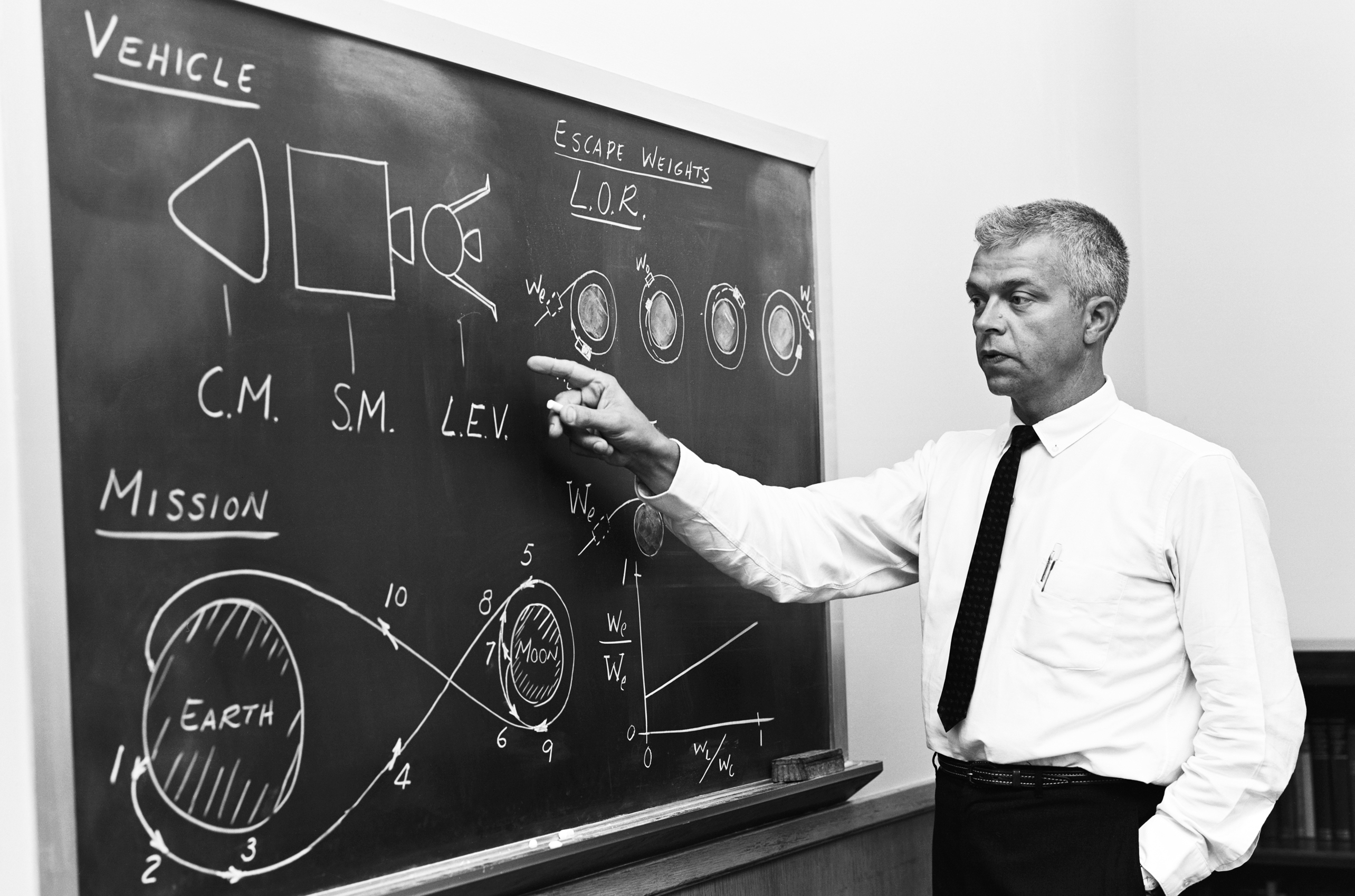
My introduction to the mind of John Houbolt, and I would wager some our readers as well, came in the form of the HBO mini-series From the Earth to the Moon (based in part off the book A Man on the Moon: The Voyages of the Apollo Astronauts by Andrew Chaikin). In the episode ‘Spider,’ Houbolt is shown as the ‘voice in the wilderness’ who bravely stood against senior NASA leaders to preach the gospel of Lunar Orbit Rendezvous (LOR) as the preferred method of sending astronauts to the moon.

Causey’s work demonstrates that the history of LOR is richer than just Houbolt’s contributions and the entire work is as much a history of NASA’s early years and its decision-making process as it is about Houbolt himself. This is a book about how we got to the moon, or rather, about how NASA decided how we would get to the moon. Causey’s work covers the period from roughly 1957 to 1963 and represents a comprehensive and readable history of NASA’s early years, but one that still brings a fresh and nuanced perspective to a familiar story.

3-john_c._houbolt_-_gpn-2000-001274b
On 24 July 1962, Dr John Houbolt explained his lunar orbit rendezvous concept for landing on the Moon. His approach called for a separate lander which saved weight from the ‘direct ascent’ design in which the entire spacecraft landed on the lunar surface. (Source: NASA)

This is a vital book as it refocuses attention on the thousands of people who aided our ascension to deep space for the first time. While the written record has generally favoured the importance of the astronauts themselves in numerous books, biographies, and autobiographies, the recent trend in focus on the individuals behind the scenes has improved our understanding of the golden age of NASA and crewed spaceflight. Causey’s biography of Houbolt now sits alongside other recent publications including Sonny Tsiao’s Piercing the Horizon: The Story of Visionary NASA Chief Tom Paine, Richard Jurek’s The Ultimate Engineer: The Remarkable Life of NASA’s Visionary Leader George M. Low and Rick Houston and Milt Heflin’s Go, Flight! The Unsung Heroes of Mission Control, 1965-1992. This is important for several reasons, but perhaps most of all because these books continue to expand our understanding of NASA as an organisation composed of thousands and not as one whose principal employees are those at the end of propellant-fueled rockets.

Causey writes with a deftness and a flair that keeps the narrative moving forward even when the subject matter is the Space Task Group, the Goett Committee, the New Projects Panel or any number of other bureaucratic organisations in the NASA hierarchy. This work never feels like you are reading the history of an organisational board meeting, but adroitly describes how the workers at the various levels of NASA made the important decisions necessary that made the entire Apollo program possible. If you are picking up this work, there stands a good chance you have more than a passing understanding of NASA’s history and organisation, and while you might be familiar with the LOR story, Causey’s telling through the lens of Houbolt is worth a read even if you think you have read it all already and neither the scholar nor the buff will be disappointed. This is an essential and much-needed addition to the history of the Apollo Program. Causey’s John Houbolt:  The Unsung Hero of the Apollo Moon Landings is a critical and stimulating look at the individual of John Houbolt, but also at NASA writ large.

Dr Brian Laslie is a US Air Force Historian and currently the Deputy Command Historian at North American Aerospace Defense Command (NORAD) and United States Northern Command (USNORTHCOM). A 2001 graduate of The Citadel and a historian of air power studies, he received his PhD from Kansas State University in 2013. His first book The Air Force Way of War (2015) was selected for the Chief of Staff of the Air Force’s and the Royal Air Force’s Chief of the Air Staff professional reading lists. He is also the author of Architect of Air Power: General Laurence S. Kuter and the Birth of the US Air Force.  He lives in Colorado Springs. He can be found online at www.BrianLaslie.com

Header Image: A view of the Apollo 11 lunar module Eagle as it returned from the surface of the moon to dock with the command module Columbia. A smooth mare area is visible on the Moon below and a half-illuminated Earth hangs over the horizon. The lunar module ascent stage was about 4 meters across. (Source: NASA)

#BookReview – Dear Neil Armstrong: Letters to the First Man from All Mankind

#BookReview – Dear Neil Armstrong: Letters to the First Man from All Mankind

Reviewed by Dr Brian Laslie

James R. Hansen, Dear Neil Armstrong: Letters to the First Man from All Mankind. West Lafayette, IN: Purdue University Press, 2019. Appendix. Notes. Hbk. 400 pp.

Neil Armstrong

Twenty-nineteen represented, for me, a golden age of space nostalgia. Twenty-eighteen through to 2022 represents the fiftieth anniversaries of the 11 human-crewed Apollo flights. Everywhere you turn you see someone in some NASA paraphernalia. Books on the Apollo program and NASA writ large are taking over the Science sections at local bookstores and larger chain stores. The government organisation is enjoying an undeniable resurgence and moment of ‘coolness,’ though I ponder whether anyone under the age of 40 uses that term. Perhaps no single individual enjoyed a greater resurgence in this regard over the last two years than the first man on the moon, Neil A. Armstrong. Twenty-eighteen saw the release of the film First Man, based on the authorised biography of the same name by James R. Hansen. The fiftieth anniversary of the Apollo 11 mission witnessed the release of CNN Film’s Apollo 11 documentary and those in Washington DC were even able to witness the Saturn V launch from the Washington Memorial.

Hansen returns to his topic with the release of Dear Neil Armstrong: Letters to the First Man from All Mankind. At its core, the book is simply a collection of letters, a representative sample of the hundreds of thousands of letters that were sent to Armstrong before, during, and after his mission; a series of letters that lasted until his death in 2012. This correspondence is now held in the Purdue University Archives as part of Armstrong’s papers. Hansen indicated that this book is the first of at least two books covering the trove of correspondence now housed at Purdue University.

Hansen’s preface included the words given to Armstrong and Lunar Module Pilot Edwin Aldrin printed on a small silicon-disc and left on the surface of the moon. Much like the rest of the book, Hansen only included samples. From Félix Houphouët-Boigny, President of the Ivory Coast (p. xiv), ‘I especially wish that he would turn towards our planet Earth and cry out how insignificant the problems which torture men are when viewed from up there.’ John Gorton, Prime Minister of Australia (p. xv), chose to quote Lord Tennyson’s poem Ulysses ‘to strive, to seek, and to find, and not to yield.’ The disc remains at the foot of the Lunar Module Descent Stage where Aldrin dropped it while climbing back into the Module.

Apollo_11_ticker_tape_parade_1
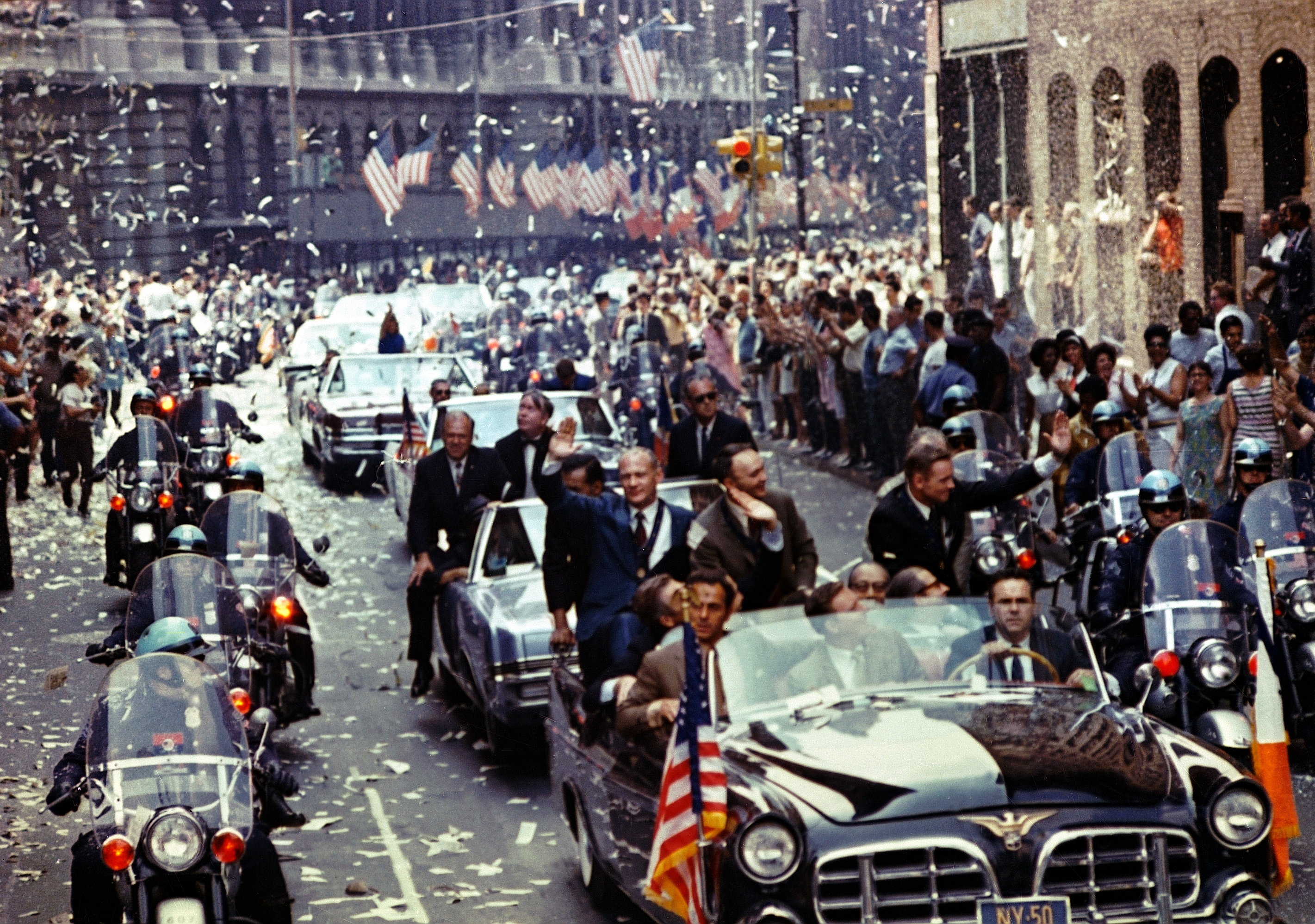
A ticker tape parade for the Apollo 11 astronauts in Manhattan, New York City on the section of Broadway known as the ‘Canyon of Heroes.’ Pictured in the lead car, from the right, are astronauts Neil A. Armstrong, Michael Collins and Edwin E. Aldrin, Jr. (Source: Wikimedia)

The book is divided into thematic chapters: ‘First Word,’ presents correspondence that poured in during the weeks leading up to the launch of Apollo 11 and deals with letters giving Armstrong advice on what to say. ‘Congratulations and Welcome Home’ samples some of the hundreds-of-thousands cards and messages that poured into Armstrong’s inbox in the immediate aftermath of the mission from military service secretaries, general officers, old friends, and civic leaders. Chapter three entitled ‘The Soviets,’ contains selections from the letters that came in from behind the Iron Curtin including from leaders and citizens of Poland, Serbia, Romania, Czechoslovakia, Yugoslavia, and Hungary. Congratulations from behind the wall also came from fellow Soviet Cosmonauts. Perhaps no better chapter demonstrates how the Apollo 11 mission was viewed as a globally unifying event. ‘For all Mankind’ contains the letters coming in from women, men, and children of all ages all around the globe.

The final three chapters go especially well together: Many Americans wanted a piece of what they considered to be their man on the moon and these letters are found in the chapters ‘From all America,’ ‘Reluctantly Famous,’ and ‘The Principled Citizen.’ Many of the appeals were harmless requests for autographs and at higher levels requests for appearances, but some requests were outright bizarre. For example, one letter requested an impression of Armstrong’s foot in clay (p. 161).  Hansen has done a superb job of providing the breadth of requests made to Armstrong in the years following his return to Earth. The simple fact remains that too many of us asked for too much of this man who simply could not respond and give of all he was asked to do.

It would be remiss if I did not ponder what this book tells us about air and space power? As I poured through the selected letters and pondered the many thousands more that Hansen could not include, it became clear that there was and remains to this day something ephemeral and special about crewed spaceflight. The book brought to mind the importance of Joseph Corn’s The Winged Gospel: America’s Romance with Aviation (1983); however, it also demonstrated that the romance with crewed spaceflight is not unique to America at all. In America and around the world, the love and excitement for space exploration were undoubtedly not monolithic, but Armstrong became the embodiment for those who recognised the crewed Apollo missions as something significant and special in the history of mankind.

Dear Neil Armstrong will appeal to those seeking a deeper understanding of what the Apollo program meant, much like Roger D. Launius’ magnificent Apollo’s Legacy, but Hansen’s reaches us on a deeper personal level here. Hansen’s First Man is and will remain, the definitive biography of Armstrong, but the collection Hansen has put together is a must-have for those seeking to understand the more profound social and cultural meaning of Apollo, namely how the world viewed this particular man and what it desired of him in return. As Hansen more eloquently reflected (p. xxiii), ‘[c]ertainly it is my own conclusion that the letters ultimately tell us more about ourselves than they do about Neil.’

Dr Brian Laslie is a US Air Force Historian and currently the Deputy Command Historian at North American Aerospace Defense Command (NORAD) and United States Northern Command (USNORTHCOM). A 2001 graduate of The Citadel and a historian of air power studies, he received his PhD from Kansas State University in 2013. His first book The Air Force Way of War (2015) was selected for the Chief of Staff of the Air Force’s and the Royal Air Force’s Chief of the Air Staff professional reading lists. His recently published Architect of Air Power: General Laurence S. Kuter and the Birth of the US Air Force.  He lives in Colorado Springs. He can be found on Twitter at @BrianLaslie.

Header Image: Neil Armstrong is seen here next to the X-15 ship #1 after a research flight. Armstrong made his first X-15 flight on November 30, 1960, in the #1 X-15. He made his second flight on December 9, 1960, in the same aircraft. This was the first X-15 flight to use the ball nose, which provided accurate measurement of airspeed and flow angle at supersonic and hypersonic speeds. The servo-actuated ball nose can be seen in this photo in front of Armstrong’s right hand. The X-15 employed a non-standard landing gear. It had a nose gear with a wheel and tire, but the main landing consisted of skids mounted at the rear of the vehicle. In the photo, the left skid is visible, as are marks on the lakebed from both skids. Because of the skids, the rocket-powered aircraft could only land on a dry lakebed, not on a concrete runway.