Looking Back at Iraqi Air Defences during Operation DESERT STORM

Looking Back at Iraqi Air Defences during Operation DESERT STORM

By Colonel Mandeep Singh

Iraqi forces stormed into Kuwait on 2 August 1990 and, after a seven-month occupation of its southern neighbour, was defeated by the United States-led coalition forces consisting of troops from 39 countries. A five-week air offensive preceded the ground offensive on 24 February 1991 to put down the Iraqi air defences and prepare the battlefield for a ground offensive. The air war during DESERT STORM is generally considered a resounding success, with the Iraqi air defences failing to offer any significant opposition. Thomas Withington’s recent insightful article ‘Electric Avenue: Electronic Warfare and the battle against Iraq’s air defences during Operation Desert Storm’ is similar but misses out on some crucial aspects.

This article aims to offer a counter view to Withington’s and put the performance of Iraqi air defences in perspective. It also must be noted that Iraq had the sixth largest air force globally, with about 915 aircraft.[1] However, it put up only minimal opposition, and only the ground-based air defences (GBAD) offered any real resistance to the coalition air forces. This article thus focuses mainly on GBAD and discusses three fundamental issues. First, were Iraqi air defences as lethal and effective as projected before the war? Second, how effective were the suppression of enemy air defences (SEAD) operations conducted by the coalition air forces and did they achieve the stated goal(s)? Finally, how did the Iraqi air defences perform during the war?

The commonly held view is that the Iraqi air defences were lethal and ‘potentially ferocious.’[2] This was echoed in Withington’s article, who quoted the following from an official report by the US Department of Defence on DESERT STORM:

The multi-layered, redundant, computer-controlled air defence network around Baghdad was denser than that surrounding most Eastern European cities during the Cold War, and several orders of magnitude greater than that which had defended Hanoi during the later stages of the Vietnam War.

This claim about the lethality and ferocity of Iraqi air defences needs to be analysed to see if it has any merit. The Iraqi integrated air defence system (IADS) comprised a mix of Soviet and Western air defence systems. While the surface-to-air missiles (SAMs) were predominantly of Soviet origin, the heart of the IADS, called KARI, was built by the French defence contractor, Thomson-CSF. It was designed primarily to provide air defence against Israel and Iran and had a severe limitation: it could only manage 20 to 40 hostile aircraft. Iraq had over 500 radars located at about 100 sites, but the radar layout did not afford comprehensive coverage with a bias toward east and west. Most radars could not detect stealth aircraft barring the limited capability of the P-12 and P-18 radars and the six Chinese (Nanjing) low-frequency radars.[3]

Iraqi GBAD included SAM and anti-aircraft artillery (AAA) guns. The missiles included the Soviet SA-2, SA-3, SA-6 and SA-8 and the Franco-German Roland I/II missiles. With a range limitation of about 40km, even SA-2s and SA-3s cannot be considered strategic air defence systems, while the SA-8s and the Rolands were purely tactical SAM systems. The SA-6 was used for the tactical role and to fill gaps in the strategic SAM layout. The 58 SAM batteries notwithstanding, Iraq had no strategic SAM system, and with the available SAM batteries, it was capable of limited and thin air defence cover over its strategic targets.
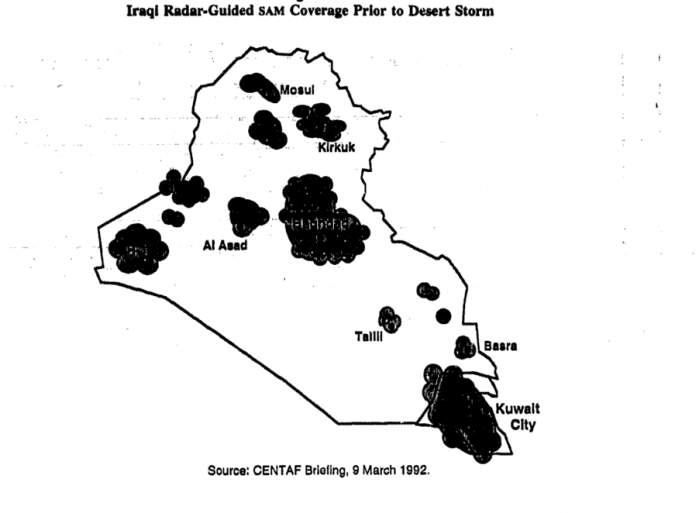
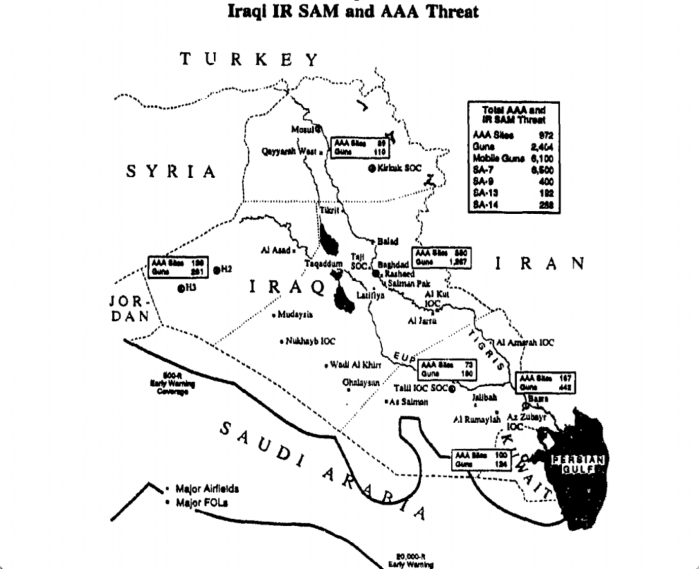
Sam Coverage
(Source: Barry Watts and Thomas Keaney ‘Effects and Effectiveness in Gulf War Air Power Survey – Volume II: Operations and Effects and Effectiveness (Washington DC: Department of the Air Force, 1993), p. 134.) 

With the country’s material assets widely dispersed; no attempt was made to defend all of them. Instead, the SAMs and AAA were concentrated on defending selected areas or sectors like Baghdad, Basra, the Scud-launching sites in western Iraq, and the northern oil fields only, with the defence of the capital given the foremost priority. With a concentration of the SAMs and AAA in select areas, Iraq had adopted a point defence system.

Fifty-eight SAM batteries, almost half the total 120 batteries, were deployed to defend Baghdad alone and 1,300 AA guns. The other areas with these missile systems were Basra with fifteen and Mosul/Kirkuk with sixteen batteries. In addition, the airfield complex of H-2/H-3 had 13 SAM batteries, and the Talil/Jalibah complex had three.[4]

Location SA-2 SA-3 SA-6 SA-8 Roland Total
Mosul/Kirkuk 1 12 0 1 2 16
H-2/H-3 1 0 6 0 6 13
Talil/Jalibah 1 0 0 0 2 3
Basrah 2 0 8 0 5 15
Baghdad 10 16 8 15 9 58
IR SAM
(Source: Williamson Murray, ‘Operations’ in Gulf War Air Power Survey – Volume II: Operations and Effects and Effectiveness (Washington DC: Department of the Air Force, 1993), p. 82.)

Even in Baghdad, the defence systems did not necessarily protect downtown Baghdad at a higher threat level than the rest of the overall metropolitan area, as the SAM sites were dispersed throughout the Baghdad area. The United States Air Force (USAF)’s claim that downtown Baghdad was where air defences are uniquely dense or severe was thus without merit.[5]

The SA-2s and SA-3s, being vintage missiles, were supplemented by the newer SA-6s with a battery deployed at essential sites. Although the presence of SA-6s at selected locations beefed up the air defences, it had an unintended effect that with the SA-6s moving back from the front-line units, the forward army units were left devoid of the most effective SAM in the inventory. The Iraqis captured several examples of the US HAWK missile system when they invaded Kuwait. The HAWK missile, with a comparable range, would have been an effective deterrent, but as the Iraqis did not have the technical expertise to operate it, it was never not used.[6] Another drawback of the Iraqi IADS was that the 8,000 or so anti-aircraft guns were reportedly not integrated with the overall air defence system and were designed to operate independently.[7]
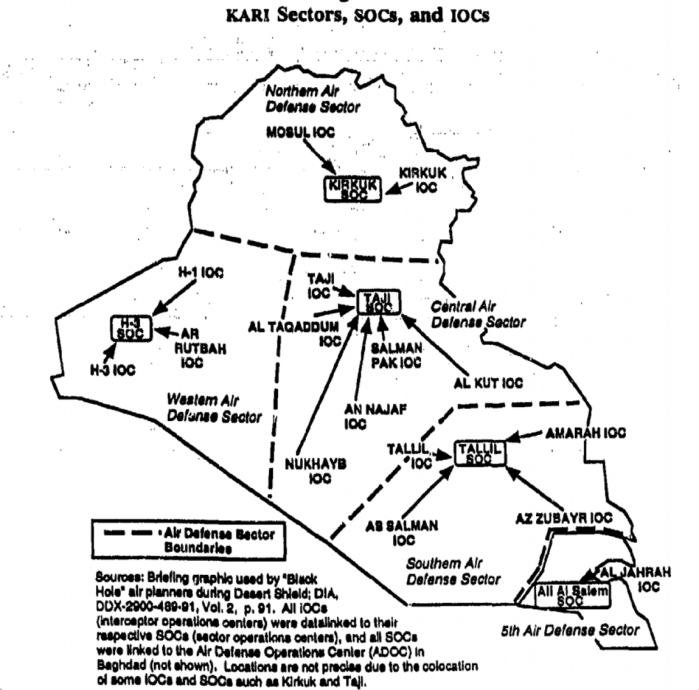
KARI
(Source: Barry Watts and Thomas Keaney ‘Effects and Effectiveness’ in Gulf War Air Power Survey – Volume II: Operations and Effects and Effectiveness (Washington DC: Department of the Air Force, 1993), p. 132.)

The air defence network was thus far from lethal and was not designed to work against a massive air assault as it was subjected to during DESERT STORM. Instead, it had limited capabilities and was optimised only to take on threats from two axes. These were from Iran to the east or from Israel to the west and did not cater for any significant threat from the south or the north. Notably, only the overall assessment of the Iraqi IADS by the US Navy’s Strike Projection Evaluation and Anti-Air Research (SPEAR) Department was more realistic than other claims as it stated that:

[t]he command elements of the Iraqi air defence organisation (the interceptor force, the IADF [Iraqi Air defence Force], as well as Army air defence) are unlikely to function well under the stress of a concerted air campaign.[8]

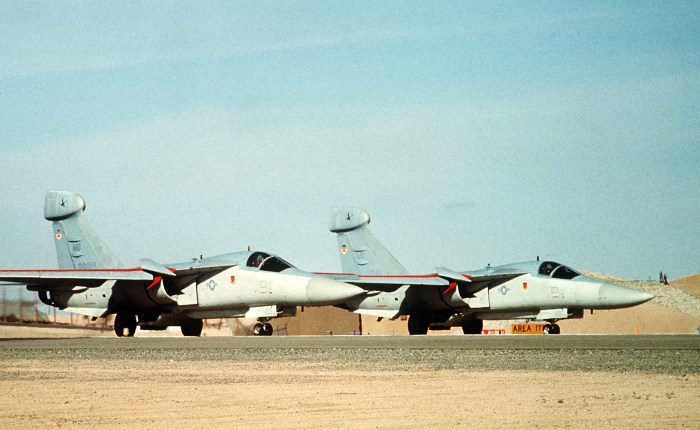
The coalition forces launched DESERT STORM at 2:38 on 17 January 1991 when Task Force Normandy struck the two Iraqi radars codenamed Nebraska and Oklahoma, firing 27 Hellfire missiles, 100 rockets and 4,000 rounds of 30mm ammunition. A corridor 30 kilometres wide was now available for the follow-on missions. Next were the eight USAF F-15E Strike Eagles that targeted the local air defence command and control centre, further degrading the network and facilitating the strike by the F-117s preceded by three EF-111 Ravens. Seventeen F-117s were tasked to deliver 27 laser-guided bombs on 15 Iraqi air defence system-related targets. Contrary to initial claims related to the effectiveness of the F-117, only nine of the 15 targets were hit, and eight remained operational even after the air strikes.[9] One of the main targets, Baghdad’s central air defence operations centre was not damaged and remained operational.[10] The F/A-18 Hornets armed with AGM-88 high-speed anti-radar missiles (HARMs) fared not much better as about half of the 75 HARMs fired hit their targets.[11]

The performance of Iraq’s air defence system was effective on Day 1 as they shot down six aircraft: all except one by GBAD. The AAA shot down two aircraft (one F-15 and a Royal Air Force (RAF) Tornado GR.1) while the SAMs claimed three. An Iraqi MiG-25 shot down one F/A-18.[12] GBAD damaged a dozen more aircraft.

The Coalition air forces lost three aircraft to ground fire over 2,250 sorties on Day 2 as one aircraft each was claimed by AAA (a US Navy A-6) and SAM (a US Marine Corps OV-10), while the cause of loss of an Italian Tornado GR.1 could not be ascertained.[13] The next day, several missions were called off due to bad weather though the strikes against Scud launchers continued during the day. The Iraqi SAMs shot down two United States F-16s over Baghdad and another F-15. The RAF and Royal Saudi Air Force each lost two Tornadoes, while a USAF F-4 crashed after being hit by AAA. The air operations on 20 January were scaled down due to continued bad weather, and with losses mounting, especially to AAA, the USAF imposed a minimum altitude to reduce attrition. The Iraqi air defences, for their part, shot down two Coalition aircraft; a United States Navy F-14, downed by an SA-2 and an RAF Tornado, besides damaging three more. The RAF lost a Tornado to ground fire, with a USAF F-15 also being hit by a SAM.

On 23 January, coalition air forces claimed to have destroyed 19 Iraqi aircraft thus far and achieved air superiority over Iraq. The losses to Iraqi air defences were 15 aircraft, and AAA and hand-held SAMs’ unexpected intensity of ground fire forced Coalition aircraft to adopt higher-altitude delivery tactics. During the second week, the Iraqi air defences could not put up any concerted opposition. It was not until 28 January that they claimed their next kill when a SAM shot down a US Marine Corps AV-8B, although several Coalition aircraft was hit by AAA fire. KARI was badly fragmented by the end of week two, and only three of 16 Intercept Operations Centres (IOCs) were reported to be fully operational. Coalition losses during week three were again relatively low, with only three aircraft (an A-10, an AC-130 and an A-6E) lost to Iraqi air defences. The following week, Iraqi air defences shot down only three Coalition aircraft – two AV-8Bs and a Saudi F-5E.

The radar-guided SAMs had been targeted repeatedly, but the Iraqis sparingly continued to launch them. In one such instance, an SA-3 shot down an RAF Tornado GR.1 on 14 February. The Iraqis managed to shoot down five aircraft during week five, including two A-10s on the same day (15 February) by SA-13s. This forced the restricted use of A-10s in high-threat areas. As the war entered its final phase with the Coalition aircraft attacking from lower altitudes, the losses went up with Iraqi air defences shooting down eight aircraft during this last week of the war: three AV-8Bs, one OV-10, one OA-10, one A-10, and two F-16s.[14] This marked the second-highest weekly loss rate since the beginning of the war.

During the ground offensive, Iraqi air defences did not fight as they folded up tamely against the coalition air forces. During the whole campaign, a total of 38 coalition aircraft were lost to Iraqi air defences. At the same time, a further 48 aircraft were damaged in combat, totalling 86 combat casualties. Most losses were to infra-red guided SAMs, which claimed 13 aircraft and damaged 15 more, while the radar-guided SAMs shot down ten aircraft and damaged four. AAA caused the lowest losses at nine aircraft, although it damaged 24 more. The remaining losses were to accidents or technical reasons, including, for example, electrical malfunction. Considering the ‘lost’ and ‘damaged’ aircraft, the maximum casualties were due to AAA as it claimed 33 aircraft (38 per cent of the total losses), with the infra-red guided SAMs accounting for 28 aircraft (31 per cent). Only 16 per cent of the casualties were attributed to radar-guided SAMs.

The low kill rate by the radar SAMs is attributable to several factors, the primary one being the SEAD missions conducted by Coalition air forces which forced the radar SAMs to shut down most of the operations. In addition, all the radar SAMs held by Iraq were vintage Soviet-era missiles that had been used in combat earlier – there were no new weapons, like the SA-6s in the Yom Kippur War, which could have posed difficulties for the Coalition air forces.
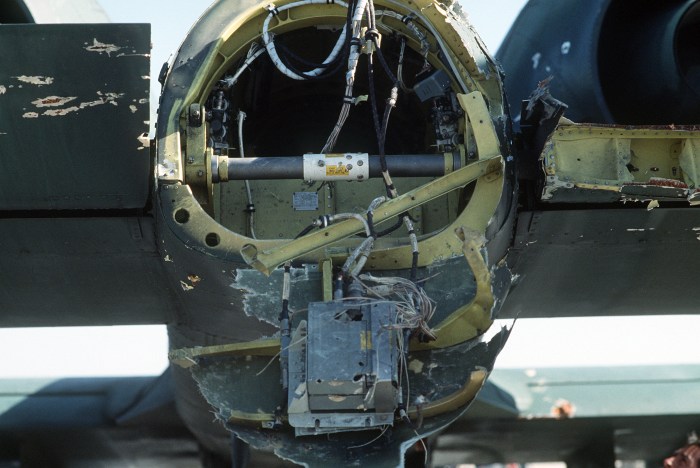
DESERT STORM
A close-up view of a damaged section of an A-10A Thunderbolt II of the 23rd Tactical Fighter Wing. The aircraft sustained damaged when an SA-16 missile exploded near it during Operation DESERT STORM, 15 February 1991. (Sorce: Wikimedia)

There was a significantly higher daily casualty rate in the first five days of the war, during which 31 aircraft casualties occurred (36 per cent of the total and an average of 6.2 per day), compared to the following 38 days, with a total of 55 more casualties (an average of 1.45 per day). Losses to radar-guided SAMs fell to nearly zero after day five, accounting for 29 per cent (nine out of 31) of total casualties by then. They accounted for just nine per cent (five out of 55) of all aircraft casualties in the remainder of the war. It is apparent, therefore, that by the end of day five of the air campaign, radar SAMs had mainly been eliminated as an effective threat to coalition aircraft. Moreover, in the first three days of the war, some aircraft (B-52s, A-6Es, GR-1s, and F-111Fs) attacked at very low altitudes, where they were more vulnerable to low-altitude defences. After the imposition of a minimum attack level of about 12,000 feet, the losses reduced, resulting in much less accuracy with unguided weapons.

Iraq managed to maintain a fair degree of air defence capability throughout the war. The primary reason for this was KARI, which expanded the responsibilities of various nodes and developed local back-up air-defence networks using different communication networks over combat phone lines and wire between multiple stations. These back-up networks could control local air defences, even when the communication to the central network was down. These back-up systems used ground observers passing information over voice and data channels for information on Coalition aircraft. Radars associated with the Roland or SA-8 would be used to gain information about the altitude of inbound aircraft. The radars would be brought online for short 15-second bursts to ensure survivability in a hostile environment. The SAMs were sometimes fired without using the target-tracking radars to prevent being targeted by the anti-radar missiles. Optical tracking mode was also used while firing the SAMs.

At the war’s end, Iraq’s air defence was far from finished. According to Anthony Cordesman of Washington’s Center for Strategic and International Studies, Iraq retained at least 380 Soviet-made surface-to-air missile launchers, about 80 French-made Roland units and ‘large numbers’ of portable Soviet-made anti-aircraft systems, not counting the hundreds of AA guns.[15] After initially claiming almost the complete destruction of the Iraqi air defence network, the claims were revised as the operations progressed. As USAF Colonel David Deptula, one of the architects of the air campaign, put it in 1996, ‘We didn’t go in there to eviscerate the whole network. The aim was to suppress their defences.’[16]

The Soviet reaction to the Gulf War was significant as the entire Iraqi IADS consisted of Soviet SAMs. In an understatement, Marshal Dmitri Yazov, the Soviet Minister of Defence, admitted that Iraq’s air defences ‘failed in most cases.’[17] Commenting on the initial attack on the IADS, Lieutenant General V. Gorbachev, Dean of the faculty at the General Staff Academy, opined that:

‘The Iraqi air defence system was paralysed by powerful electronic warfare devices. Command and control of troops was overwhelmed in the first few minutes.’[18]

Gorbachev also added:

[a]s far as Soviet equipment is concerned, it is not so much a problem, I think, as the people operating it. Iraqi military professionalism is not, as we can see, up to the mark.’[19]

Reinforcing this view, the Soviets believed that, as the air defence systems employed by the Iraqis were able to down most types of Coalition aircraft used, it suggested that the problem was more one of staffing than technology. It also reinforced an emerging view that modern wars demand well-trained professional soldiers to man and maintain it, not a large conscript army.[20]

After DESERT STORM, Iraq’s air defence system continued to harass the Coalition aircraft, defying the restrictions imposed by the no-fly zone. During Operation DESERT FOX, Iraq engaged Coalition aircraft more than 1,000 times over three years and fired nearly 60 SAMs.[21] The Iraqis even fired unguided rockets at the aircraft to harass them. The Iraqi IADS remained operational throughout and was never ‘put down.’

The Iraqi IADS had limited capabilities and was not as lethal or effective as initially projected; however, its capabilities had been exaggerated in most of the assessments conducted before DESERT STORM. Considering its limited capabilities against a modern air force, aggravated by poor training standards, it performed reasonably well and inflicted a fair amount of attrition. On the other hand, the SEAD operations by coalition air forces were not as effective as claimed during the operations. Even as the surveillance network and radar-guided SAMs were suppressed, the Iraqi IADS continued to function, albeit with reduced efficiency and continued to attrite. It must be remembered that GBAD cannot be suppressed entirely and will continue to inflict losses. It was so during DESERT STORM and will remain so in future conflicts.

Colonel Mandeep Singh, a veteran air defence gunner, has a Masters in Defence and Strategic Studies. He has contributed several articles on air power and air defence for specialist journals. His books include Air Defence Artillery in Combat, 1972 to the Present: The Age of the Surface-to-Air Missiles (2020) published by Air World.

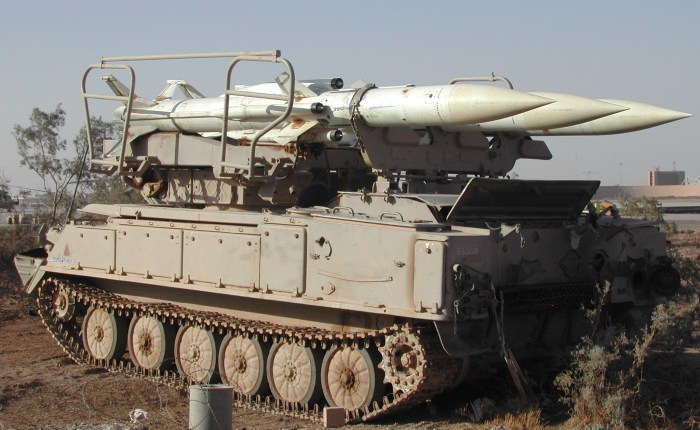
Header image: An Iraqi SA-6 Gainful low-to-medium altitude surface-to-air-missiles on its transporter-erector-launcher. This system was captured by US forces in 2006; however, during the first Gulf War, Iraq operated a number of these systems. (Source: Wikimedia)

[1] The Iraqi Air Force had a mix of combat aircraft, ranging from 190 advanced Mirages, MiG-25s, MiG-29s, and Su-24s to about 300 moderate-quality MiG-23s, Su-7s, Su-25s, Tu-16s and Tu-22s. Most of the air force however comprised of older aircraft like the MiG-17s and MiG-21s.

[2] ‘Conduct of the Persian Gulf War,’ Final Report to the Congress (Washington, DC : Dept. of Defense, 1992), p. 15.

[3] The P-18 radar, which uses metre-length waves in the Very High Frequency (VHF) bandwidth, can detect targets at a greater range than centimetre or millimetre wave radar which stealth aircraft are optimised against. It was a P-18 radar of the Yugoslav Army that detected an F-117 Nighthawk during the Kosovo air war, which led to its shooting down by an SA-3 missile. Similarly, P-12 radar also operates in VHF and can detect stealth aircraft. Kenneth Werrell, in his book Archie to SAM, mentions that Iraq had low-frequency radars though this is not mentioned by any other source. See, Kenneth Werrell, Archie to SAM: A Short Operational History of Ground-Based Air Defense, second edition (Maxwell, AL: Air University Press, 2005), p. 218. Michael Gordon and Bernard Trainor, The Generals’ War: The Inside Story of the Conflict in the Gulf (New York: Little Brown, 1995), p. 105; Williamson Murray, ‘Operations’ in Gulf War Air Power Survey – Volume II: Operations and Effects and Effectiveness (Washington DC: Department of the Air Force, 1993), pp. 77-82.

[4] Iraq had 7,000 SAM and 6,000 AA Guns with the Republican Guard had its own air defence System with about 3,000 AA Guns and 60 SAM Batteries. See: Anthony Tucker-Jones, The Gulf War: Operation Desert Storm 1990-1991 (Barnsley: Pen & Sword Books, 2014), p. 40.

[5] United States Air Force, ‘Reaching Globally, Reaching Powerfully: The United States Air Forces in the Gulf War’ (United States Air Force, 1991), p. 5.

[6] Richard Blanchfield et al, Part I – Weapons, Tactics, and Training’ in Gulf War Air Power Survey – Volume IV: Weapons, Tactics, and Training and Space Operations, directed by Eliot Cohen (Washington DC: Department of the Air Force, 1993), p. 15.

[7] Tucker-Jones, The Gulf War, p. 40.

[8] ‘Iraqi Threat to U.S. Forces,’ Naval Intelligence Command, Navy Operational Intelligence Center, SPEAR Department, December 1990, p. 3-14.

[9] ‘Operation Desert Storm: Evaluation of the Air Campaign’ (Washington DC: General Accounting Office, 1997), p. 137.

[10] ‘Operation Desert Storm: Evaluation of the Air Campaign,’ p. 137.

[11] Jim Corrigan, Desert Storm Air War: The Aerial Campaign against Saddam’s Iraq in the 1991 (Guilford, CT: Stackpole Books, 2017), p. 59.

[12] Lon Nordeen, Air Warfare in the Missile Age, second edition (Washington DC: Smithsonian Institution, 2010), pp. 413-4.

[13] James P. Coyne, Air Power in the Gulf (Arlington, VA: Air Force Association, 1992), pp. 67-71.

[14] ‘Conduct of the Persian Gulf War: Final Report to Congress, April 1992,’ (Washington, DC: Dept. of Defense, 1992), p. 197.

[15] Bradley Graham, ‘Gulf War left Iraqi Air Defence Beaten, Not Bowed,’ Washington Post, 6 September 1996.

[16] Graham, ‘Gulf War left Iraqi Air Defence Beaten, Not Bowed.’

[17] Quoted in ‘Outgunned Weaponry is Under Fire in Kremlin,’ The Irish Independent, 2 March 1991, p. 6. See also Alexander Velovich, ‘USSR Demands Post-Gulf Air Defense Review,’ Flight International, 13-19 March 1991, p. 5.

[18] Benjamin S. Lambeth, ‘Desert Storm and Its Meaning: The View from Moscow,’ A RAND Report (Santa Monica, CA: RAND Corporation, 1992), p. 23.

[19] Lambeth, ‘Desert Storm and Its Meaning,’ pp. 23-4, fn. 10.

[20] Daniel Sneider, ‘Soviets Assess Their Arsenal After Iraq’s Defeat in Gulf,’ The Christian Science Monitor, 8 March, 1991, p. 1.

[21] Tucker-Jones, The Gulf War, p. 201.

#ResearchResources – Recent Articles and Books (February 2022)

#ResearchResources – Recent Articles and Books (February 2022)

Editorial note: In this series, From Balloons to Drones highlights research resources available to researchers. Contributions range from discussions of research at various archival repositories to highlighting new publications. As part of this series, we are bringing you a monthly precis of recent articles and books published in air power history. This precis will not be exhaustive but will highlight new works published in the preceding month. Publication dates may vary around the globe and are based on those provided on the publisher’s websites. If you would like to contribute to the series, please contact our Editor-in-Chief, Dr Ross Mahoney, at airpowerstudies@gmail.com or via our contact page here.

Books

Douglas C. Dildy, “Big Week” 1944: Operation ARGUMENT and the Breaking of the Jagdwaffe (Oxford: Osprey Publishing, 2022).

A rigorous new analysis of America’s legendary ‘Big Week’ air campaign which enabled the Allies to gain air superiority before D-Day.

The USAAF’s mighty World War II bomber forces were designed for unescorted, precision daylight bombing, but no-one foresaw the devastation that German radar-directed interceptors would inflict on them. Following the failures of 1943’s Schweinfurt-Regensburg raids, and with D-Day looming, the Allies urgently needed to crush the Luftwaffe’s ability to oppose the landings.

In February 1944, the Allies conceived and fought history’s first-ever successful offensive counter­air (OCA) campaign, Operation Argument or “Big Week.” Attacking German aircraft factories with hundreds of heavy bombers, escorted by the new long-range P-51 Mustang, it aimed both to slash aircraft production and force the Luftwaffe into combat, allowing the new Mustangs to take their toll on the German interceptors. This expertly written, illustration-packed account explains how the Allies finally began to win air superiority over Europe, and how Operation Argument marked the beginning of the Luftwaffe’s fall.

Richard Hallion, Desert Storm 1991: The Most Shattering Air Campaign in History (Oxford: Oxford University Press, 2022).

An expertly written, illustrated new analysis of the Desert Storm air campaign fought against Saddam Hussein’s Iraq, which shattered the world’s fourth-largest army and sixth-largest air force in just 39 days, and revolutionized the world’s ideas about modern air power.

Operation Desert Storm took just over six weeks to destroy Saddam Hussein’s war machine: a 39-day air campaign followed by a four-day ground assault. It shattered what had been the world’s fourth-largest army and sixth-largest air force, and overturned conventional military assumptions about the effectiveness and value of air power.

In this book, Richard P. Hallion, one of the world’s foremost experts on air warfare, explains why Desert Storm was a revolutionary victory, a war won with no single climatic battle. Instead, victory came thanks largely to a rigorously planned air campaign. It began with an opening night that smashed Iraq’s advanced air defense system, and allowed systematic follow-on strikes to savage its military infrastructure and field capabilities. When the Coalition tanks finally rolled into Iraq, it was less an assault than an occupation.

The rapid victory in Desert Storm, which surprised many observers, led to widespread military reform as the world saw the new capabilities of precision air power, and it ushered in today’s era of high-tech air warfare.

David Hobbs, The Fleet Air Arm and the War in Europe, 1939–1945 (Barnsley: Seaforth Publishing, 2022).

For the first time, this book tells the story of how naval air operations evolved into a vital element of the Royal Navy’s ability to fight a three-dimensional war against both the Kriegsmarine and Luftwaffe. An integral part of RN, the Fleet Air Arm was not a large organisation, with only 406 pilots and 232 front-line aircraft available for operations in September 1939. Nevertheless, its impact far outweighed its numbers – it was an RN fighter that shot down the first enemy aircraft of the war, and an RN pilot was the first British fighter ‘ace’ with 5 or more kills. The Fleet Air Arm’s rollcall of achievements in northern waters went on to include the Norwegian Campaign, the crippling of Bismarck, the gallant sortie against Scharnhorst and Gneisenau as they passed through the Channel, air attacks on enemy E-boats in the narrow seas, air cover for the Russian convoys, air attacks that disabled Tirpitz, and strikes and minelaying operations against German shipping in the Norwegian littoral that continued until May 1945. By the end of the war in Europe the FAA had grown to 3243 pilots and 1336 aircraft.

This book sets all these varied actions within their proper naval context and both technical and tactical aspects are explained with ‘thumb-nail’ descriptions of aircraft, their weapons and avionics. Cross reference with the Fleet Air Arm Roll of Honour has been made for the first time to put names to those aircrew killed in action wherever possible as a mark of respect for their determination against enemy forces on, above and below the sea surface which more often than not outnumbered them.

The Fleet Air Arm and the War in Europe completes David Hobbs’ much-praised six-volume series chronicling the operational history of British naval aviation from the earliest days to the present.

Milos Sipos and Tom Cooper, Wings of Iraq: Volume 2 – The Iraqi Air Force, 1970-1980 (Warwick: Helion and Company, 2022).

Officially established on 22 April 1931, around a core of 5 pilots and 32 aircraft mechanics, the Royal Iraqi Air Force was the first military flying service in any Arab country.

Wings of Iraq, Volume 2 tells the story of the Iraqi Air Force between 1970 and 1980. In doing so it examines the air force’s involvement in the October 1973 Arab-Israeli War, and then the showdown with the Iranian-supported Kurdish insurgency in northern Iraq in 1974-1975. These two affairs taught the Iraqis that numbers alone did not make an air force. Correspondingly, during the second half of the 1970s, Baghdad embarked on a project based on full technology transfer from France, which was intended to result in preparing the IrAF for the twenty-first century.

This process hardly began when the new ruler in Baghdad, Saddam Hussein at-Tikriti, led his country into an invasion of neighbouring Iran, embroiling it in a ruinous, eight-year-long war. This volume details the events leading up to the beginning of that war and its opening moves in the air.

Although virtually ‘born in battle’, collecting precious combat experience and playing an important role in so many internal and external conflicts, the Iraqi Air Force remains one of the least known and most misinterpreted military services in the Middle East. Richly illustrated, Wings of Iraq, Volume 2, provides a uniquely compact yet comprehensive guide to its operational history, its crucial officers and aircraft, and its major operations between 1970 and 1980.

#DesertStorm30 – Electric Avenue: Electronic Warfare and the battle against Iraq’s air defences during Operation Desert Storm

#DesertStorm30 – Electric Avenue: Electronic Warfare and the battle against Iraq’s air defences during Operation Desert Storm

By Dr Thomas Withington

In January 1991, a US-led coalition launched Operation DESERT STORM to evict Iraq from Kuwait, which the former had invaded six months earlier. DESERT STORM was a combined operation involving a major air campaign. At the time, Iraq had one of the world’s most sophisticated air defence systems. The radars and communications necessary to spot hostile aircraft and coordinate their engagement were integral to this. As a result, the coalition correctly determined that the air campaign would only succeed by establishing air superiority and supremacy. This would be achieved through an Offensive Counter Air (OCA) campaign against the Iraqi Air Force (IQAF). A crucial part of this was an electronic war waged against Iraqi air defence radars and communications. This article explains the extent to which Iraq’s air defences threatened coalition air power, how the electronic war against these air defences was fought and why they were not able to overcome the coalition’s electromagnetic supremacy.

When Operation DESERT STORM began on the morning of 17 January 1991, Iraq possessed one of the world’s most fearsome Integrated Air Defence Systems (IADS). At 02:38, its demise began. Task Force Normandy, an armada of US Army AH-64A Apache gunships and US Air Force (USAF) MH-53J Pave Low helicopters attacked a group of IQAF radars. These were positioned a few miles behind the midpoint of the Saudi-Iraqi border within the Iraqi 1st Air Defence Sector’s area of responsibility. The radars consisted of P-18 Very High Frequency (VHF), P-15 Ultra High Frequency (UHF) and P-15M2 UHF ground-based air surveillance radars.[1] This attack left a large swathe of Iraq’s southwest airspace without radar coverage. As a result, Iraq’s IADS failed to detect waves of incoming aircraft tasked with hitting strategic targets. These planes followed USAF F-117A Nighthawk ground-attack aircraft which had slipped through Iraqi radar coverage earlier to hit targets in Baghdad.

The Story so Far: From Vietnam to DESERT STORM

The United States had learned about well-operated air defences the hard way during the Vietnam War. Vietnam’s air war saw the United States lose over 3,300 fixed-wing aircraft across all services. Rotary-wing and uninhabited aerial vehicle losses pushed this figure to over 10,000.[2] In addition, the North Vietnamese IADS, consisting of Anti-Aircraft Artillery (AAA) and SA-2 high-altitude Surface-to-Air Missiles (SAMs), reaped a grim toll on American aircraft. The experience led to the development of the USAF’s Wild Weasel concept.

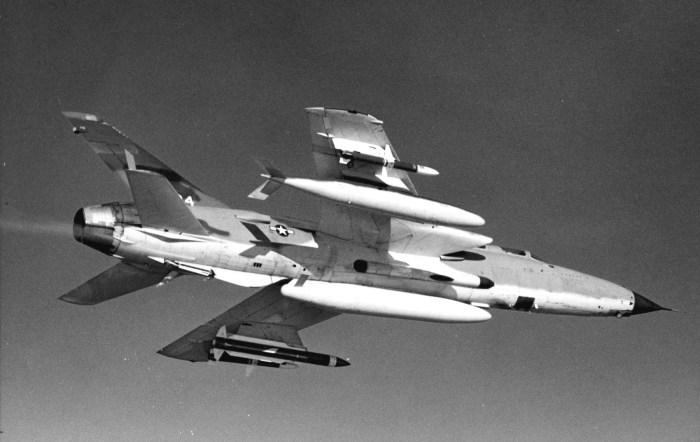
Republic F-105G
Republic F-105G ‘Wild Weasel’ in flight on 5 May 1970. External stores include QRC-380 blisters, AGM-45 Shrike and AGM-78B Standard Anti-Radiation Missile. (Source: Wikimedia)

First seeing service in the summer of 1965, customised F-105F Thunderchief fighters outfitted with radar detectors, listened for transmissions from an SA-2’s accompanying radar. The purpose of locating the accompanying radar was that it helped locate the associated SAM battery. The aircraft would then attack the radar, initially with gunfire and rockets and later with specialist Anti-Radar Missiles (ARMs). These attacks destroyed the radar site and blinded the SAM site, thus reducing the threat to incoming attack aircraft. These aircraft were eventually upgraded to F-105G standard. The Wild Weasel concept was progressively honed during and after the Vietnam War with ever-more capable radar sensors, ordnance, and platforms. When the USAF deployed to Saudi Arabia in 1990, the Wild Weasels used F-4G Phantom-II jets with sophisticated radar-hunting equipment and AGM-88 high-speed anti-radar missiles.

The skies over Southeast Asia gave the US armed forces, and their North Atlantic Treaty Organisation (NATO) allies a taste of the potency of Soviet and Warsaw Pact air defences as they had for the Israeli Air Force during the Six-Day War of 1967 and the Yom Kippur War of 1973. No sooner had the last US units left Vietnam than the so-called ‘New Cold War’ began to unfold. Both NATO and the Warsaw Pact prepared for a confrontation that might engulf East and West Germany. Part of the Warsaw Pact’s role was to ensure that air approaches into the European USSR were heavily defended. This required robust IADSs of fighter defences and an umbrella of short-range/low-altitude, medium-range/medium-altitude SAM systems covering the altitudes NATO aircraft were likely to use. This SAM umbrella protected everything from dismounted troops on the front line pushing through the Fulda Gap on the Inner German Border to strategic politico-military leadership targets in the Soviet Union.

The Wild Weasel units were not the only assets involved in degrading Soviet air defences. Also important were SIGINT (signals intelligence) platforms, such as the USAF’s RC-135U Combat Sent ELINT (Electronic Intelligence) gathering aircraft. These aircraft allowed NATO to develop an understanding of where the radars supporting Soviet and Warsaw Pact air defences were situated. Understanding where the radars were located allowed NATO to build up an electronic order of battle of the ground-based air surveillance radars and Fire Control/Ground-Controlled Interception (FC/GCI) radars the air defences depended upon to detect and engage targets with SAMs or fighters. Many aircraft configured to collect SIGINT and prosecute Soviet/Warsaw Pact air defences were the same that deployed to the Persian Gulf. After arriving, they soon discovered similar defences to those on the eastern side of the Inner German Border.

KARI: Defending Iraqi Airspace

The US Department of Defence’s official report on DESERT STORM did not mince its words regarding the potential ferocity of Iraq’s IADS:

The multi-layered, redundant, computer-controlled air defence network around Baghdad was denser than that surrounding most Eastern European cities during the Cold War, and several orders of magnitude greater than that which had defended Hanoi during the later stages of the Vietnam War.[3]

The components of Iraq’s air defence system were sourced from the USSR and France. In the wake of the 17 July Revolution in 1968, which brought the Iraqi affiliate of the Arab Socialist Ba’ath Party to power, France steadily deepened its relationship with Iraq. As a result, France sold some of its finest materiel to Iraq during the 1970s and 1980s. For Iraq’s President Saddam Hussein, who had seized power in July 1979, this was ideal.

With tensions growing between Iraq and Iran, the Iraqi armed forces needed as much support as the regime could muster. They were not disappointed. Paris supplied Roland Short-Range Air Defence (SHORAD) SAM batteries. The Soviet Union, meanwhile, furnished Iraq with SA-2 batteries, SA-3 medium-range/medium-altitude, SA-6A low/medium-altitude/medium-range, SA-8, and SA-9 SHORAD SAM batteries. Additional SHORAD coverage was provided by a plethora of ZSU-23-4 and ZSU-57-2 AAA systems and SA-13 Man-Portable Air Defence Systems (MANPADS). The SAMs were mainly to protect Iraqi strategic targets. Divisions of the elite Republican Guard also had some organic SA-6 and Roland units. AAA was used for corps and division air defence, along with the point defence of strategic targets. These units would also have MANPADS coverage, some SA-8s and Rolands. These provided air defence coverage over the manoeuvre force.[4]

These air defences received targeting information from Chinese-supplied Type-408C VHF ground-based air surveillance radars with a range of 324 nautical miles/nm (600 kilometres/km). Iraq received five of these radars between 1986 and 1988. France also supplied six TRS-2215/2230 S-band ground-based air surveillance radars between 1984 and 1985. These had a range of 335nm (620km).[5] Iraq supplemented these with five French TRS-2206 Volex ground-based air surveillance radars transmitting on an unknown waveband with a range of 145nm (268.5km). The Soviet Union also supplied several ground-based air surveillance and height-finding radars for use with Iraq’s SAM batteries and independently. These included six P-12 and five P-14 VHF ground-based air surveillance radars with ranges of 135nm (250km) and 216nm (400km), respectively, plus ten P-40 radars with a 200nm (370km) range and five PRV-9 height-finding radars with a 162nm (300km) range.[6]

The IQAF’s radars, fighters, airbases, SAM batteries and supporting infrastructure that provided operational/strategic level air defence were networked using the French-supplied KARI Command and Control system.[7] The nerve centre of the IADS was the Air Defence Operations Centre in downtown Baghdad. This was responsible for Iraq’s operational/strategic air defence, particularly industrial and political installations.

Iraq’s airspace was segmented into four sectors (see figure 1).[8] Each was commanded from a Sector Operations Centre. Subordinate to the Sector Operations Centres were the Intercept Operations Centres. The Intercept Operations Centres would control a segment of airspace in a specific sector using organic radars. Their radar pictures would be sent to the Sector Operations Centre. There they would be fused together creating a Recognised Air Picture (RAP) of the sector and its air approaches. The recognised air picture was sent up the chain of command to the Air Defence Operations Centre using standard radio, telephone, and fibre optic links. A ‘Super RAP’ of Iraq’s airspace and approaches was created at the Air Defence Operations Centre. KARI used several means of communication to provide redundancy. If radio communications were jammed, communications with the Air Defence Operations Centre could be preserved using telephone and fibre optic lines. If telephone exchanges and fibre optic nodes were hit, radio communications could be used.

Iraq Air defence
Figure 1 – Iraqi Air Defence Sectors, Sector Operations Centres, and Intercept Operations Centres

Cooking up a Storm

Coalition air planners had two critical Iraqi threats to contest in the bid to achieve air superiority and air supremacy; the Iraqi IADS and deployed Ground-Based Air Defences (GBAD) protecting the Iraqi Army and Republican Guard units. The IADS/GBAD had to be degraded to the point where they would effectively be useless if coalition aircraft enjoyed relative freedom in the skies above the Kuwait Theatre of Operations. Electronic Warfare (EW) was intrinsic to this effort. The IADS and GBAD relied on air surveillance, battle management and weapons control.[9] Air surveillance was dependent on radar, battle management was dependent on communications, and both depended on the electromagnetic spectrum.

The concept of operations for coalition electronic warfare to support the air campaign was to attack the two electronic elements of the IADS/GBAD, namely radar and radio communications, without which situational awareness and command and control would be badly degraded if not neutralised altogether. Alongside electronic warfare, kinetic attacks on radars were made using anti-radiation missiles and against key nodes and targets in the IADS using conventional ordnance. Following Kuwait’s occupation, the coalition’s immediate task was to build an electronic order of battle of the radars and communications intrinsic to the IADS and GBAD. Space and airborne assets were instrumental to this effort. Although much information regarding the specifics of the US Central Intelligence Agency/National Reconnaissance Office Magnum SIGINT satellite constellation remains classified, they were almost certainly employed to collect raw signals intelligence germane to the IADS/GBAD. This would have been analysed at facilities in the US before being disseminated to allies.[10]

SIGINT collection followed a hierarchical approach. The Magnum satellites made a ‘broad brush’ collection of Iraqi electromagnetic emissions, discerning potential signals of interest from radars or communications from the prevailing electromagnetic noise generated by the country.[11] Further investigation of these signals of interest would be done using airborne SIGINT assets.[12] For example, the USAF based two RC-135Us at King Khalid International Airport, Riyadh, Saudi Arabia.[13] These jets flew close to Iraq’s borders to ‘hoover up’ as much ELINT as possible.[14] This served two purposes. First, the collection of ELINT allowed the coalition to determine which radars were used by Iraq’s IADS/GBAD and where they were located. This allowed potential gaps or more weakly defended areas in Iraqi air defence coverage to be identified. Second, regular ELINT collection allowed SIGINT experts to determine the pattern of electromagnetic life. This would have helped answer pertinent questions about whether Iraqi SA-2 batteries switched their radars off every evening or every weekend. By identifying geographical or temporal gaps in radar coverage, coalition planners could take advantage of weak coverage.

American SIGINT aircraft were joined by Royal Air Force Nimrod RMk.1s flying from Seeb airbase in Oman, and Armée de l’Air (French Air Force) C-160G Gabriel and DC-8F Sarigue SIGINT planes based at King Khalid International Airport. However, the Iraqis knew they were being watched. Iraqi air defenders had correctly deduced that coalition SIGINT efforts would extract as much usable SIGINT as possible. As a result, they tried to keep their radar and radio use to a minimum while coalition warplanes relentlessly probed Iraqi air defences to tempt radar activation and communications traffic for collection by SIGINT aircraft hanging back from the fighters.[15]

Support was also provided by the US Navy’s Operational Intelligence Centre’s Strike Projection Evaluation and Anti-Air Research team, better known as SPEAR. This unit helped build a comprehensive order-of-battle of the Iraqi IADS/GBAD.[16] In cooperation with the USAF and national US intelligence agencies, SPEAR identified key nodes in the Iraqi IADS that would badly degrade its efficacy if destroyed.[17] In addition, the process helped draft simulation programmes that built an increasingly detailed model of the Iraqi IADS/GBAD system. These programmes were continually updated as new intelligence arrived, allowing analysts to perform ever-more detailed replications of the expected potency of Iraqi air defences.[18]

DESERT SHIELD
An RC-135V/W Rivet Joint from the 9th Strategic Reconnaissance Wing approaches a KC-135 Stratotanker from the 1700th Air Refueling Squadron Provisional during Operation DESERT SHIELD. (Source: Wikimedia)

Alongside the RC-135Us discussed above, USAF RC-135V/W Rivet Joint and US Navy EP-3E Aries planes primarily collected Communications Intelligence (COMINT) on Iraq’s IADS/GBAD. Although the Rivet Joints were primarily configured to collect COMINT from radios and telecommunications transmitting on V/UHF wavebands of 30 megahertz to three gigahertz, these frequencies were also used by several Iraqi early warning and ground-based air surveillance radars. This allowed the Rivet Joints to assist their Combat Sent counterparts in gathering ELINT.[19]

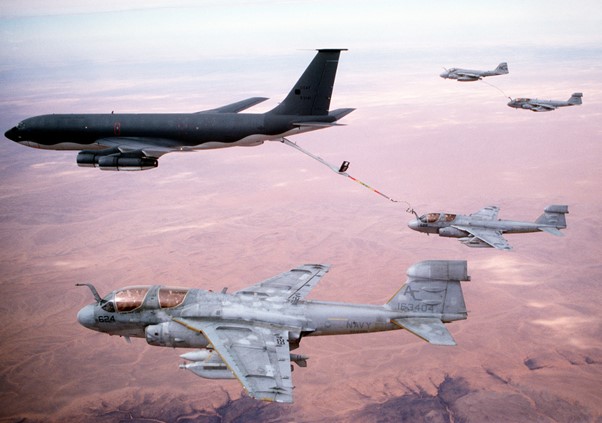
Determining Iraq’s electronic order of battle allowed the radars to be attacked kinetically by USAF F-4G Wild Weasels using the AGM-88B/C missiles. Radars were also engaged electronically by USAF EF-111A Raven EW aircraft. Likewise, radio communications were attacked electronically with USAF EC-130H Compass Call planes. However, the USAF was not the only custodian of the suppression of enemy air defence mission. The US Navy was an avid user of the AGM-88 and, together with the US Marine Corps (USMC), flew EA-6B Prowlers. These jets could electronically and kinetically target hostile radars and gather ELINT.

Now in the streets, there is violence

‘The attack on the Iraqi electronic order of battle affected every aspect of the air supremacy operation,’ noted the official record of Operation DESERT STORM.[20] The initial focus of the electronic warfare battle was to destroy critical radars and communications nodes in the Iraqi IADS to paralyse the air defence network at strategic and operational levels.[21] At the tactical level, deployed SAM systems were then attacked with anti-radiation missiles when they illuminated coalition aircraft. This was done by patrolling F-4Gs and EA-6Bs, waiting for these radars to be activated or having the same aircraft and other anti-radiation missile-armed warplanes, such as the Royal Air Force’s Tornado GR.1 ground attack aircraft with their ALARMs (Air-Launched Anti-Radiation Missiles) accompany strike packages of aircraft. This had the dual purpose of helping keep these aircraft safe and continually attritting the kinetic elements of Iraq’s air defence.[22]

As noted earlier in this article, plans for attacking Iraq’s IADS/GBAD system became a reality in the early morning of 17 January. While Task Force Normandy laid waste to Iraqi radars, F-117As hit the Sector Operations Centres and Intercept Operations Centres in the 1st and 2nd Air Defence Sectors.[23] The actions of the Nighthawks and Task Force Normandy opened gaps in southern and western Iraqi radar coverage and air defence command and control network, which was then exploited.[24] Stealthy and non-stealth aircraft alike ingressed into Iraqi airspace to reach their strategic targets with electronic attack assistance provided by EF-111As and EA-6Bs. These platforms effectively jammed Iraqi early warning/ground-based air surveillance radars transmitting on V/UHF frequencies and FC/GCI radars transmitting in higher wavebands.[25] Typically, the EF-111As and EA-6Bs flew jamming orbits to protect air operations in a particular segment of the Kuwait Theatre of Operations. For example, USAF EF-111As flew orbits in western Iraq, providing jamming support to strikes in that part of the country, performing similar missions in the vicinity of Baghdad.[26] The EF-111As and EA-6Bs also relayed near-real-time updates on the Iraqi Electronic Order of Battle in their locale using radio and tactical datalink networks. Air campaign planners then adjust the air campaign’s electronic dimension accordingly.[27]

EA-6B DESERT STORM
EA-6B Prowlers of VAQ-130 refuelled by a KC-135 Stratotanker en-route to an attack during Operation DESERT STORM. (Source: NARA)

With one part of its radars destroyed and jamming afflicting the others, coalition aircraft headed into Iraq, clearing a path through the IADS, and hitting IADS targets with anti-radiation missiles and air-to-ground ordnance.[28] As well as hitting these targets, BGM-109 cruise missiles hit transformer yards dispersing carbon fibre filaments. This caused short circuits in the power supply.[29] Air defence facilities without backup power went offline. Even those with generators would still see their systems shut down before being reactivated, costing valuable time.[30]

Influenced by Israeli Air Force operations over the Bekaa Valley in Lebanon close to that country’s border with Syria in June 1982, another tactic used by the coalition was the use of USAF launched BQM-74C Chukar drones to mimic coalition combat aircraft ingressing Iraq’s 1st Air Defence Sector. The intention was for Iraqi air defenders to illuminate the drones and engage them. This allowed anti-radiation missile-equipped aircraft to determine the position of SAM batteries engaging the drones and attack their radars. The US Navy performed similar missions with their ADM-141A/B Tactical Air-Launched Decoys This was an effective tactic as it not only revealed the location of Iraqi SAM batteries, but it forced them to expend missiles.[31]

The Continuing Campaign

Initial overtures in the air defence suppression campaign were aimed at attritting Iraqi long and medium-range/high and medium-altitude SAM systems to help sanitise the airspace for following coalition strikes.[32] Typically, AAA would be effective up to altitudes of circa 15,000 feet/ft (4,572 metres/m), with Iraqi SAM batteries effective up to circa 40,000ft (12,192m).[33] The controlled kinetic and electronic violence unleashed against the Iraqi IADS/GBAD during the first 24 hours of the war was palpable. The official record notes that almost 48 targets, including an array of air defence aim points, were hit: ‘This was not a gradual rolling back of the Iraqi air defence system. The nearly simultaneous suppression of so many vital centres helped cripple Iraq’s air defence system.’[34] This inflicted a level of damage from which the Iraqi IADS/GBAD could not recover.

As the campaign unfolded Iraqi air defenders learnt that activating their radar invited an AGM-88 or ALARM attack. By the end of the first week of combat operations, the Iraqis realised that a significant dimension of the coalition air campaign focused on destroying their air defences.[35] SAMs would still be fired ballistically in the hope of a lucky strike, but sans radar, SAM capabilities were severely degraded. Switching off the radars did not stop the attacks. AAA or SAM sites that kept their radars switched off were engaged with conventional air-to-ground ordnance.[36] Life was increasingly unpleasant for Iraqi air defenders who realised that switching off their radars did not stop the attacks. One can only imagine the demoralisation this must have caused.

Assessment

Benjamin Lambeth correctly asserted that DESERT STORM exemplified the decisive migration of electronic countermeasures and EW in general ‘from a supporting role to a direct combat role.’[37] Quite simply, without EW, the coalition would not have succeeded in degrading the Iraqi IADS/GBAD to a point where it could no longer meaningfully challenge coalition air power in such a short space of time. One of the major successes of the electronic warfare aspect of the air campaign was its dislocation of Iraqi IADS/GBAD command and control. Despite the technological sophistication of KARI, it could not mitigate the hierarchical nature of Iraqi air defence doctrine. The Intercept Operations Centres struggled to operate when their Sector Operations Centre and the Air Defence Operations Centre was neutralised.[38] There appeared to be little redundancy within KARI by which these centres could assume the responsibilities of their destroyed or badly degraded counterparts. For instance, the Air Defence Operations Centre was destroyed as a priority target at the start of the air campaign. It does not appear that Iraqi air defenders could rapidly replicate Air Defence Operations Centre functions at either a back-up facility or at one of the Sector Operations Centres. Likewise, when Sector Operations Centres were taken out of the fight, their functions were not immediately assumed by Intercept Operations Centres in their area of responsibility or adjacent sectors.

While KARI was a sophisticated system, Iraq possessed radars and SAM systems already known to the US and its allies on the eve of DESERT STORM. The US had encountered similar SAM systems in the skies over Vietnam and during Operation Eldorado Canyon in 1986 when the US attacked strategic targets in Libya in retaliation for the sponsorship of political violence by its leader Colonel Muammar Gaddafi. Likewise, Israel had faced similar defences during numerous conflicts with its neighbours. Although Israel remained outside the US-led coalition, it is all but certain that intelligence germane to Iraq’s air defence systems would have been made available to the US.[39] The French are also thought to have shared intelligence regarding Iraq’s Roland and KARI systems in a similar fashion.[40] Egypt, an avid user of Soviet-supplied air defence equipment and member of the US-led coalition, was also believed to have been furnished the latter with intelligence.[41] Some of Iraq’s air defence equipment may have lacked Electronic Counter-Countermeasure (EECM) protection to exacerbate matters. Some of Iraq’s radars, notably early versions of the SNR-75 S-band and C-band 65nm (120km) to 75nm (140km) range fire control radars accompanying the SA-2 batteries may not have been fitted with ECCM.[42]

Once the war commenced, the Iraqis fell for the US ruse of using drones to seduce radars into revealing themselves, only to receive an ARM for their trouble. A glance at the history books would have revealed that given the success the Israeli Air Force had enjoyed using this tactic a decade previously, there was every chance the coalition may follow suit. This tactic was recently revisited during the 2020 conflict between Azerbaijan and Armenia. The Azeri armed forces skilfully exploited Uninhabited Aerial Vehicles (UAVs). UAVs were used to tempt Armenian GBADs to activate their radars. By activating the radars their location could be determined, and the GBADs then struck with suicide UAVs equipped with explosives.

Furthermore, Iraq’s air defence doctrine lacked flexibility. Indeed, it has been argued that Iraq’s air command and control writ large during the preceding Iran-Iraq War was characterised by over-centralisation and rigid planning.[43] This may have resulted from two factors; the authoritarian nature of Saddam Hussein’s regime and the procurement of Soviet materiel not only for air defence but across the Iraqi armed forces with a similar acquisition of Soviet doctrine not known for its flexibility.[44] There are significant questions to ask regarding the degree to which subordinates in the IADS believed they had latitude and blessing for individual initiative in the tactical battle. Similar questions apply to higher echelons. Did operational commanders in the air force and air defence force feel emboldened to take decisions as the battle unfolded? Saddam Hussein presided over a totalitarian state where insubordination, real or perceived, could be punished harshly. This raises the question as to whether the fear of taking the wrong decision paralysed decision-making. The result being that the Iraqi IADS lost the initiative in the coalition’s electronic battle. An initiative it never recovered. The net result of a lack of doctrinal flexibility, and against the backdrop of Saddam Hussein’s regime, meant that Iraq’s air defences did not respond and adjust to the electronic battle. Tactical and operational flexibility did not extend beyond radar operators switching off their systems to avoid an attack by an ARM.

However, the coalition’s success was underpinned by a vitally important factor, the luxury of time. DESERT STORM was not a ‘come as you are’ war. The US and its allies had 168 days between Iraq’s invasion of Kuwait and the commencement of the air campaign to plan the electromagnetic scheme of manoeuvre that supporting the air war.

DESERT STORM underlined a truism in air power: Air superiority as a prerequisite for air supremacy must be achieved over an opponent as early as possible. OCA was central to this effort. Electromagnetic superiority and supremacy are central to OCA. One must ensure one can manoeuvre in the spectrum with minimal interference from one’s adversary while denying their adversary use of the spectrum. Working towards electromagnetic superiority and supremacy reduces red force access to the spectrum, denying its use for situational awareness and command and control. Denying Iraqi air defenders’ situational awareness and command and control blunted the efficacy of the kinetic elements of Iraq’s IADS/GBAD, which were then attritted using ARMs and conventional ordnance.

DESERT STORM ended on 28 February. Electronic warfare was intrinsic to the air campaign’s success. Iraq’s IADS and GBAD were prevented from meaningfully interfering with the coalition’s actions. However, this was not the end of the story. The US and the UK would continue to confront the rump of Iraq’s air defences for several years to come until the final showdown with Saddam Hussein’s regime in 2003.

Dr Thomas Withington specialises in contemporary and historical electronic warfare, radar, and military communications, and has written numerous articles on these subjects for a range of general and specialist publications. He holds a PhD from the University of Birmingham.

Header image: EF-111A Raven aircraft prepare to take off on a mission during Operation Desert Shield. (Source: Wikimedia)

[1] C. Kopp, ‘Operation Desert Storm: The Electronic Battle, Part-2’ @http://www.ausairpower.net/Analysis-ODS-EW.

[2] J. Schlight, A War Too Long: The USAF in Southeast Asia 1961-1975 (Washington DC: Air Force History and Museum Programme, 1996), p. 103.

[3] Conduct of the Persian Gulf War: Final Report to Congress, (Alexandria, VA: US Department of Defence, 1992), p. 15.

[4] Ibid.

[5] Author’s proprietary information.

[6] Ibid.

[7] KARI is the French name for Iraq spelt backwards.

[8] ‘Iraqi Air Defense – Introduction’.

[9] P.W. Mattes, ‘Systems of Systems: What, exactly, is an Integrated Air Defense System?’, The Mitchell Forum No.26, (Arlington VA: The Mitchell Institute, June 2019), p. 3.

[10] Confidential interview with US electronic intelligence expert, 17/3/21.

[11] Ibid.

[12] Ibid.

[13] Ibid.

[14] Ibid.

[15] S. Morse (ed), Gulf Air War Debrief, (London: Aerospace Publishing, 1991), p. 37.

[16] Conduct of the Persian Gulf War, p. 124.

[17] Ibid.

[18] Kopp, ‘Operation Desert Storm’.

[19] Morse (ed.), Gulf Air War Debrief, p. 37.

[20] Conduct of the Persian Gulf War, p. 220.

[21] Kopp, ‘Operation Desert Storm’.

[22] Ibid.

[23] Conduct of the Persian Gulf War, p. 153.

[24] Ibid.

[25] Ibid, p. 172.

[26] Ibid, p. 220.

[27] Ibid.

[28] Kopp, ‘Operation Desert Storm’.

[29] Ibid.

[30] Confidential interview with US electronic intelligence expert.

[31] Kopp, ‘Operation Desert Storm’.

[32] Ibid.

[33] Conduct of the Persian Gulf War, p. 202.

[34] Ibid, p. 156.

[35] C. Kopp, ‘Operation Desert Storm: The Electronic Battle, Part-3’ @http://www.ausairpower.net/Analysis-ODS-EW.html consulted 12/2/21.

[36] Ibid.

[37] B. Lambeth, The Winning of Air Supremacy in Operation Desert Storm, (Santa Monica, CA: RAND Corporation, 1993), p. 5.

[38] ‘Iraqi Air Defense – Introduction’.

[39] Confidential interview with US electronic intelligence expert.

[40] Ibid.

[41] Kopp, ‘Operation Desert Storm: The Electronic Battle, Part-1’.

[42] Ibid.

[43] A.H. Cordesman, A.R. Wagner, The Lessons of Modern War Volume-II: The Iran-Iraq War, (London: Mansell, 1990).

[44] Conduct of the Persian Gulf War, p. 9.

#Commentary – The Iran-Iraq Tanker War and the Non-Delta Winged Mirage F1

#Commentary – The Iran-Iraq Tanker War and the Non-Delta Winged Mirage F1

By Dr Adam Leong Kok Wey

The 12 May 2019 tanker attacks off the United Arab Emirates coast in the Persian Gulf by suspected Iranian or Iran-backed saboteurs reminded us of the high-stakes Tanker War during the Iran-Iraq war (1980-1988).

Super_Étendard_with_Exocet_launching_from_Foch_(R99)_1983
An AM-39 Exocet on a Dassault Super-Étendard of the French Navy. (Source: Wikimedia)

During the Iran-Iraq War, from around 1984, merchant tankers sailing through the Persian Gulf were regularly targeted by both Iraqi and Iranian forces in the Tanker War. The Iraqis frequently used air power to target Iranian oil tankers and merchant ships in an attempt to wage economic warfare against Iran – a strategic move to strangle Iran’s economic lifeline. One of the primary aircraft used by the Iraqis to conduct anti-shipping operations was the Dassault Mirage F1, which was armed with Exocet missiles.

The Mirage F1 was the Dassault’s answer to several technological challenges faced by the famous delta-winged Mirage III. The Mirage III made its mark during the Six Day War when the Israelis used their Mirage IIIs successfully in their opening pre-emptive strikes against its Arab neighbours. The Mirage III, however, had inherent weaknesses – its delta wing meant that the Mirage III had to land with a high pitch at high speeds, often causing accidents with inexperienced pilots. It also required long airstrips for its take-off run and landing, making these large airfields easy to spot and vulnerable to enemy counter strikes. The Mirage IIIs were also unable to operate from robust forward air bases. The Mirage III, with its delta wings, was less agile at low altitude compared with other non-delta winged aircraft and had a short operational radius.

Mirage_F1_biplace
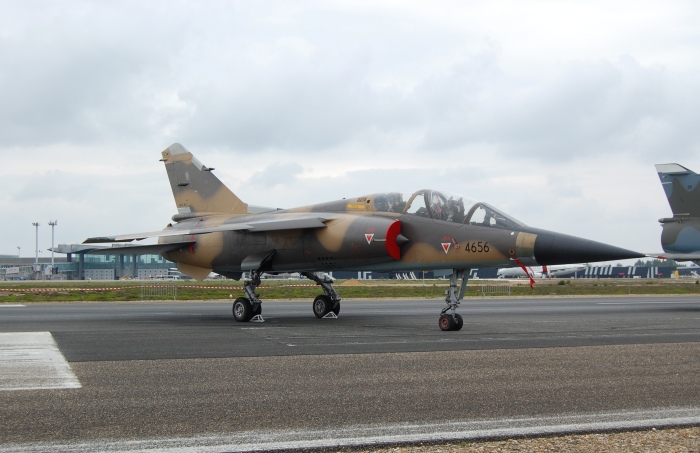
A Mirage F1BQ of the Iraqi Air Force. (Source: Wikimedia)

All these weaknesses were remedied in the new Mirage F1. The F1 featured a high mounted swept wing and a conventional tail design, dumping the use of delta wings. These changes enabled the F1 to carry 40 per cent more fuel, translating to a longer operational radius, a shorter take-off run and slower landing speed, and all-around better manoeuvrability. The F1 was armed with two DEFA 553 30-mm cannons with 135 rounds per gun with a typical intercept load of two Matra Super 530 and two R.550 Magic anti-aircraft missiles.

The Mirage F1 was a success with the French Air Force, which acquired and used it as their primary interceptor aircraft in the 1970s and 1980s. It was also exported to numerous countries including Spain, South Africa (where it saw combat as a strike aircraft), and Iraq.

The Iraqis acquired the Mirage F1 in the late 1970s, and its first F1s were delivered just in time to participate in the Iran-Iraq War. The Mirage F1s performed remarkably well in obtaining air superiority (shooting down the first Iranian F-14 Tomcat in a dogfight in November 1981), ground attack roles (both close air support and interdiction strikes) and anti-shipping missions. Armed with Exocet missiles, the Mirage F1 made its mark in conducting anti-shipping operations against Iranian-flagged oil tankers and merchant ships during the Tanker War.

DN-SC-87-06412
The USS Stark listing to port after being struck by two Iraqi Exocet missiles. (Source: Wikimedia)

Mirage F1s attacked and damaged numerous oil tankers and conducted air raids against Iranian oil terminals at Kharg Island. Their use culminated in the attack on USS Stark (an Oliver Hazard Perry guided missile frigate) on 17 May 1987. The Stark was hit by two Exocets launched from an Iraqi Mirage F1. The attack damaged the Stark and killed 37 US sailors but did not sink it. The Iraqis claimed that the pilot had mistaken the frigate as an Iranian oil tanker.[1] Interestingly, recently, there have been questions raised regarding the type of aircraft that launched the attack.[2]

Iraqi Mirage F1s continued to operate during the First Gulf War. In a desperate attempt to hit back at the US-led coalition forces, two Mirage F1s armed with incendiary bombs took part in an air strike attempting to destroy the Saudi oil refinery in Abqaiq, but both were shot down by a Royal Saudi Air Force F-15.

Mirage_F1BQ_of_IRIAF
A Mirage F1BQ of the Islamic Republic of Iran Air Force. (Source: Wikimedia)

Although the Mirage F1 has mostly been retired from service, limited numbers still serve in a few air forces today, ironically including Iran, which had confiscated 24 Iraqi Mirage F1s that were flown into Iran during the First Gulf War to prevent their destruction. The non-delta winged Mirage F1, although not as famous as the Mirage III, has given extraordinary service for its users and should be given better recognition than it deserves.

Dr Adam Leong Kok Wey is Associate Professor in Strategic Studies, and the Deputy Director of Research in the Centre for Defence and International Security Studies (CDISS) at the National Defence University of Malaysia. He has a PhD in strategic studies from the University of Reading and is the author of two books on military strategy and history including Killing the Enemy: Assassination operations during World War II (2015) published by IB Tauris.

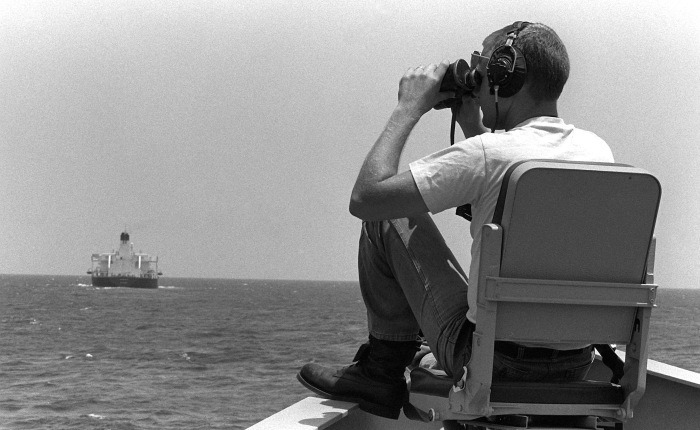
Header Image: A US sailor scans for mines from the bow of the guided missile frigate USS Nicolas during an Operation Earnest Will convoy mission, in which tankers are led through the waters of the Persian Gulf by US warships, c. 1988. (Source: Wikimedia)

[1] Sam LaGrone, ‘The Attack on USS Stark at 30,’ USNI News, 17 May 2017. For the report into the circumstances surrounding the attack, see: Chairman of the US Joint Chiefs of Staff to the Secretary of Defence, Formal investigations into the circumstances surrounding the attack on USS Stark (FFG31)  on 17 May 1987, 3 September 1987.

[2] See Tom Cooper, ‘In 1987, a Secret Iraqi Warplane Struck an American Frigate and Killed 37 Sailors,’ War is Boring, 27 July 2016.