#Podcast – “I want to serve in the same way they did”: An Interview with Dr Sarah Myers

#Podcast – “I want to serve in the same way they did”: An Interview with Dr Sarah Myers

Editorial Note: Led by Editor Dr Mike Hankins, From Balloons to Drones, produces a monthly podcast that provides an outlet for the presentation and evaluation of air power scholarship, the exploration of historical topics and ideas, and provides a way to reach out to both new scholars and the general public. You can find our Soundcloud channel here. You can also find our podcast on Apple Podcasts and Google Podcasts.

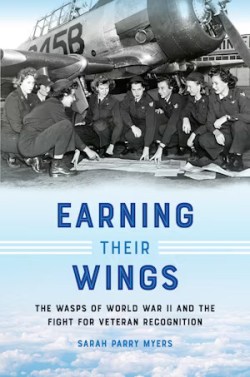
During the Second World War, it was not only men who flew military aeroplanes. Many women flew all kinds of aeroplanes in various roles in the United States, many of them members of the Women’s Airforce Service Pilots (WASP). Their story did not end with the war either, as they fought for recognition as veterans throughout the 1960s and 70s. In our latest interview, From Balloons to Drones, Dr Sarah Myers joins us to discuss these women’s unique roles in the war and beyond and their legacy today.

9781469675039

Dr Sarah Parry Myers is an Associate Professor of History at Messiah University in central Pennsylvania, where she teaches courses on 20th Century U.S. history, gender history, public history, and war and society. Myers is the author of Earning Their Wings: The WASPs of World War II and the Fight for Veteran Recognition (2023). She previously attended a National Endowment of the Humanities Summer Institute on Veterans Studies. She received a 2020-2022 National Endowment of the Humanities Dialogues on the Experience of War grant, ‘We are Veterans Too: Women’s Experiences in the U.S. Military.’

Header image: Four United States Women’s Airforce Service Pilots members receive final instructions as they chart a cross-country course on the flight line of a US airport. Assigned to the ferrying division of the United States Army Air Transport Command, the women pilots belong to the first class of American women to complete a rigorous nine-week transitional flight training course in handling B-26 Marauder medium bombers. They have been given special assignments with the US Army Air Forces as tow target pilots. (Source: US National Archives and Records Administration)

#FilmReview – Masters of the Air, Episode Four

#FilmReview – Masters of the Air, Episode Four

By Dr Luke Truxal

Editorial note: On 26 January 2024, Apple TV+ launched the much-anticipated series Masters of the Air. This series follows the actions of the US 100th Bomb Group during the Combined Bomber Offensive in the Second World War. As the series is being aired, our Book Reviews Editor, Dr Luke Truxal, the author of Uniting against the Reich (2023), will critically review each episode.

The fourth episode of Masters of the Air was about those left behind. This is meant literally in the sense that we do not go up in the air with the planes after they take off, but we also see many of the characters on the show struggle with loss during the war. The result is that we get a good episode that portrays the struggles of airmen, ground crews, resistance fighters, and civilians left on the ground. This review will examine the episode’s analysis and responses to grief thematically rather than tackle the episode chronologically, as in past reviews.

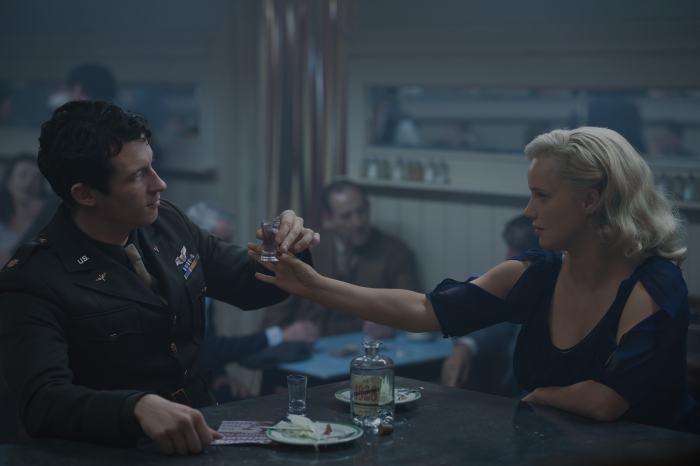
The episode begins with a party after Lieutenant Glenn Dye’s crew completes their 25th mission. This will be the first and only crew of the original 100th Bomb Group to complete their tour of duty and go home. At the party, we are introduced to two new characters, Lieutenant Herbert Nash and Lieutenant Robert ‘Rosie’ Rosenthal. Both are green but capable and eager pilots. During the episode, Nash dances and flirts with Helen, who works for the Red Cross at Thorpe Abbotts. There are sparks between these two characters. At the same time, Rosenthal tries to understand better what he is flying into by talking to Major Gale Clevan. Nash is more successful in flirtations than Rosenthal in feeling out the veteran pilots about the nature of air combat. As the aircrews depart for their first mission the following day, Nash makes a last pass at Helen with a line that foreshadows his fate, “You might be the last pretty face that I ever see.” Nash’s fate is shown off-screen, and it falls on Rosenthal to deliver the shocking news to the young woman with whom he had developed a budding romance. In the same sequence, the news is broken to the group that Clevan and Crosby had gone down. The news that the group’s best pilot and navigator went down in separate planes stuns the group. Colonel Neil ‘Chick’ Harding and Lieutenant Joseph ‘Bubbles’ Payne express the shock that the group and audience feel when the news is broken. Two of the more critical anchors for the group have now been lost off-screen. The show does an excellent job of showing how the loss of these veteran aircrews impacts morale.

Masters_of_the_Air_Photo_010408
Callum Turner and Joanna Kulig in Masters of the Air. (Source: Apple TV+)

Along with shock, we see sympathy and grief for those living under the bombs. During the episode, Egan walks about a series of bombed homes while on leave in London. He finally can see the results of what bombing does to civilians. As he watches the rescue crews work we hear the scream of a woman who lost what appears to be her daughter. While short, this was a hard scene to watch. Seeing the woman pull the dead child out of the rubble builds sympathy between the viewers and the bombed. It is a great scene to include. It is easy for the audience to get lost in the air-to-air combat, but these bombs have consequences. Even those who play no part in this war, such as children, suffer from the air war. It is a well-written and executed scene.

Another element of processing grief for those in combat is the sense of guilt that those who survived feel. This is an area where Masters of the Air has surpassed both Band of Brothers (2001) and The Pacific (2010), in my opinion. That is not to say that the previous series ever avoided the topic, and The Pacific did lean into the post-war struggles of Eugene Sledge with post-traumatic stress syndrome. However, we never saw it portrayed so personally, with Sergeant William Quinn’s decision to leave Sergeant William Hinton behind, trapped on the B-17 Flying Fortress before it exploded. Throughout his time on the run, Quinn grapples with his guilt over leaving his comrade behind. It eats at him throughout the whole episode more so than the fear of being captured by the Germans as his fellow airmen keep asking him about what happens. This plot ends with another crewman who survived the crash, Sergeant Charles Bailey, comforting Quinn. Bailey tells Quinn that he would have made the same decision as well. Some viewers will find it easy to judge Quinn for his actions in the previous episode, but as the show eloquently shows, many of us would have made the same decision in the same circumstances. To me, this was a powerful sequence of scenes paired with the scenes of Sledge at the end of The Pacific; we get a better sense of the survivor’s guilt and its aftermath.

The last element of grief that the episode deals with is anger. During the episode, Major John Egan goes on leave in London and meets a Polish woman with whom he sleeps. As they are in bed together, they watch German bombers strike London from a distance. Egan admits that this is the first time he has seen this side of the air war. As they continue talking, the Polish woman expresses her anger and desire for revenge against the Germans for the war that they unleashed. This scene sets up viewers perfectly for Egan in this episode and in episode five. After finishing his night with the woman, Egan sees the woman grieving the loss of her daughter. He then sees a newspaper highlighting the heavy losses that the Eighth Air Force suffered on the most recent raid. Egan calls Thorpe Abbotts to learn the fate of the 100th Bomb Group and, more importantly, his best friend Clevan. Egan ends the episode by lobbying to be on the next mission. In the teaser at the end of the episode, we see that Egan desires revenge against not only the Luftwaffe but all Germans for the loss of his friend.

This might go down as one of the series’ more important episodes. It broadened the audience’s perspective of the air war. It showed the ground crews, the bombed, and how they fought the air war in their way. Some struggled to process the shock of loss either in the air or on the ground. Others struggled with survivor’s guilt. Finally, we see many turn their grief into anger and desire for payback for the anguish that they feel for the loss of their loved ones. In an episode where grief took centre stage and, in many forms, this episode handled such a delicate topic as well as you can on screen. I think this is arguably the best episode of the series up to this point.

Dr Luke Truxal is an adjunct at Columbia State Community College in Tennessee. He completed his PhD in 2018 from the University of North Texas with his dissertation ‘Command Unity and the Air War Against Germany.’ His previous publications include ‘Bombing the Romanian Rail Network’ in the Spring 2018 issue of Air Power History. He also wrote ‘The Politics of Operational Planning: Ira Eaker and the Combined Bomber Offensive in 1943’ in the Journal of Military Aviation History. In addition, Truxal is researching the effectiveness of joint air operations between the Allied air forces in the Second World War. He can be reached on Twitter at @Luke_Truxal.

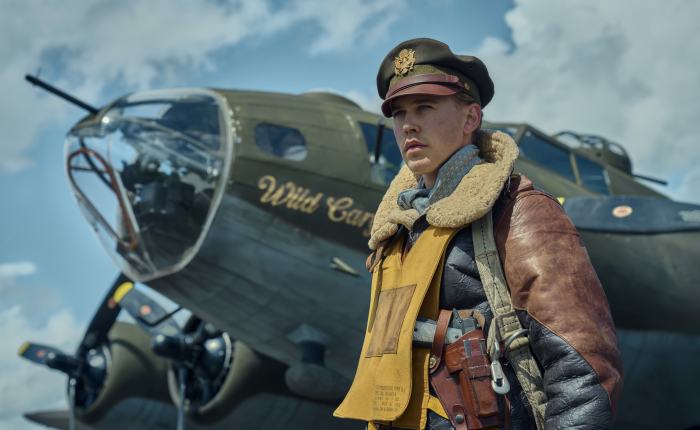
Header image: Edward Ashley and Austin Butler in Masters of the Air. (Source: Apple TV+)

#FilmReview – Masters of the Air, Episode Three

#FilmReview – Masters of the Air, Episode Three

By Dr Luke Truxal

Editorial note: On 26 January 2024, Apple TV+ launched the much-anticipated series Masters of the Air. This series follows the actions of the US 100th Bomb Group during the Combined Bomber Offensive in the Second World War. As the series is being aired, our Book Reviews Editor, Dr Luke Truxal, the author of Uniting against the Reich (2023), will provide a critical review of each episode.

Three episodes in, we now better understand what the series Masters of the Air does well and where the show falls short. Let me begin this review by stating that I enjoy the series and what it deliers. Viewers gain a better perspective of the air war from the airmen who flew the missions than previous depictions. The show does justice to the US 100th Bomb Group and tells its story. This is still a good episode and series despite the criticism you will see at the end of this review. I will still recommend it to others. My problem is that the show fails to reach its full potential in telling this story. I think this is where the shows Band of Brothers (2001) and The Pacific (2010) really soared and why, for me, Masters of the Air feels so close but still not on the same level.

This week’s episode was the fateful Schweinfurt-Regensburg mission on 17 August 1943. The raid was the second unmitigated disaster that the Americans suffered in the air war that month. On 1 August 1943, the US Ninth Air Force attacked the Romanian oil refineries at Ploiești with five B-24 groups, three of which were on loan from the US Eighth Air Force. While the raid succeeded in damaging the refineries, it failed to stop Romanian oil production at the cost of 54 Consolidated B-24 Liberators and 310 airmen.[1] While Ploiești does not appear in the episode, it is crucial to understand the context of the air war in 1943. These were some of the darkest days of the air war for the Americans. The episode begins with a briefing about the Schweinfurt-Regensburg mission. Colonel Neil Harding, portrayed by James Murray, does a great job at explaining the nature of the mission, bad sports metaphors aside. The first strike force, which included the 100th Bomb Group, was to strike at German aircraft factories at Regensburg, thus drawing the bulk of the German fighter force onto their formation. He correctly explains that the bombers behind the 100th Bomb Group will move towards Schweinfurt and strike at German ball-bearing production with less resistance. The audience now has a great understanding of how the mission is supposed to work on paper.

Masters_Of_The_Air_Photo_010305
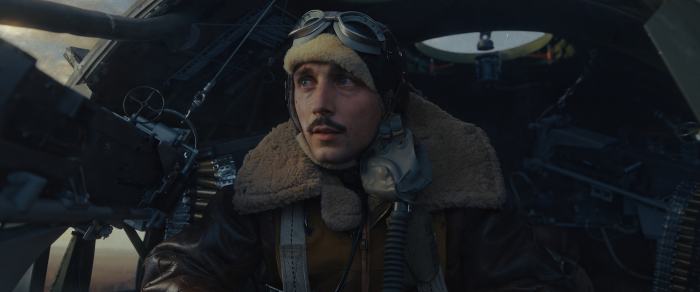
Elliot Warren as Lieutenant James Douglass, a bombardier with the US 100th Bomb Group who flies with Harry Crosby. (Source: Apple TV+)

The thesis of this entire episode was about the choices that soldiers make in war and how they impact the lives of those around them. It all begins with the poor weather delays that affected the execution of the raid. This led the US Eighth Air Force to send out Colonel Curtis LeMay’s Regensburg force five hours ahead of the rest of the force. During the raid, the creators of the show highlight several vital moments when decisions have to be made that affect the lives of the airmen in this episode. The first happens when Roy Claytor’s plane is shot down. As the crew bails out, the ball turret gunner, Sergeant William Hinton, becomes trapped and cannot escape. Sergeant William Quinn, the radio operator, hears his calls and tries to aid him as the rest of the crew bail out. Unfortunately, the plane enters a spin, and the force throws Quinn against the wall. He has to choose between his life and Hinton’s. He chooses his own. Later, we see that same choice posed to Quinn again when he speaks to a member of the Belgian resistance and has to decide if he wants to try to escape or spend the remainder of the war in a prison camp. His choice has not yet been revealed, and the scene ends on a cliffhanger. Lieutenant Curtis Biddick is the second character to face a life-or-death decision. His plane is hit during the raid, and his co-pilot, Lieutenant Richard Snyder, is severely wounded. In an emotionally impactful scene, Biddick decides to try and crash land the plane to save Snyder. The rest of the crew bail out successfully, and for a moment, it appears Biddick has once again pulled off the impossible. Unfortunately, he can’t maintain control of his Boeing B-17 Flying Fortress as it crashes into the ground in a massive explosion. The final major choice we see throughout the raid is Major Gale Clevan’s choice not to bail out and keep pushing his aircraft through the raid. His choice to keep pushing on paid off, with his plane landing just short of the runway at Telergma in the French colony of Algeria. Throughout the entire episode, there are several moments where the show makes it very clear that Clevan’s decision to press on could have had catastrophic consequences for him and his crew. The show did an excellent job at showing the choices that the young airmen of the 100th Bomb Group, many in their late teens and early twenties, had to make in split seconds and their consequences.

For an episode that emphasized the importance of the decisions made in war, the biggest one was left out. On the morning of 17 August 1943, the head of the US VIII Bomber Command, Brigadier General Frederick Anderson, had to decide whether or not to scrap the Schweinfurt-Regensburg mission. Anderson, like the commander of the Eighth Air Force, Major General Ira Eaker, was under immense pressure to execute this mission. General Henry Arnold, the US Army Air Forces commander, had taken a great personal interest in the raid and its success. The raid had been put off before due to poor weather. Additionally, the Regensburg force had to leave with enough time to have light remaining to land when they reached Algeria. Anderson ultimately made the call to send LeMay’s force first through the fog while waiting for the rest of the fog to dissipate before sending the rest of the bombers. This is how the two forces end up five hours apart. [2] This brings me to my biggest criticism of the show. Three episodes in, the show struggles to discuss the air war’s wider context. In the second episode, the writers poorly executed a scene to introduce the doctrine debates between the Americans. In this episode, the decision to not fly the mission as planned does not appear on the screen, which was the raid’s most important decision. This was a big missed opportunity for the creators of Masters of the Air. Anderson had to live with the fact that his decision on 17 August 1943 cost the Eighth Air Force sixty B-17s and 559 airmen either killed or missing.[3]

When it comes to telling the story of the 100th Bomb Group and its experience during the raid, this episode did an excellent job. It showed the life-or-death decisions these young men had to make in seconds, and if they were lucky, they would have to live with the consequences of those decisions. Yet, the quality of the television show could be much improved by occasionally widening its perspective. The series has become so zoomed in on the 100th Bomb Group that it struggles to tell the bigger picture of the air war. Adding a short scene here or there to add that big-picture perspective would bring everything together and make this television series genuinely extraordinary. My criticisms aside, this is still the best series on the air war I have seen, and it deserves to be in the same conversation as the 1949 film Twelve O’clock High.

Dr Luke Truxal is an adjunct at Columbia State Community College in Tennessee. He completed his PhD in 2018 from the University of North Texas with his dissertation ‘Command Unity and the Air War Against Germany.’ His previous publications include ‘Bombing the Romanian Rail Network’ in the Spring 2018 issue of Air Power History. He also wrote ‘The Politics of Operational Planning: Ira Eaker and the Combined Bomber Offensive in 1943’ in the Journal of Military Aviation History. In addition, Truxal is researching the effectiveness of joint air operations between the Allied air forces in the Second World War. He can be reached on Twitter at @Luke_Truxal.

Header image: Edward Ashley, Matt Gavan, Callum Turner and Anthony Boyle in Masters of the Air (Source: Apple TV+)

[1] Jay A. Stout, Fortress Ploesti: The Campaign to Destroy Hitler’s Oil (Havertown, PA: Casemate Publishers, 2011), p. 76.

[2] Luke Truxal, Uniting against the Reich: The American Air War in Europe (Lexington, KT: University Press of Kentucky, 2023), pp. 71-3.

[3] Truxal, Uniting Against the Reich, pp. 76-7.

#FilmReview – Masters of the Air, Episodes One and Two

#FilmReview – Masters of the Air, Episodes One and Two

By Dr Luke Truxal

Editorial note: On 26 January 2024, Apple TV+ launched the much-anticipated series Masters of the Air. This series follows the actions of the US 100th Bomb Group during the Combined Bomber Offensive in the Second World War. As the series is being aired, our Book Reviews Editor, Dr Luke Truxal, the author of Uniting against the Reich (2023), will critically review each episode.

The first two episodes of the Apple TV+ television series Masters of the Air are a great introduction to the air war for those less familiar with the subject. Yet, they also treat the subject with the seriousness that scholars of the air war demand from media portrayals. Stylistically, the episodes blend the storytelling style of the famous documentary Target for Today (1944) with the drama of the more famous film Twelve O’clock High (1949). Other films on air power, such as Top Gun (1986), tend to romanticize or glorify air-to-air combat. The episodes do not do that. Instead, viewers better understand the nature of combat in the skies above Europe. This one-two-punch season opener stands strong on its own. This was a very promising start for Masters of the Air.

These were two great episodes for those unfamiliar with the air war in Europe. The first episode centres around the US 100th Bomb Group, which became famous for the high losses that it suffered during the summer and fall of 1943. For those who wish to spoil themselves, read the book the series is based on, Don Miller’s eponymous Masters of the Air, or Harry Crosby’s memoirs A Wing and a Prayer. John Orloff, who created the series, uses the 100th Bomb Group as a vessel to tell the larger story of the American experience in the air war. The opening scenes show young pilots and their aircrews eager to enter combat. By the end of the first episode, they return, having experienced the true horrors of fighting high above the skies in subzero temperatures.

Their first mission to Bremen begins as an introduction to what a typical mission is like for the aircrews. Gale Cleven and the rest of the aircrews are woken up in the pre-dawn hours for all the work that takes place before a mission. As the time gets closer to the start of the mission, viewers can feel the tension building slowly until the aircraft take off. During the mission, viewers get a taste of the dangers aircrews faced, such as forming up in cloud cover, flak, and German fighters. The combat scenes in this episode are fast-paced and intense. Fighters whiz by the formation in the blink of an eye, and gunners struggle to keep up with the speed of combat. Keep in mind that German pilots approached from the front to limit the ability of the bomber formation to concentrate its guns on the fighters. Doing so significantly increased the closing speed between the fighters and the bombers. Masters of the Air is not the Memphis Belle, where combat is long and prolonged. It is quick, brutal, and deadly. This episode is a great educational tool for what a typical mission could look like.

I thought the second episode did a great job of highlighting the personal relationships between the ground crews and the British civilians living near the base at Thorpe Abbotts. We see the close bonds the children near the airfield had with the ground crew. At one point, a group of children helped the ground crew clean up oil on the runway after the planes took off. For many children, these bonds lasted a lifetime. This provides viewers insight into the American and British cultural interactions during the war.

Masters_of_the_Air__Photo_010203
Raff Law and Samuel Jordan in the second episode of Masters of the Air. (Source: Apple TV+)

No depiction of the air war on film is perfect. There are some areas where the second episode struggled, but these are few and far between. Judging by online reactions, the most controversial scene involved the doctrinal debate between American and British airmen in the pub. I believe this scene did a good job of educating the public about the doctrinal differences between the two sides without having to dive into the high-level strategy meetings that occurred on this topic. The episode also demonstrates that the two allies are quite passionate about their beliefs on how best to prosecute the air war. However, the second episode failed to grasp the attitude with which the British expressed their concerns over daylight precision bombing. The British had tried and failed to carry out their own precision bombing campaign at the beginning of the war. Their experience led them to adopt night area bombing. As the more experienced partner in the alliance, the British were concerned that the Americans might be unable to maintain the attrition rate that a daylight campaign demanded. The Americans were, however, more than willing to sustain a much higher attrition rate to execute daylight precision bombing. Instead, the writers wrote a scene that wreaked of animosity between the two groups of airmen. Had the writers changed the tone of the scene, then they might not be facing the blowback that they are today. It was one scene, but even today, the emotions of the air war still run high.

Overall, the first two episodes of Masters of the Air started the series well and educated viewers about the ugly nature of the American strategic bombing campaign from the perspective of the airmen. This episode gave the audiences the basics of what to expect from typical American raids. As a result, they set the stage for the raids that would begin to stand out more in 1943, such as the upcoming 17 August 1943 Schweinfurt-Regensburg mission, a disaster for the Eighth Air Force. Masters of the Air has done an excellent job setting up the rest of the series. Now, viewers will see whether the series can maintain its form going into the darker days of the air war in the following episodes.

Dr Luke Truxal is an adjunct at Columbia State Community College in Tennessee. He completed his PhD in 2018 from the University of North Texas with his dissertation ‘Command Unity and the Air War Against Germany.’ His previous publications include ‘Bombing the Romanian Rail Network’ in the Spring 2018 issue of Air Power History. He also wrote ‘The Politics of Operational Planning: Ira Eaker and the Combined Bomber Offensive in 1943’ in the Journal of Military Aviation History. In addition, Truxal is researching the effectiveness of joint air operations between the Allied air forces in the Second World War. He can be reached on Twitter at @Luke_Truxal.

Header image: Austin Butler as Major Gale ‘Buck’ Cleven in episode one of Masters of the Air. (Source: Apple TV+)

#Podcast – “The airplane just blew up into several pieces!”: An Interview with Lee Ellis

#Podcast – “The airplane just blew up into several pieces!”: An Interview with Lee Ellis

Editorial Note: Led by Editor Dr Mike Hankins, From Balloons to Drones, produces a monthly podcast that provides an outlet for the presentation and evaluation of air power scholarship, the exploration of historical topics and ideas, and provides a way to reach out to both new scholars and the general public. You can find our Soundcloud channel here. You can also find our podcast on Apple Podcasts and Google Podcasts.

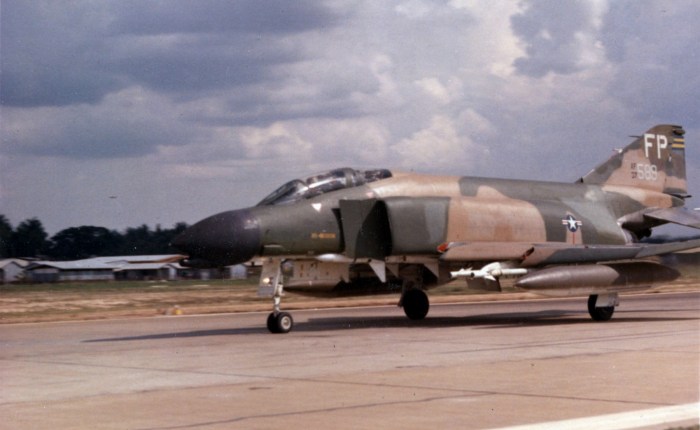
In our latest interview, we talk to  former United States Air Force F-4 Phantom pilot Lee Ellis who was a prisoner of war in the ‘Hanoi Hilton’ in Vietnam for over five years. However, in the time since, he noticed that he and many other POWs had gone on to experience dramatic love lives. Ellis joins us to discuss his new book, Captured By Love: Inspiring True Romance Stories from Vietnam POWs.

<div style=”font-size: 10px; color: #cccccc;line-break: anywhere;word-break: normal;overflow: hidden;white-space: nowrap;text-overflow: ellipsis; font-family: Interstate,Lucida Grande,Lucida Sans Unicode,Lucida Sans,Garuda,Verdana,Tahoma,sans-serif;font-weight: 100;”>

61gdD3VMsEL._AC_UF894,1000_QL80_

Lee Ellis is the Founder and President of Leadership Freedom® LLC and FreedomStar Media®. He is an award-winning author, leadership coach, and expert presenter in the areas of leadership, teambuilding, and human performance. Early in his career, Lee was a United States Air Force fighter pilot flying fifty-three combat missions over North Vietnam. In 1967, he was shot down and held as a POW for over five years in Hanoi and surrounding camps. For his wartime service, he was awarded two Silver Stars, the Legion of Merit, the Bronze Star with Valor device, the Purple Heart, and POW Medal. Lee resumed his Air Force career, serving in leadership roles of increasing responsibility, including command of a flying squadron and leadership development organizations, before retiring as a colonel. Lee has a BA in History and a MS in Counseling and Human Development. He is a graduate of the Armed Forces Staff College and the Air War College. He has authored or co-authored five books on leadership and career development.

Header image: A US Air Force McDonnell F-4C Phantom II from the 497th Tactical Fighter Squadron, 8th Tactical Fighter Wing, rolls out on takeoff from Ubon Royal Thai Air Force Base, circa 1967. It is configured for the MiGCAP escort role with AIM-7 Sparrow air-to-air missiles under the fuselage, and AIM-9B Sidewinder air-to-air missiles and extra fuel tanks under the wings. (Source: Wikimedia)

#Podcast – “Check Six” – Historian Questions and Answers: An Interview with Dr Mike Hankins and Dr Brian Laslie

#Podcast – “Check Six” – Historian Questions and Answers: An Interview with Dr Mike Hankins and Dr Brian Laslie

Editorial Note: Led by Editor Dr Mike Hankins, From Balloons to Drones, produces a monthly podcast that provides an outlet for the presentation and evaluation of air power scholarship, the exploration of historical topics and ideas, and provides a way to reach out to both new scholars and the general public. You can find our Soundcloud channel here. You can also find our podcast on Apple Podcasts and Google Podcasts.

In our latest podcast episode, our Podcast Editor, Dr Mike Hankins, and Assistant Editor, Dr Brian Laslie, have each come up with questions to ask each other about what it’s like to be a historian and pick on some of their favourite topics about air power and aviation history.

Dr Michael Hankins is the Curator for US Air Force, Navy, and Marine Corps post-World War II Aviation at the Smithsonian National Air and Space Museum and the author of Flying Camelot: The F-15, the F-16, and the Weaponization of Fighter Pilot Nostalgia (2021). In addition, he is a former Professor of Strategy at the USAF Air Command and Staff College eSchool, and a former Instructor of Military History at the US Air Force Academy. He earned his PhD in history from Kansas State University in 2018 and his master’s in history from the University of North Texas in 2013. He has a web page here.

Dr Brian Laslie is a US Air Force Historian and Command Historian at the United States Air Force Academy. Formerly he was the Deputy Command Historian at North American Aerospace Defense Command (NORAD) and United States Northern Command (USNORTHCOM). A 2001 graduate of The Citadel and a historian of air power studies, he received his Masters’ from Auburn University Montgomery in 2006 and his PhD from Kansas State University in 2013. He is the author of Air Power’s Lost Cause: The American Air Wars of Vietnam (2021),  Architect of Air Power: General Laurence S. Kuter and the Birth of the US Air Force (2017) and The Air Force Way of War (2015). The latter book was selected for the Chief of Staff of the Air Force’s 2016 professional reading list and the 2017 RAF Chief of the Air Staff’s reading list. He can be found on Twitter at @BrianLaslie.

Header image: Four Republic F-84F Thunderstreak from the US Air Force Thunderbirds aerobatics team flying in formation in c. 1955. (Source: Wikimedia)

#ResearchResources – Air and Space Power Bibliography

#ResearchResources – Air and Space Power Bibliography

In the past few weeks, From Balloons to Drones launched a group ‘Air and Space Power Bibliography’ using the open-source reference management software Zotero. The bibliography aims to (slowly) catalogue works related to air power history, theory, and current operations in their broadest sense, including space power. The bibliography is hoped to be helpful to academics, students, and practitioners alike. Types of works included in the bibliography range from journal articles and books to scholarly online articles such as those published here at From Balloons to Drones. So far, we have added 250 titles, with more being added weekly.

As well as the central catalogue into which every resource is documented, the bibliography is split into 40 sub-catalogues. These sub-catalogues either relate to a time frame, country, or theme. After each work is added to the main catalogue, they are included in one of the 40 sub-catalogues that best represent the subject of that work. For example, Peter Gray’s The Leadership, Direction and Legitimacy of the RAF Bomber Offensive from Inception to 1945 (2012) is catalogued in the following sub-catalogues: ‘Interwar’ and ‘Second World War’ as its main chronological focus is those periods; ‘Air Power Leadership and Culture’ and ‘Legal and Ethical Aspects of Air Power’ as this is the main thematic focus of the book, and finally, ‘British Air Power’ as the book is focused on the Royal Air Force.

You can request to become a member of the group bibliography or follow it using an RSS feed.

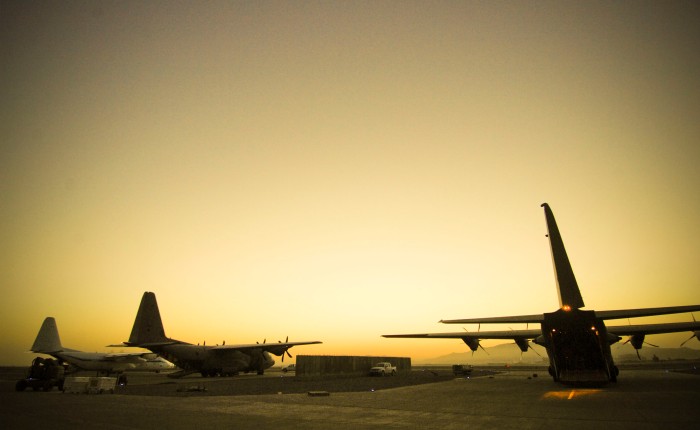
Header image:  Royal Air Force C-130J Hercules transport aircraft wait to airlift British soldiers from Kandahar Airfield, Afghanistan, 19 June 2009. (Source: Wikimedia)

Expressions of Interest – Social Media Editor, From Balloons to Drones

Expressions of Interest – Social Media Editor, From Balloons to Drones

Job title: Social Media Editor

Established in 2016, From Balloons to Drones has successfully developed into a well-regarded online scholarly platform dedicated to analysing and debating air power history, theory, and contemporary operations in their broadest sense, including space and cyber power. Our outputs include articles ranging from scholarly pieces to book reviews and a successful podcast series.

The role

To help us develop further, From Balloons to Drones is looking to recruit an emerging and passionate air power specialist to join our editorial team. This voluntary role’s primary purpose is to manage our social media presence on Twitter, Facebook, and LinkedIn. You will also be involved with the peer review of submissions and supporting the aims and objectives of From Balloons to Drones in other areas. Please note that this is an unpaid role.

What do we offer?

The From Balloons to Drones team comprises experienced and knowledgeable air power scholars and editors who will mentor, advise, and assist the successful applicant. In addition, this role will allow you to develop your editing skills and experience of engaging with the broader air power studies community. You can learn more about the From Balloons to Drones editorial team here.

Who are we looking for?

Are you passionate about the study of air power? Do you have experience in managing social media accounts? Are you interested in the contest of ideas? Do you want to be involved in publishing new and exciting research? Then this role is for you.

From Balloons to Drones welcomes and encourages applications for this new role from applicants working in a wide range of fields, including but not limited to military history, international relations, strategic studies, law, and archaeology. The role is open to postgraduates, academics, policymakers, service personnel and relevant professionals involved in researching the subject of air power.

From Balloons to Drones actively encourages and promotes diversity within the field of air power studies. We particularly encourage applications from those underrepresented within the air power studies community.

Job functions

  1. Contribute to managing our social media presence on Twitter, Facebook and LinkedIn.
  2. Contribute to the peer review of submissions.
  3. Contribute to building a core community of interest using social media that furthers the aims and objectives of From Balloons to Drones.
  4. Contribute to content creation for From Balloons to Drones across all platforms.
  5. Professionally represent From Balloons to Drones at conferences and other events.
  6. Undertake additional duties as required by the Editor-in-Chief.

Applications

To apply, contact Dr Ross Mahoney (airpowerstudies@gmail.com) with a copy of your CV and a brief cover letter (c. 500 words) explaining why you wish to join the team.

Closing date: 1 July 2023

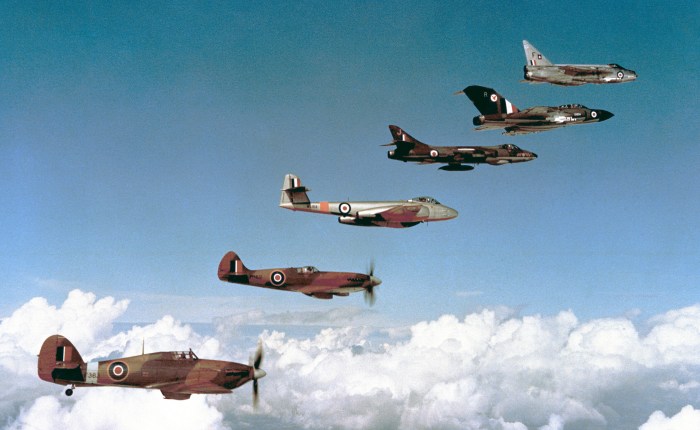
Header image: Pictured for the 20th Anniversary of the Battle of Britain in 1960 is a unique line-up of RAF fighters from the Battle of Britain to 1960. From bottom to top: Hawker Hurricane IIc, Supermarine Spitfire PR.XIX, Gloster Meteor F.8, Hawker Hunter FGA.9, Gloster Javelin FAW.9R and an English Electric Lightning F.1. (Source: Wikimedia)

#Podcast – “This Cannot Go On”: The ‘Race Riot’ on the USS Kitty Hawk: An Interview with Marv Truhe

#Podcast – “This Cannot Go On”: The ‘Race Riot’ on the USS Kitty Hawk: An Interview with Marv Truhe

Editorial Note: Led by Editor Dr Mike Hankins, From Balloons to Drones, produces a monthly podcast that provides an outlet for the presentation and evaluation of air power scholarship, the exploration of historical topics and ideas, and provides a way to reach out to both new scholars and the general public. You can find our Soundcloud channel here. You can also find our podcast on Apple Podcasts and Google Podcasts.

In 1972, the USS Kitty Hawk was conducting bombing raids against North Vietnam when violence broke out on the ship itself. Long-building racial tensions exploded into a series of assaults quickly labelled a race riot. Marv Truhe was one of the JAG lawyers assigned to defend the African American sailors charged in the incident. He tells the story of a series of racial injustices in his shocking new book, Against All Tides: The Untold Story of the USS Kitty Hawk Race Riot (2022). He joins us on the podcast to discuss the incident and its legacy for changes in race relations in the US Navy and the military.

9781641607841

Marv Truhe served as a Navy JAG lawyer and military judge during the Vietnam War. Following his military service, he was an Assistant Attorney General for South Dakota before entering private practice. He defended six of the Black sailors charged with rioting and assaults in the USS Kitty Hawk incident.

Header image: A US Navy McDdonnell F-4B Phantom II  of VF-114  traps on board the aircraft carrier USS Kitty Hawk underway in the Western Pacific off the coast of North Vietnam in March 1969. Also visible on the flight deck is another F-4B  of VF-114 as well as one from VF-213, a North American RA-5C Vigilante of RVAH-11, and an LTV A-7A Corsair II  of VA-105. (Source: Wikimedia)

#ResearchNote – Brassey’s Air Power: Aircraft, Weapons Systems and Technology Series

#ResearchNote – Brassey’s Air Power: Aircraft, Weapons Systems and Technology Series

By Dr Ross Mahoney

20230513_115224-01

With an abiding interest in how air power has been presented and written about, I, like many others, am an inveterate buyer of second-hand books. I recently added to my library a volume entitled Air Power: An Overview of Roles by R.A. ‘Tony’ Mason, published in 1987. Mason is arguably the key British air power thinker of the late-20th Century. He was appointed the Royal Air Force’s (RAF) first Director of Defence Studies (DDefS) in 1977. Since then, he has widely commented on, lectured, and written about air power. When he wrote this book, Mason, an Air Vice-Marshal, served as Air Secretary.

The book formed part of a series published by Brassey’s Defence Publishers, consisting of 11 titles – see the list below. I have read several of these during my career, including Mason’s title. However, I had not realised several interesting aspects of this series until now. Namely, these volumes were written for a specific audience and authored by serving RAF officers.

Dealing with the first issue, the series outline in the book’s frontmatter noted that ‘[t]his new series […] is aimed at the international officer cadet or junior officer level.’ Thus, the series had a specific pedagogical aim in mind. The series was designed to provide the knowledge that new officers joining an air force needed regarding the use and development of air power. In the case of the RAF, it was clearly aimed at those attending the RAF College at Cranwell and junior officers undertaking staff education. It would be interesting to find out whether the books ended up on the reading lists for these institutions and whether they were used as part of the curriculum. More research…

This leads to the second interesting aspect of this series, namely that they were all written by serving RAF officers. Indeed, many, such as Mason, Armitage, Knight, and Walker, were officers holding Air Rank. As noted, Mason was an Air Vice-Marshal when writing this book – he retired at this rank. Sir Michael Armitage was an Air Chief Marshal, and at the time his book was published, he had been appointed Commandant of the Royal College of Defence Studies. Knight was an Air Chief Marshal at the time of publication, while John Walker was an Air Vice-Marshal – he retired as an Air Marshal. Moreover, many of these officers were regular writers on air power at the time. Aside from Mason’s own outputs, which included editing Air Power in the Next Generation (1979) and War in the Third Dimension (1986), Armitage had, by this time, co-written Air Power in the Nuclear Age (1983) with Mason. Similarly, Walker had edited a collection for the Royal United Services Institute entitled The Future of Air Power (1986), to which Armitage also contributed.

What is interesting about the choice of officers is that the views presented in these books constitute an RAF view of air power and its employment in the late-1980s and early-1990s despite the series being ostensibly aimed at an international market. More interesting is that, taken as a whole, these books can be considered a source of informal or implicit doctrine. In essence, this is a form of doctrine not codified in formal manuals and helps explore the changing debates surrounding the use of military force, in this case, air power. This is especially important given that when the first volumes of this series were published, the RAF did not have its own formal, explicit environmental capstone doctrine – it was using NATO doctrine to guide operations. Furthermore, the final edition of AP1300 was declared obsolete in the 1970s, and the first edition of AP3000 would not be published until 1990. As such, this series should not be separated from the broader context of the RAF’s re-engagement with formal doctrine.

Finally, the publication of this series, through its choice of authors, shows that despite operating in a doctrinal lacuna, the RAF of the 1980s was still a thinking organisation that thought about the role of air power in war. Critical in that process was the establishment of the DDefS position in 1977. Mason, both as DDefS and in subsequent roles, published works on air power that can be seen as informal doctrine. This started with Air Power and the Next Generation and continued through the 1980s and 1990s. Moreover, this form of publishing informal doctrine would be formalised in the 1990s when the Chief of the Air Staff, Air Chief Marshal Sir Michael Graydon, established the CAS Air Power Workshop, led by DDefS. Over time, the Air Power Workshop has published several significant edited volumes on air power that can be viewed as informal doctrine. The first publication from the Air Power Workshop was The Dynamics of Air Power (1996), edited by DDefS, Group Captain Andrew Lambert and Arthur Williamson. These publications were an essential adjunct to the RAF’s formal doctrine, AP3000. Indeed, the volumes published in the late-1990s under the auspicious of the Air Power Workshop were significant because of the time taken to publish the various editions of AP3000. Put simply, informal doctrine could discuss and debate issues that took time to filter into formal codified doctrine.

Given this, the various DDefS’ have invariably played an essential role in developing British air power thinking, both formal and informal, since the establishment of the post. Moreover, the personalities who have held this role have been influential in that process. While Mason is a prominent name to cite to highlight the role’s importance, it is possible to note several other officers who held the post of DDefS and have played a role in developing British air power thinking inside the RAF and externally within academia and the broader public. These have included Air Marshal (ret’d) Timothy Garden, Air Vice-Marshal (ret’d) Andrew Vallance, Air Commodore (ret’d) Andrew Lambert, Air Chief Marshal Sir Stuart Peach, Air Commodore (ret’d) Professor Peter Gray and Air Commodore (ret’d) Dr Neville Parton.

Brassey’s Air Power: Aircraft, Weapons Systems and Technology Series

  1. Mason, R.A., Air Power: An Overview of Roles (London: Brassey’s Defence Publishers, 1987).
  2. Walker, J.R., Air-to-ground Operations (London: Brassey’s Defence Publishers, 1987).
  3. Armitage, M.J., Unmanned Aircraft (London: Brassey’s Defence Publishers, 1988).
  4. Browne, J.P.R, and Thurbon, M. T., Electronic Warfare (London: Brassey’s Defence Publishers, 1998).
  5. Walker, J.R., Air Superiority Operations (London: Brassey’s Defence Publishers, 1989).
  6. Chapman, K., Military Air Transport Operations (London: Brassey’s Defence Publishers, 1989).
  7. Elsam, M.B., Air Defence (London: Brassey’s Defence Publishers, 1989).
  8. Knight, M., Strategic Offensive Air Operations (London: Brassey’s Defence Publishers, 1989).
  9. Oxlee, G.J., Aerospace Reconnaissance (London: Brassey’s, 1997).
  10. Dutton, L. et al., Military Space (London: Brassey’s Defence Publishers, 1990).
  11. Laite, B.C., Maritime Air Operations (London: Brassey’s Defence Publishers, 1991).

Dr Ross Mahoney is an independent scholar specialising in the history of war with particular reference to the use of air power and the history of air warfare. He is currently the Senior Historian within the City Architecture and Heritage Team at Brisbane City Council in Australia. He has over 15 years of experience in the heritage and education sectors in Australia and the United Kingdom. Between 2013 and 2017, he was the inaugural Historian at the Royal Air Force Museum in the UK. In Australia, he has worked as a Historian for the Department of Veterans’ Affairs and taught at the Strategic and Defence Studies Centre at The Australian National University based at the Australian War College. His research interests are focused on the history of war, specifically on the history of air warfare, transport history, and urban history. He has published several chapters and articles, edited two books, and delivered papers on three continents. His website is here, and he can be found on Twitter at @airpowerhistory.

Header image: A Royal Air Force SEPECAT Jaguar GR1 of No. 2 Squadron RAF parked on the flight line during Tactical Air Meet ’78 at RAF Wildenrath, 15 May 1978. (Source: Wikimedia)