#BookReview – Balloon Ace: The Life of an Early Airpower Visionary

#BookReview – Balloon Ace: The Life of an Early Airpower Visionary

Reviewed by Ray Ortensie

Charles D. Dusch Jr., Balloon Ace: The Life of an Early Airpower Visionary. Lexington, KY: The University Press of Kentucky, 2025. Illustrations. Notes. Bibliography. Index. Pbk. 269 pp.
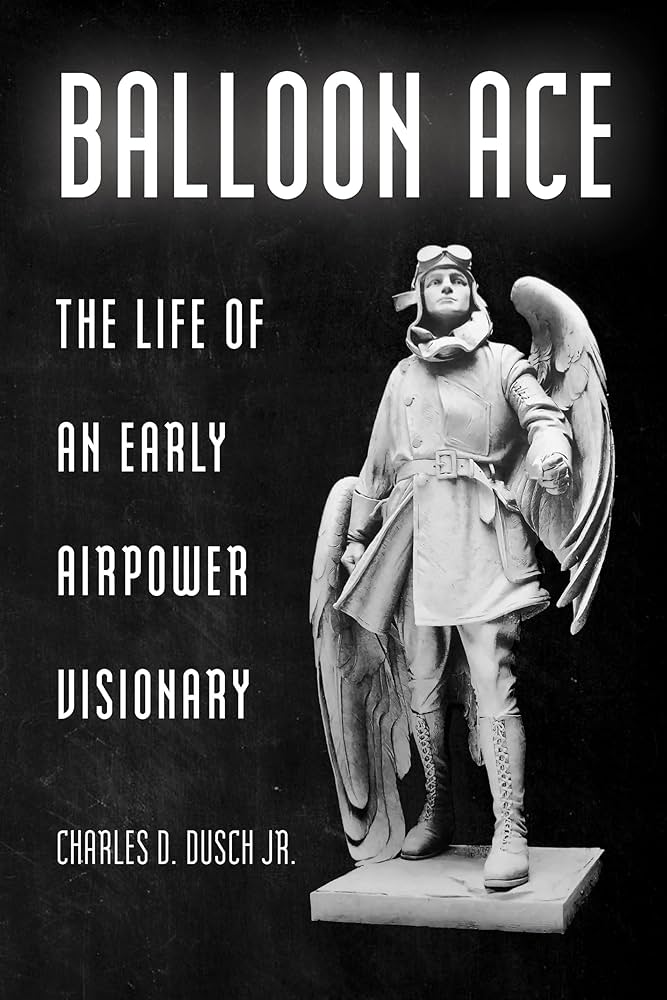
Charles D. Dusch Jr.’s Balloon Ace: The Life of an Early Airpower Visionary chronicles the brief, heroic, and influential life of Louis Bennett Jr., a figure who sought to revolutionise American military aviation during the First World War. Dusch skilfully integrates Bennett’s personal history, familial pressures, military ambitions, and spectacular combat achievements with the broader cultural and military history of the Great War, resulting in a biography that is both insightful into early air power concepts and profoundly moving in its examination of wartime loss and subsequent commemoration. The book’s comprehensive scope, spanning from Bennett’s Southern upbringing to his mother’s tireless post-war efforts, illuminates how one young man’s vision anticipated future air power strategy and how the ensuing grief shaped public memory.

The narrative begins by establishing Bennett’s complex heritage. Born into a prominent Southern family with service in the Confederate Army during the Civil War, his identity was heavily influenced by the narrative of the Lost Cause. His family was related by marriage to Thomas J. ‘Stonewall’ Jackson, a figure elevated to the pantheon of Confederate heroes and Bennett was taught by his mother to embrace the Lost Cause mythology and recognise that he had ‘big shoes to fill.’ Despite this powerful heritage, as a student at Yale University on the eve of the Great War, Bennett intended to be ‘his own man’ and forge his own path, perhaps spurred by this very Civil War legacy.

Bennett and his classmates followed newspaper accounts that dramatically romanticised the war, particularly focusing on the new air weapon, often casting aviators as ‘medieval knights, jousting high above the clouds.’ (p. 24) This glamour, coupled with the speed of aviation, appealed greatly to Bennett. He became an early advocate for military flying, joining the Aero Club of America in 1915. While many Yale students debated the war or joined the Connecticut National Guard, Bennett focused on flying, securing a summer job at an aircraft factory in Marblehead, Massachusetts, in 1916 to learn how aircraft were assembled – a pursuit he deemed a ‘good healthy job’ and ‘quite a science.’ (p. 38)

Upon America’s entry into the war in April 1917, Bennett, a senior at Yale, departed mid-semester. He purchased a Curtiss aeroplane and immediately pursued his most significant, yet ultimately unrealised, vision: the creation of the West Virginia Flying Corps (WVFC). Bennett sought to form a state aerial militia, as outlined in his ‘West Virginia Aerial Reserve Unit’ sketch, to train 15 aviators. The unit’s goal was to establish ‘aerial efficiency in this section of the country.’ Bennett’s expansive concept went beyond West Virginia, where he envisioned a national aviation reserve system with a decentralised network of airfields and repair stations. Dusch notes that this systematic approach made practical sense, especially given the unprepared state of American aviation technology and industry, which lagged well behind Europe. Furthermore, Bennett’s idea closely resembled the air power arguments William ‘Billy’ Mitchell put forth in 1925.

To ensure the unit’s sustainability, Bennett incorporated the WVFC and established the West Virginia Aircraft Factory in Warwood, West Virginia, along the Pennsylvania Railroad line. This factory later produced spare parts and Curtiss JN-4D airframes for the Army, valued at about $1 million. Crucially, Bennett hired Captain E.A. Kelly, an officer on leave from the British Royal Flying Corps (RFC), as an instructor, ensuring his cadets would learn modern combat tactics, which few available US Army aviators were qualified to teach.

Despite his patriotic efforts, the War Department resisted Bennett’s efforts to create an elite, independent unit. General George Squier, head of the US Army’s Signal Corps, advised Bennett that the government was reluctant to recognise individual units because doing so would restrict the stationing of officers. Secretary of War Newton D. Baker appreciated the WVFC’s patriotism but asserted that military aviation demanded far more than mere flying skills, requiring training in ‘radio telegraphy, aerial combat, and reconnaissance, machine guns, topography, etc..’ Baker recommended that WVFC members apply for regular US Army training. Discouraged by the US Army’s refusal and aware of the logistical ‘growing pains’ and production delays plaguing the fledgling US Army Air Service, Bennett made a realistic choice: the ‘quickest and most direct route’ to active combat was through the RFC in Canada. (p. 87) This decision was upsetting to his father, who questioned Bennett’s choice of Canadian service over American service once the US declared war.
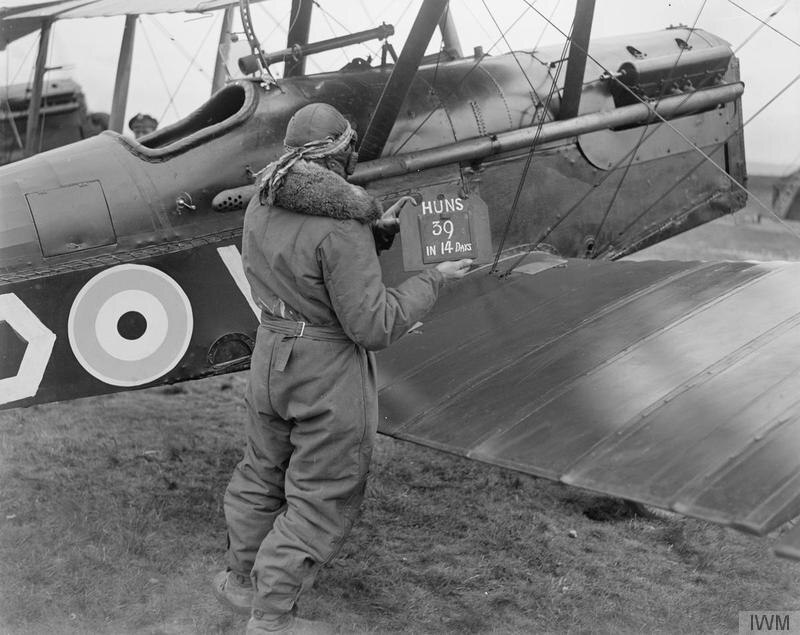
A Royal Air Force pilot affixing to his Royal Aircraft Factory S.E.5a biplane a notice reading: ‘Huns: 39 in 14 Days.’ Saint-Omer Aerodrome, 21 June 1918. This was the same type of aircraft flown by No. 40 Squadron during 1918. (Source: IWM)

Bennett was commissioned as a second lieutenant in the RFC in January 1918. After primary training, he progressed rapidly through advanced aircraft in England, moving from the Avro 504 to the beloved Sopwith Pup. He then trained on the highly manoeuvrable but notoriously tricky Sopwith Camel and the Sopwith Dolphin. Dusch expertly discusses the deadly instability of the rotary-powered Camel, which was known for killing new pilots.

Posted to France around 21 July 1918, Bennett joined No. 40 Squadron of the Royal Air Force (RAF) the following day, replacing Lieutenant Indra ‘Laddie’ Roy, an ace from India recently killed in combat. Placed in ‘C Flight’ under Captain George E.H. ‘McIrish’ McElroy, one of Britain’s leading aces, whose reputation for ‘great determination, reckless bravery and abandonment’ galvanised the squadron. Bennett was thrilled, believing he would learn more from the experienced flight commander. (p. 114) Bennett’s combat career was intensive but brief, occurring during the great Allied counteroffensive of summer 1918. His first combat sortie was disastrous; on 31 July, his commander, McElroy, was shot down and killed by ground fire. This high rate of attrition was sobering; one pilot estimated the average life expectancy of a pursuit pilot was just three weeks.

Bennett soon became known as a highly effective ‘balloon buster,’ targeting German observation balloons (Drachen). Dusch emphasises the strategic importance of these attacks: balloons and observation aircraft provided the necessary aerial observation for accurate artillery fire, which accounted for approximately 75 per cent of First World War casualties. Neutralising these platforms was key to achieving air superiority, thereby protecting Allied soldiers and blinding enemy commanders.

Bennett scored his first confirmed air victory on 15 August, sending a German Fokker DVII down out of control. Later that same day, he destroyed his first balloon near Merville using Buckingham incendiary ammunition. On 19 August, demonstrating unusual courage, Bennett took off alone after being delayed by engine trouble and dove on an easterly balloon, setting it ablaze instantly. Emboldened, he took off again that afternoon, destroying two more balloons near Merville and Hantay. In just four hours, he destroyed four German targets. On 23 August, he destroyed two more balloons in a single sortie, bringing his confirmed score to seven.

However, on 24 August 1918, Bennett was reported missing. Later accounts from villagers and German Lieutenant Emil Merkelbach confirmed his final heroic actions. Bennett was shot down after successfully attacking German balloons. He had pursued the balloonists fiercely, despite being low to the ground and facing intense anti-aircraft fire, a risk he willingly took. Wounded by a bullet to the head and suffering severe burns and two broken legs, he died that evening in the German field hospital at Wavrin without regaining consciousness. He was buried the next day with full military honours by his German captors.

Dusch spends the concluding section of the book discussing the legacy established by Bennett’s mother, Sallie Maxwell Bennett, a woman driven by intense, personal bereavement. Dusch frames Sallie’s actions within the larger context of First World War grief, noting that the absence of identifiable bodies caused acute psychological suffering for families, linking the experience back to the American Civil War. Sallie, already mourning the death of her husband earlier that August, immediately began a tireless quest to find her only son. Despite being initially denied a passport by the US government, she prevailed by becoming a correspondent for the Wheeling Register.

Once in France, Sallie overcame bureaucratic obstacles and conflicting reports about the location of her son’s grave. With assistance from Major General Mason Patrick and local French villagers, she eventually located his grave in the Wavrin cemetery. Her efforts soon expanded beyond her son; profoundly moved by the devastation and the grief of other mothers, Sallie undertook a ‘private quest’ to find, visit, photograph, and map the graves of other fallen American servicemen for their families back home. She overcame French governmental resistance to repatriation and, in April 1920, successfully arranged for Bennett’s remains to be returned secretly to Weston, West Virginia, where he was buried next to his father.

Sallie ensured Bennett’s legacy through perpetual memorials. She dedicated the family home in Weston as the Louis Bennett Jr. War Memorial and Public Library. More globally, she commissioned a stained-glass window in Westminster Abbey to guard the Tomb of the Unknown Warrior, dedicating it to ‘all flying men.’ In a unique blending of collective and personal memory, the artist used Bennett’s image as the model for the angel holding the shield of Faith within the window. Her final major endeavour was commissioning the statue of ‘The Aviator,’ designed to inspire the nation’s youth with his example of ‘able courage.’ This statue was ultimately dedicated at Linsly Military Institute in Wheeling, strategically positioned along the National Road to be seen continually by the American public.

Dusch’s Balloon Ace paints a comprehensive portrait of Louis Bennett Jr., not merely as a combat hero, but as an insightful, if ultimately thwarted, early air power visionary whose innovative ideas predated official policy. Furthermore, the detailed account of Sallie Bennett’s unrelenting efforts provides a powerful case study of maternal grief and the profound role of women in shaping national commemoration during the tumultuous post-war years. Balloon Ace: The Life of an Early Airpower Visionary convincingly demonstrates how Bennett’s story, though tragic and brief, became a foundational part of America’s public memory of the First World War.

Ray Ortensie is the Command Historian for Headquarters Air Force Materiel Command, based at Wright-Patterson Air Force Base, Dayton, Ohio, giving command oversight and support to 13 field-level history offices and four field-level museums. He is also an adjunct professor at American Public University System and Southern New Hampshire University, teaching undergraduate and upper-level graduate courses in U.S. history. His research focuses on aviation depots and Civil War guerrilla warfare. Ray received his master’s from Purdue University in 2004 and started working as an Air Force Historian shortly afterwards.

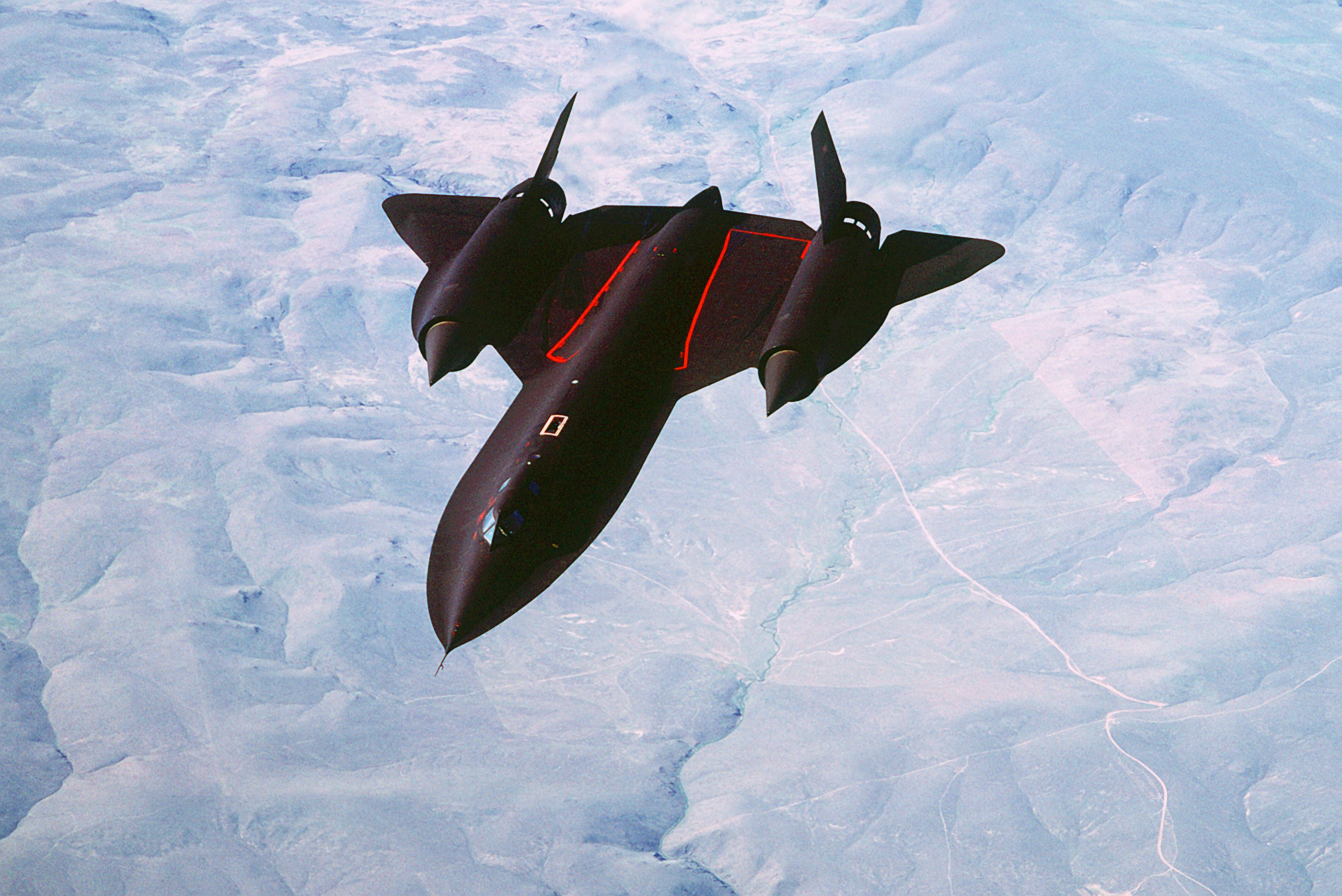
Header image: A Royal Aircraft Factory S.E.5 returning to St Omer aerodrome in the evening, 26 June 1918. This was the same type of aircraft flown by Bennett when he served with No. 40 Squadron RAF in 1918. (Source: IWM)
#BookReview – Flight Culture and the Human Experience

#BookReview – Flight Culture and the Human Experience

Reviewed by Dr Brian Laslie

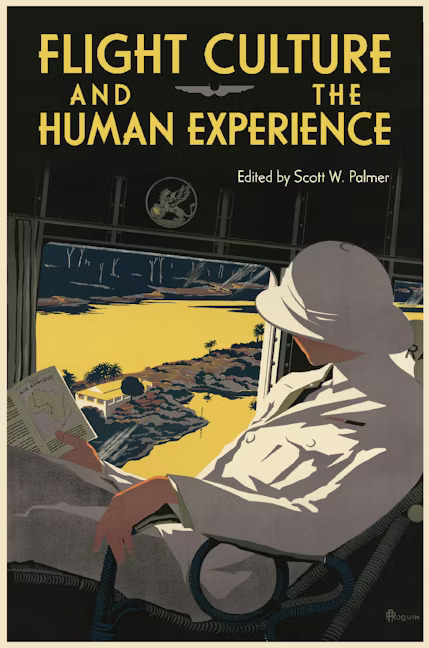
Scott W. Palmer (ed.), Flight Culture and the Human Experience. College Station, TX: Texas A&M Press, 2025. Hbk Photos. Bibliography. Index. 248 pp.

Scott W. Palmer’s edited work, Flight Culture and the Human Experience from the Texas A&M Press, is a compilation of papers presented at the 55th Annual Walter Prescott Webb Lecture Series in 2021. Sadly, edited volumes and collections of this type are seeing a downward trend in publication across academia as university presses tighten their belts under increased budgetary constraints, and this work demonstrates what a blow that is to serious academic scholarship, particularly for those without a manuscript-length project.

The book itself is a ‘collection of essays on the modern social and historical implications of aviation,’ which ostensibly places it outside the purview of the classically trained military historian, but since ‘guns and trumpets’ has been slowly subsumed into the broader contours of ‘war and society,’ there is still much here for the historian who concerns themselves with military matters as it pertains to aviation and air power. Only three of the seven chapters relate specifically to military issues; these include Johanna Rustler’s ‘The British Air Mechanic at War and Aircraft Innovation, 1914-1918,’ Marc Dierikx’s ‘Civil Air Transport and the Colonial Context in the Interwar Period,’ and Michael W. Hankins’ ‘Selling the Fighter Pilot’s Dream Machines: The F-15 and F-16 in the Public Eye.’ However, military aspects of the ‘flight culture’ can be found throughout.

In an introduction provided by Caroline E. Tapp, Curator of Social and Cultural History at the Smithsonian National Air and Space Museum, she notes that ‘flight culture has become an intrinsic part of the human experience’ and an experience which ‘transcends geographic borders and historical timelines.’ (p. 1) Contrary to Joseph Corn’s magnificent book Winged Gospel (1983), which demonstrated an America-centric focus on aviation, the current work broadens that interpretation into a global one. People of all nations are affected by and interact with aviation and air travel, which, in turn, shapes national culture and identity. As Tapp also notes, thanks to the work of Roger Launius, the writings of New Aviation History/New Aerospace History have become a distinct field exploring the melding of technology, social, and other ‘inclusive investigations’ into a cohesive field of study (p. 4).

Patrick Luis Sullivan De Oliveira begins the work with ‘The Utopian Machine: Lighter-Than-Air Flight and Romantic Socialism in Nineteenth-Century France,’ a chapter focusing on Ernest Pétin, the French milliner who went on to design airships. However, the chapter’s strength lies in its demonstration of the relationship between European socialist thought and the belief in lighter-than-air flight. Flight, be it heavier or lighter than air, has always been used in political metaphors. In this case, utopian socialist ideals wrapped their conceptions around lighter-than-air flight. As the author quotes Victor Hugo, who ‘turned his attention upward and toward the future’ and the promises of a better 20th Century (p. 34). De Oliveira shows, through Hugo, that the airship ‘would finally bring to fruition the ideals of the French Revolution.’ (p. 36)

Marc Alsina’s ‘Gender, Race, and Heroic Aviation in Interwar Argentia, 1920-1940’ demonstrates how aviation helped create unique national identities. In Argentina, military and civilian aviators, both men and women, received acclaim that helped to ‘articulate a modern national identity’ (p. 70). Rénald Fortier’s chapter ‘“Detroyattaboy”: Michael Détroyat and the 1936 National Air Races,’ gives a brief biography of the French air racer and how his victories in the 1936 National Air Races in the United States engendered resentment amongst American flyers including Roscoe Turner who stated, ‘[i]t isn’t fair for any foreign pilot to come over here’. However, Turner was severely criticised for his ‘poor sportsmanship’ (p. 148, 150). Still, the chapter clearly demonstrates how foreign influencers catalysed change, in this case, in America.

Janet Bednarek’s ‘Chasing the Future: Why US Airports Seem Always Under Construction,’ while not meant to be humorous, certainly provides chances to chuckle as she addresses the American nationwide airport signage ‘pardon our progress’ as airports have struggled since the 1960s with keeping up to an insatiable demand for air travel in America (p 171). In short, the airports themselves could not keep up with the ever-increasing number of travellers. Besides the ticketed passengers themselves, pre-9-11 airport visitors, changes made after the September 11th attacks, Covid-19, and myriad other reasons have made creating an ‘airport of the future’ a nearly impossible task (p. 192). While we may look upon the pre-9/11 era as the halcyon days of air travel, Bednarek clearly shows that at no time since the 1960s air travel boom has an airport been able to keep up with demand and that our interpretation of well-dressed flight attendants, good food, and good drinks began and ended at the door to the aircraft.

As previously noted, only three chapters demonstrate a more military-focused bent. Of these, Rustler’s ‘The British Air Mechanic at War and Aircraft Innovation, 1914-1918’ is a breath of fresh air that focuses on the support arm to those who fly at the ‘pointy end of the spear.’ In much the same way that Apple TV’s Masters of the Air gave significant, if not equal, screentime to these air mechanics or what we today call ‘maintainers,’ Rustler’s chapter infuses the study of aviation with a much-needed focus on the lower-ranked enlisted men who have since 1914, ‘kept ‘em flying.’ However, more importantly, Rustler shows how the relationship between the mostly officer flyers and enlisted air crews developed into ‘mutual trust and respect that transcended social boundaries’ and ‘served as a guidepost for future social development and emancipation.’ (p. 63)

Dierikx’s ‘Civil Air Transport and the Colonial Context in the Interwar Period’ is not exclusively military, but the air power historian studying the interwar years should not miss it. It begins with a vignette by a Dutch cartographer, which Antoine de Saint-Exupéry could have written. In short, flying can often be viewed in ‘Hobbesian’ terms: short, brutish, and nasty. Again, while not a military chapter per se, it does demonstrate the lengths to which colonial powers went to develop viable air routes between the First and Second World Wars. Flying these routes as both crew and passenger required a certain, ‘panache,’ as governments, postal and mail services, corporations, businessmen, and other air travelers all fought against the unknown in an early globalisation movement that shrank our world, connected empires, and birthed a new form of traveler and all done under the assumption that ‘absolute national sovereignty should rule the air medium.’ (p. 130)

Hankins’ chapter is entitled ‘Selling the Fighter Pilot’s Dream Machines: The F-15 and F-16 in the Public Eye,’ although ‘Mad Men for the Military Industrial Complex’ would also have been an apt descriptor. While Hankins has already explored the developments of both the F-15 and F-16 and the fights between the ‘Fighter Mafia’/‘Reformers,’ in his book Flying Camelot (2021), this chapter shows how that fight played out in ads present in trade publications, magazines, and other venues that saw these roles of each aircraft morph over time. Hankins has become one of the leading post-Vietnam United States Air Force and air power scholars, and this chapter only enhances that reputation.

Overall, this book accomplishes what it sets out to do, namely, providing a ‘wider, more meaningful view of aviation history.’ (p. 4) This is an important book; it presents some of the latest and greatest aviation scholarship, and its sum is greater than its composite parts. This vital work will find a home on the shelf of everyone who considers themselves a serious scholar of air power and aviation history.

Dr Brian Laslie is a noted air power historian, having authored The Sundowners, Pegasus, and Little Butch: Carrier Air Group Eleven and the War in the Pacific, 1943-1945 (2025), Air Power’s Lost Cause: The American Air Wars of Vietnam (2021),  Architect of Air Power: General Laurence S. Kuter and the Birth of the US Air Force (2017) and The Air Force Way of War (2015). The latter book was selected for the Chief of Staff of the Air Force’s 2016 professional reading list and the 2017 RAF Chief of the Air Staff’s reading list. US Air Force Historian and Command Historian at the United States Air Force Academy. Formerly, he was the Deputy Command Historian at the North American Aerospace Defense Command (NORAD) and United States Northern Command (USNORTHCOM). A 2001 graduate of The Citadel and a historian of air power studies, he received his Masters’ from Auburn University Montgomery in 2006 and his PhD from Kansas State University in 2013.

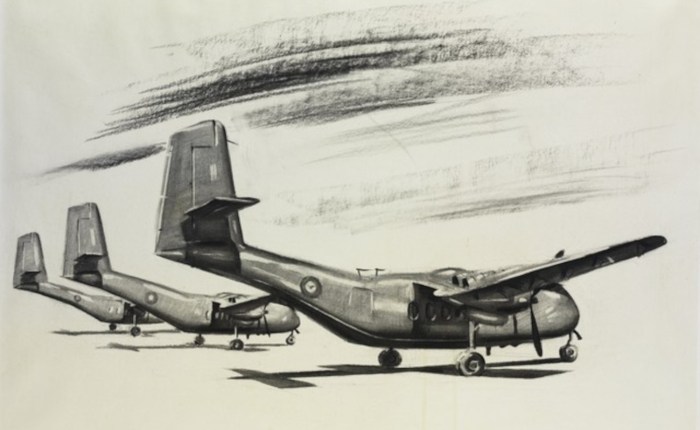
Header image: Three DHC-4 Caribou aircraft of No. 35 Squadron Royal Australian Air Force at Vung Tau air base, Vietnam, c. 1967-68. (Source: Australian War Memorial)

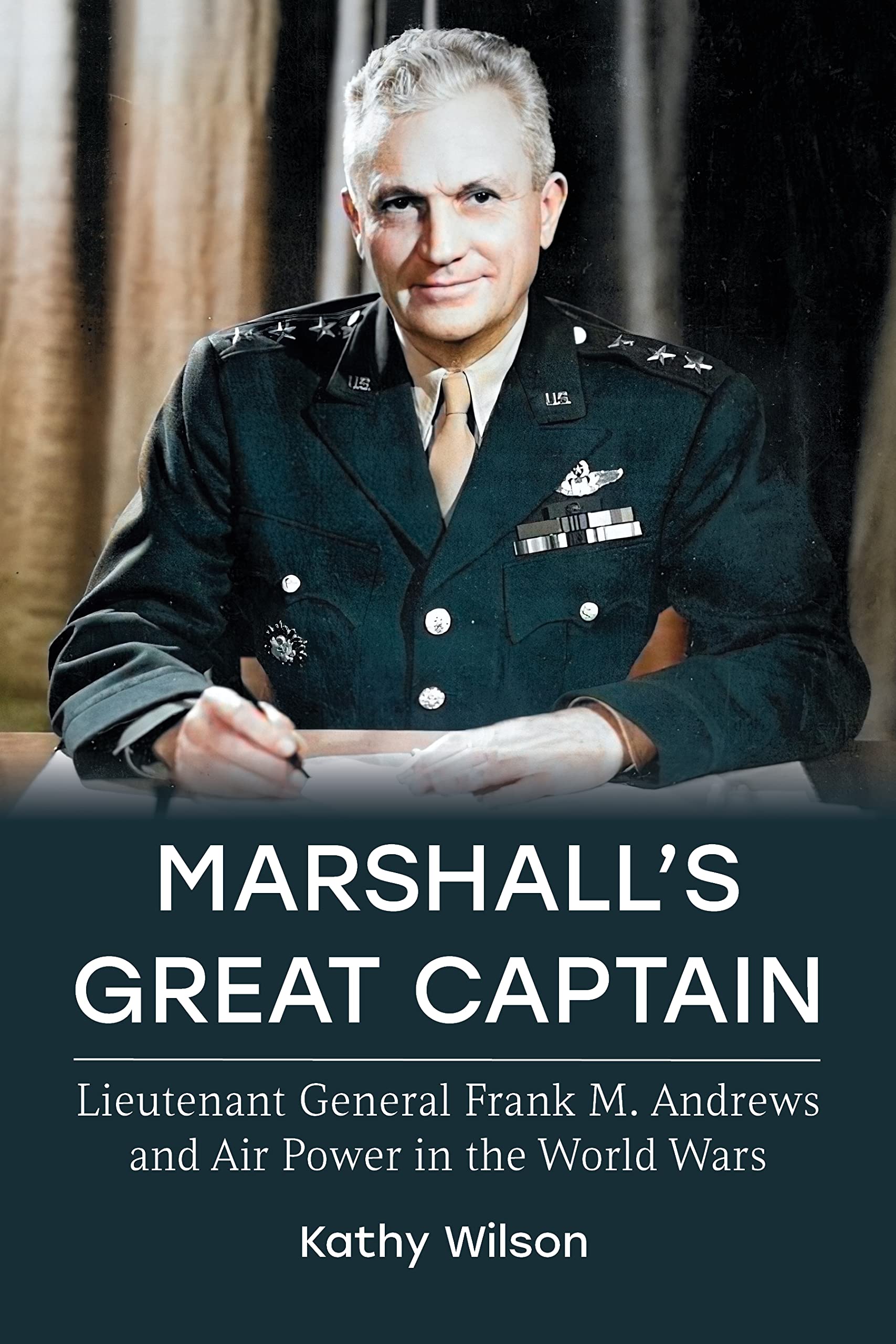
#BookReview – Marshall’s Great Captain: Lieutenant General Frank M. Andrews and Air Power in the World Wars

#BookReview – Marshall’s Great Captain: Lieutenant General Frank M. Andrews and Air Power in the World Wars

Reviewed by Dr John J. Abbatiello

Kathy Wilson, Marshall’s Great Captain: Lieutenant General Frank M. Andrews and Air Power in the World Wars. Lexington, KY:  University Press of Kentucky, 2024. Illustrations. Appendix. Notes. Bibliography. Index. Pbk. 273 pp. 

Kathy Wilson highlights the career of a key player in US air power history in Marshall’s Great Captain: Lieutenant General Frank M. Andrews and Air Power in the World Wars. This is a much-needed and valuable contribution about a senior leader of the US Army Air Corps (USAAC) and the Army Air Forces (USAAF) – a leader who was a driving force behind American air power, yet not a well-known figure to our reading public. Who was the namesake of Andrews Air Force Base (now styled as Joint Base Andrews), located in Prince George’s County, Maryland, and currently the primary military airbase serving America’s capital city?

Wilson, an independent scholar and Writing Fellow for Norwich University, published Marshall’s Great Captain as part of the University Press of Kentucky’s Aviation and Airpower Series, edited by US Air Force Academy command historian Brian Laslie. Wilson’s narrative begins with Andrews’s time at West Point (Class of 1906) and ends with his untimely death due to an aircraft accident on 3 May 1943. The author correctly argues that the extant works on Second World War air power leadership gloss over Andrews’s career and fail to fully explain his significant contributions. Wilson rectifies this oversight with this thoroughly researched volume.

After a brief introduction and prologue, the latter teasing the reader with the circumstances of Andrews’s final flight and Consolidated B-24 crash, Chapter 1 succinctly covers the subject’s time at West Point and first 11 years in the US Army as a cavalry officer. A descendant of Confederate cavalry officers and related to two Tennessee governors, Andrews thrived as a young leader. In 1914, he married Jeanette ‘Johnnie’ Allen, daughter of a senior Army cavalry commander.

As Wilson explains in Chapter 2, Andrews transferred to the US Army Signal Corps’ Aviation Division, forerunner of the US Army Air Service and USAAC, in 1917 but did not see action overseas. His contributions during the First World War included staff duty in Washington, D.C., and command of Rockwell Field in southern California. By 1918, he was a 38-year-old temporary Lieutenant Colonel. In the early 1920s, he served in Germany in the Army of Occupation. A series of typical assignments followed, to include attendance at all three of the US Army’s professional schools: Air Corps Tactical School, Command and General Staff School, and Army War College. This chapter provides extensive context about US air power in the 1920s and early 1930s, including coverage of the Billy Mitchell trial, air-coastal defence experiments, and the Air Mail fiasco of 1934.

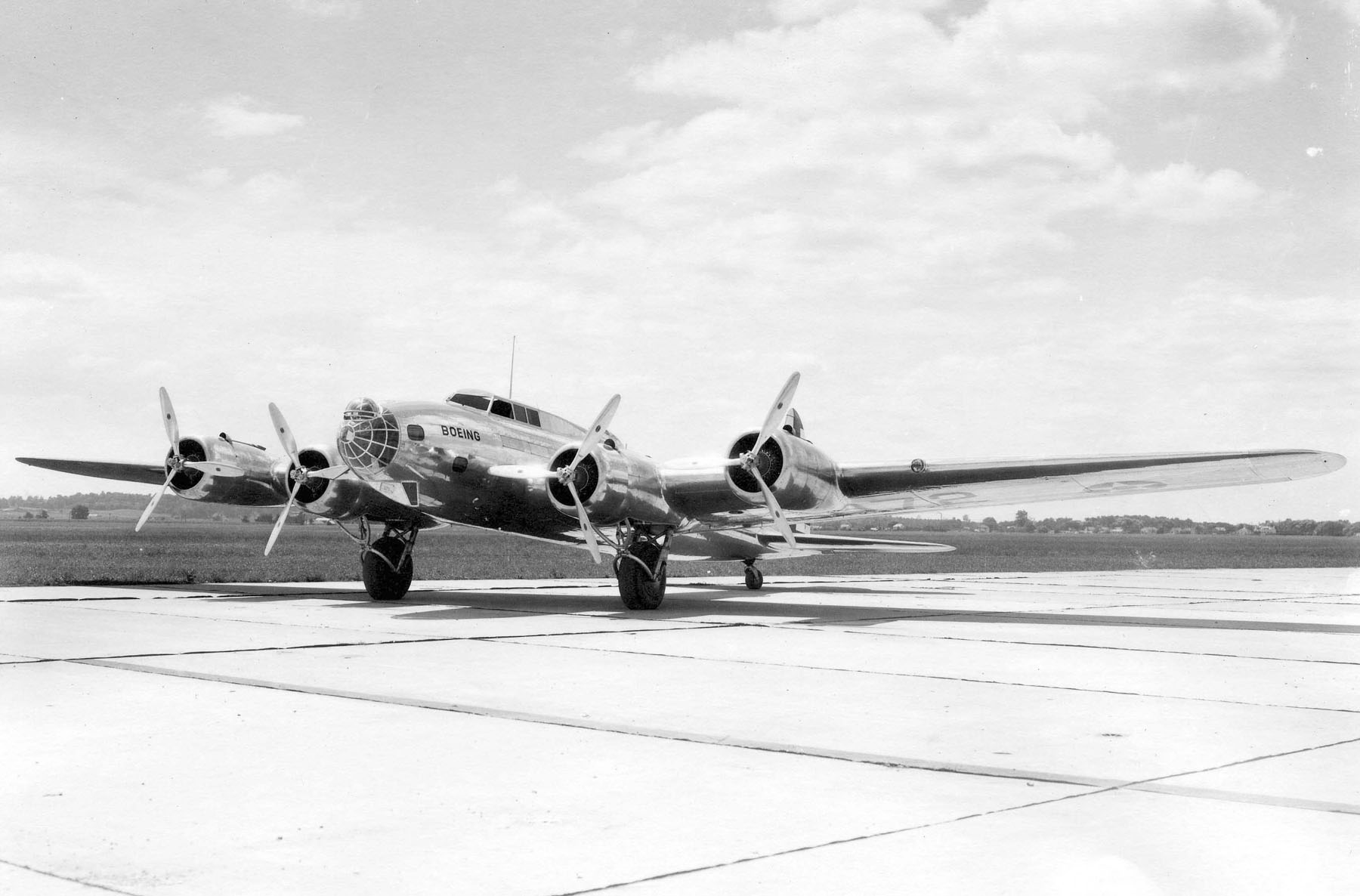
The next two chapters examine Andrews’s appointment to and service as Commanding General, General Headquarters (GHQ) Air Force, and the development of the Boeing B-17 bomber. Once again, Wilson provides extensive background, this time explaining the various boards and commissions investigating US air power, to include the Drum Board (1933) and the Baker Board (1934). In early 1935, US Army Chief of Staff General Douglas MacArthur appointed Andrews to serve as the first commander of GHQ Air Force. Comprising three under-resourced wings, the new GHQ Air Force was to serve as the Army’s air strike force, and here Andrews took charge of operations and training for the Air Corps. Wilson recounts his challenges stemming from a fragmented command structure in which the Chief of the Air Corps was responsible for supply, procurement, funding, assignments, and other supporting functions. At the same time, Army regional commanders exercised control over bases, maintenance, and court-martial authority. During his four years commanding GHQ Air Force, Andrews increased combat efficiency for USAAC, advocated for the long-range B-17 bomber, and, through air demonstrations and humanitarian flights, raised public awareness of the capabilities of US air power. He also established a solid relationship with a future mentor, then Brigadier General George Marshall, during the summer of 1938 by hosting the latter at GHQ and providing him with a personal tour of USAAC bases across the country. This visit paid dividends in two ways: it established a sense of trust between the two leaders, and it provided Marshall—then serving as the new Chief of Plans for the Army – with a solid understanding of air power’s roles, missions, and capabilities.

Boeing XB-17 (Model 299). (Source: Wikimedia)

Marshall became US Army Chief of Staff in September 1939 and appointed Andrews as the Assistant Chief of Staff, G-3, or chief of operations and training for the Army. Andrews was the first aviator to serve in this critical role for the Army, and, according to Wilson’s Chapter 5, it ‘was the most important and impactful assignment of Andrews’s career.’ (p. 105) Here, Andrews played an essential role in preparing the US Army for future combat in the Second World War, including establishing the Armored Force, improving training for the National Guard, setting up the Army’s emerging airborne infantry capability, and generally better integrating air units with Army operations. Chapter 6 then covers Andrews’ increased responsibilities first as commander of USAAC units in the Panama Canal Zone and then as overall US Army commander of the Caribbean Defense Command. These were important roles given American fears of potential Axis interference with the Panama Canal. Andrews demonstrated his expertise in reorganising forces, building and improving facilities, nurturing relationships with regional Allies, and most importantly, improving combat readiness.

Chapter 7 continues the Andrews story by describing the subject’s role as Commander, US Forces Middle East, starting in November 1942, and then as Commander, US Forces European Theater of Operations (ETO) beginning in February 1943. In these responsibilities, Andrews once again excelled at organising, training, and employing forces against the Axis. As ETO Commander, headquartered in London, he oversaw the rapid buildup of US Army ground units for Operation OVERLORD and the US 8th Air Force for the Combined Bomber Offensive; throughout, he maintained an excellent working relationship with his British counterparts.

In the final chapter, Wilson details the planned trip from London back to the United States via Iceland on 3 May 1943, which ended in a tragic crash due to poor weather. Her epilogue speculates – using the best available evidence – what next role Andrews may have taken on had he lived. Unfortunately, Andrews’ story ends too early.

Some key themes emerge throughout Wilson’s narrative. In mentioning the leadership style and personality of the gregarious and hard-charging USAAF Commanding General Henry ‘Hap’ Arnold, admiration of Andrews’s soft-spoken, gentlemanly demeanour is obvious. In all his roles, Andrews sought to educate superiors, peers, and subordinates about air power, not to antagonise them as other airmen sometimes did. Andrews’s relationship with George Marshall was important not only for the former’s rise through leadership positions but also for Marshall’s clear understanding of air power’s role in its various capacities. Finally, Wilson skilfully describes the technical development and acquisition processes of US aircraft, topics seldom mentioned in similar histories of this formative period for American air power.

This reviewer submits only one minor complaint about this study. Several verbatim quotes appearing throughout the volume are unattributed in the text, requiring the reader to flip to the note pages at the end of the book to determine the source. Many of these are lengthy. For example, page 115 presents an extensive excerpt on Marshall’s approach to selecting Army leaders, with no clues about the source. The endnote at the back of the book reveals that this was a quotation from a 1943 New York Tribune article by a staff writer.

Nevertheless, Wilson’s well-researched biography of Frank Andrews is a welcome addition to our understanding of air power leadership during the interwar years and the Second World War. Andrews was a key player, skilled in diplomacy yet laser-focused on organisation, training, and readiness. Airmen today have much to learn from Frank Andrews’ story.

Dr John J. Abbatiello earned his PhD from King’s College London’s War Studies program in 2004. After 18 years of faculty service at the US Air Force Academy’s Department of History and Center for Character and Leadership Development, he then served as the Training and Education Branch Chief for North American Aerospace Defense Command and US Northern Command. He is the author of Anti-Submarine Warfare in World War I: British Naval Aviation and the Defeat of the U-Boats (Routledge, 2006) and a chapter on Lewis Brereton in The Worst Military Leaders in History (Reaktion Books, 2022).

Header image: General Frank M. Andrews, theatre commander of US forces in the ETO, was responsible for directing the American strategic bombing campaign against Germany and for planning the land invasion of occupied western Europe, 1943. (Source: Wikimedia)

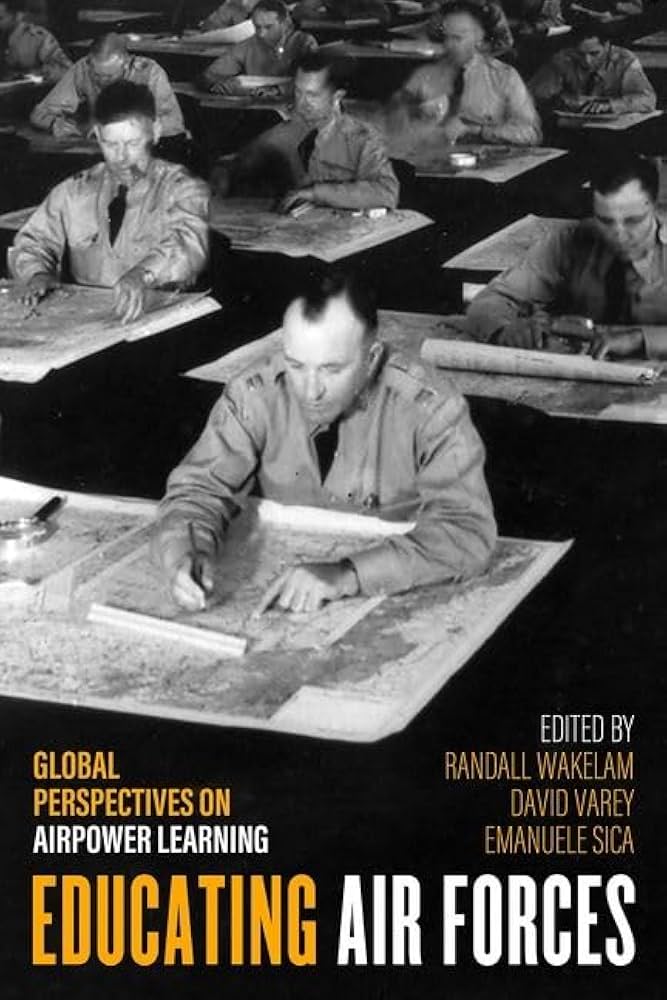
#BookReview – Educating Air Forces: Global Perspectives on Airpower Learning

#BookReview – Educating Air Forces: Global Perspectives on Airpower Learning

Reviewed by Dr Ross Mahoney

Randall Wakelam, David Varey and Emanuele Sica (eds.), Educating Air Forces: Global Perspectives on Airpower Learning. Lexington, KY: University Press of Kentucky, 2020. Hbk. Notes. Index. vii + 260 pp.

Air power history is dominated by accounts of operations, especially those of the First World War, the Second World War, and the Vietnam War. There is relatively little written about how air forces prepared for war. However, an inherent part of this preparation is how air forces have educated their aviators throughout history. As such, it is refreshing to read a volume dedicated to the subject of learning in air forces. Moreover, as the editors of the volume correctly write (p. 1), [i[f we accept that militaries are professions and that professions need education […] then we could reasonably want to know how militaries are educated and how well they perform this task.’

This edited volume is the outgrowth of a 2016 conference held at the Royal Military Academy of Canada on air power education. The book consists of 13 chapters organised into three chronological eras (the interwar years, the Cold War, and the post-Cold War). Many of the chapters were presented as keynote lectures at the 2016 conference. Several chapters, such as James Beldon and Peter Gray’s reflection on air power education in the modern Royal Air Force (RAF), were added for the publication of the volume (pp. 232-44). The addition of such chapters helps to round out the book and give shape to the subject.

Before examining some of the chapters, it is essential to recognise that, conceptually, this edited volume focuses on learning rather than solely on education. However, the latter is its main focus. This is an important distinction, as some of the chapters deal with educational establishments whose primary focus was training rather than education. As the editors relate, a tiered system of learning exists in military organisations that moves from training through to education (pp. 3-4). Nonetheless, for example, the chapters by Emanuele Sica (pp. 30-50) and John Farquhar (pp. 111-33) address institutions – the Accademia Aeronautica (Italian Air Force Academy) and the United States Air Force (USAF) Academy, respectively – whose primary focus is training. However, such institutions still have a broader educational role to play, and in this, we have a case of ‘Athens in Sparta,’ or a mix of skills-based training (Sparta) with broader education (Athens).

A review of this kind cannot hope to critique each chapter individually. As such, a couple of examples taken from each period will suffice. In the section on the interwar years, Sica examines the role that Giulio Douhet’s writing played in the education of the Regia Aeronautica (Italian Air Force) through the lens of the Accademia Aeronautica. In doing this, Sica presents a well-trodden subject – the writing of Douhet – in a new light. As Sica highlights, the place of Douhet in the development of his own country’s air force remains ‘open to debate’ (p. 43). Moreover, while the appointment of Italo Balbo in 1926 as undersecretary for air in the Italian government has been interpreted as ‘boon for Douhet’s fortune,’ the former’s policies illustrate the difficulty of assessing Douhet’s impact. This is born out in the teaching at the Accademia Aeronautica. As Sica argued, Douhet’s ‘ideas […] did not appear to gain wide acceptance, especially in the first years of the Italian Air Force Academy’ (p. 44).

In the section on the Cold War, the chapter by Richard Goette is of particular interest to this author, given the parallels between the Canadian and Australian experiences in the early years of the Cold War. Canada’s experience with creating its own Staff College is the subject of Goette’s chapter. However, it is worth noting that during the interwar years, both the Royal Canadian Air Force (RCAF) and the Royal Australian Air Force (RAAF) relied on the RAF to provide mid-level officer education through the RAF Staff College at Andover, the latter examined by Gray in his chapter (pp. 15-29). The experience of the Second World War led the RCAF and RAAF to establish their own staff colleges. Goette, however, points out (p. 103) that ‘[a]ir force education at the RCAF Staff College […] involved much more than studying and time spent in the classroom.’ Goette’s point here is important. Attendance at institutions such as staff colleges is about more than just formal learning; it is about the experience as a whole and the opportunity for socialisation, networking and the sharing of ideas amongst peers.  

The establishment of the USAF School of Advanced Airpower Studies (now the School of Advanced Air and Space Studies (SAASS)) by the world’s preeminent air force is the subject of Harold Winton’s chapter. In this chapter, Winton compares SAASS with the interwar Air Corps Tactical School and examines five key areas of comparison: origins and purpose, faculty, curriculum, students, and significance (p. 154). In his conclusion, Winton rightly highlights that, in creating an institution for the ‘elite’ education of select officers in the form of SAASS, the USAF must ensure that its officers show ‘intellectual humility’ to prevent them from degenerating (p. 163) into ‘elites of privilege and entitlement.’ Conversely, Martin James discusses the role of education and the establishment of the Air Power Studies Centre (APSC) (now the Air and Space Power Centre) by the RAAF. In this, James highlights the importance of key stakeholders, notably, the Chief of the Air Staff (CAS), Air Marshal Ray Funnell, in supporting the establishment of APSC. Indeed, the role of such ‘champions’ needs to be more fully understood. For example, Marshal of the RAF Lord Cameron was instrumental in establishing the role of Director of Defence Studies for the RAF in 1977. The RAAF was fortunate in having a CAS, Funnell, who recognised that the study and writing of air power, including its doctrine, had been neglected (p. 170).   

It is hard to criticise an edited work such as this, as it does not purport to be a comprehensive examination of air power learning. It could never hope to be, but it does offer a valuable insight into a much-underappreciated subject. However, the volume focuses on the experience of Western air forces. It would have been interesting to compare the experience of Western air forces in learning with that of non-Western countries. For example, discussing air power learning in communist countries such as the Soviet Union and China could highlight the role ideology played in officer education.

In conclusion, despite the author’s criticism above, the editors are to be commended for bringing this volume to fruition. The volume offers a starting point for any scholar researching learning in the military, generally, and in air forces specifically. It should be read by both scholars and practitioners who are interested in military learning.

Dr Ross Mahoney is an independent scholar specialising in the history of war, with a particular focus on the use of air power and the history of air warfare. He is the Editor-in-Chief of From Balloons to Drones and currently the Senior Historian within the Heritage Policy team at Brisbane City Council in Australia. He has 20 years of experience in the education, museum, heritage and government sectors in Australia and the United Kingdom, including serving as the inaugural Historian at the Royal Air Force Museum from 2013 to 2017. His other research interests are military leadership and command, military culture, and the history and development of professional military education. He also maintains an interest in transport history. He has published numerous articles, chapters and encyclopedia entries, edited two books, and delivered papers on three continents.

Header image: Ramslade House, the home of the RAF Staff College in Bracknell after the Second World War. (Source: Wikimedia)

#BookReview – Rain of Ruin: Tokyo, Hiroshima and the Surrender of Japan

#BookReview – Rain of Ruin: Tokyo, Hiroshima and the Surrender of Japan

Reviewed by Dr Ross Mahoney

Richard Overy, Rain of Ruin: Tokyo, Hiroshima and the Surrender of Japan. London: Allen Lane, 2025. Hbk. Images. Notes. Further readings. Index. xiii + 206 pp.

The decision to use the atomic bomb in the Second World War is one of the most written-about episodes in modern military history. As Richard Overy (p. xi) identifies in this work:

[n]o single subject in the history of the United States war effort has prompted so much historical, political, and philosophical writing. No set of surviving records has been subjected to so much close forensic scrutiny.

Broadly speaking, debates over its use range from the argument that they were used to save American lives to the view that they were used to forestall Soviet ambition in the Far East and prevent the division of Japan. As exemplified by the controversy in 1994 surrounding the planned script for what became the ‘Enola Gay’ exhibition at the Smithsonian National Air and Space Museum in 1995, debates over how we interpret the decision to use the atomic bomb have been subject to intense scrutiny and disagreements. Into this milieu comes Overy, one of the world’s leading authorities on the history of the Second World War and an expert on the history of air power.

Overy had previously written the voluminous The Bombing War (2013), which dealt with debates surrounding bombing in the European theatre of war; however, in this volume, he turns his attention to the US strategic bombing campaign against Japan in 1945 and the decision to use the atomic bomb. In Rain of Ruin, Overy deals with three separate but indelibly linked areas, which form the core of the book’s key chapters. Indeed, each chapter provides the necessary context for the next. For example, in Chapter Two, Overy explores the reason why the US shifted from precision targeting to a strategy of indiscriminate firebombing from March 1945 onwards. As Overy notes, the US had abhorred British ‘area bombing’ techniques. However, they were willing to adopt similar methods in the Far East against Japan because of a shift in thinking about the use of incendiary raids influenced by the character of the war in the Far East, ‘the demonisation of the Japanese enemy, and the effort to define area targets as legitimate military-economic ones.’ (p.40). Furthermore, they were supported in this shift in strategy by appointing an officer, General Curtis LeMay, who showed no ‘compunction about bombing and killing civilians if it helped shorten the war’ (p. 22).

Following on from the shift in US air power strategy, Chapter Three deals with the development and decision to use the atomic bomb. Indeed, Overy highlights that in accepting the change in air power strategy, it became easier for the US to normalise the use of the atomic bombs. As he argued, the shift in strategy ‘prepared the way for the apotheosis of indiscriminate destruction in the two atomic attacks’ (p. 18). Moreover, Overy also adeptly illustrates the role that civilian scientists played in the development of the atomic bomb, arguing that ‘[w]ere it not for the maximum effort by a cohort of the world’s most distinguished physicists, the bomb would not have been ready by 1945’ (p.54). As such, it is essential to remember that the use of the atomic bombs was a whole-of-government affair that not only required a shift in US air power strategy but also the willingness of other stakeholders to buy into the project and their eventual use. This also included government officials in key decision-making roles and illustrates that military strategy, such as the decision to use the atomic bomb, does not develop in a vacuum.

Finally, in Chapter Four, Overy examines the reasons for the Japanese surrender in 1945 and the role that the dropping of the atomic bombs played in that decision. In doing so, Overy does an excellent job in comparing the various arguments related to Japan’s decision to surrender, most notably, the role played by the Soviet invasion of Manchuria that started between the dropping of the two atomic bombs. Indeed, as Overy illustrates, drawing on Japanese sources, the Japanese decision to surrender – the so-called ‘Sacred Decision’ – was complex and not readily accepted. For example, towards the end of August, a Japanese Kamikaze unit dropped propaganda leaflets over Tokyo, warning residents not to surrender and stating that the imperial rescript had been a false document (p. 126). Despite this, Overy makes clear that the decision to surrender was complex. Both conventional and atomic attacks on Japan played a role in the decision-making process, though whether they were decisive, as many have argued, remains open to question. Indeed, Japanese leaders viewed the atomic bombings simply as an ‘extension of LeMay’s campaign’ (p. 110).

Overall, Overy has, in the course of just 150 pages, placed the decision to use the atomic bomb in its essential context, the shift in US air power strategy that occurred in the Far East in 1945 and assessed their role in the Japanese decision to surrender. The book is supported by copious referencing to sources not just from the US but also from Britain and Japan. It is necessary reading for anyone interested in the decision to use the atomic bomb, how the Second World War ended, or US air power strategy. However, perhaps the greatest strength of Overy’s analysis is that he does not ‘judge the past’ but allows the evidence to tell its story and allows the reader to ‘understand it better on its own terms’ (p. xiii). In this, Overy has been successful.

Dr Ross Mahoney is an independent scholar specialising in the history of war, with a particular focus on the use of air power and the history of air warfare. He is the Editor-in-Chief of From Balloons to Drones and currently the Senior Historian within the Heritage Policy team at Brisbane City Council in Australia. He has nearly 20 years of experience in the education, museum, and heritage sectors in Australia and the United Kingdom, including serving as the inaugural Historian at the Royal Air Force Museum from 2013 to 2017. His other research interests are military leadership and command, military culture, and the history and development of professional military education. He also maintains an interest in transport history. He has published numerous articles, chapters and encyclopedia entries, edited two books, and delivered papers on three continents.

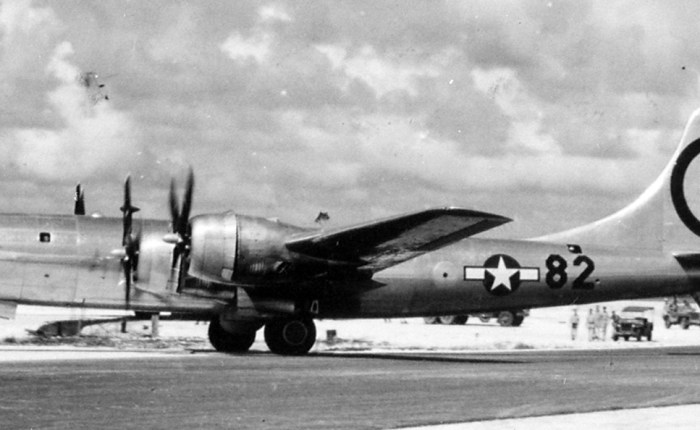
Header image: The Boeing B-29 Superfortress Enola Gay on Tinian just after the attack on Hiroshima on 6 August 1945. (Source: Wikimedia)

#ReviewArticle – Bomber Command at War

#ReviewArticle – Bomber Command at War

Reviewed by Dr Dan Ellin

Marcus Gibson, The Greatest Force: How RAF Bomber Command became the No.1 factor in Britain’s total, destructive defeat of Nazi Germany. York: Marcus Gibson, 2025. Illustrations. Bibliographic Notes. xv + 537 pp.

Daniel Knowles, Reaping the Whirlwind: The Changing Perceptions of the Wartime Role of RAF Bomber Command. York: Barnthorn, 2025. Illustrations. Appendices. Bibliographic Notes. Index. 281 pp.

The history of RAF Bomber Command is a difficult heritage. Since the war itself, questions about area bombing have divided opinion, and today the bombing war is frequently remembered through the divisive, binary lenses of the ‘Dams or Dresden’.[1] Both books consider the public perception of the actions of RAF Bomber Command. However, while Reaping the Whirlwind examines the subject critically and objectively, The Greatest Force passionately argues for further recognition for Bomber Command. On his website, Gibson claims that the book aims to ‘fundamentally change our view, once and for all, of the immensity of their contribution.’[2]

In The Greatest Force, Gibson claims to answer the ‘outstanding questions’ (Rear cover) he has identified about RAF Bomber Command’s war, including why ‘Harris was right to bomb city centres’, how ‘Bomber Command became the No.1 factor in Britain’s total, destructive defeat of Nazi Germany’, and how the force ‘gave little-known but vital support to the Royal Navy against the U-boats and to Allied armies.’ He also maintains that the ‘book is the first-ever full analysis of the impact of RAF Bomber Command on Nazi Germany’. He claims that his research finally ‘dispels the many myths about Bomber Command’s true effectiveness,’ and proves that ‘it was the foremost military force in securing victory.’[3] The Greatest Force massively overpromises and underdelivers.

The book makes a couple of legitimate points, notably the importance of small industrial production to the Nazi war effort. However, it lacks proper evidence to support these ideas, and Gibson’s claims are largely unsubstantiated. The book fails to live up to the promise of the title, the blurb on the back cover, and its marketing. In the introduction, he back-pedals from the title’s claim, concluding ‘that the RAF’s bombing was the principal reason for Germany’s early military defeat in the West – a destructive force equalled in effectiveness only by the victories of the Red Army on the Eastern Front’. (p. xiv) More importantly, the questions he asks are not ‘outstanding’. For example, we already know that materiel was diverted from elsewhere to defend against Allied air power (p. 163). 

He resolutely buys into the big man of history concept, citing Harris, Churchill, and his namesake with the dog, while making his disdain for Atlee very clear. (p. 470) His political stance and agenda are also revealed by phrases like ‘group think’ (p. 461) and ‘betrayal’ (p. 465, 469), as well as his wish for a column for Harris to rival that of Nelson. (p. 465) He tries so hard to clear the name of Bomber Command that he avoids the complexity of the subject and includes so much that is irrelevant. Rather than debunking certain myths about the role of Bomber Command, the book reinforces those on one side of the debate over the difficult heritage of the bombing war. His wish for a monumental column taller than that of Nelson firmly positions him in this. Gibson is a journalist with an axe to grind; he is not a historian.

The book is poorly referenced, many claims are unsupported, and the sources used are often cherry-picked without analysis. Most references are to the secondary literature, such as Adam Tooze’s Wages of Destruction (2006), rather than to the primary sources he claims to have used. The book overlooks the cultural context of the historiography he cites, as well as the nuances of working with veteran testimony 80 years after the events. One moment, he’s talking about Allied air power; the next, he is attributing all success solely to RAF Bomber Command (p. 159, 163).[4]  Reading it made me realise that ‘yes and’ can be a negative comment.

Conversely, in Reaping the Whirlwind, Daniel Knowles acknowledges that the bomber has been in ‘the shadow of Fighter Command’ since Churchill’s speech about ‘the few’ in 1940, and like Gibson, argues that since the end of the war, Bomber Command has occasionally been regarded ‘with great distaste’ (p. 100). However, unlike Gibson, he traces how the ‘perceptions of, and attitudes to the role played by Bomber Command’ have fluctuated between 1945 and today, and he advances explanations for their changing favour (p. 5).[5]

Unlike Gibson, Knowles is historically minded, having a degree in History and Politics. The difference is highlighted in their approach to their subject. He critically examines the historiography, and how literature, film and TV, novels and comics, political discourse and contemporary events, the popular press, and even representations in school textbooks, have played their part in the construction of the popular memory of Bomber Command. He goes into some detail describing the capabilities of different bombsights, and navigation aids including Gee, H2S and Oboe, before he considers how the tactical differences between RAF and USAAF bombing policies have been remembered as area or precision bombing. In doing so, unlike Gibson, Knowles engages with the complexity and the nuance of evolving attitudes to the bombing war in the context of changing politics and worldwide events over the last eight decades.

Reaping the Whirlwind has a logical structure; it is well-referenced and includes 70 pages of appendices with transcripts of important primary sources, including the Butt Report and Churchill’s speeches and correspondence. I would argue that it is worth buying to have these sources accessible on a bookshelf. The book flounders a little by oversimplifying the discussion around censorship of films and the removal of statues (pp. 130-1), but the reader can forgive this and the occasional typo. Although he perhaps incongruously claims ‘little concern has been given to the aircrews of Bomber Command’, (p. 79) Knowles examines the decorations awarded to veterans, and comments that the issue of the Bomber Command Clasp in 2013 would not have occurred if ‘perceptions and attitudes of Bomber Command’s role within the Second World War had not changed’ (p. 97).

Knowles summarises the historiographical and current perspectives on the bombing war, whereas the thinking behind The Greatest Force remains rooted in the late 1990s or early 2000s. Although his book is half as long, Knowles is more effective than Gibson at arguing that the ‘hostility’ to Bomber Command’s position in public memory has been ‘unfair’. (p. 162) He concludes that while their role still divides opinion, perceptions have altered, and Bomber Command is now recognised by the memorials in London and by the International Bomber Command Centre in Lincoln. (p. 179)  

Dr Dan Ellin is the archivist for the International Bomber Command Centre Digital Archive housed at the University of Lincoln. A Social and Cultural historian, his research examines the lives, emotions and medical treatment of the men and women who served with Bomber Command during the Second World War, and how the bombing war is remembered.

Header image: An Avro Lancaster MkIII of No. 103 Squadron at Elsham Wolds, Lincolnshire, early March 1943. As part of the publicity for ‘Wings For Victory Week’ (6-13 March), the station photographer was required to supply photographs of the men and machines of the squadron for inclusion in local newspapers. (Source: IWM (CH 8965))

[1] Mark Connelly Reaching for the Stars: A New History of Bomber Command in World War II (London: I.B. Tauris, 2001), p. 147.

[2] Marcus Gibson, ‘The Greatest Force – New Book by Marcus Gibson’ 2025. Accessed 15/08/2025 https://rafbook.co.uk/

[3] Marcus Gibson, ‘The Greatest Force – New Book by Marcus Gibson’ 2025. Accessed 15/08/2025 https://rafbook.co.uk/

[4] Paul Woodadge and Marcus Gibson, ‘How RAF Bomber Command became the No.1 factor in Britain’s total, destructive defeat of Nazi Germany’, WW2TV (2025). Accessed 15/08/2025 

[5] Ashley Barnett and Daniel Knowles, Barnthorn Publishing, ‘Reaping the Whirlwind by Daniel Knowles.’ Accessed 15/08/2025 

#BookReview – Bomber Boys: WWII Flight Jacket Art

#BookReview – Bomber Boys: WWII Flight Jacket Art

Reviewed by Dr Brian Laslie

John M. Slemp, Bomber Boys: WWII Flight Jacket Art. self-published: www.wwiibomberboys.com, 2024. Hbk. 371 pp.

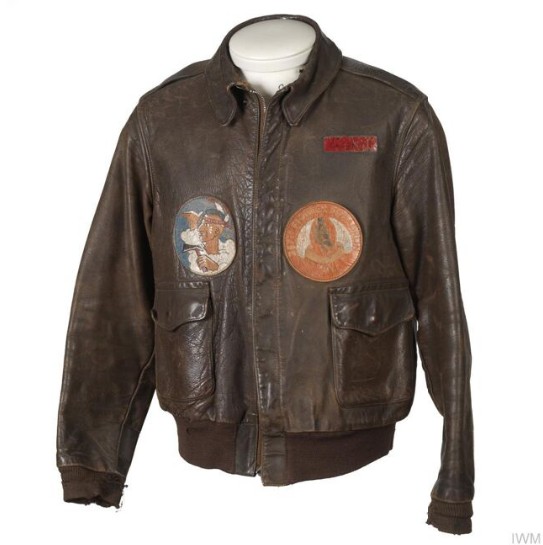
At the National Museum of the United States Air Force in Dayton, Ohio, a glass case between the Second World War and Korean War exhibits displays artwork painted on the back of seventeen A-2 jackets. Each jacket is a work of art, and each has a story detailing the wearer’s unique identity. Sometimes, they contained simple unit insignia, or the number of missions flown, and other jackets had full murals of the aircraft, pin-ups, cartoon characters, or nose art from the aeroplane.

Bomber Boys: WWII Flight Jacket Art is a love story to these A-2 jackets when leather was the ‘ideal canvas’ (p. 16). At the same time, it is a book on cultural history, military history, military uniforms, and, to the extent that wearers of the jacket might get away with it, a social commentary on the units the American airmen served in. As the author John Slemp notes, the A-2 jackets became ‘mobile signposts reflecting the distinct mortal challenges every flyer faced’ (p. v.). Although the jackets were technically uniform items and, therefore, not to be altered, senior leaders turned a blind eye to many uniform modifications. Learning to ‘read’ these jackets might, to the uninitiated, be like attempting to read Mayan glyphs. However, Slemp deftly walks the reader through what each marking indicates and, thus, what the wearer conveyed to other members of his unit and others he (and it was always he) might come into contact with.

The jackets contained in this book represent a ‘cultural and historical significance’ (p. v.). The book’s highlight is obviously the jackets, photographed in high resolution, and each picture is beautifully displayed. Jimmy Stewart’s jacket is one of those appearing in the book (pp. 182-3), and the author also weaves in fighter squadrons.

An A-2 jacket of 1st Lieutenant ‘Eugene’ Greenwell, who served at Steeple Morden, Cambridgeshire with the US 357th Fighter Squadron, 355th Fighter Group. Later, he joined the newly formed 2nd Scouting Force (still based at Steeple Morden), a formation of fighter aircraft that were specially tasked with going forward in advance of the heavy bomber formations to visually check the all-important weather conditions en-route to the target area, diminishing the risk of bombers having to abort their missions due to heavy cloud. Although expressly forbidden to engage enemy forces because of their reconnaissance role, 2nd SF did account for several enemy aircraft. By their final mission of 25 April 1945, 2nd SF was credited with thirteen kills in the air, two ground, two probable and eight damaged. Among that total, Greenwell is confirmed as having destroyed the 355th Group’s first Me 262 jet fighter on the ground at Neuberg airfield on 23 February 1945. (Source: IWM (UNI 13858))

The book, written over the course of a decade, also includes numerous veteran vignettes; black and white photographs – similar to the Medal of Honor: Portraits of Valor book by Peter Collier (Author), Nick Del Calzo (Photographer) – give an aging human face to the stories. Slemp also includes other ‘artifacts’ in this work, including Captain Walter Thompson’s bomb tags and the cotter pins that armed the bomb: on each tag, he wrote the date, bombing location, and bomb load (pp. 94-5). A map with hand-drawn pictures and annotations for each flyer’s bombing missions, including one mission to ‘Big B’ Berlin (pp. 122-3).

While the book focuses primarily on the European Theater of Operations, Slemp does turn his attention to the Mediterranean and North African theatre and the China, Burma, and India theatre. Not forgotten, Slemp includes a small section on the Women Airforce Service Pilots (WASPs). Most of the women of the WASPs turned their A-2 jackets in, although Dawn Seymour kept hers, and its photograph clearly shows the Disney-designed Fifi gremlin emblem (p. 306).

As noted earlier, this book is a love letter to the American bomber jacket. Slemp clearly shows the American Airmen’s influence on the future of fashion as the bomber jacket became a symbol of American masculinity and impacted fashion writ large. The Beatles, Steve McQueen, Indiana Jones, and the 1990s rap trio Salt-N-Peppa all appear sporting various versions of the iconic jacket.

While the US$129.95 price tag will put some people off, the cost is certainly worth it. A blurb seems inarticulate for the gift that author and photographer John Slemp has given the historical community. The work is an absolute must-own for those with a passion for the history of the Second World War and historians of air power and American fashion. A superb cultural history of the American airman.

Dr Brian Laslie is a noted air power historian, having authored The Sundowners, Pegasus, and Little Butch: Carrier Air Group Eleven and the War in the Pacific, 1943-1945 (2025), Air Power’s Lost Cause: The American Air Wars of Vietnam (2021),  Architect of Air Power: General Laurence S. Kuter and the Birth of the US Air Force (2017) and The Air Force Way of War (2015). The latter book was selected for the Chief of Staff of the Air Force’s 2016 professional reading list and the 2017 RAF Chief of the Air Staff’s reading list. US Air Force Historian and Command Historian at the United States Air Force Academy. Formerly, he was the Deputy Command Historian at the North American Aerospace Defense Command (NORAD) and United States Northern Command (USNORTHCOM). A 2001 graduate of The Citadel and a historian of air power studies, he received his Masters’ from Auburn University Montgomery in 2006 and his PhD from Kansas State University in 2013.

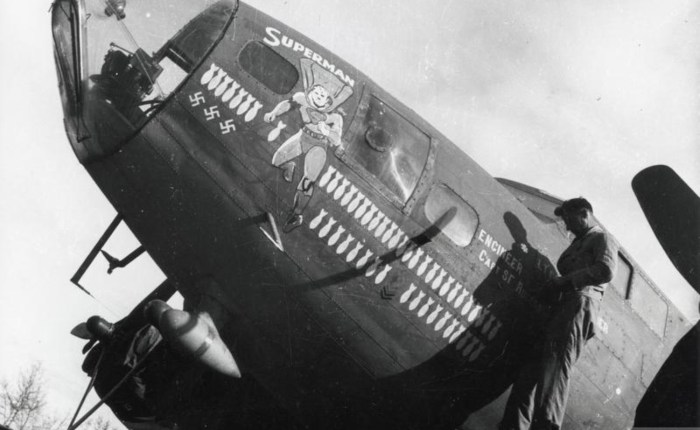
Header image: A ground crewman of the US 97th Bomb Group, 15th Air Force with the nose art of a Boeing B-17 Flying Fortress nicknamed ‘Superman.’ (Source: IWM (FRE 14013))

#BookReview – Spitfires: The American Women Who Flew in the Face of Danger during World War II

#BookReview – Spitfires: The American Women Who Flew in the Face of Danger during World War II

Reviewed by Dr Brian Laslie

Becky Aikman, Spitfires: The American Women Who Flew in the Face of Danger during World War II. London, Bloomsbury Press, 2025. Footnotes. Hbk. 368 pp.

In her new bookSpitfires: The American Women Who Flew in the Face of Danger during World War II, Becky Aikman has accomplished two things: First, she has surprised me and proven that I have much to learn regarding the contributions of women aviators in the Second World War. Second, she clearly demonstrates the importance of someone’s immutable characteristics and their agency and story. Without acknowledging these characteristics, the extraordinary efforts taken by specific individuals in the face of prescribed gender roles might be lost.

This new work details the story of American women who defied the odds, stereotypes, gender roles, and numerous other obstacles to support the war effort, but more importantly, to contribute to the war effort by doing something they loved, slipping the surly bonds of earth. As the advance copy, which landed on my desk, notes a group of aviatrixes:

[w]ere denied the opportunity to fly for their country when the United States entered the Second World War. But Great Britain, desperately fighting for survival, would let anyone-even Americans, even women-transport warplanes. Thus, twenty-five daring young aviators bolted for England in 1942, becoming the first American women to command military aircraft.

Before establishing the Women’s Auxiliary Ferrying Squadron and the Women’s AirForce Service Pilots, this select group of women, initially under the leadership of Jackie Cochran, left home to fly in England for Britain’s Air Transport Auxiliary (ATA).

Allied women pilots of the Air Transport Auxiliary service. Their job done, four female ATA pilots (three Americans and one Polish) leaving an airfield near Maidenhead, 19 March 1943. They are from left to right: Roberta Sandoz of Washington; Kay Van Doozer from Los Angeles; Jadwiga Piłsudska from Warsaw; and Mary Hooper from Los Angeles. (Source: IWM (CH 8945))

Aikman clearly shows that these women flyers had what Tom Wolfe later called the same ‘right stuff’ as their male counterparts. The ATA ‘was an organization where renegade behavior was part of the DNA.’ The ATA ‘had established itself as a seat-of-the-pants operation that sometimes tolerated, or even celebrated, eccentrics’ (p. 33). In the same way that Billy Mitchell was known for his early Maverickism, which seeped into the essence of the American flyer, these women also did things in their way, regardless of what the rules said. While this nonconformist and individualist attitude is part of the mythology of the American Flyer, it did not conform to gender roles.

Aikman relies heavily on diaries and surviving papers of the Americans in the ATA. She uses these to significant effect in creating an intimate and personal account, but Aikman quickly points out that this was not a unified Band of Sisters; as found within any unit, there were disagreements, alliances, and competition (p. 84). Still, these few dozen women were doing what they loved to: flying and doing so in every conceivable type of aircraft the British flying services had to offer: 147 different types in total. Detailing too much of the book here would rob you of the story of these ‘Spitfires,’ but suffice it to say that not all of them made it through training, completed their contracts, or even lived to see the United States again.

The end of the war saw the end of the ‘ATA-girls,’ and they returned home. Aikman states, ‘[t]he era when women pilots would fall out mind had already begun.’ (p.271). Except for mention in a few books or self-published memoirs and autobiographies, the American women of the ATA faded into public obscurity. However, their lives after the war remained as varied and vibrant as the women themselves, and Aikman’s telling of their story could not have arrived at a better time. It is here to remind us that the ‘immutable characteristics’ of some individuals are what make their story compelling and worth telling.

This book is the finest in aviation history: a sweeping narrative, deeply researched, and passionately written work that is sure to please and inform its audience. This book will appeal to a broad audience of historians and buffs. However, more importantly, it fills another gap in the historiography of American women flyers in the Second World War and their contributions to the war effort abroad, providing avenues in its copious footnotes for future researchers to follow. Any historian of air power studies or those interested in aviation in the Second World War will want a copy of this on their bookshelves.

Header image: A group of women pilots of the ATA service photographed in their flying kit at Hatfield. (Source: IWM (C 381))

Dr Brian Laslie is a noted air power historian, having authored The Sundowners, Pegasus, and Little Butch: Carrier Air Group Eleven and the War in the Pacific, 1943-1945 (2025), Air Power’s Lost Cause: The American Air Wars of Vietnam (2021),  Architect of Air Power: General Laurence S. Kuter and the Birth of the US Air Force (2017) and The Air Force Way of War (2015). The latter book was selected for the Chief of Staff of the Air Force’s 2016 professional reading list and the 2017 RAF Chief of the Air Staff’s reading list. US Air Force Historian and Command Historian at the United States Air Force Academy. Formerly, he was the Deputy Command Historian at the North American Aerospace Defense Command (NORAD) and United States Northern Command (USNORTHCOM). A 2001 graduate of The Citadel and a historian of air power studies, he received his Masters’ from Auburn University Montgomery in 2006 and his PhD from Kansas State University in 2013.

#BookReview – A Reluctant Icon: Letters to Neil Armstrong

#BookReview – A Reluctant Icon: Letters to Neil Armstrong

Reviewed by Dr Brian Laslie

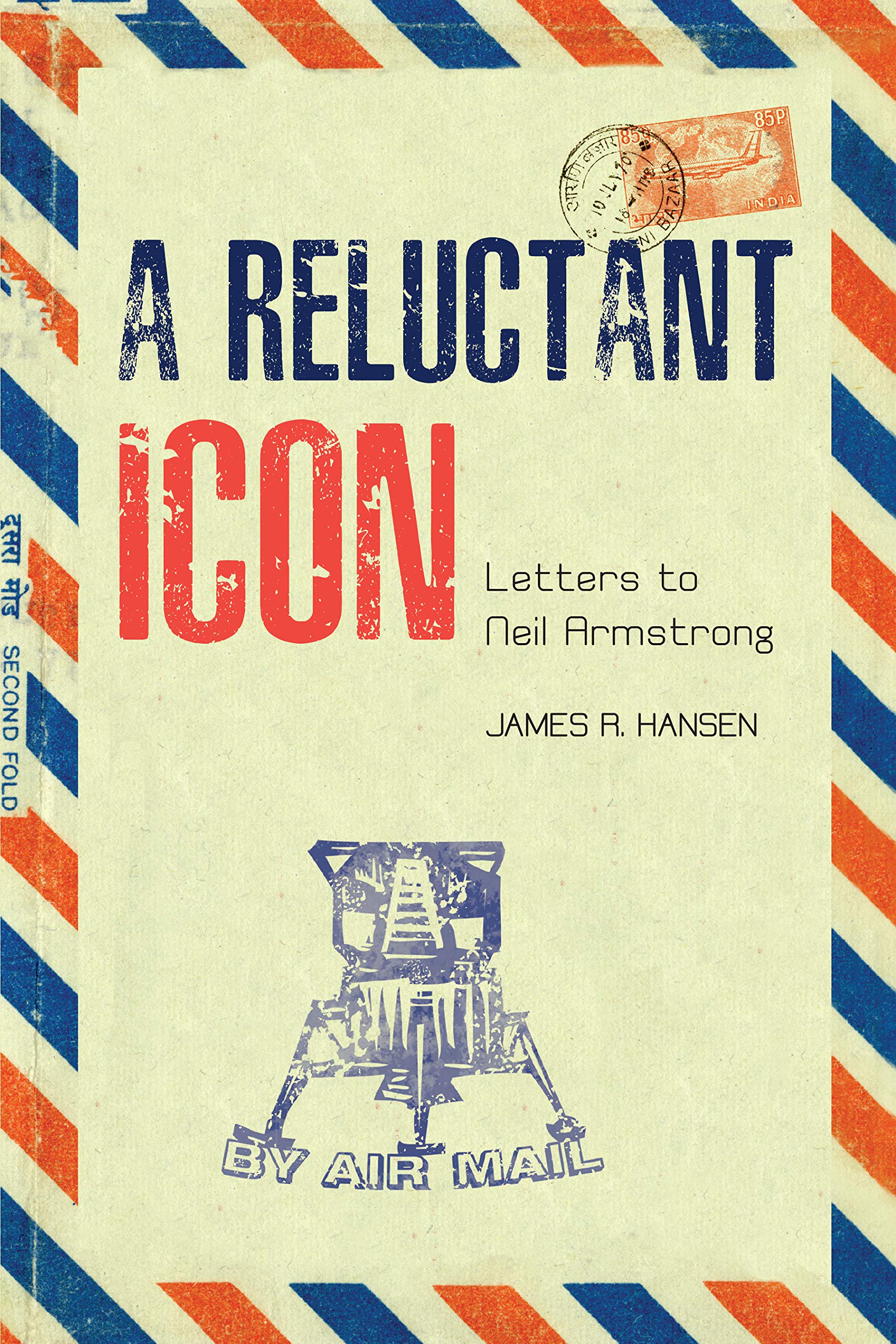
James R. Hansen, A Reluctant Icon: Letters to Neil Armstrong. West Lafayette, IN: Purdue University Press, 2020. Notes. Hbk. 384 pp.

There are new air power scholarship releases all the time. One need look no further than the academic press catalogues for the University Press of Kentucky, University of North Texas Press, and Naval Institute Press (to name a few) to see what is up and coming. As the book reviews editor for From Balloons to Drones, I often receive books or ask for them in advance with promises of a ‘review forthcoming,’ it is all too easy to fall behind. Thus, this book review comes several years in arrears. So, please note that the book covered below was published in the year following the 50th anniversary of Apollo 11.

Now that the hype for #Apollo11, #Apollo50, and all things Apollo program has died following the 50-year celebrations from 2018-2023 (coinciding with Apollo 7-17), there is time for reflection on the Golden Age of Spaceflight. Even as the Space Shuttle moves into distant memory, there continues to be a deep draw towards America’s space pioneers, and no one individual better encapsulates that draw than Neil Armstrong, the enigmatic first man on the moon, and no one better understands Armstrong than his biographer Dr James R. Hansen. Hansen spent hundreds of hours with Armstrong in writing the biography First Man: The Life of Neil A. Armstrong. His second book (from Purdue University Press) on Armstrong was Dear Neil Armstrong: Letters to the First Man from All Mankind, reviewed here. This is Hansen’s third book about Armstrong, and he has not ruled out writing more. This most recent volume, A Reluctant Icon: Letters to Neil Armstrong, is part of the Purdue University Press series: Purdue Studies in Aeronautics and Astronautics.

Since he published First Man in 2005, there has been an explosion of books, podcasts, magazines, toys, and other ephemera available to purchase as a memory or remembrance of the end of the golden age of spaceflight. Books include Jay Barbree’s 2014 Neil Armstrong: A Life of Flight. The Lego Brick Company produced a hugely successful series of building sets, including the Saturn V, Lunar Rover, and Lunar Lander. All this falls under what Hansen calls the ‘Iconography and myth’ of Armstrong and what I have labelled as ‘The Cottage Industry of Neil Armstrong’ culminating in one of the most sought-after signatures in history for collectors, running from $2,000 to $10,000 depending on the medium.

In writing his two ‘Letters to…’ works, Hansen had, for the first time, complete access to Armstrong’s papers now housed in the archives at Purdue University (p. xi). This second book is broken down into six chapters. It contains letters, and sometimes responses, concerning first, religion and belief; second, anger, disappointment and disillusionment; third, quacks, conspiracy theories, and Ufologists; fourth, fellow astronauts and the world of flight; fifth, the corporate world; sixth, celebrities, stars, and notables, and finally, letters from a grieving world.

In ‘Religion and Belief,’ most of the letters projects onto Neil being a devout Christian – Armstrong was a Deist. Neil responded by ‘ignoring their questions or sidestepping the issue of religion altogether’ (p. 5). While most of the letters in this chapter are benign, Armstrong did receive some bizarre and ‘kooky’ letters over many years.

Chapters two and three, ‘Anger, disappointment and disillusionment’ and ‘Quacks, conspiracy theories, and, Ufologists’ complement each other in that the letters Armstrong received (Hanson notes these represented less than one per cent of all letters he received) read like online comment sections: sometimes interesting, rarely thought-provoking, often ad hominem. Hansen includes a selection here: ‘Without taking such letters into account, the iconography involving Neil Armstrong, sadly, is incomplete.’

Of most interest to the readers of this website are the many letters found in the chapter ‘Fellow Astronauts and the World of Flight.’ Armstrong received numerous letters from his fellow astronauts, but he remained close, with very few of them, Jim Lovell and Gene Cernan being the notable exceptions. Hansen shows Jim Irwin’s request for a gathering of moonwalkers that never came to fruition, Al Bean passing along pieces of the Apollo Saturn V, which fell to Earth, and correspondence with Al Shepard and Jim Lovell attempting to enlist Armstrong’s involvement in ventures including the Astronaut Scholarship fund. Even amongst friends and colleagues, Armstrong remained an intensely private person.

The rest of the work, including the corporate world, celebrities, stars, and notables, and letters from a grieving world, all help to put into perspective who Armstrong was and not just the man who made the one giant leap. In many of the above, people wanted something from Armstrong: an autograph, a response, or some enigmatic comfort. Studying Armstrong is something akin to the study of Jefferson; one biography is not enough, and proper understanding can only come through diligent study of correspondence and letters, so Hansen is to be commended for providing a glimpse here and providing access to that which is otherwise available only in archives and special collections. The two volumes of Armstrong’s letters will surely appeal to those interested in Armstrong, the Apollo program, and those looking for something beyond the regular biography, a taste of source documentation in book form. Hansen is not only the best source to begin and end with if one is interested in studying the life of Neil Armstrong, but he is also one of the most outstanding living scholars of aeronautics and astronautics.

Dr Brian Laslie is a US Air Force Historian and Command Historian at the United States Air Force Academy. Formerly, he was the Deputy Command Historian at the North American Aerospace Defense Command (NORAD) and United States Northern Command (USNORTHCOM). A 2001 graduate of The Citadel and a historian of air power studies, he received his Masters’ from Auburn University Montgomery in 2006 and his PhD from Kansas State University in 2013. He is the author of Air Power’s Lost Cause: The American Air Wars of Vietnam (2021), Architect of Air Power: General Laurence S. Kuter and the Birth of the US Air Force (2017) and The Air Force Way of War (2015). The latter book was selected for the Chief of Staff of the Air Force’s 2016 professional reading list and the 2017 RAF Chief of the Air Staff’s reading list.

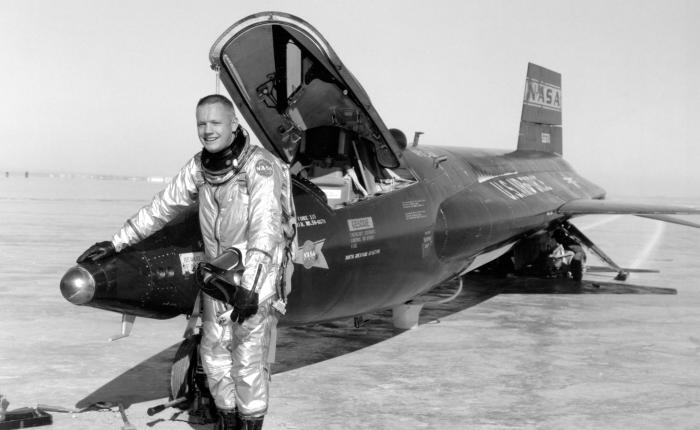
Header Image: Neil Armstrong is seen here next to the X-15 ship #1 after a research flight. Armstrong made his first X-15 flight on November 30, 1960, in the #1 X-15. He made his second flight on December 9, 1960, in the same aircraft. This was the first X-15 flight to use the ball nose, accurately measuring airspeed and flow angle at supersonic and hypersonic speeds. The servo-actuated ball nose can be seen in this photo in front of Armstrong’s right hand. The X-15 employed a non-standard landing gear. It had a nose gear with a wheel and tyre, but the main landing consisted of skids mounted at the vehicle’s rear. The left skid is visible in the photo, as are marks on the lakebed from both skids. Because of the skids, the rocket-powered aircraft could only land on a dry lakebed, not on a concrete runway. (Source: NASA)


#BookReview – Lockheed Blackbird: Beyond the Secret Missions – The Missing Chapters

#BookReview – Lockheed Blackbird: Beyond the Secret Missions – The Missing Chapters

Reviewed by Dr Brian Laslie

Paul F. Crickmore, Lockheed Blackbird: Beyond the Secret Missions – The Missing Chapters. Oxford, UK: Osprey Publishing, 2023. Appendices. Bibliography. Hbk, 528 pp.

91m-3MYFv9L._SL1500_

Author Paul Crickmore is the unofficial Dean of the school of SR-71 studies. Much of what is public knowledge is due to his diligent efforts and publication record. Crickmore has spent decades uncovering every piece of paper concerning the program, from its reception to its retirement. He has left no stone unturned and no recently declassified document unexamined. No discussion of the A-12, SR-71, or any other variants is complete without mentioning his name. Every academic or researcher interested in air power studies, particularly those interested in low observability or the history of intelligence, surveillance, and reconnaissance, has one of his books near. His previous titles include Lockheed Blackbird: Beyond the Secret Missions (Revised Edition 2016), Lockheed SR-71: The Secret Missions Exposed (Osprey Modern Military) 1993, Lockheed SR-71: The Secret Missions Exposed 1997, and Lockheed SR-71 Blackbird 1986. Crickmore has recently published what might be rightly said to be the final word on the history of this iconic airframe in Lockheed Blackbird: Beyond the Secret Missions, The Missing Chapters.

This is not just the history of the SR-71 but begins with a rather detailed examination of aerial ISR platforms in the post-World War II and Cold War era, including the U-2. Crickmore should be commended early on for his thorough analysis and excellent work on stealth vs performance characteristics (p. 44). An early highlight is the section detailing Convair’s ‘First Invisible Super Hustler (FISH),’ a modified B-58 with a parasitic jet-powered aircraft attached to the hull that would drop and rocket off on its mission. I chuckled at the idea of a B-58 crewmember being forced to trade in their coveted ‘I fly to the Hustler’ for an ‘I fly the FISH.’ While Convair worked on their flying FISH, members of Lockheed went through significant changes in designs for their ‘Archangel’ concept. ‘Archangel’ was the name Lockheed engineer Clarence ‘Kelly’ Johnson used for his internal design efforts for a future Surveillance and reconnaissance aircraft. The final concept drawing was the twelfth of a series of the ‘Archangel,’ thus the A-12 (44-45).

DF-ST-89-06277
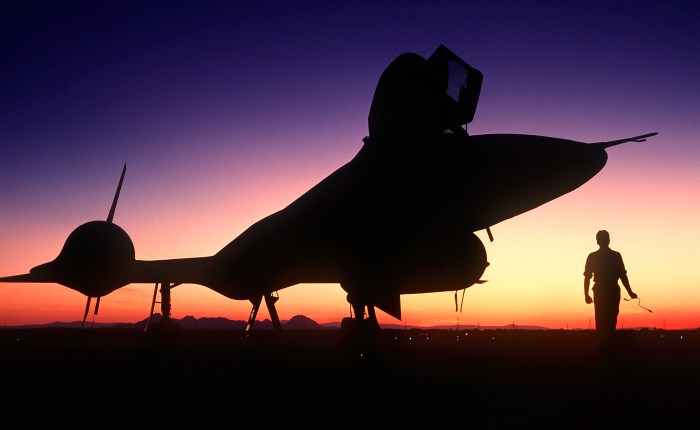
An air-to-air overhead view of an SR-71A strategic reconnaissance aircraft, c. 1988. (Source: US National Archives and Records Administration (NAID 6438039))

Crickmore’s book really ‘takes off’ in his chapter on SR-71 operations over North Vietnam as part of Operation BLACK SHIELD and its photo reconnaissance missions detecting North Vietnamese surface-to-air missile (SAM) sites and other targets of interest, including photographs of the Hoa Loa (Hanoi Hilton) prison complex. This chapter also gives an excellent description of North Vietnam’s missile operators’ attempts to track and engage the A-12. From there, Crickmore covers every possible A-12 and SR-71 operation and deployment. Historians of the Cold War will especially enjoy Crickmore’s details about the USSR’s attempts to intercept the SR-71.

There are some drawbacks to what is otherwise a very fine work. The book is weighty, both for its in-depth research and size. At more than 500 pages of high-gloss paper, the book is literally heavy. Its measurements are 9.9 x 12.55 inches, and its weight is nearly seven pounds. This has become a trend for some presses, which one might call the ‘high-end coffee table book.’  This is not a book to be carried around in your spare time and read; it remained firmly ensconced on my desk for the duration of its review. In reality, this is something of a hybrid between an in-depth history, a photographic coffee table book, and a reference book. One of my students who noticed the copy sitting on my desk stated, “It looks good on a bookshelf, but no one actually reads those cover to cover.” No one except book reviewers, of course. Another problem is that there are also no footnotes, another trend in some recent publications, perhaps to attract a larger audience and not be perceived as a stuffy academic tome. However, there is a real and dangerous drawback to not noting where particular quotes or data were extracted. The appendices – one of Crickmore’s greatest contributions is his appendices – are slightly different from the previous version published in 2016, although the missing information is available online.

Crickmore’s book, this new and expanded edition of Lockheed Blackbird, is indeed the final word and ultimate reference guide for the history of the entire SR-71 program. As Crickmore notes, few aircraft transcend to being ‘iconic,’ and undoubtedly, the SR-71 surpassed that label many years ago. Crickmore’s book is a must-have for every aviation enthusiast and a must-read for every aviation and Cold War scholar who seeks to understand this legendary aircraft’s history, operations, and legacy.

Dr Brian Laslie is a US Air Force Historian and Command Historian at the United States Air Force Academy. Formerly he was the Deputy Command Historian at North American Aerospace Defense Command (NORAD) and United States Northern Command (USNORTHCOM). A 2001 graduate of The Citadel and a historian of air power studies, he received his Masters’ from Auburn University Montgomery in 2006 and his PhD from Kansas State University in 2013. He is the author of Air Power’s Lost Cause: The American Air Wars of Vietnam (2021),  Architect of Air Power: General Laurence S. Kuter and the Birth of the US Air Force (2017) and The Air Force Way of War (2015). The latter book was selected for the Chief of Staff of the Air Force’s 2016 professional reading list and the 2017 RAF Chief of the Air Staff’s reading list. He can be found on Twitter at @BrianLaslie.

Header image: A right front view of an SR-71B Blackbird strategic reconnaissance training aircraft, silhouetted on the runway at sundown at Beale AFB, 1 June 1988. Image by Technical Sergeant Michael Haggerty. (Source: US National Archives and Records Administration (NAID 6438040))