
By Alexander Fitzgerald-Black
Robert S. Ehlers Jr., The Mediterranean Air War: Airpower and Allied Victory in World War II. Lawrence, KS: University Press of Kansas, 2015. Notes. Bibliography. Index. Hbk. 536 pp.

The Second World War’s Mediterranean Theatre of Operations was a sideshow, right? The road to defeating Nazi Germany where the Western Allies were concerned lay through Normandy, not North Africa. The Allies launched their great Combined Bomber Offensive from the United Kingdom as this incredible animation from the American Air Museum shows. Other efforts were relatively unimportant and sapped resources from where the real air battle took place. Alternatively, were they?
Robert S. Ehlers Jr.’s The Mediterranean Air War: Airpower and Allied Victory in World War II offers a valuable counter-narrative. The Mediterranean was not a sideshow. In fact, it was a critical theatre for Allied victory. Adolf Hitler committed the Wehrmacht to the Mediterranean in 1941 to support Benito Mussolini’s faltering armies in Greece and North Africa. Four years later the consequence of this simple plan was 400,000 Italian and 730,000 German casualties. However, human casualties only tell part of the tale. The European Axis lost 42 percent of its merchant shipping in the Mediterranean. The Allies all but destroyed the Regia Aeronautica by mid-1943 while the Luftwaffe lost 17,750 aircraft in the Mediterranean throughout the war. By comparison, the Germans lost 20,419 aircraft on the Western Front while losing only 11,000 on the Eastern Front.
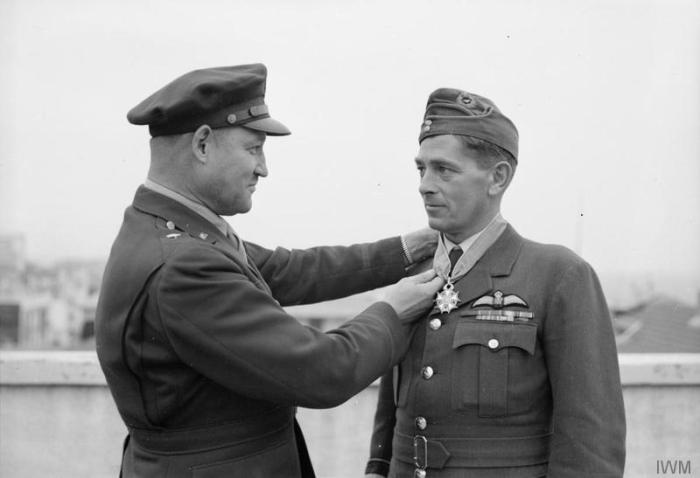
This is just the strategic picture. Ehlers’s work also talks logistics. Historians have often highlighted the importance of tank strength in the Western Desert. The side that could field the most tanks had the advantage. Since both sides had to maintain their forces across long supply chains the ability to retrieve and repair damaged battlefield equipment was crucial. The same was true for aircraft. The Royal Air Force created an efficient system for repair and salvage early in the campaign. Air Vice-Marshal Graham Dawson, the RAF’s Chief Maintenance Officer in the Mediterranean, organized the effort. Dawson was a Battle of Britain veteran who received a Mention in Dispatches for superb engine repair efforts in 1940. He coordinated his crews’ efforts with local Egyptian shops that could repair and manufacturer parts. Dawson’s command was innovative. It created modifications that allowed Hurricane fighters to engage high-flying Junkers Ju 86P photo reconnaissance aircraft. The aircraft’s service ceiling was 36,000 feet, yet the modified version achieved its first victory over the Nile at 49,000 feet.
The Mediterranean was ultimately a battle for sea lines of communication or SLOCs. Air superiority was essential to winning this and other battles. With the war in North Africa won, Ehlers argues that the Western Allies were right to take the war to Sicily and then on to mainland Italy. After securing air superiority, the Allied air forces were free to expand their cooperation with Allied armies. The Allies produced great results when the services coordinated their efforts. In the first half of 1944, Operations STRANGLE and DIADEM sought to defeat German forces barring the way to Rome. STRANGLE was an air campaign aimed at depriving the Germans of supplies while DIADEM was a large-scale ground offensive with air support. On its own, air power’s effectiveness was limited. The Germans lost 20 trucks per day during STRANGLE, but that number rose to 100 per day during DIADEM. Pressure from the army kept enemy transports on the road in large numbers, making them easier prey for prowling fighter-bombers. Together these operations cost the Germans Rome and 80,000 casualties.
Ehlers convincingly argues that the final air campaigns flown from bases in Italy shortened the war and saved lives. Targets included the Luftwaffe, the German oil industry, and German lines of communication to the Eastern Front. Instructors who seek to offer their students a fresh perspective on the Mediterranean Theatre of Operations will do well to include this book on their reading lists.
This post first appeared at Fighter-Bomber’s Blog.
Alexander Fitzgerald-Black completed his MA thesis, ‘Eagles over Husky: The Allied Air Forces and the Sicilian Campaign, 14 May to 17 August 1943,’ with The Gregg Centre for the Study of War and Society, University of New Brunswick in 2014. He is in the process of turning this work into a manuscript for publication with Helion & Company. Alex lives with his wife in Moncton, Canada. He operates his own blog at alexfitzblack.wordpress.com and can be reached on Twitter @AlexFitzBlack.
Header Image: A formation of five Blenheim Mark IVs of No. 14 Squadron RAF in flight over the Western Desert. A Curtiss Kittyhawk, one of the escorting fighters, can be seen on the far right (Source: © IWM (CM 3108))
 From Balloons to Drones