Reviewed by Dr John J. Abbatiello
Kathy Wilson, Marshall’s Great Captain: Lieutenant General Frank M. Andrews and Air Power in the World Wars. Lexington, KY: University Press of Kentucky, 2024. Illustrations. Appendix. Notes. Bibliography. Index. Pbk. 273 pp.
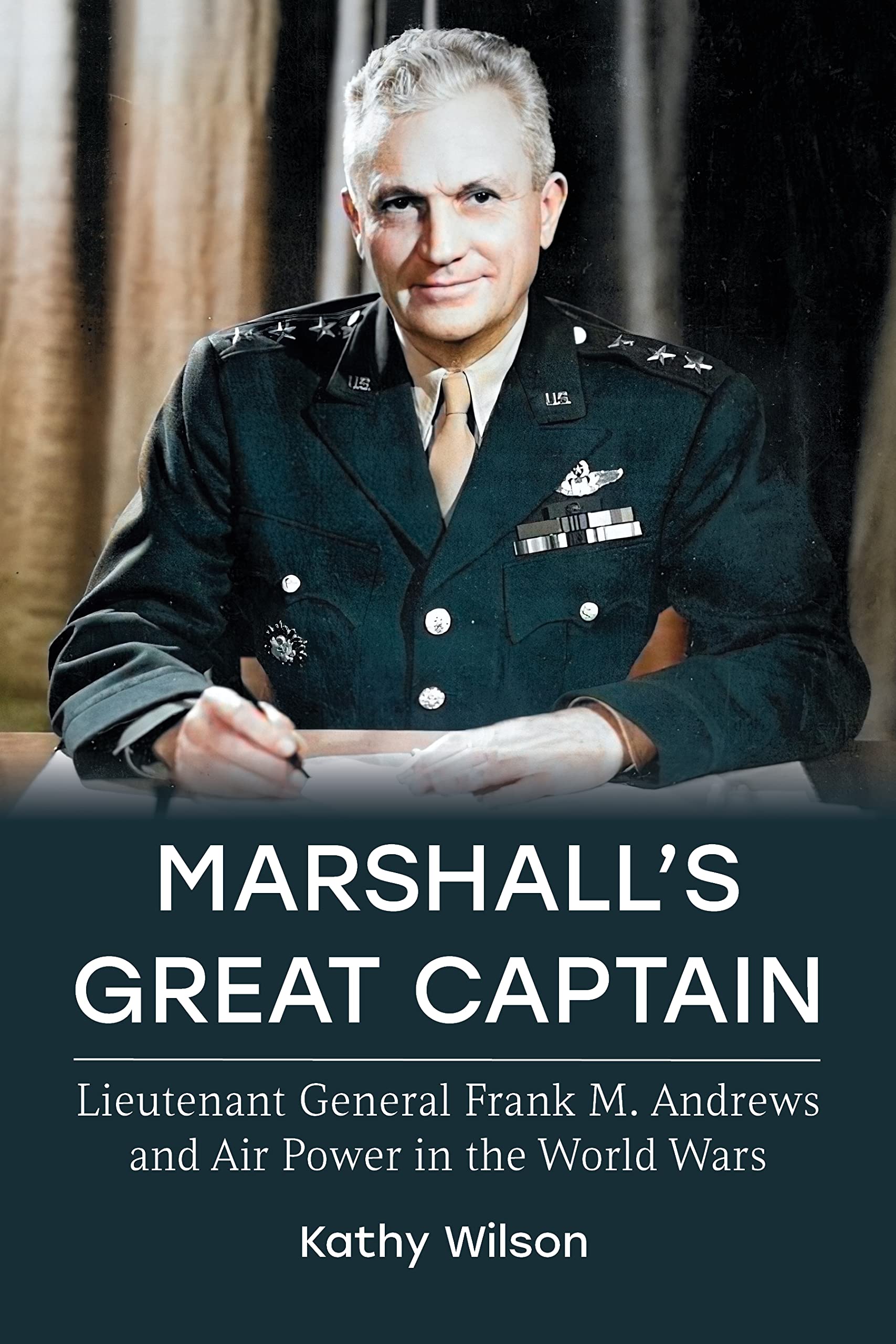
Kathy Wilson highlights the career of a key player in US air power history in Marshall’s Great Captain: Lieutenant General Frank M. Andrews and Air Power in the World Wars. This is a much-needed and valuable contribution about a senior leader of the US Army Air Corps (USAAC) and the Army Air Forces (USAAF) – a leader who was a driving force behind American air power, yet not a well-known figure to our reading public. Who was the namesake of Andrews Air Force Base (now styled as Joint Base Andrews), located in Prince George’s County, Maryland, and currently the primary military airbase serving America’s capital city?
Wilson, an independent scholar and Writing Fellow for Norwich University, published Marshall’s Great Captain as part of the University Press of Kentucky’s Aviation and Airpower Series, edited by US Air Force Academy command historian Brian Laslie. Wilson’s narrative begins with Andrews’s time at West Point (Class of 1906) and ends with his untimely death due to an aircraft accident on 3 May 1943. The author correctly argues that the extant works on Second World War air power leadership gloss over Andrews’s career and fail to fully explain his significant contributions. Wilson rectifies this oversight with this thoroughly researched volume.
After a brief introduction and prologue, the latter teasing the reader with the circumstances of Andrews’s final flight and Consolidated B-24 crash, Chapter 1 succinctly covers the subject’s time at West Point and first 11 years in the US Army as a cavalry officer. A descendant of Confederate cavalry officers and related to two Tennessee governors, Andrews thrived as a young leader. In 1914, he married Jeanette ‘Johnnie’ Allen, daughter of a senior Army cavalry commander.
As Wilson explains in Chapter 2, Andrews transferred to the US Army Signal Corps’ Aviation Division, forerunner of the US Army Air Service and USAAC, in 1917 but did not see action overseas. His contributions during the First World War included staff duty in Washington, D.C., and command of Rockwell Field in southern California. By 1918, he was a 38-year-old temporary Lieutenant Colonel. In the early 1920s, he served in Germany in the Army of Occupation. A series of typical assignments followed, to include attendance at all three of the US Army’s professional schools: Air Corps Tactical School, Command and General Staff School, and Army War College. This chapter provides extensive context about US air power in the 1920s and early 1930s, including coverage of the Billy Mitchell trial, air-coastal defence experiments, and the Air Mail fiasco of 1934.
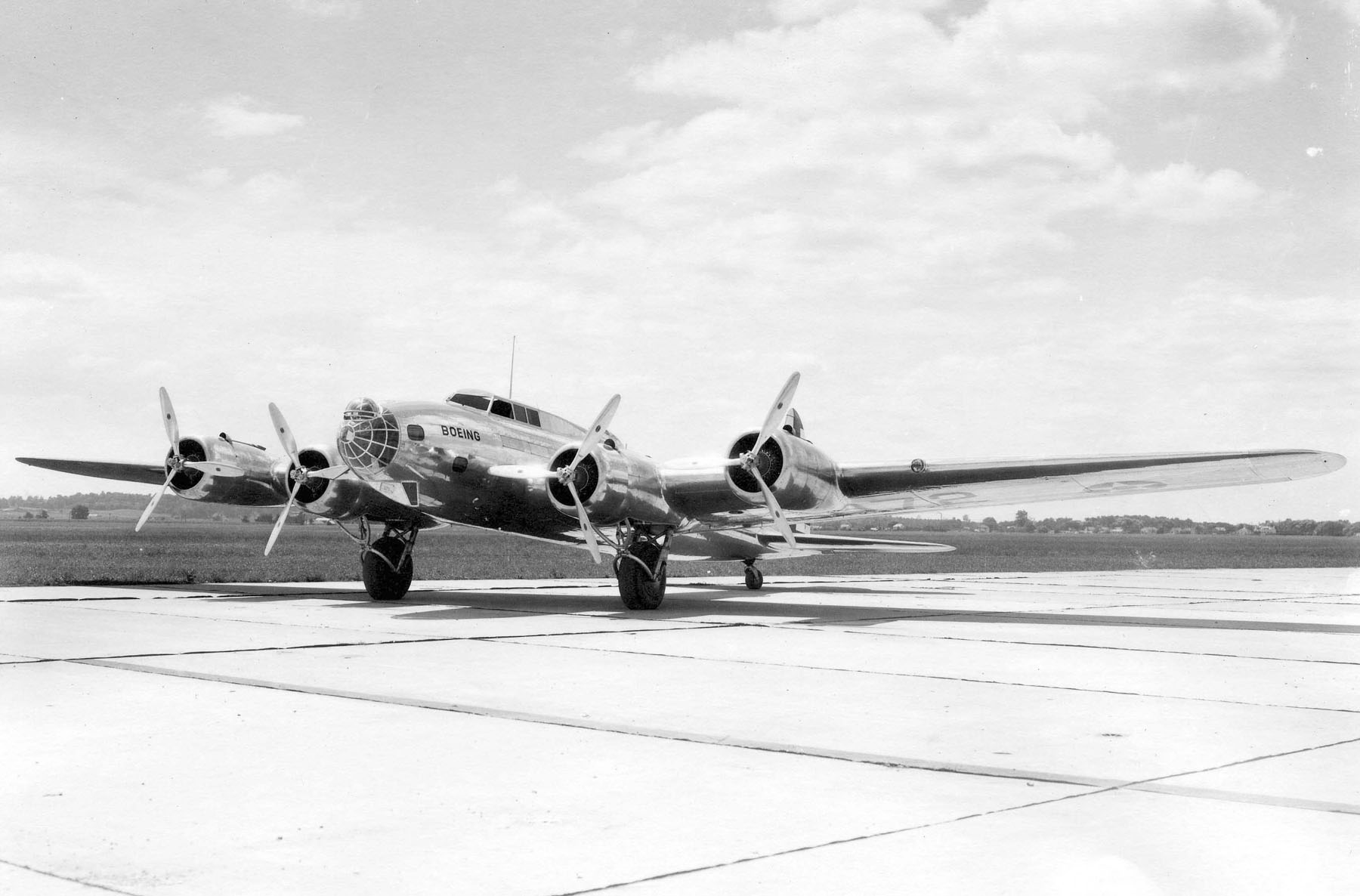
The next two chapters examine Andrews’s appointment to and service as Commanding General, General Headquarters (GHQ) Air Force, and the development of the Boeing B-17 bomber. Once again, Wilson provides extensive background, this time explaining the various boards and commissions investigating US air power, to include the Drum Board (1933) and the Baker Board (1934). In early 1935, US Army Chief of Staff General Douglas MacArthur appointed Andrews to serve as the first commander of GHQ Air Force. Comprising three under-resourced wings, the new GHQ Air Force was to serve as the Army’s air strike force, and here Andrews took charge of operations and training for the Air Corps. Wilson recounts his challenges stemming from a fragmented command structure in which the Chief of the Air Corps was responsible for supply, procurement, funding, assignments, and other supporting functions. At the same time, Army regional commanders exercised control over bases, maintenance, and court-martial authority. During his four years commanding GHQ Air Force, Andrews increased combat efficiency for USAAC, advocated for the long-range B-17 bomber, and, through air demonstrations and humanitarian flights, raised public awareness of the capabilities of US air power. He also established a solid relationship with a future mentor, then Brigadier General George Marshall, during the summer of 1938 by hosting the latter at GHQ and providing him with a personal tour of USAAC bases across the country. This visit paid dividends in two ways: it established a sense of trust between the two leaders, and it provided Marshall—then serving as the new Chief of Plans for the Army – with a solid understanding of air power’s roles, missions, and capabilities.
Marshall became US Army Chief of Staff in September 1939 and appointed Andrews as the Assistant Chief of Staff, G-3, or chief of operations and training for the Army. Andrews was the first aviator to serve in this critical role for the Army, and, according to Wilson’s Chapter 5, it ‘was the most important and impactful assignment of Andrews’s career.’ (p. 105) Here, Andrews played an essential role in preparing the US Army for future combat in the Second World War, including establishing the Armored Force, improving training for the National Guard, setting up the Army’s emerging airborne infantry capability, and generally better integrating air units with Army operations. Chapter 6 then covers Andrews’ increased responsibilities first as commander of USAAC units in the Panama Canal Zone and then as overall US Army commander of the Caribbean Defense Command. These were important roles given American fears of potential Axis interference with the Panama Canal. Andrews demonstrated his expertise in reorganising forces, building and improving facilities, nurturing relationships with regional Allies, and most importantly, improving combat readiness.
Chapter 7 continues the Andrews story by describing the subject’s role as Commander, US Forces Middle East, starting in November 1942, and then as Commander, US Forces European Theater of Operations (ETO) beginning in February 1943. In these responsibilities, Andrews once again excelled at organising, training, and employing forces against the Axis. As ETO Commander, headquartered in London, he oversaw the rapid buildup of US Army ground units for Operation OVERLORD and the US 8th Air Force for the Combined Bomber Offensive; throughout, he maintained an excellent working relationship with his British counterparts.
In the final chapter, Wilson details the planned trip from London back to the United States via Iceland on 3 May 1943, which ended in a tragic crash due to poor weather. Her epilogue speculates – using the best available evidence – what next role Andrews may have taken on had he lived. Unfortunately, Andrews’ story ends too early.
Some key themes emerge throughout Wilson’s narrative. In mentioning the leadership style and personality of the gregarious and hard-charging USAAF Commanding General Henry ‘Hap’ Arnold, admiration of Andrews’s soft-spoken, gentlemanly demeanour is obvious. In all his roles, Andrews sought to educate superiors, peers, and subordinates about air power, not to antagonise them as other airmen sometimes did. Andrews’s relationship with George Marshall was important not only for the former’s rise through leadership positions but also for Marshall’s clear understanding of air power’s role in its various capacities. Finally, Wilson skilfully describes the technical development and acquisition processes of US aircraft, topics seldom mentioned in similar histories of this formative period for American air power.
This reviewer submits only one minor complaint about this study. Several verbatim quotes appearing throughout the volume are unattributed in the text, requiring the reader to flip to the note pages at the end of the book to determine the source. Many of these are lengthy. For example, page 115 presents an extensive excerpt on Marshall’s approach to selecting Army leaders, with no clues about the source. The endnote at the back of the book reveals that this was a quotation from a 1943 New York Tribune article by a staff writer.
Nevertheless, Wilson’s well-researched biography of Frank Andrews is a welcome addition to our understanding of air power leadership during the interwar years and the Second World War. Andrews was a key player, skilled in diplomacy yet laser-focused on organisation, training, and readiness. Airmen today have much to learn from Frank Andrews’ story.
Dr John J. Abbatiello earned his PhD from King’s College London’s War Studies program in 2004. After 18 years of faculty service at the US Air Force Academy’s Department of History and Center for Character and Leadership Development, he then served as the Training and Education Branch Chief for North American Aerospace Defense Command and US Northern Command. He is the author of Anti-Submarine Warfare in World War I: British Naval Aviation and the Defeat of the U-Boats (Routledge, 2006) and a chapter on Lewis Brereton in The Worst Military Leaders in History (Reaktion Books, 2022).
Header image: General Frank M. Andrews, theatre commander of US forces in the ETO, was responsible for directing the American strategic bombing campaign against Germany and for planning the land invasion of occupied western Europe, 1943. (Source: Wikimedia)
Discover more from From Balloons to Drones
Subscribe to get the latest posts sent to your email.

 From Balloons to Drones