By Dr John Ringquist
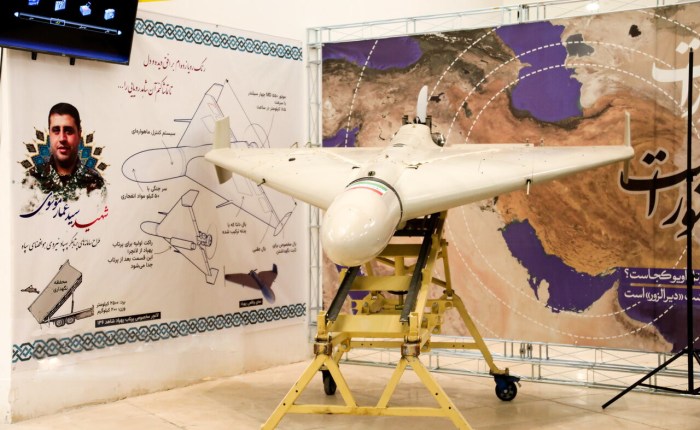
The Iranian HESA Saheed 136 suicide drone (unmanned aerial vehicle (UAV)) entered the war between Ukraine and Russia with undeniable effects. The influence of the same Iranian drones on Red Sea shipping in 2024 is equally undeniable, as Houthi militias utilised drones to threaten world shipping the same way they threatened Saudi Arabian defences in prior years. Russia has purchased thousands of Shahed 136 drones and received training for Shahed 136, HESA Ababil-3 and Raad drones through Iranian proxies and military forces in Syria.[1] Thus, Iran has quickly become a drone exporter and power broker, using regional proxies to provide lethal drone firepower to hard-pressed governments in East Africa. Iran now employs drones as a foreign policy tool to demonstrate its viability as a significant influence and a capable partner in the Middle East, Europe, and Africa. Iran’s efforts have undercut Western security guarantees and exploited the weakness of Ethiopian and Sudanese governments engaged in their internal efforts to defeat insurgent forces. The 2024 Nigerien junta’s rejection of United States forces currently hosted in Niger, and the likely denial of the critical drone airbases therein, allows Iran to attempt to influence an African state that has chosen to sever ties with the West. Looking at the situations in Ethiopia and Sudan can assist with understanding how Iranian drone capabilities, cost, and performance have earned Iran a place at the table.
Iranian drones offer hard-pressed states much-needed reconnaissance and attack capabilities with no questions about employment doctrine or human rights guarantees. Iranian drones also give potential customers access to various platforms at costs below that of most conventional aircraft. Although costs vary widely depending on the source, an Iranian Saheed 136 goes for between $20,000-$40,000. Multi-role drones like the Mohajer-6 also have lower prices than Western drones.[2] Iran’s goal is not to displace China, Turkey, and the United Arab Emirates as drone competitors in Ethiopia but to demonstrate its ability to compete successfully on the international stage and prove that its drones are effective options for potential international allies.[3] When Ethiopia needed drones in 2021, Iran could offer Ethiopia drones and munitions that helped defeat insurgents through precision strike and reconnaissance capabilities. However, Iranian assistance comes at a price for countries unwilling to risk extended diplomatic pressure. Despite being reported by Bellingcat at Semara airport in late 2021, by late 2023, Ethiopia’s two Iranian Mohajer-6 drones and their single ground control station (capable of controlling two drones at a time) were hard to find on overhead imagery. This is likely due to the drones and associated materials being pulled back under cover or into hangars until needed for operations. In contrast, Ethiopia’s Turkish and Chinese models have been seen in the open on the runways of at least two Ethiopian Air Force base runways. This may have been in whole or in part due to US protests to the UN about Iran’s violation of United Nations Security Council Resolution 2231 and the delivery of unmanned warplanes.[4] UN SCR 2231, although written as a diplomatic effort to find a solution to Iran’s nuclear issues, contains within the resolution Paragraph 6, Annex B that specifically enjoins all states to prevent ‘the transfer of arms or related material from Iran by their nationals or using their flag vessels or aircraft and whether or not originating in the territory of Iran.’ The transfer of drones falls within this set of restrictions. By transferring drones to Ethiopia, UNSCR 2231 was violated, with Iran and Ethiopia as knowing participants.
It is undeniable that Iran was willing to defy UN opposition to provide Ethiopia with drones; what is surprising is that Ethiopia chose to work with Iran despite being a US ally. Iran’s window of opportunity may have materialised partly due to the United States’ policy of not selling armed drones to allies without extensive vetting and Congressional approval.[5] In contrast, when Ethiopia’s military needed a rapid response and a technological solution to rebel threats, Turkey and China were already supplying to the African and Middle East markets. Although it is hard to gauge if Iran will be able to have the same influence that it had with Ethiopia in 2021, Iran could look to the situation in Sudan as another success in efforts to disrupt US regional goals and Western security assurances. As the United States attempts to counter drone proliferation, Iran displays technical and technological skills through its drone sales. Its drive for prestige and relevancy in the arms trade has been rewarded by the Russian and African adoption of Iranian drones to affect the sort of damage previously restricted to more conventional aircraft.[6]
Despite severing diplomatic relations with Iran in 2016, Sudan is interested in Iran’s assistance in combatting its main rival in the ongoing civil war, the Rapid Support Forces. Iran’s relationship with Sudan is evolving as Sudan’s government struggles against the rebel Rapid Support Forces, US sanctions, and a lack of international assistance. However, some countries, namely Iran and Turkey, have supplied Sudan with drones despite sanctions. In Sudan, as in Ethiopia, drones may be the factor that enables the government to contest and eventually defeat insurgents. The Sudanese government’s forces employ a variety of Iranian drones: the Ababil-3, Mohajer-2, Mohajer-4, and the latest Mohajer-6. These drones are part of Iran’s policy toolkit and have helped Iran maintain access and influence in Sudan despite Sudan becoming a signatory to the 2019 Abraham Accords, which included policies that were diametrically opposed to Iran’s stated interests.[7] Iranian interests in the region and globally can best be understood from a combination of Iranian policy goals: posturing Iran as an option to Western states for arms and technological assistance and providing an Islamic champion to former al-Bashir loyalists.[8]
Iran’s policy goals in Sudan include turning Sudan away from Saudi Arabia and UAE as part of Iran’s challenge to regional rivals.[9] Iran has exploited the Sudanese regime’s need for drone platforms, and news stories of alleged offers of additional drones and a helicopter carrier in exchange for a Port Sudan base cloud Iran’s history with Sudan. Iran can use drones to gain influence and restore Sudan as a partner in Iran’s ‘Axis of Resistance’ to the West.[10] The other obvious advantage of a Sudan-Iran alliance, from Iran’s perspective, is a scenario in which Iran could threaten Red Sea shipping and cause worldwide disruptions. An Iran-Sudan alliance would also sandwich Saudi Arabia between Sudan, Iran, and Yemen’s Houthi rebels. A Sudan-Iran diplomatic and defence alliance gives Sudan and Iran the tools to achieve their goals. Sudan’s Armed Forces-led government wants to extract concessions from the West, defeat the Rapid Support Forces, and establish itself as a drone power with the technological sophistication that implies. Iran continues to force the West to bleed resources to prevent a Sudan-Iran alliance from becoming a reality. The multiple threats to the Red Sea, combined with the ecological crisis that is challenging the Panama Canal’s shipping capacity, have great potential to cause Iran’s rivals severe economic and political embarrassment.

Iran has demonstrated their will to defy United Nations sanctions. It should be expected to do so in the future, especially if doing so will bring Iran revenue and influence with new diplomatic and defence partners. The recent coup in Niger demonstrates how Iran readily offered assistance and drones to the Nigerien junta despite ECOWAS (Economic Community of West African States) sanctions. Other African states have similarly courted in Iranian efforts to bust United Nations sanctions. Burkina Faso and Zimbabwe, for example, for gold exports.[11] Iran has a valuable negotiating tool in the form of its family of armed drones. Sources including CNBC, Voice of America, senior Iranian officials, and the Israeli Defence Minister Yoav Gallant claim Iran now has customers and interested countries (for example, Bolivia and Venezuela) across the world, with Iran claiming 22 interested countries and Israel as many as 50.[12] As of 2023, Venezuela manufactures armed Mohajer-2 surveillance drones and operates armed Mohajer-6 drones. Considering Iran’s support for terrorist organizations and their willingness to sell drones with little regard for the consequences, the risks of international disruptions grow with each country that adopts Iranian technology.[13] International sanctions have limited Iran’s ability to obtain and export parts for drones. Suppliers who provide clandestine support are thus complicit in Iran’s arms industry. Attempts to interdict drone deliveries to Iran’s allies have been ineffective because most users of Iranian drones choose to manufacture in-country or build drones from parts.[14] Drone sales have helped Iran gain partner states. Iran will take advantage of situations where Western partners have been rejected and ejected by their former regional allies or Western states have cut off diplomatic relations due to coups. Iranian influence across the Sahel will grow as states seek sources for drones, and states that have little to deter them will find Iranian drones to be an attractive combination of proven capability and low cost.
Iran is opportunistic, and the situation in Niger, where the regime has rejected the West and joined with the ECOWAS-spurning Association of Sahel States (AES), opens a new avenue for Iran to counter Western influence and gain new allies.[15] Niger is an attractive destination for Iranian influence because of Niger’s uranium deposits. Iran has been engaged in diplomatic exchanges with Niger, offering Niger an ally against the West as well as assistance in mitigating the effects of ECOWAS sanctions.[16] In April 2024, the news site Africa Intelligence reported that ‘Iran and Niger were negotiating for Niger to provide 300 tons of uranium yellowcake to Iran in exchange for drones and surface-to-air missiles.’[17] That alone would demonstrate the utility of Iranian drones as diplomatic bargaining tools. However, in March of 2024, Iran International News and the Wall Street Journal alleged that United States opposition to the trade was one reason for the Nigerien junta deciding to close the facility known as Airbase 201 in Agadez, Niger, a major drone base for counterterrorism operations in the Sahel.[18] Although the junta closed the airbase and ordered the United States to withdraw its drones, the decision was most likely driven by the need to demonstrate sovereignty and strength when the Nigerien junta was weak and under foreign pressure to change its policies. The developing ties with Russia and neighbouring junta-led states were also likely factors in the decision.[19] However, this development left a prime drone base in the hands of the Niger coup junta just as its relationships with Russia and Iran deepened. We can expect the Nigerien government to seek to take advantage of the $100 million facility at Agadez for new drones delivered by new security partners.
Niger still needs drones to patrol its vast territory and strike at terrorist groups. As Iran’s influence rises in Africa, so too may its drone presence in the service of governments where expediency is valued over human rights, transparency, and sustainability. Iranian drones are an effective policy tool, an asymmetric warfare solution scalable to many situations, and responsive to the needs of states and non-state actors. Iran’s drones will continue to create pockets of regional instability and serve Iran’s need for prestige, credibility, and allies for years to come unless countered by effective policies that neutralize Iran’s disregard for UN sanctions and undercutting of peace initiatives. The challenge for the US and its allies is not simply how to shoot down drones or where to direct diplomatic initiatives but to provide states with better options and to deny terrorists access to advanced systems. The United States is improving Counter-Unmanned Aerial Systems, but allies need assistance countering the whispers of a regime that offers advanced technology without warning of the inevitable repercussions.
Dr John Ringquist is a retired US Army Lieutenant Colonel, Africa Foreign Area Officer, and historian. He currently teaches at the Command and Staff School at the US Army Command and General Staff College. He has written about topics related to security, terrorism, and military history for various publications.
Header image: An Iranian HESA Ababil-3 UAV at an arms expo in Iran. (Source: Wikimedia)
[1] Oded Yaron, ‘Gold for Drones: Massive Leak Reveals the Iranian Sahed project in Russia,’ Haaretz, 21 February 2024.
[2] Danny Citrinowicz, ‘Iran is on its way to replacing Russia as a leading arms exporter: The US needs a strategy to counter this trend,’ The Atlantic Council, 2 February 2024.
[3] Federico Borsari, ‘Tools of influence: Drone proliferation in the Middle East and North Africa,’ European Council on Foreign Relations, 27 May 2022.
[4] Alex Gatopoulos, ‘How Armed Drones May Have Helped Turn the Tide in Ethiopia’s War,’ Al-Jazeera, 10 December 2021. Jeremy Binnie, ‘Ethiopia displays UAVs,’ Janes, 10 May 2023. Tefsa-alem Tekle, ‘U.S. says Iran supplied Ethiopia military drones for Tigray war,’ Sudan Tribune, 19 October 2022. ‘UN Resolution 2231 (2015) on Iran Nuclear Issue – Background.’
[5] David A. Deptula ‘Anachronistic Export Policy Is Damaging the U.S. Drone Industry and National Security,’ Forbes, 9 June 2020.
[6] Steven Feldstein ‘The Larger Geopolitical Shift Behind Iran’s Drone Sales to Russia,’ Carnegie Endowment for International Peace, 26 October 2022.
[7] ‘Sudan Seeks Iranian Drones Amid Growing Regional Tensions,’ Iran International, 12 March 2023.
[8] Giorgio Cafiero, ‘Iran’s Concerted Efforts to Secure a Foothold in Sudan,’ Gulf International Forum, 27 June 2024.
[9] Eric Lob, ‘Iran’s intervention in Sudan’s civil war advances its geopolitical goals − but not without risks,’ The Conversation, 28 May 2024.
[10] Wad Madani, ‘Reports About Iran’s Bid for Naval Base in Sudan Sparks Controversy,’ Asharq Al-Awsat, 4 March 2024; Jay Soloman, ‘Iran sending attack drones to Sudan’s military,’ Semafor, 29 February 2024.
[11] Liam Karr and Kitaneh Fitzpatrick. ‘Iran in Africa,’ Institute for the Study of War, 2 May 2024.
[12] Natasha Turak, ‘Iran’s drones could reach a new South American market as Bolivia expresses interest,’ CNBC, 31 July 2023; Michael Lupin, ‘Iran’s Apparent Supply of Combat Drones to Venezuela Highlights Terrorism Risks,’ VOA News, 2 March 2022; Agnes Helou, ‘Global interest in Iranian Drones Unlikely to Wane Despite Failed Attack on Israel,’ Breaking Defense, 24 April 2024.
[13] Garrett Nada, ‘Explainer: Iran’s Drone Exports Worldwide,’ Iran Primer, 12 June 2023.
[14] ‘US Sanctions Network Accused of Supplying Iran’s Drone Production,’ Al-Jazeera, 20 December 2023.
[15] ‘Military leaders of Niger, Mali and Burkina Faso rule out returning to the ECOWAS regional bloc,’ NBC News, 7 July 2024.
[16] ‘Turkey, Iran, and Morocco Joist for Influence in Africa’s Sahel,’ France24, 12 March 2024.
[17] ‘Sous l’œil de Washington, Téhéran négocie avec Niamey l’acquisition de 300 tonnes d’uranium,’ Africa Intelligence, 30 April 2024.
[18] ‘Niger Ends US Alliance Amid Accusations of Uranium Deal with Iran,’ Iran International, 18 March 2024; Michael R. Gordon, Gabriele Steinhauser, Laurence Norman, Michael M. Phillips, ‘Niger Termination of U.S. Military Ties Followed Accusation of Iran Uranium Deal,’ The Wall Street Journal, 17 March 2024.
[19] ‘Niger’s Junta Revokes Military Agreement with US,’ BBC, 17 March 2024.
 From Balloons to Drones