#BookReview – Lockheed Blackbird: Beyond the Secret Missions – The Missing Chapters

#BookReview – Lockheed Blackbird: Beyond the Secret Missions – The Missing Chapters

Reviewed by Dr Brian Laslie

Paul F. Crickmore, Lockheed Blackbird: Beyond the Secret Missions – The Missing Chapters. Oxford, UK: Osprey Publishing, 2023. Appendices. Bibliography. Hbk, 528 pp.

91m-3MYFv9L._SL1500_

Author Paul Crickmore is the unofficial Dean of the school of SR-71 studies. Much of what is public knowledge is due to his diligent efforts and publication record. Crickmore has spent decades uncovering every piece of paper concerning the program, from its reception to its retirement. He has left no stone unturned and no recently declassified document unexamined. No discussion of the A-12, SR-71, or any other variants is complete without mentioning his name. Every academic or researcher interested in air power studies, particularly those interested in low observability or the history of intelligence, surveillance, and reconnaissance, has one of his books near. His previous titles include Lockheed Blackbird: Beyond the Secret Missions (Revised Edition 2016), Lockheed SR-71: The Secret Missions Exposed (Osprey Modern Military) 1993, Lockheed SR-71: The Secret Missions Exposed 1997, and Lockheed SR-71 Blackbird 1986. Crickmore has recently published what might be rightly said to be the final word on the history of this iconic airframe in Lockheed Blackbird: Beyond the Secret Missions, The Missing Chapters.

This is not just the history of the SR-71 but begins with a rather detailed examination of aerial ISR platforms in the post-World War II and Cold War era, including the U-2. Crickmore should be commended early on for his thorough analysis and excellent work on stealth vs performance characteristics (p. 44). An early highlight is the section detailing Convair’s ‘First Invisible Super Hustler (FISH),’ a modified B-58 with a parasitic jet-powered aircraft attached to the hull that would drop and rocket off on its mission. I chuckled at the idea of a B-58 crewmember being forced to trade in their coveted ‘I fly to the Hustler’ for an ‘I fly the FISH.’ While Convair worked on their flying FISH, members of Lockheed went through significant changes in designs for their ‘Archangel’ concept. ‘Archangel’ was the name Lockheed engineer Clarence ‘Kelly’ Johnson used for his internal design efforts for a future Surveillance and reconnaissance aircraft. The final concept drawing was the twelfth of a series of the ‘Archangel,’ thus the A-12 (44-45).

DF-ST-89-06277
An air-to-air overhead view of an SR-71A strategic reconnaissance aircraft, c. 1988. (Source: US National Archives and Records Administration (NAID 6438039))

Crickmore’s book really ‘takes off’ in his chapter on SR-71 operations over North Vietnam as part of Operation BLACK SHIELD and its photo reconnaissance missions detecting North Vietnamese surface-to-air missile (SAM) sites and other targets of interest, including photographs of the Hoa Loa (Hanoi Hilton) prison complex. This chapter also gives an excellent description of North Vietnam’s missile operators’ attempts to track and engage the A-12. From there, Crickmore covers every possible A-12 and SR-71 operation and deployment. Historians of the Cold War will especially enjoy Crickmore’s details about the USSR’s attempts to intercept the SR-71.

There are some drawbacks to what is otherwise a very fine work. The book is weighty, both for its in-depth research and size. At more than 500 pages of high-gloss paper, the book is literally heavy. Its measurements are 9.9 x 12.55 inches, and its weight is nearly seven pounds. This has become a trend for some presses, which one might call the ‘high-end coffee table book.’  This is not a book to be carried around in your spare time and read; it remained firmly ensconced on my desk for the duration of its review. In reality, this is something of a hybrid between an in-depth history, a photographic coffee table book, and a reference book. One of my students who noticed the copy sitting on my desk stated, “It looks good on a bookshelf, but no one actually reads those cover to cover.” No one except book reviewers, of course. Another problem is that there are also no footnotes, another trend in some recent publications, perhaps to attract a larger audience and not be perceived as a stuffy academic tome. However, there is a real and dangerous drawback to not noting where particular quotes or data were extracted. The appendices – one of Crickmore’s greatest contributions is his appendices – are slightly different from the previous version published in 2016, although the missing information is available online.

Crickmore’s book, this new and expanded edition of Lockheed Blackbird, is indeed the final word and ultimate reference guide for the history of the entire SR-71 program. As Crickmore notes, few aircraft transcend to being ‘iconic,’ and undoubtedly, the SR-71 surpassed that label many years ago. Crickmore’s book is a must-have for every aviation enthusiast and a must-read for every aviation and Cold War scholar who seeks to understand this legendary aircraft’s history, operations, and legacy.

Dr Brian Laslie is a US Air Force Historian and Command Historian at the United States Air Force Academy. Formerly he was the Deputy Command Historian at North American Aerospace Defense Command (NORAD) and United States Northern Command (USNORTHCOM). A 2001 graduate of The Citadel and a historian of air power studies, he received his Masters’ from Auburn University Montgomery in 2006 and his PhD from Kansas State University in 2013. He is the author of Air Power’s Lost Cause: The American Air Wars of Vietnam (2021),  Architect of Air Power: General Laurence S. Kuter and the Birth of the US Air Force (2017) and The Air Force Way of War (2015). The latter book was selected for the Chief of Staff of the Air Force’s 2016 professional reading list and the 2017 RAF Chief of the Air Staff’s reading list. He can be found on Twitter at @BrianLaslie.

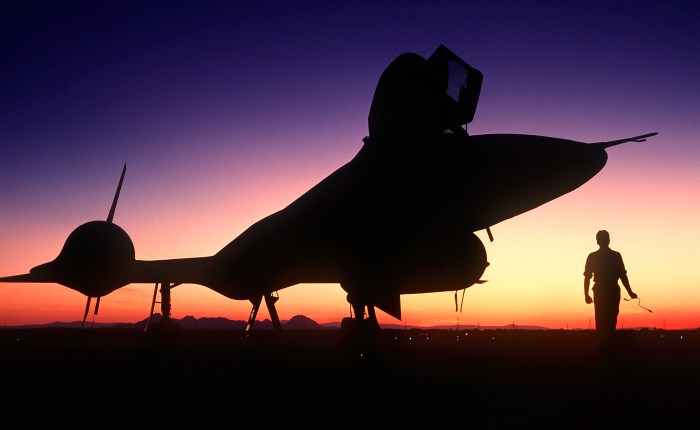
Header image: A right front view of an SR-71B Blackbird strategic reconnaissance training aircraft, silhouetted on the runway at sundown at Beale AFB, 1 June 1988. Image by Technical Sergeant Michael Haggerty. (Source: US National Archives and Records Administration (NAID 6438040))
#ResearchNote – Project Suntan: The Huge Hydrogen Aircraft That Might Have Blown Up Southern California

#ResearchNote – Project Suntan: The Huge Hydrogen Aircraft That Might Have Blown Up Southern California

By Dr Michael W. Hankins

I am fascinated by aircraft designs that ‘could have been.’ Maybe it’s just my nostalgia for childhood drawings of imaginary aeroplanes, but I love looking at the concept for the out-of-the-box ideas that never made it off the drawing board. Recently, I was researching at the beautiful Huntington Library archives, combing through the papers of Ben Rich, who ran Lockheed’s Advanced Development Projects division, ‘Skunk Works,’ between 1975 and 1990. ‘Skunk Works’ handled Lockheed’s top-secret programs, such as the U-2. I came across his files on the CL-400, also known as Project Suntan.[1] This had nothing to do with the project I was working on, but I found the files fascinating and wanted to share some of what I found here on From Balloons to Drones.

In 1955, most people dancing to Bill Haley’s new hit song ‘Rock Around the Clock’ had little idea that the Central Intelligence Agency and US Air Force had partnered with Lockheed to design a secret spy plane to fly 70,000 feet above the Soviet Union, the U-2. However, even as the U-2 began flying, Clarence ‘Kelly’ Johnson, then chief engineer at Lockheed’s Burbank, California plant, suspected that the U-2 would not last long – it was an effective aeroplane but vulnerable. Johnson wanted a follow-on to the U-2 that could fly even higher, further, and faster.

Lockheed turned to the advantages of high-energy fuels, specifically liquid hydrogen (LH). With a much greater energy density, hydrogen was more powerful (and hazardous). On paper, it seemed like an LH-powered aircraft could have everything Johnson needed: very long range, very high altitude, and supersonic speed. Rich led the project, working under Johnson at the ‘Skunk Works.’

Rich recalled, ‘between 1955-1958, [Lockheed] developed and built all the components and systems necessary for a liquid hydrogen-fueled airplane.’ Designing aircraft to use this unique fuel source presented major challenges. As Rich noted: ‘The hydrogen fueled airplane has very little flexibility in design configuration […] since fuel requirements dictate a long fuselage with attendant balancing and C.G. [center of gravity] travel limitations.’

Nevertheless, the concept went through a series of iterations. The original CL-400 was a two-seat reconnaissance plane, 160 feet long with a 10-foot diameter. The wings resembled Lockheed’s F-104 Starfighter, and the plane’s vertical fin was retractable. It was designed to cruise at 99,500 feet, going Mach 2.5, for a maximum range of 2,200 nautical miles.

CL-400-14
An illustration showing the relative size comparison of the C-400-14 with a Boeing B-52 Stratofortress and a Lockheed Constellation (Source: The Huntington Library, California, Ben Rich Papers, Box 3, Folder 1, Projects – Engineering – CL-400)

That was just the beginning. Variant designs on the CL-400, Rich says, ‘were studied from the standpoint of achieving maximum range rather than maximum altitude.’ As evident from the accompanying series of plan drawings, the original CL-400 was near the size of the massive Boeing B-52 Stratofortress bomber, but increasing its range meant increasing the fuel capacity. So, the designs got bigger. Much, much bigger.

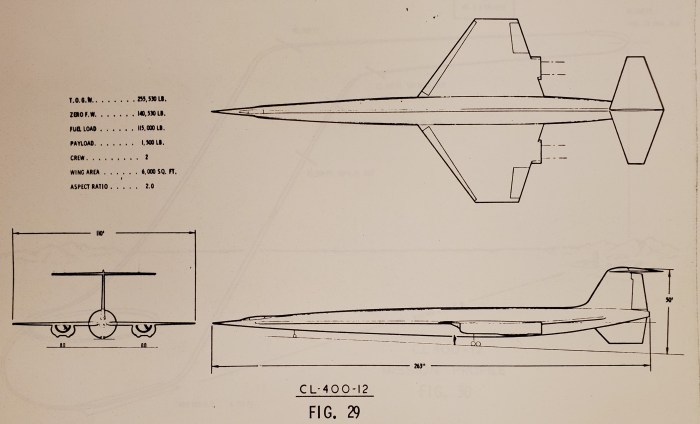
CL-400-12
Drawing of the CL-400-12. (Source: An illustration showing the relative size comparison of the C-400-14 with a Boeing B-52 Stratofortress and a Lockheed Constellation (Source: The Huntington Library, California, Ben Rich Papers, Box 3, Folder 1, Projects – Engineering – CL-400)

The CL-400-12 was more than double the size of a B-52 and designed for a 4,720 nautical mile range with four engines blasting it to Mach 2.5. Rich’s notes simply stated that ‘the aircraft size is quite large.’

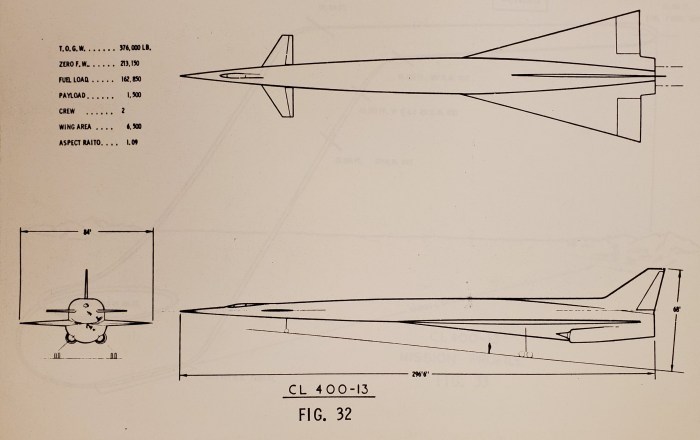
CL-400-13
Drawing of the CL-400-13. (Source: Drawing of the CL-400-12. (Source: An illustration showing the relative size comparison of the C-400-14 with a Boeing B-52 Stratofortress and a Lockheed Constellation (Source: The Huntington Library, California, Ben Rich Papers, Box 3, Folder 1, Projects – Engineering – CL-400)

The CL-400-13 took the idea even further with a cone-delta design and forward canards. The aeroplane was almost the length of one football field, with a gross take-off weight of 376,000 pounds. Nevertheless, it could cruise at Mach 4 for a total range of 9,000 nautical miles. The CL-400-14 was similar in size to the -13 but used four smaller engines instead of two big ones.

CL-400-14 1
Drawing of the CL-400-14 (Source: Drawing of the CL-400-13. (Source: Drawing of the CL-400-12. (Source: An illustration showing the relative size comparison of the C-400-14 with a Boeing B-52 Stratofortress and a Lockheed Constellation (Source: The Huntington Library, California, Ben Rich Papers, Box 3, Folder 1, Projects – Engineering – CL-400)

Hydrogen, as readers familiar with the Hindenburg disaster will attest, is also very dangerous. Lockheed had an approach to address the danger: try to cause a series of hydrogen explosions. Rich’s notes explained that ‘Numerous hydrogen ignition tests were made so as to get a feel for the damage potential in such an explosion, and it was found that the danger was not nearly as great as expected. Explosions were generally mild, and hydrogen fireball radiation was much less than that from a comparable kerosene fire.’ They tried to create an explosion 61 times, and only twice (when purposefully mixed with oxygen and ignited) did it cause ‘a bona fide explosion.’ Lockheed engineers were convinced LH could be handled safely – even more critically since the top-secret nature of the program meant that if there were an uncontrollable fire, they would not be able to call the fire department.[2]

Lockheed built a massive facility to test methods to produce, store, and transport the large quantities of liquid hydrogen necessary to operate a fleet of huge, LH-guzzling aeroplanes a few hundred yards away from the Burbank Municipal Airport. Dr Russell Scott, a leading expert on liquid hydrogen from the U.S. Bureau of Standards, visited the facility and said, ‘My God in heaven, you’re gonna to blow up Burbank.’[3] Ultimately, the logistical challenges of operating a fleet of LH aircraft proved insurmountable at the time. After examining the international basing requirements for the necessary fuel, Johnson gave up on the project. He called the Secretary of the Air Force, James Douglas, and said, ‘I’m afraid I’m building you a dog. My recommendation is that we cancel Suntan.’[4] Today, U-2s are still flying, and the Burbank site, which was once the home for testing and production of classic Lockheed aircraft, has been turned into a giant shopping complex featuring a Best Buy and Wal-Mart. In a way, maybe Burbank did blow up.

It is tempting to write off this story as a historical footnote, but the story of Suntan has three important takeaways: First, failure is important. Just because the project never went to production does not mean it was insignificant. With the aerospace industry currently looking into the potential use of hydrogen fuel, projects like this are still relevant. Second, failed designs still have a strong influence on those that succeed. Going through the process of designing these aircraft and thinking through potential solutions taught these engineers a lot. Many of the design elements first experimented with on the CL-400 went on to have a strong influence on the design of later aircraft – especially the A-12, the forerunner of the SR-71 Blackbird.

Finally, the CL-400 shows the importance and power of imagination. These planes might seem wild, but the effort shows that engineers could push themselves to think outside the box. This reveals the mindset underneath American Cold War aviation design – that it often gravitated to the massive or even outlandish, but it is also inspiring. I am not an aircraft designer, but I hope that in my own life and work, I am pushing myself to think beyond the boundaries of what I think might be possible, explore new ideas and see where they lead.

Dr Michael Hankins is the Curator for US Air Force, Navy, and Marine Corps post-World War II Aviation at the Smithsonian National Air and Space Museum and the author of Flying Camelot: The F-15, the F-16, and the Weaponization of Fighter Pilot Nostalgia (2021). In addition, he is a former Professor of Strategy at the USAF Air Command and Staff College eSchool, and a former Instructor of Military History at the US Air Force Academy. He earned his PhD in history from Kansas State University in 2018, and his master’s in history from the University of North Texas in 2013.

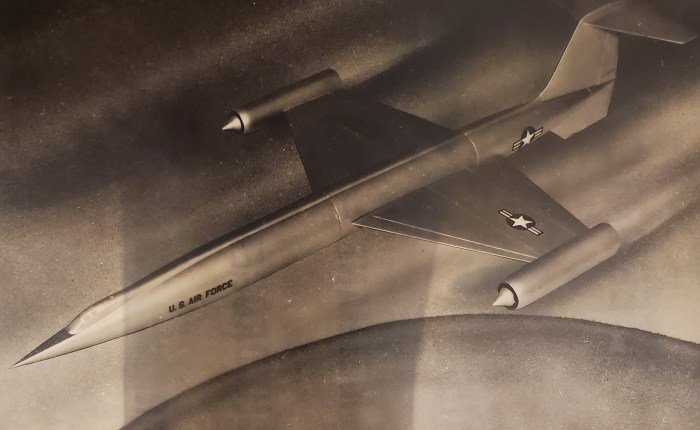
Header image: An artist’s impression of the CL-400 in flight. (Source: The Huntington Library, California, Ben Rich Papers, Box 3, Folder 1, Projects – Engineering – CL-400)

[1] Unless otherwise noted, all information, quotations, and images in this article are taken from: The Huntington Library, California, Ben Rich Papers, Box 3, Folder 1, Projects – Engineering – CL-400.

[2] John L. Sloop, Liquid Hydrogen as a Propulsion Fuel, 1945-1959 (Washington, DC: National Aeronautics and Space Administration, 1978), p. 149.

[3] Ben Rich and Leo Janos, Skunk Works: A Personal Memoir of My Years at Lockheed (New York: Little, Brown and Company, 1994), p. 173.

[4] Rich and Janos, Skunk Works, 177.

#BookReview – Stealth: The Secret Contest to Invent Invisible Aircraft

#BookReview – Stealth: The Secret Contest to Invent Invisible Aircraft

Reviewed by Dr Mike Hankins

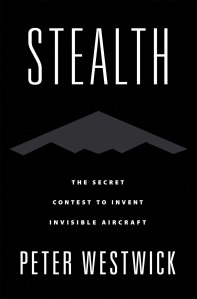
Peter Westwick, Stealth: The Secret Contest to Invent Invisible Aircraft. New York: Oxford University Press, 2020. Illustrations. Glossary. Notes. Index. Hbk. 251 pp.

The advent of stealth technology – making aircraft nearly invisible to radar detection – in the 1970s was one of those rare moments in the history of military aircraft technology that seemed to shape much of the development that followed it. Over 40 years later, most new aircraft designed around the world incorporate stealth characteristics in some way or another. Taking a sweeping look at the advent and early development of stealth aircraft within a broad context is the aim of Stealth: The Secret Contest to Invent Invisible Aircraft by Peter Westwick, director of the University of Southern California’s Aerospace History Project. The book is a fascinating look at two companies, Lockheed, and Northrop, that continually competed for stealth projects – each coming at the technology from very different perspectives and methodologies. With this comparative lens, Westwick explores the ways that culture shaped each company’s differing solutions to similar technological problems.

The most significant limitation for any book about stealth is the lack of unclassified sources, and this book is no exception. While much of the material here will be familiar to stealth aficionados, Westwick has conducted a large number of new interviews that shed new light on some familiar events, and reveal new, fresh stories, many that speak to the unique personal experiences of those involved in stealth development.

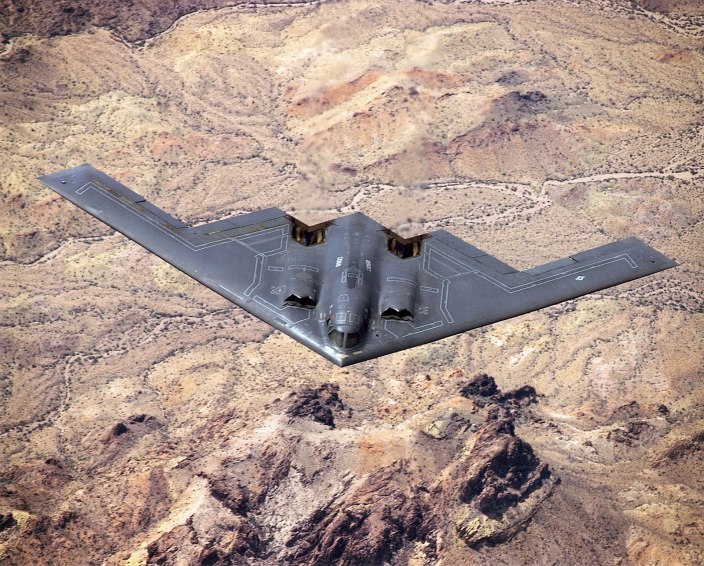
The Northrop B-2 Spirit stealth bomber on its first flight in 1989. (Source: US Air Force)

Westwick emphasises that Lockheed’s approach to stealth relied extensively on computer modelling, which was a significant shift for the firm at the time. For decades, successful designs from Lockheed, including the A-12 and SR-71 Blackbird, which each incorporated stealth characteristics, had been grounded in Chief Executive Officer, Clarence ‘Kelly’ Johnson’s adage that planes that look beautiful fly beautiful. When Johnson retired, his replacement Ben Rich allowed radar experts to have a more significant say in the design process. Their creation of powerful computer programs that could calculate radar returns from a variety of shapes fueled their design process. Nevertheless, the limitations of the program influenced the team to rely on flat, faceted surfaces – an approach that was quite successful, winning the company that contract for the aircraft that became the F-117 Nighthawk.

Lockheed’s programs made use of Soviet research that, ironically, had been requested for translation by engineers at Northrop. Although Northrop also incorporated this research and made similar computer modelling programs, their engineers combined them with a more intuitive approach. Northrop designers used their extensive knowledge of radar theory in a more hands-on way, often literally through iterative modelling and moulding. One of the more dramatic moments of Westwick’s narrative involves Northrop engineer Fred Oshiro visiting Disneyland and sitting outside the Tea Cup ride playing with a lump of modelling clay – a common practice at Northrop – until he intuitively developed the idea of using complex curves to minimize radar returns. The Tea Party ride had been designed by Lockheed engineer and stealth pioneer Richard Sherrer.

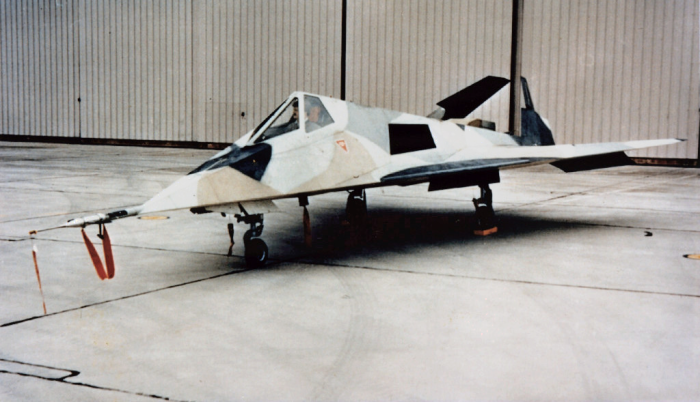
The Lockheed Have Blue prototype that eventually led to the F-117 Nighthawk stealth fighter. (Source: US Air Force)

This tale of two engineering houses, each with different cultural approaches to designing stealth, forms the backbone of the story, which traces the development of the Have Blue, F-117, Tacit Blue, and B-2 programs. Along the way, Westwick dispels some prevalent misconceptions that frequently crop up in discussions of stealth. For example, some readers might assume that Northrop’s B-2 design was a ‘flying wing’ conception because the company was founded by Jack Northrop, who was obsessed with flying wings and designed several himself. However, Westwick reveals the company had completely abandoned the idea for decades, and only adopted it after Lockheed had submitted their flying wing bomber concept. Another of the more dramatic moments in the book involves the aging Jack Northrop’s heartwarming response to seeing the B-2 designs, which I will not spoil in this review.

Westwick goes beyond the analysis of these companies and attempts to place the development of stealth in a larger context in terms of culture, strategy, and Cold War geopolitics. This includes implying that the inherent creativity around the ‘[i]magineering’ culture of Disney that pervaded California in the 1960s and 70s was a contributing factor to stealth development. On a broader scale, Westwick goes as far as to say that stealth provided an alternative to nuclear deterrence, in some ways making nuclear weapons obsolete. He argues that stealth delivered what President Ronald Reagan’s fanciful Strategic Defense Initiative could only promise. With the ability to essentially defeat the Soviet Union’s massive investment into radar-based air defence networks, stealth broke the foundation of Cold War deterrence theory, and, according to Westwick, pressed the Soviet Union into an unsustainable increase in defence spending that contributed to the nation’s collapse. These ideas are interesting and worthy of consideration, but Westwick’s presentation of them is far too brief; these ideas are not nearly as fully developed as they could be. That does not take anything away from the book as it is. To really make these larger points hit home would probably require a different type of book with a different focus. However, this type of overarching analysis is welcome and thought-provoking, perhaps pointing to further research directions on how stealth technology contributed to the end of the Cold War in specific ways.

Overall, the book is an excellent addition to any air power or history bookshelf. This book manages to be the best starting point for those new to the topic of stealth while also providing new insights and details for the already initiated. Even more impressive, Westwick delivers these contributions while writing in an engaging and personal style that is great to read and sure to be enjoyed by scholars and still easily accessible for enthusiasts and general readers.

Dr Michael Hankins is the Curator of US Air Force History at the Smithsonian National Air and Space Museum. He is a former Professor of Strategy at the USAF Air Command and Staff College eSchool, and former Instructor of Military History at the U.S. Air Force Academy. He earned his PhD from Kansas State University in 2018 with his dissertation, ‘The Cult of the Lightweight Fighter: Culture and Technology in the U.S. Air Force, 1964-1991.’ He completed his master’s thesis at the University of North Texas in 2013, titled ‘The Phantom Menace: The F-4 in Air-to-Air Combat in the Vietnam War.’ He has a web page here and can be found on Twitter at @hankinstien.

Header Image: The Lockheed F-117 Nighthawk stealth fighter flying over Nellis Air Force Base in 2002. (Source: US Air Force)