#BookReview – Flight Culture and the Human Experience

#BookReview – Flight Culture and the Human Experience

Reviewed by Dr Brian Laslie

Scott W. Palmer (ed.), Flight Culture and the Human Experience. College Station, TX: Texas A&M Press, 2025. Hbk Photos. Bibliography. Index. 248 pp.
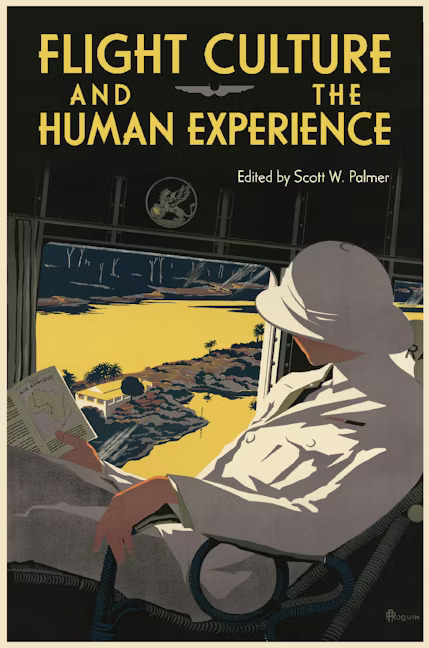
Scott W. Palmer’s edited work, Flight Culture and the Human Experience from the Texas A&M Press, is a compilation of papers presented at the 55th Annual Walter Prescott Webb Lecture Series in 2021. Sadly, edited volumes and collections of this type are seeing a downward trend in publication across academia as university presses tighten their belts under increased budgetary constraints, and this work demonstrates what a blow that is to serious academic scholarship, particularly for those without a manuscript-length project.

The book itself is a ‘collection of essays on the modern social and historical implications of aviation,’ which ostensibly places it outside the purview of the classically trained military historian, but since ‘guns and trumpets’ has been slowly subsumed into the broader contours of ‘war and society,’ there is still much here for the historian who concerns themselves with military matters as it pertains to aviation and air power. Only three of the seven chapters relate specifically to military issues; these include Johanna Rustler’s ‘The British Air Mechanic at War and Aircraft Innovation, 1914-1918,’ Marc Dierikx’s ‘Civil Air Transport and the Colonial Context in the Interwar Period,’ and Michael W. Hankins’ ‘Selling the Fighter Pilot’s Dream Machines: The F-15 and F-16 in the Public Eye.’ However, military aspects of the ‘flight culture’ can be found throughout.

In an introduction provided by Caroline E. Tapp, Curator of Social and Cultural History at the Smithsonian National Air and Space Museum, she notes that ‘flight culture has become an intrinsic part of the human experience’ and an experience which ‘transcends geographic borders and historical timelines.’ (p. 1) Contrary to Joseph Corn’s magnificent book Winged Gospel (1983), which demonstrated an America-centric focus on aviation, the current work broadens that interpretation into a global one. People of all nations are affected by and interact with aviation and air travel, which, in turn, shapes national culture and identity. As Tapp also notes, thanks to the work of Roger Launius, the writings of New Aviation History/New Aerospace History have become a distinct field exploring the melding of technology, social, and other ‘inclusive investigations’ into a cohesive field of study (p. 4).

Patrick Luis Sullivan De Oliveira begins the work with ‘The Utopian Machine: Lighter-Than-Air Flight and Romantic Socialism in Nineteenth-Century France,’ a chapter focusing on Ernest Pétin, the French milliner who went on to design airships. However, the chapter’s strength lies in its demonstration of the relationship between European socialist thought and the belief in lighter-than-air flight. Flight, be it heavier or lighter than air, has always been used in political metaphors. In this case, utopian socialist ideals wrapped their conceptions around lighter-than-air flight. As the author quotes Victor Hugo, who ‘turned his attention upward and toward the future’ and the promises of a better 20th Century (p. 34). De Oliveira shows, through Hugo, that the airship ‘would finally bring to fruition the ideals of the French Revolution.’ (p. 36)

Marc Alsina’s ‘Gender, Race, and Heroic Aviation in Interwar Argentia, 1920-1940’ demonstrates how aviation helped create unique national identities. In Argentina, military and civilian aviators, both men and women, received acclaim that helped to ‘articulate a modern national identity’ (p. 70). Rénald Fortier’s chapter ‘“Detroyattaboy”: Michael Détroyat and the 1936 National Air Races,’ gives a brief biography of the French air racer and how his victories in the 1936 National Air Races in the United States engendered resentment amongst American flyers including Roscoe Turner who stated, ‘[i]t isn’t fair for any foreign pilot to come over here’. However, Turner was severely criticised for his ‘poor sportsmanship’ (p. 148, 150). Still, the chapter clearly demonstrates how foreign influencers catalysed change, in this case, in America.

Janet Bednarek’s ‘Chasing the Future: Why US Airports Seem Always Under Construction,’ while not meant to be humorous, certainly provides chances to chuckle as she addresses the American nationwide airport signage ‘pardon our progress’ as airports have struggled since the 1960s with keeping up to an insatiable demand for air travel in America (p 171). In short, the airports themselves could not keep up with the ever-increasing number of travellers. Besides the ticketed passengers themselves, pre-9-11 airport visitors, changes made after the September 11th attacks, Covid-19, and myriad other reasons have made creating an ‘airport of the future’ a nearly impossible task (p. 192). While we may look upon the pre-9/11 era as the halcyon days of air travel, Bednarek clearly shows that at no time since the 1960s air travel boom has an airport been able to keep up with demand and that our interpretation of well-dressed flight attendants, good food, and good drinks began and ended at the door to the aircraft.

As previously noted, only three chapters demonstrate a more military-focused bent. Of these, Rustler’s ‘The British Air Mechanic at War and Aircraft Innovation, 1914-1918’ is a breath of fresh air that focuses on the support arm to those who fly at the ‘pointy end of the spear.’ In much the same way that Apple TV’s Masters of the Air gave significant, if not equal, screentime to these air mechanics or what we today call ‘maintainers,’ Rustler’s chapter infuses the study of aviation with a much-needed focus on the lower-ranked enlisted men who have since 1914, ‘kept ‘em flying.’ However, more importantly, Rustler shows how the relationship between the mostly officer flyers and enlisted air crews developed into ‘mutual trust and respect that transcended social boundaries’ and ‘served as a guidepost for future social development and emancipation.’ (p. 63)

Dierikx’s ‘Civil Air Transport and the Colonial Context in the Interwar Period’ is not exclusively military, but the air power historian studying the interwar years should not miss it. It begins with a vignette by a Dutch cartographer, which Antoine de Saint-Exupéry could have written. In short, flying can often be viewed in ‘Hobbesian’ terms: short, brutish, and nasty. Again, while not a military chapter per se, it does demonstrate the lengths to which colonial powers went to develop viable air routes between the First and Second World Wars. Flying these routes as both crew and passenger required a certain, ‘panache,’ as governments, postal and mail services, corporations, businessmen, and other air travelers all fought against the unknown in an early globalisation movement that shrank our world, connected empires, and birthed a new form of traveler and all done under the assumption that ‘absolute national sovereignty should rule the air medium.’ (p. 130)

Hankins’ chapter is entitled ‘Selling the Fighter Pilot’s Dream Machines: The F-15 and F-16 in the Public Eye,’ although ‘Mad Men for the Military Industrial Complex’ would also have been an apt descriptor. While Hankins has already explored the developments of both the F-15 and F-16 and the fights between the ‘Fighter Mafia’/‘Reformers,’ in his book Flying Camelot (2021), this chapter shows how that fight played out in ads present in trade publications, magazines, and other venues that saw these roles of each aircraft morph over time. Hankins has become one of the leading post-Vietnam United States Air Force and air power scholars, and this chapter only enhances that reputation.

Overall, this book accomplishes what it sets out to do, namely, providing a ‘wider, more meaningful view of aviation history.’ (p. 4) This is an important book; it presents some of the latest and greatest aviation scholarship, and its sum is greater than its composite parts. This vital work will find a home on the shelf of everyone who considers themselves a serious scholar of air power and aviation history.

Dr Brian Laslie is a noted air power historian, having authored The Sundowners, Pegasus, and Little Butch: Carrier Air Group Eleven and the War in the Pacific, 1943-1945 (2025), Air Power’s Lost Cause: The American Air Wars of Vietnam (2021),  Architect of Air Power: General Laurence S. Kuter and the Birth of the US Air Force (2017) and The Air Force Way of War (2015). The latter book was selected for the Chief of Staff of the Air Force’s 2016 professional reading list and the 2017 RAF Chief of the Air Staff’s reading list. US Air Force Historian and Command Historian at the United States Air Force Academy. Formerly, he was the Deputy Command Historian at the North American Aerospace Defense Command (NORAD) and United States Northern Command (USNORTHCOM). A 2001 graduate of The Citadel and a historian of air power studies, he received his Masters’ from Auburn University Montgomery in 2006 and his PhD from Kansas State University in 2013.

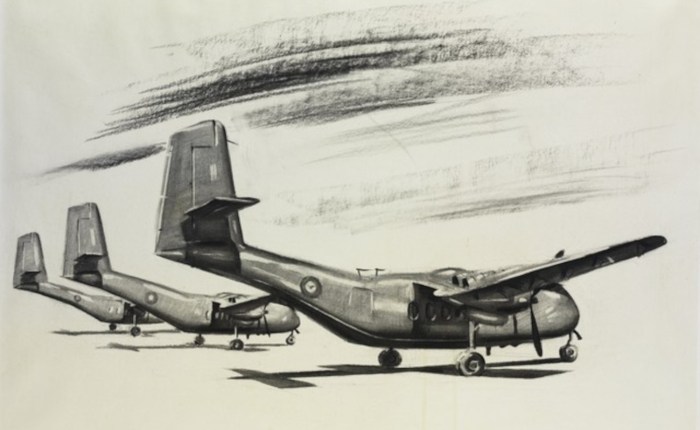
Header image: Three DHC-4 Caribou aircraft of No. 35 Squadron Royal Australian Air Force at Vung Tau air base, Vietnam, c. 1967-68. (Source: Australian War Memorial)

#BookReview – Spitfires: The American Women Who Flew in the Face of Danger during World War II

#BookReview – Spitfires: The American Women Who Flew in the Face of Danger during World War II

Reviewed by Dr Brian Laslie

Becky Aikman, Spitfires: The American Women Who Flew in the Face of Danger during World War II. London, Bloomsbury Press, 2025. Footnotes. Hbk. 368 pp.

In her new bookSpitfires: The American Women Who Flew in the Face of Danger during World War II, Becky Aikman has accomplished two things: First, she has surprised me and proven that I have much to learn regarding the contributions of women aviators in the Second World War. Second, she clearly demonstrates the importance of someone’s immutable characteristics and their agency and story. Without acknowledging these characteristics, the extraordinary efforts taken by specific individuals in the face of prescribed gender roles might be lost.

This new work details the story of American women who defied the odds, stereotypes, gender roles, and numerous other obstacles to support the war effort, but more importantly, to contribute to the war effort by doing something they loved, slipping the surly bonds of earth. As the advance copy, which landed on my desk, notes a group of aviatrixes:

[w]ere denied the opportunity to fly for their country when the United States entered the Second World War. But Great Britain, desperately fighting for survival, would let anyone-even Americans, even women-transport warplanes. Thus, twenty-five daring young aviators bolted for England in 1942, becoming the first American women to command military aircraft.

Before establishing the Women’s Auxiliary Ferrying Squadron and the Women’s AirForce Service Pilots, this select group of women, initially under the leadership of Jackie Cochran, left home to fly in England for Britain’s Air Transport Auxiliary (ATA).

Allied women pilots of the Air Transport Auxiliary service. Their job done, four female ATA pilots (three Americans and one Polish) leaving an airfield near Maidenhead, 19 March 1943. They are from left to right: Roberta Sandoz of Washington; Kay Van Doozer from Los Angeles; Jadwiga Piłsudska from Warsaw; and Mary Hooper from Los Angeles. (Source: IWM (CH 8945))

Aikman clearly shows that these women flyers had what Tom Wolfe later called the same ‘right stuff’ as their male counterparts. The ATA ‘was an organization where renegade behavior was part of the DNA.’ The ATA ‘had established itself as a seat-of-the-pants operation that sometimes tolerated, or even celebrated, eccentrics’ (p. 33). In the same way that Billy Mitchell was known for his early Maverickism, which seeped into the essence of the American flyer, these women also did things in their way, regardless of what the rules said. While this nonconformist and individualist attitude is part of the mythology of the American Flyer, it did not conform to gender roles.

Aikman relies heavily on diaries and surviving papers of the Americans in the ATA. She uses these to significant effect in creating an intimate and personal account, but Aikman quickly points out that this was not a unified Band of Sisters; as found within any unit, there were disagreements, alliances, and competition (p. 84). Still, these few dozen women were doing what they loved to: flying and doing so in every conceivable type of aircraft the British flying services had to offer: 147 different types in total. Detailing too much of the book here would rob you of the story of these ‘Spitfires,’ but suffice it to say that not all of them made it through training, completed their contracts, or even lived to see the United States again.

The end of the war saw the end of the ‘ATA-girls,’ and they returned home. Aikman states, ‘[t]he era when women pilots would fall out mind had already begun.’ (p.271). Except for mention in a few books or self-published memoirs and autobiographies, the American women of the ATA faded into public obscurity. However, their lives after the war remained as varied and vibrant as the women themselves, and Aikman’s telling of their story could not have arrived at a better time. It is here to remind us that the ‘immutable characteristics’ of some individuals are what make their story compelling and worth telling.

This book is the finest in aviation history: a sweeping narrative, deeply researched, and passionately written work that is sure to please and inform its audience. This book will appeal to a broad audience of historians and buffs. However, more importantly, it fills another gap in the historiography of American women flyers in the Second World War and their contributions to the war effort abroad, providing avenues in its copious footnotes for future researchers to follow. Any historian of air power studies or those interested in aviation in the Second World War will want a copy of this on their bookshelves.

Header image: A group of women pilots of the ATA service photographed in their flying kit at Hatfield. (Source: IWM (C 381))

Dr Brian Laslie is a noted air power historian, having authored The Sundowners, Pegasus, and Little Butch: Carrier Air Group Eleven and the War in the Pacific, 1943-1945 (2025), Air Power’s Lost Cause: The American Air Wars of Vietnam (2021),  Architect of Air Power: General Laurence S. Kuter and the Birth of the US Air Force (2017) and The Air Force Way of War (2015). The latter book was selected for the Chief of Staff of the Air Force’s 2016 professional reading list and the 2017 RAF Chief of the Air Staff’s reading list. US Air Force Historian and Command Historian at the United States Air Force Academy. Formerly, he was the Deputy Command Historian at the North American Aerospace Defense Command (NORAD) and United States Northern Command (USNORTHCOM). A 2001 graduate of The Citadel and a historian of air power studies, he received his Masters’ from Auburn University Montgomery in 2006 and his PhD from Kansas State University in 2013.

#BookReview – A Reluctant Icon: Letters to Neil Armstrong

#BookReview – A Reluctant Icon: Letters to Neil Armstrong

Reviewed by Dr Brian Laslie

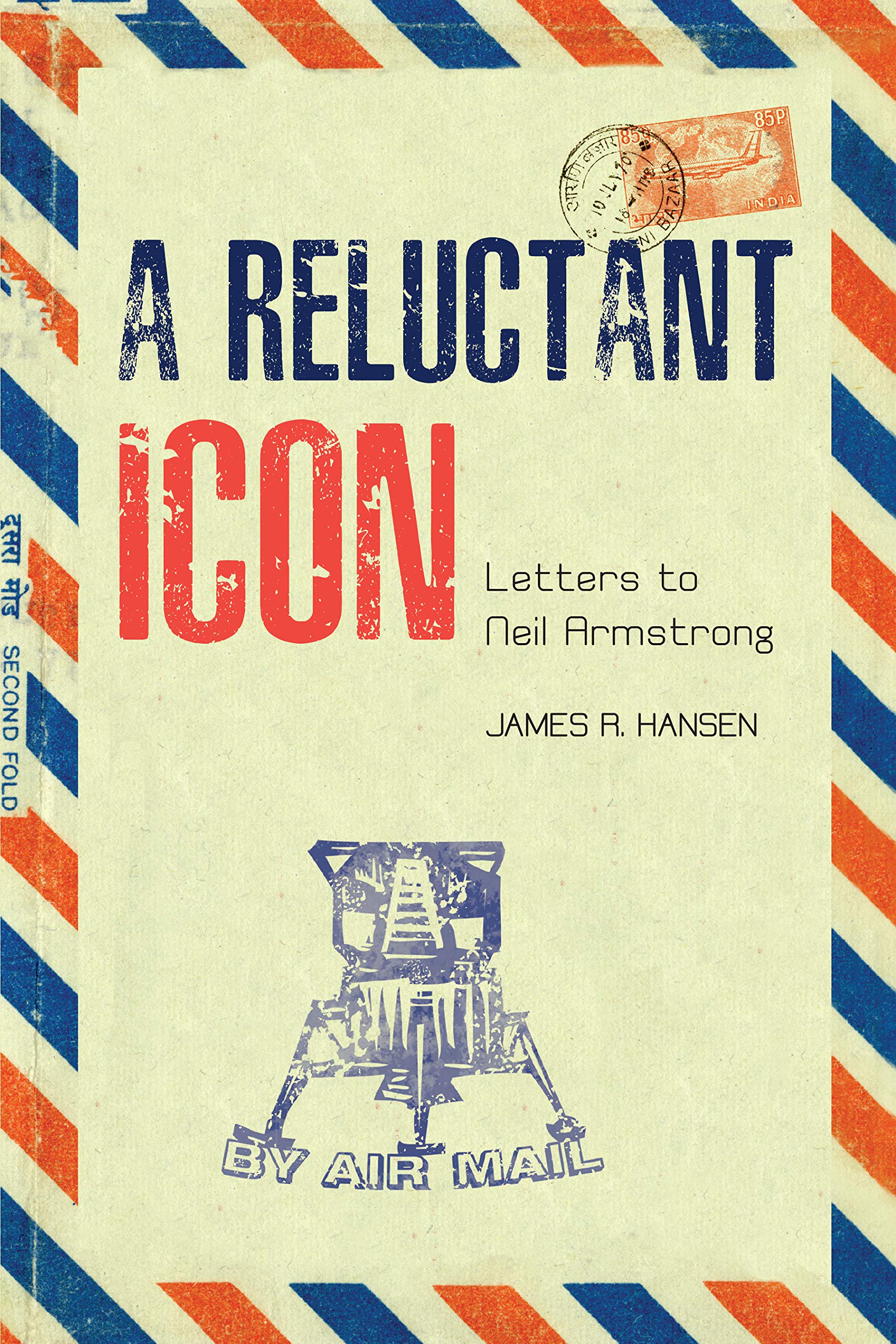
James R. Hansen, A Reluctant Icon: Letters to Neil Armstrong. West Lafayette, IN: Purdue University Press, 2020. Notes. Hbk. 384 pp.

There are new air power scholarship releases all the time. One need look no further than the academic press catalogues for the University Press of Kentucky, University of North Texas Press, and Naval Institute Press (to name a few) to see what is up and coming. As the book reviews editor for From Balloons to Drones, I often receive books or ask for them in advance with promises of a ‘review forthcoming,’ it is all too easy to fall behind. Thus, this book review comes several years in arrears. So, please note that the book covered below was published in the year following the 50th anniversary of Apollo 11.

Now that the hype for #Apollo11, #Apollo50, and all things Apollo program has died following the 50-year celebrations from 2018-2023 (coinciding with Apollo 7-17), there is time for reflection on the Golden Age of Spaceflight. Even as the Space Shuttle moves into distant memory, there continues to be a deep draw towards America’s space pioneers, and no one individual better encapsulates that draw than Neil Armstrong, the enigmatic first man on the moon, and no one better understands Armstrong than his biographer Dr James R. Hansen. Hansen spent hundreds of hours with Armstrong in writing the biography First Man: The Life of Neil A. Armstrong. His second book (from Purdue University Press) on Armstrong was Dear Neil Armstrong: Letters to the First Man from All Mankind, reviewed here. This is Hansen’s third book about Armstrong, and he has not ruled out writing more. This most recent volume, A Reluctant Icon: Letters to Neil Armstrong, is part of the Purdue University Press series: Purdue Studies in Aeronautics and Astronautics.

Since he published First Man in 2005, there has been an explosion of books, podcasts, magazines, toys, and other ephemera available to purchase as a memory or remembrance of the end of the golden age of spaceflight. Books include Jay Barbree’s 2014 Neil Armstrong: A Life of Flight. The Lego Brick Company produced a hugely successful series of building sets, including the Saturn V, Lunar Rover, and Lunar Lander. All this falls under what Hansen calls the ‘Iconography and myth’ of Armstrong and what I have labelled as ‘The Cottage Industry of Neil Armstrong’ culminating in one of the most sought-after signatures in history for collectors, running from $2,000 to $10,000 depending on the medium.

In writing his two ‘Letters to…’ works, Hansen had, for the first time, complete access to Armstrong’s papers now housed in the archives at Purdue University (p. xi). This second book is broken down into six chapters. It contains letters, and sometimes responses, concerning first, religion and belief; second, anger, disappointment and disillusionment; third, quacks, conspiracy theories, and Ufologists; fourth, fellow astronauts and the world of flight; fifth, the corporate world; sixth, celebrities, stars, and notables, and finally, letters from a grieving world.

In ‘Religion and Belief,’ most of the letters projects onto Neil being a devout Christian – Armstrong was a Deist. Neil responded by ‘ignoring their questions or sidestepping the issue of religion altogether’ (p. 5). While most of the letters in this chapter are benign, Armstrong did receive some bizarre and ‘kooky’ letters over many years.

Chapters two and three, ‘Anger, disappointment and disillusionment’ and ‘Quacks, conspiracy theories, and, Ufologists’ complement each other in that the letters Armstrong received (Hanson notes these represented less than one per cent of all letters he received) read like online comment sections: sometimes interesting, rarely thought-provoking, often ad hominem. Hansen includes a selection here: ‘Without taking such letters into account, the iconography involving Neil Armstrong, sadly, is incomplete.’

Of most interest to the readers of this website are the many letters found in the chapter ‘Fellow Astronauts and the World of Flight.’ Armstrong received numerous letters from his fellow astronauts, but he remained close, with very few of them, Jim Lovell and Gene Cernan being the notable exceptions. Hansen shows Jim Irwin’s request for a gathering of moonwalkers that never came to fruition, Al Bean passing along pieces of the Apollo Saturn V, which fell to Earth, and correspondence with Al Shepard and Jim Lovell attempting to enlist Armstrong’s involvement in ventures including the Astronaut Scholarship fund. Even amongst friends and colleagues, Armstrong remained an intensely private person.

The rest of the work, including the corporate world, celebrities, stars, and notables, and letters from a grieving world, all help to put into perspective who Armstrong was and not just the man who made the one giant leap. In many of the above, people wanted something from Armstrong: an autograph, a response, or some enigmatic comfort. Studying Armstrong is something akin to the study of Jefferson; one biography is not enough, and proper understanding can only come through diligent study of correspondence and letters, so Hansen is to be commended for providing a glimpse here and providing access to that which is otherwise available only in archives and special collections. The two volumes of Armstrong’s letters will surely appeal to those interested in Armstrong, the Apollo program, and those looking for something beyond the regular biography, a taste of source documentation in book form. Hansen is not only the best source to begin and end with if one is interested in studying the life of Neil Armstrong, but he is also one of the most outstanding living scholars of aeronautics and astronautics.

Dr Brian Laslie is a US Air Force Historian and Command Historian at the United States Air Force Academy. Formerly, he was the Deputy Command Historian at the North American Aerospace Defense Command (NORAD) and United States Northern Command (USNORTHCOM). A 2001 graduate of The Citadel and a historian of air power studies, he received his Masters’ from Auburn University Montgomery in 2006 and his PhD from Kansas State University in 2013. He is the author of Air Power’s Lost Cause: The American Air Wars of Vietnam (2021), Architect of Air Power: General Laurence S. Kuter and the Birth of the US Air Force (2017) and The Air Force Way of War (2015). The latter book was selected for the Chief of Staff of the Air Force’s 2016 professional reading list and the 2017 RAF Chief of the Air Staff’s reading list.

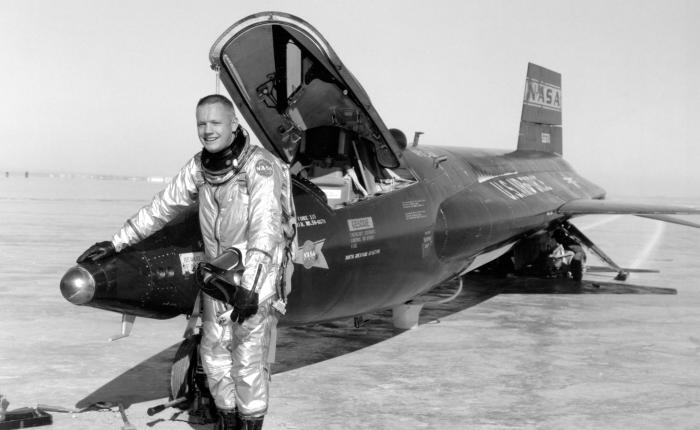
Header Image: Neil Armstrong is seen here next to the X-15 ship #1 after a research flight. Armstrong made his first X-15 flight on November 30, 1960, in the #1 X-15. He made his second flight on December 9, 1960, in the same aircraft. This was the first X-15 flight to use the ball nose, accurately measuring airspeed and flow angle at supersonic and hypersonic speeds. The servo-actuated ball nose can be seen in this photo in front of Armstrong’s right hand. The X-15 employed a non-standard landing gear. It had a nose gear with a wheel and tyre, but the main landing consisted of skids mounted at the vehicle’s rear. The left skid is visible in the photo, as are marks on the lakebed from both skids. Because of the skids, the rocket-powered aircraft could only land on a dry lakebed, not on a concrete runway. (Source: NASA)


#Podcast – 50th Episode Celebration: An Interview with Dr Mike Hankins and Dr Brian Laslie

#Podcast – 50th Episode Celebration: An Interview with Dr Mike Hankins and Dr Brian Laslie

Editorial Note: Led by Editor Dr Mike Hankins, From Balloons to Drones, produces a monthly podcast that provides an outlet for the presentation and evaluation of air power scholarship, the exploration of historical topics and ideas, and provides a way to reach out to both new scholars and the general public. You can find our Soundcloud channel here. You can also find our podcast on Apple Podcasts and Google Podcasts.

In our 50th episode, Dr Mike Hankins and Dr Brian Laslie review the first 50 episodes of the From Balloons to Drones podcast, revisit our favourites, and consider where we’re headed in the future!

Dr Michael Hankins is the Curator for US Air Force, Navy, and Marine Corps post-World War II Aviation at the Smithsonian National Air and Space Museum and the author of Flying Camelot: The F-15, the F-16, and the Weaponization of Fighter Pilot Nostalgia (2021). In addition, he is a former Professor of Strategy at the USAF Air Command and Staff College eSchool, and a former Instructor of Military History at the US Air Force Academy. He earned his PhD in history from Kansas State University in 2018 and his master’s from the University of North Texas in 2013. He has a web page here.

Dr Brian Laslie is a US Air Force Historian and Command Historian at the United States Air Force Academy. Formerly, he was the Deputy Command Historian at the North American Aerospace Defense Command (NORAD) and United States Northern Command (USNORTHCOM). A 2001 graduate of The Citadel and a historian of air power studies, he received his Masters’ from Auburn University Montgomery in 2006 and his PhD from Kansas State University in 2013. He is the author of Air Power’s Lost Cause: The American Air Wars of Vietnam (2021),  Architect of Air Power: General Laurence S. Kuter and the Birth of the US Air Force (2017) and The Air Force Way of War (2015). The latter book was selected for the Chief of Staff of the Air Force’s 2016 professional reading list and the 2017 RAF Chief of the Air Staff’s reading list. He can be found on Twitter at @BrianLaslie. 

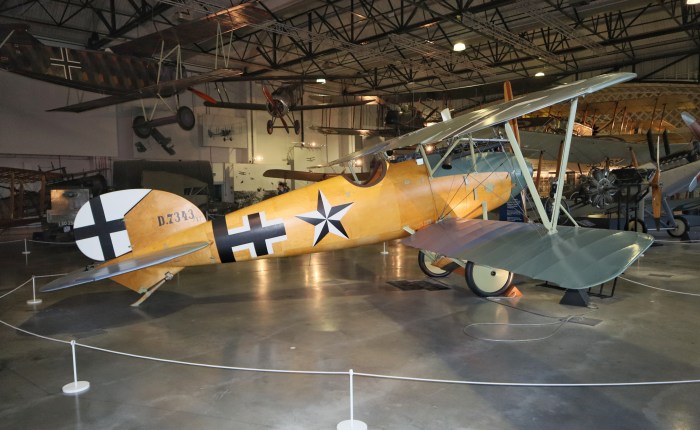
Header image: A replica Albatros DVa at the Royal Air Force Museum at Hendon (Source: Author’s Collection)

#FilmReview – Episodes 1 and 2 of Masters of the Air

#FilmReview – Episodes 1 and 2 of Masters of the Air

By Dr Brian Laslie

Friday, 26 January, the long-awaited first and second episodes of Masters of the Air, based on the excellent eponymous book by Don Miller, premiered on Apple TV+. When I say long-awaited, rumours and articles have swirled around the series for over a decade, dating back to 2012.

I was lucky to see the first episode early last week as part of pre-screening at the US Air Force Academy. As From Balloons to Drones was created to discuss just such a series in the public realm, I wanted to provide a quick commentary with my thoughts from the first episode.

The oft-watched, oft-quoted, and something of related series that Masters of the Air will be inevitably compared to is 2001’s Band of Brothers. When Band of Brothers released on 09 September 2001 (yes, at its first showing on the evening of the ninth, the world was less than 48 hours away from the events of 11 September), 57 years had passed since the events of the show. Many unit members were still alive in their late seventies or early eighties. As most remember, each episode either began or ended with the veterans telling their stories. This is, sadly, impossible for Masters of the Air. I do ponder how Major Gale ‘Buck’ Cleven, Major John Egan, or Lieutenant Colonel Robert ‘Rosie’ Rosenthal might have reacted to having themselves portrayed in the series. These real-life men never lived to see themselves portrayed in film, another bitter reminder that the Second World War generation is all but gone now.

342-FH_001236
Bombs being dropped on enemy installations at Wessling, Germany by Boeing B-17 Flying Fortresses of the US 100th Bomb Group, 12 August 1943. (Source: US National Archives and Records Administration)

In my two viewings of episode one so far, two words continually play in my mind: Poignant and terrifying. Masters of the Air has succeeded where other more recent films have failed – at least for me –  the actors portraying these real men (I cannot bring myself to refer to them as ‘characters’) do so without entering the realm of parody. The protagonists thus far, Buck and Bucky, seem like mid-twenties officers of the time, and I hope their character development continues in future episodes.

So far, the attention to detail seems well in hand. The men gearing up for the missions, the checklist, and the startup process for the Boeing B-17 Flying Fortresses is something too oft missed in other aerial films where pilots and crews hop in and zoom off to the wild blue yonder with nary a wave at the ground crews. The maintainers and mechanics also have their moments so far, and it is nice to see some recognition for the men who kept the planes in the air.

Obviously, the series uses CGI for the aerial battles but has used existing B-17s where possible. With only one episode down and knowing that the air battles are to increase in size with the number of aircraft and defenders, it has, thus far, demonstrated well the speed of attacking aircraft. Some critics have noted that the air battles are chaotic and difficult to follow. It is hard to tell who is who with the masks up and gear on, and the enemy fighters fly by in a blur with the gunners twisting to get off a few shots, but to my eye, there is realism here: the speed and chaos of air combat amongst the bomber crews is well done.

I cannot tell as of yet if Masters of the Air will live up to the hype, but as a historian, I have already found myself enjoying the series both for its storytelling and its accuracy. I also note that my air power colleagues have talked of little else this week and spent an inordinate amount of time talking to other interested parties, including media outlets (it’s a good time to be an air power historian). Knowing that the Tuskegee Airmen and Stalag Luft prison camps will be seen in future episodes only heightens my eagerness for more.

Thus far, I commend all parties involved in bringing the show to the screen. If this series inspires a younger generation to explore their past, ask questions about history, and look to learn more, it will have done its job.

Meanwhile, those of us already immersed in reading, researching, and publishing should use the series as a moment in time to explain what went on in the skies over Europe – and all over the world – during the Second World War: both the good and the bad, the glory and the horror, the rhetoric and the reality of the Masters of the Air.

Dr Brian Laslie is a US Air Force Historian and Command Historian at the United States Air Force Academy. Formerly he was the Deputy Command Historian at North American Aerospace Defense Command (NORAD) and United States Northern Command (USNORTHCOM). A 2001 graduate of The Citadel and a historian of air power studies, he received his Masters’ from Auburn University Montgomery in 2006 and his PhD from Kansas State University in 2013. He is the author of Air Power’s Lost Cause: The American Air Wars of Vietnam (2021),  Architect of Air Power: General Laurence S. Kuter and the Birth of the US Air Force (2017) and The Air Force Way of War (2015). The latter book was selected for the Chief of Staff of the Air Force’s 2016 professional reading list and the 2017 RAF Chief of the Air Staff’s reading list. He can be found on Twitter at @BrianLaslie.

Header image: A formation of Boeing B-17 Flying Fortresses of the 100th Bomb Group flies over a blanket of clouds en route to their target at Warnemunde, Germany, 29 July 1943. The aircraft shown is the  B-17 ‘Alice From Dallas’. Source: US National Archive and Records Administration)

#Podcast – “Check Six” – Historian Questions and Answers: An Interview with Dr Mike Hankins and Dr Brian Laslie

#Podcast – “Check Six” – Historian Questions and Answers: An Interview with Dr Mike Hankins and Dr Brian Laslie

Editorial Note: Led by Editor Dr Mike Hankins, From Balloons to Drones, produces a monthly podcast that provides an outlet for the presentation and evaluation of air power scholarship, the exploration of historical topics and ideas, and provides a way to reach out to both new scholars and the general public. You can find our Soundcloud channel here. You can also find our podcast on Apple Podcasts and Google Podcasts.

In our latest podcast episode, our Podcast Editor, Dr Mike Hankins, and Assistant Editor, Dr Brian Laslie, have each come up with questions to ask each other about what it’s like to be a historian and pick on some of their favourite topics about air power and aviation history.

Dr Michael Hankins is the Curator for US Air Force, Navy, and Marine Corps post-World War II Aviation at the Smithsonian National Air and Space Museum and the author of Flying Camelot: The F-15, the F-16, and the Weaponization of Fighter Pilot Nostalgia (2021). In addition, he is a former Professor of Strategy at the USAF Air Command and Staff College eSchool, and a former Instructor of Military History at the US Air Force Academy. He earned his PhD in history from Kansas State University in 2018 and his master’s in history from the University of North Texas in 2013. He has a web page here.

Dr Brian Laslie is a US Air Force Historian and Command Historian at the United States Air Force Academy. Formerly he was the Deputy Command Historian at North American Aerospace Defense Command (NORAD) and United States Northern Command (USNORTHCOM). A 2001 graduate of The Citadel and a historian of air power studies, he received his Masters’ from Auburn University Montgomery in 2006 and his PhD from Kansas State University in 2013. He is the author of Air Power’s Lost Cause: The American Air Wars of Vietnam (2021),  Architect of Air Power: General Laurence S. Kuter and the Birth of the US Air Force (2017) and The Air Force Way of War (2015). The latter book was selected for the Chief of Staff of the Air Force’s 2016 professional reading list and the 2017 RAF Chief of the Air Staff’s reading list. He can be found on Twitter at @BrianLaslie.

Header image: Four Republic F-84F Thunderstreak from the US Air Force Thunderbirds aerobatics team flying in formation in c. 1955. (Source: Wikimedia)

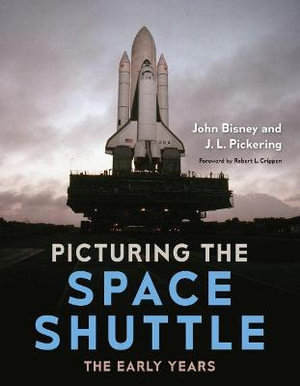
#BookReview – Picturing the Space Shuttle: The Early Years

#BookReview – Picturing the Space Shuttle: The Early Years

J.L. Pickering and John Bisney, Picturing the Space Shuttle: The Early Years. Gainesville, FL: University Press of Florida, 2021. Hbk. 240 pp.

Reviewed by Dr Brian Laslie

picturing-the-space-shuttle

A couple of years ago, in a book review for From Balloons to Drones, I started by saying:

A different type of book necessitates a different type of book review. Herein you will not find an author’s argument or a critique thereof since the book being discussed today is a collection of photographs and an extremely fine one at that.

That book review was for J.L. Pickering and John Bisney’s Picturing Apollo 11: Rare Views and Undiscovered Moments. The same authors have followed up that superb effort with the recently released Picturing the Space Shuttle: The Early Years.

As the title suggests, the authors undertake to produce a pictorial history of – and to look at the development of – the reusable Shuttle Transportation System (STS), the Approach and Landing Tests (ALT), the astronaut class of 1978 (the ‘Thirty-Five New Guys,’ or TFNGs) and the first four STS missions that made up the test program for the new shuttle. Pickering and Bisney have again accomplished just that and produced a unique look at the early days of the space shuttle program, using rare, never-before-published photographs from the late 1970s and early 1980s. The book opens with a forward from STS-1 pilot Robert L. Crippen, who stated that he hoped the book ‘will increase your appreciation for what a remarkable accomplishment the Space Shuttle was.’ Crippen need not worry; the book does precisely that.

Although ostensibly a book of photographs, there is also enough background here to keep the layman and the historian happy with the development of the program. However, it is the photos that stand out. From Maxime Faget’s original model of a reusable space shuttle to the numerous designs, concepts, and artists’ renderings as they developed into the recognizable shuttle design that went into production, there are enough photographs in the first chapter alone to make the book worth the purchase.

s78-26481-orig
This is a montage of the individual portraits of the 35-member 1978 class of astronaut candidates. The Astronaut Class of 1978, otherwise known as the ‘Thirty-Five New Guys,’ was NASA’s first new group of astronauts since 1969. This class was notable for many reasons, including having the first African-American and first Asian-American astronauts and the first women. From left to right are Guion S. Bluford, Daniel C. Brandenstein, James F. Buchli, Michael L. Coats, Richard O. Covey, John O. Creighton, John M. Fabian, Anna L. Fisher, Dale A. Gardner, Robert L. Gibson, Frederick D. Gregory, S. David Griggs, Terry J. Hart, Frederick H. (Rick) Hauck, Steven A. Hawley, Jeffrey A. Hoffman, Shannon W. Lucid, Jon A. McBride, Ronald E. McNair, Richard M. (Mike) Mullane, Steven R. Nagel, George D. Nelson, Ellison S. Onizuka, Judith A. Resnik, Sally K. Ride, Francis R. (Dick) Scobee, Rhea Seddon, Brewster H. Shaw Jr., Loren J. Shriver, Robert L. Stewart, Kathryn D. Sullivan, Norman E. Thagard, James D. Van Hoften, David M. Walker and Donald E. Williams. (Source: NASA)

Some of the great gems are the photos that show the transition from the Apollo era to the shuttle era. Nowhere is this more clearly displayed than the chapter detailing the Shuttle Enterprise’s Approach and Landing Tests. Here, Apollo mission veteran Fred Haise (Apollo 13) is joined by Gordon Fullerton, Joe Engle, and Richard Truly to test the flying characteristics of the new shuttle. Dave Scott and Deke Slayton in very late-1970s garb also make appearances in these pages (pp. 38-9). This transition is completed in the next chapter with the introduction of NASA’s next astronaut class, the ‘TFNGs,’ which introduced America and the world to the names of Guion Bluford, Anna Fisher, Robert Gibson, Steven Hawley, Sally Ride, and many others. The book includes a complete montage of the 35 Group 8 astronauts, the TFNGs (p. 71). Many of them are also pictured testing out Apollo-era spacesuits, marking the transition from old to new. If you had a favourite shuttle-era astronaut, there is a good chance they were represented in this class, and I was pleased to see photos of some of my heroes herein: Rhea Seddon, Frederick Gregory, and Shannon Lucid (65-71).

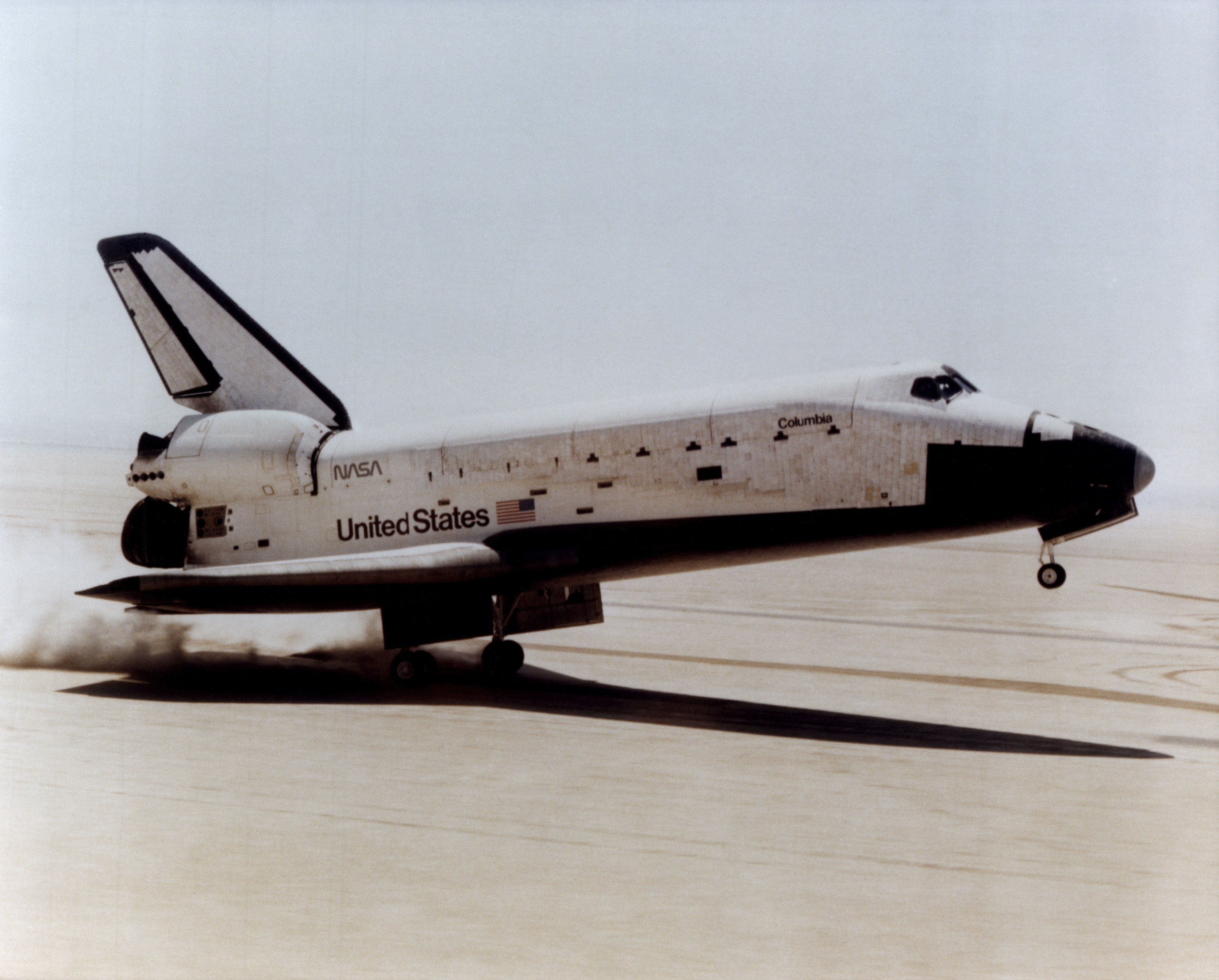
Obviously, the book really takes off (pun completely intended) with a section devoted to the first four shuttle missions, all of them aboard the Columbia. After that, the book moves from construction at Palmdale to delivery to Kennedy. The woes of Columbia’s heat-ablative tiles are adequately covered and, although the shuttle is a brand-new ship, it looks the worse for wear in several photographs (pp. 104-5). However, these problems overcome, there are some truly terrific ‘behind the scenes’ shots as Columbia is mated to the stack and rolled out to the pad. Here, there are some iconic photographs of the shuttle sitting on the pad with the setting sun turning the clouds a stunning orange and lifting into bright clear-blue Florida skies, but also some great shots ‘on orbit’ and the crews returning safely to Earth along the tanned lakebed of Edwards Air Force Base in California.

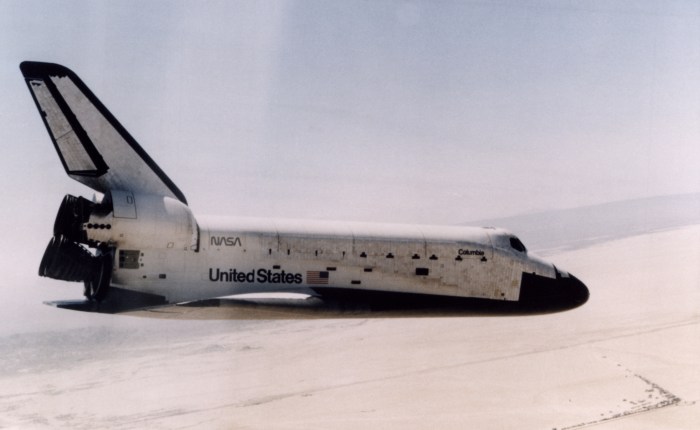
The Space Shuttle Columbia touches down on lakebed runway 23 at Edwards Air Force Base, Calif., to conclude the first orbital shuttle mission
The Space Shuttle Columbia touches down on lakebed runway 23 at Edwards Air Force Base to conclude the first orbital shuttle mission, 14 April 1981. (Source: NASA)

Picturing the Space Shuttle is another masterwork. It is truly a tour de force and a compelling collection of photographs that should be on the bookshelf of everyone who considers themselves a shuttle aficionado. One hopes that Pickering and Bisney continue to comb through the photographic archives of later shuttle missions. It has been 40 years since Columbia lifted into the sky for the first time and, perhaps even more amazing, a decade since the last shuttle returned safely to earth. As time marches on and the shuttle program recedes into memory, Pickering and Bisney have given us a reason to remember what Astronaut John Young called the ‘world’s greatest flying machine,’ the Space Shuttle.

Dr Brian Laslie is a US Air Force Historian and is the Command Historian at the United States Air Force Academy. Formerly he was the Deputy Command Historian at North American Aerospace Defense Command (NORAD) and United States Northern Command (USNORTHCOM). He is the Book Reviews Editor for From Balloons to Drones. A 2001 graduate of The Citadel and a historian of air power studies, he received his Masters’ from Auburn University Montgomery in 2006 and his PhD from Kansas State University in 2013. He is the author of Air Power’s Lost Cause: The American Air Wars of Vietnam (2021),  Architect of Air Power: General Laurence S. Kuter and the Birth of the US Air Force (2017) and The Air Force Way of War (2015). The latter book was selected for the Chief of Staff of the Air Force’s 2016 professional reading list and the 2017 RAF Chief of the Air Staff’s reading list. He can be found on Twitter at @BrianLaslie.

Header image:  The Space Shuttle Columbia glides down over Rogers Dry Lake as it heads for a landing at Edwards Air Force Base at the conclusion of its first orbital mission on 14 April 1981. (Source: NASA)