#BookReview – Across the Airless Wilds: The Lunar Rover and the Triumph of the Final Moon Landings

#BookReview – Across the Airless Wilds: The Lunar Rover and the Triumph of the Final Moon Landings

Earl Swift, Across the Airless Wilds: The Lunar Rover and the Triumph of the Final Moon Landings. New York, NY: Custom House, 2021. Illustrations. Notes. ARC. 365 pp.

Reviewed by Dr Brian Laslie

9780062986535

It is rare for the team at From Balloons to Drones to cover machines that run across the ground. After all, our name literally describes the history of aircraft. I feel somewhat sheepish, then, in covering a book that is essentially about a car, but here we are. That being said, in his new book Across the Airless Wilds: The Lunar Rover and the Triumph of the Final Moon Landings, author Earl Swift has produced an important, much needed, and excellent history of the lunar rover vehicle and its excursions on the final three Apollo missions. In addition, Swift has written the seminal history of the concept, design, and creation of perhaps the most unique automobile ever built.

Swift’s thesis is straightforward. As the author states:

It comes to this: Remembered or not, the nine days the final three missions spent on the moon were a fitting culmination to Apollo, and a half-century later remain the crowning achievement of America’s manned space program.

While the world remembers Neil Armstrong’s “One Small Step” and Apollo 13’s “Houston, We’ve had a problem here,” the visits, footprints, and rover tracks at Hadley–Apennine, Descartes Highlands, and Taurus–Littrow Valley are certainly less well-remembered. Even the individuals who took these steps, including Jim Irwin, Charlie Duke, and Harrison Schmitt, are not the easiest of names in the Apollo Program to recall. Of note, Irvin, Duke and Schmitt all authored excellent books later in life that are worth adding to your collection. Each of the commanders of these missions: Dave Scott, John Young, and Gene Cernan, Gemini and Apollo giants that they are, are oft-forgotten for those who do not read and study this particular section of space-exploration history. It is also worth mentioning that, although not covered in Swift’s account, the Command Module Pilots: Al Worden, Ken Mattingly, and Ron Evans spent the longest amount of time flying solo around the moon and conducting their own scientific experiments.

Swift divides his new work into seven different sections, more or less covering the principal characters, the ‘Practical Considerations’ of building a lunar automobile, which also details the various designs and concepts for lunar vehicles never produced – Oberth’s moon car is worth looking up – and two sections on building the rover. However, it is section six, ‘Across the Airless Wilds’ where Swift really shines. Here the book is strikingly similar to the ‘Outward Odyssey’ Series by the University of Nebraska Press. If you enjoyed these books on the Apollo program, Swift’s work is definitely one you will want to read. The final three Apollo missions (the ‘J’ missions) were the ultimate in scientific exploration. Swift’s account of the rover’s operations clearly demonstrates that much of the discoveries made during these missions were not possible were it not for the Lunar Rover.

There are some minor drawbacks to be found herein. Swift admits this is not an academic work. Since the version provided to From Balloons to Drones was an advanced reader’s copy, I cannot speak for his bibliography. Swift often breaks into the first-person perspective, and for a work of non-fiction, this can be slightly distracting. However, since these sections discuss Swift’s travels across the country to meet with the creators of the rover or visit the locations where it was tested, this is a relatively minor distraction.

Across the Airless Wilds is part history, part travelogue, but one hundred per cent terrific space history. Swift has written a book that provides unique, personal accounts and, at the same time, is deeply researched and throws fresh light onto a well-traversed subject.

Dr Brian Laslie is a US Air Force Historian and currently the Command Historian at the USAF Academy. A 2001 graduate of The Citadel and a historian of air power studies, he received his Masters’ from Auburn University Montgomery in 2006 and his PhD from Kansas State University in 2013. He is the author of three books with his most recent being Air Power’s Lost Cause: The American Air Wars of Vietnam (2021). His first book, The Air Force Way of War (2015) was selected for the Chief of Staff of the Air Force’s 2016 professional reading list and the 2017 RAF Chief of the Air Staff’s reading list. He can be found on Twitter at @BrianLaslie.

Header image: One of a series of images taken as a pan of the Apollo 15 landing site, taken by Commander Dave Scott, 1 August 1971. Featured is the Lunar Roving Vehicle at its final resting place after EVA-3. At the back is a rake used during the mission. Also note the red Bible atop the hand controller in the middle of the vehicle, placed there by Scott.

#Podcast – The Bomber Mafia: An Interview with Dr Micheal Hankins, Dr Brian Laslie, and Dr Luxe Truxal

#Podcast – The Bomber Mafia: An Interview with Dr Micheal Hankins, Dr Brian Laslie, and Dr Luxe Truxal

Editorial Note: Led by our Editor Dr Mike Hankins, From Balloons to Drones produces a monthly podcast that provides an outlet for the presentation and evaluation of air power scholarship, the exploration of historical topics and ideas, and provides a way to reach out to both new scholars and the general public. You can find our Soundcloud channel here. You can also find our podcast on Apple Podcasts and Google Podcasts.

The recent publication of Malcolm Gladwell’s The Bomber Mafia has generated much interest in the topic of strategic bombing during the Second World War. In our latest podcast episode, three of the editors at From Balloons to Drones, Dr Mike Hankins, Dr Brian Laslie, and Dr Luke Truxal, discuss the book and go beyond it to talk about various issues related to bombing during the Second World War.

Dr Michael Hankins is the Curator of US Air Force History at the Smithsonian National Air and Space Museum. He is a former Professor of Strategy at the USAF Air Command and Staff College eSchool, and former Instructor of Military History at the U.S. Air Force Academy. He earned his PhD from Kansas State University in 2018 with his dissertation, ‘The Cult of the Lightweight Fighter: Culture and Technology in the U.S. Air Force, 1964-1991.’ He completed his master’s thesis at the University of North Texas in 2013, titled ‘The Phantom Menace: The F-4 in Air-to-Air Combat in the Vietnam War.’ He has a web page here and can be found on Twitter at @hankinstien.

Dr Brian Laslie is a US Air Force Historian and currently the Command Historian at the USAF Academy. A 2001 graduate of The Citadel and a historian of air power studies, he received his Masters’ from Auburn University Montgomery in 2006 and his PhD from Kansas State University in 2013. He is the author of three books with his most recent being Air Power’s Lost Cause: The American Air Wars of Vietnam (2021). His first book, The Air Force Way of War (2015) was selected for the Chief of Staff of the Air Force’s 2016 professional reading list and the 2017 RAF Chief of the Air Staff’s reading list. He can be found on Twitter at @BrianLaslie.

Dr Luke Truxal is an adjunct at Columbia State Community College in Tennessee. He completed his PhD in 2018 from the University of North Texas with his dissertation ‘Command Unity and the Air War Against Germany.’ His previous publications include ‘Bombing the Romanian Rail Network,’ in the Spring 2018 issue of Air Power History. He has also written ‘The Politics of Operational Planning: Ira Eaker and the Combined Bomber Offensive in 1943’ in the Journal of Military Aviation History. Truxal is currently researching the effectiveness of joint air operations between the Allied air forces in the Second World War. He can be reached on Twitter at @Luke_Truxal.

Header image: Boeing B-29 Superfortresses drop bombs over Rangoon, Burma in 1945. The nearest aircraft is a B-29-25-BA of the 871st Bomb Squadron, 497th Bomb Group, 20th Air Force. (Source: Wikimedia)

#BookReview – The Royal Flying Corps, the Western Front and the Control of the Air, 1914-1918

#BookReview – The Royal Flying Corps, the Western Front and the Control of the Air, 1914-1918

James Pugh, The Royal Flying Corps, the Western Front and the Control of the Air, 1914-1918. Abingdon: Routledge, 2017. Figures. Charts. Bibliography. Index. Hbk. xviii + 190 pp.

Reviewed by Dr Heather Venable

41IVdzZMc4L._SX331_BO1,204,203,200_

The so-called Father of the Royal Air Force Lord Hugh Trenchard looms large in the historiography of air power, perhaps most infamously for his assertion – seemingly wrought out of thin air – that the moral effect of air power outweighed the material by a factor of twenty to one. To many students of air power, this statement epitomises how much the interwar pursuit of strategic bombardment rested on flights of fancy more than carefully reasoned analysis of the lessons of the First World War because airmen like Trenchard intended to have a moral effect on civilian populations in future wars.

By contrast, James Pugh’s The Royal Flying Corps, the Western Front and the Control of the Air, 1914-1918 pushes back at a significant portion of the historiography of First World War air power concerning the Royal Flying Corps (RFC). Unlike many other scholars, Pugh insists that before the First World War, British airmen anticipated how to use air power effectively and demonstrated creativity and flexibility in applying it during the war. Pugh’s revisionist approach depends on the compelling claim that historians have teleologically read aspects of the interwar period into the First World War experience. Pugh thus wants to rescue some airmen from unfair and overwrought reputations for dogmatism (p. 52). Perhaps most importantly, Pugh seeks to validate the RFC’s overwhelmingly offensive approach as fundamentally sound while showing change over time during the war concerning offensive air strategy. Pugh argues that the offensive approach taken by airmen primarily echoed that of the ground war. Moreover, airmen shifted from seeking decisiveness to pursuing attrition and pursued more sophisticated approaches to achieving control of the air during the First World War.

Q 4192
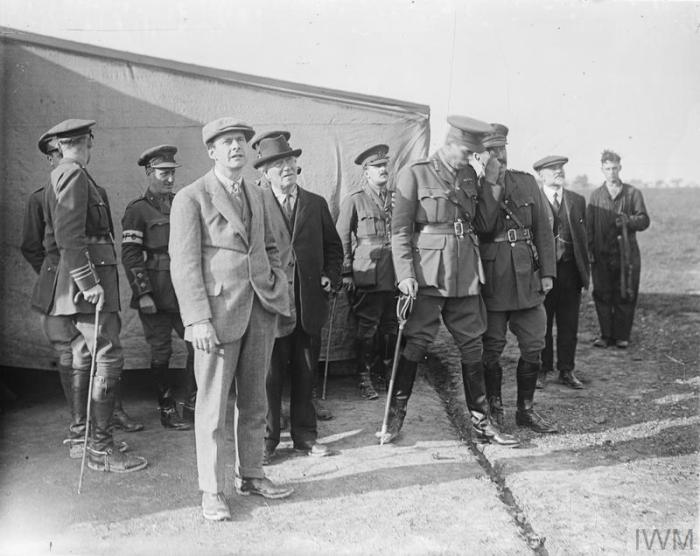
Prime Minister Herbert Asquith watches a squadron of aeroplanes returning to RFC Headquarters at Frevillers. With him is Major-General Hugh Trenchard, commander of the Royal Flying Corps. (Source: © IWM Q 4192)

Pugh’s first chapter establishes convincingly that airmen properly appreciated the importance of air superiority before the First World War. He also shows how vital missions, such as fostering battlefield communication and observing artillery fire, were anticipated before the First World War. However, limited technology and other factors impeded greater experimentation with these roles before the war (p. 33). These roles, moreover, reflected how aviators considered themselves to be part of the British Army. Their embrace of offensive thinking particularly reflected the powerful influence of British Army culture on the RFC. Pugh offers this helpful corrective in response to his belief that historians have traced the origins of airmen’s offensive proclivities too unilaterally to Trenchard (p. 14). Indeed, Pugh generally stresses the extent to which other airmen deserve more credit for developing air power thinking, continually deemphasising Trenchard (p. 51). In a similar vein, Pugh not only challenges widely held views on Trenchard’s emphasis on morale but also offers competing explanations for why the RFC stressed it so much. According to the author, the emphasis on diminishing an opponent’s morale owes much to the ‘fragility of aircraft’ (p. 24, 52). This point is not entirely convincing.

Still, Pugh argues that the RFC did not acquire ‘effective’ fighters until 1916, which were increasingly sent to the Western Front organised in squadrons responsible for different roles (p. 49). While awaiting improved aircraft, the RFC revised doctrine and improved organisational practices. When updated in 1915, RFC doctrine denoted reconnaissance as air power’s primary purpose, although it also increasingly recognised the requirement for ‘fight[ing]’ to obtain that information (p. 46), thereby placing more emphasis on controlling the air. Still, the RFC Training Manual diminished its emphasis on reconnaissance from 75 to 36% of the manual while increasing its coverage of artillery support most dramatically (p. 47).

‘Rules of the air – meeting another machine’. An air technical diagram of a Sopwith Dolphin and two Sopwith Camel biplanes meeting in the air and turn to the right. (Source: © IWM Q 67829)

The RFC’s views on how to control the air grew increasingly expansive, especially after learning valuable lessons about airpower employment at Verdun. Thus, the British now stressed seeking control of the air ‘far away’ from those aircraft providing direct support to the battlefield (p. 52) as well as reaffirming the importance of ‘maintaining an offensive posture’ (p. 56), which resulted in a theatre-wide emphasis as airmen sought to control the air in ‘breadth and depth’ (p. 81).

Pugh’s revisionist account largely depends on assuming the best about many of the airmen he describes, resulting in a somewhat Whiggish and rosy account of the RFC’s achievements in the First World War. Pugh valuably attempts to explode accepted thought in multiple areas. This approach is the work’s greatest benefit and failing. Regarding the extent to which airmen embraced an attrition-based strategy over the course of the war, for example, Pugh never fully makes an argument. Describing the phrase ‘relentless and incessant offensive’ as the ‘most profound evidence’ of this strategic shift ultimately falls short of proving one of the work’s key themes (p. 62). In a related vein, Pugh’s argument depends on separating out the rhetoric of airmen like Trenchard, who he claims made much of offensive air power for political reasons, meanwhile arguing that in actuality, airmen pursued an ‘increasingly nuanced and sophisticated approach to controlling the air’ (p. 71), such as using ‘concentrated and coordinated’ groups of fighters (p. 82). These contrasting interpretations cause the reader to wonder how Pugh determines when to accept evidence as rhetoric and when to accept it as representing airmen’s authentic thinking. These potential problems epitomise how Pugh is trying to do too much, such as when he mentions studies of First World War land power being importantly focused more systematically on ‘learning, transformation, or adaption’ yet preserves that approach for future airpower researchers (p. 91, 71). Using the methodology from some studies more systematically to explore British thinking about air control could offer more value.

Despite these critiques, all students of air power should read Pugh’s work for its argument-driven and revisionist analysis of the Royal Flying Corps. While adding significant complexity to widely accepted views of First World War airpower, Pugh ultimately concludes that the RFC’s offensive mindset represented the ‘most sensible course of action’ to pursue (p. 163). Even for those not necessarily interested in the RFC, his discussion of how to best employ air power will provide much of value to ponder for readers interested in any era of air power.

Dr Heather Venable is an Associate Professor in the Department of Airpower at the United States Air Force’s Air Command and Staff College. She received her PhD in Military History from Duke University. Venable’s first book, How the Few Became the Proud: Crafting the Marine Corps Mystique, 1874-1918, was published by Naval Institute Press in 2019.

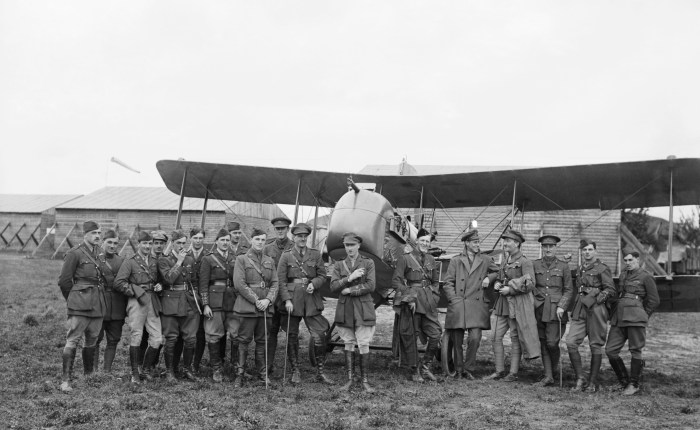
Header image: A group of pilots of No. 32 Squadron RFC at Beauval in 1916. Behind them is an Airco DH.2 biplane. (Source: Wikimedia)

#DesertStorm30 #BookReview – She Went to War: The Rhonda Cornum Story

#DesertStorm30 #BookReview – She Went to War: The Rhonda Cornum Story

Editorial Note: 2021 marks the 30th anniversary of Operation DESERT STORM. To mark this anniversary, during 2021, From Balloons to Drones will be publishing a series of articles that examine various aspects of DESERT STORM’s air campaign. We will be publishing pieces throughout 2021, and if you would like to contribute to the series, please contact our Editor-in-Chief, Dr Ross Mahoney, at airpowerstudies@gmail.com or via our contact page here. The official call for submissions can be found here.

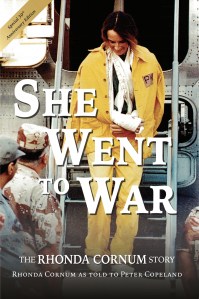
In this first instalment, Dr Brain Laslie provides a review of one of the first memoirs to emerge after the end of the First Gulf War; She Went to War: The Rhonda Cornum Story. Rhonda Cornum’s story is interesting for several reasons. First, it provides an army view of the air war rather than the more common air force view. Second, much of its focus relates to the latter part of the conflict, and finally, and most importantly, the book provides an insight into the experience of female prisoners of war (POW) in wartime.

Rhonda Cornum with Peter Copeland, She Went to War: The Rhonda Cornum Story (30th Anniversary Edition). Cardiff, CA: Waterside Productions, 2020. Pbk. 240pp.

Reviewed by Dr Brian Laslie

This was it. This was life as a POW. This was my life for the near future. This room, those walls, that ceiling. My reality. (p. 168).

Major Rhonda Cornum was a member of the US Army’s 2-229th Attack Helicopter Battalion attached to the 101st Airborne Division (Air Assault) during Operation DESERT STORM. As a medical doctor, her job was to fly as a member of a UH-60 crew behind attacking AH-64 Apaches and provide medical support to any downed aircrew. On 27 February 1991 – the fourth day of the ground war – Cornum and the other members of her UH-60 crew diverted to become a search and rescue aircraft sent to pick up a downed F-16 pilot, Captain William F. Andrews. During the rescue mission, the UH-60 she was riding was shot down. Her subsequent ordeal is detailed in the book She Went to War: The Rhonda Cornum Story (with her co-author Peter Copeland). Originally published in 1992, Cornum’s book was one of the early personal reflections of service during DESERT STORM. The book has now been re-released as part of the 30th anniversary of DESERT STORM.

The crash resulted in the loss of Chief Warrant Officer Four Philip Garvey, Chief Warrant Officer Three Robert Godfrey, Sergeant 1st Class William Butts, Staff Sergeant Patbouvier Ortiz, and Sergeant Roger Brelinski. Only three crew members survived: Cornum, Staff Sergeant Daniel Stamaris, and Specialist Four Troy Dunlap. The three survivors were rapidly captured by the Iraqi military (pp. 12-3). Among the trio of survivors, Cornum was the most seriously injured. Her injuries sustained in the crash included ‘two broken arms, both at odd angels; a smashed finger […] a blown out knee and various lacerations and bruises’ (p. 79-80) and – as she later discovered – a bullet wound in her back (pp. 97-8).

Captured almost immediately Cornum was taken to a series of bunkers and one gets the sense that the Iraqi military was not entirely prepared to deal with her and other captured Americans preferring to shuttle them up the chain of command. This description harkens back to Everett Alvarez’s early days of captivity after he became the first POW during the Vietnam war and detailed in his autobiography Chained Eagle (1989).

Cornum, suffering from her severe wounds, also learned to deal with a myriad of other problems. These problems included boredom and the indeterminable waiting for something to happen (p.39, 41), a sexual assault at the hands of one of the guards, and the complete inability to do anything on her own from dressing to going to the bathroom. Cornum was forced to rely on her captors or a fellow POW to help her with her dressings and personal hygiene.

She Went to War certainly deserves to be included under the rubric of air power books coming out of DESERT STORM, but this particular book is essential for another reason as it is one of the few works that explore the experience of female POWs. Cornum and US Army Specialist Melissa Rathbun-Nealy were the only two female POWs taken prisoner during DESERT STORM. As such, Cornum’s insightful work adds something unique to the historiography of DESERT STORM; a female perspective. Indeed, arguably the critical work on POWs’ experience during DESERT STORM remains Tornado Down (1992), the account of Britain’s Flight Lieutenants John Peters and John Nichol who were shot down on the first day of the air campaign. As we enter into a period of historical reflection thirty years later, Cornum and Copeland’s book should enter the conversation as one of the great memoirs to come from DESERT STORM.

Dr Brian Laslie is an Editor at From Balloons to Drones and a US Air Force Historian and currently the Deputy Command Historian at North American Aerospace Defense Command and the United States Northern Command. A 2001 graduate of The Citadel and a historian of air power studies, he received his PhD from Kansas State University in 2013. He is the author of three books: The Air Force Way of War (2015) was selected for the Chief of Staff of the Air Force’s and the Royal Air Force’s Chief of the Air Staff professional reading lists, Architect of Air Power: General Laurence S. Kuter and the Birth of the US Air Force and the forthcoming Air Power’s Lost Cause: The American Air Wars of Vietnam. He can be found on Twitter at @BrianLaslie and at www.brianlaslie.com.

Header image: A left front view of a US Army UH-60 Blackhawk helicopter in flight during Operation DESERT SHIELD. (Source: US Department of Defense)

#BookReview – Selling Schweinfurt: Targeting, Assessment, and Marketing in the Air Campaign Against German Industry

#BookReview – Selling Schweinfurt: Targeting, Assessment, and Marketing in the Air Campaign Against German Industry

Brian D. Vlaun, Selling Schweinfurt: Targeting, Assessment, and Marketing in the Air Campaign Against German Industry. Annapolis, MD: Naval Institute Press, 2020. Illustrations. Notes. Bibliography. Index. Hbk. xiii + 320 pp.

Reviewed by Bryant Macfarlane

With Selling Schweinfurt Brian D. Vlaun, a Colonel and command pilot in the United States Air Force offers readers a history of air intelligence development of the United States Army Air Force (USAAF) with two mutually supporting goals. First, the American conception of a strategically-minded independent air power arm that ‘was well suited to the limitations of the political will, manpower pool, and military-industrial complex of the United States’ (pp. 5-6) required unquestionable battlefield impacts from bombing offensives to be politically viable. Second, providing such indisputable effects required an intellectual cadre (p. 6) of ‘academics, industrialists, lawyers, and wartime-civilian-turned-military officers who shaped the targeting decisions and air campaign assessments.’ Vlaun centres his analysis around Major General Ira C. Eaker’s US Eighth Air Force and the 1943 Allied Combined Bomber Offensive (CBO) that was intended to cripple German industrial and economic systems and establish air superiority over Europe. Leveraging thousands of declassified American and British documents, Vlaun draws upon nearly forty primary and over one hundred secondary sources to present a well-researched and highly accessible work. Vlaun pulls back the curtain on how doctrine writers or a commander’s staff profoundly impact the conception of problems and possible solutions available to a commander – especially when those organisations are vying for influence.

Selling Schweinfurt is organised chronologically along five chapters. Chapter one focuses on the development of strategic air power doctrine and requirements in the interwar years. Here, Vlaun provides the backstory on how and why US air intelligence (A2) and doctrine developed organically before sending liaisons to Britain in 1941 to observe and shape American efforts to establish a robust and capable air intelligence capacity. With the realisation that the USAAF was the most mobilised portion of the American Army, and with aviation’s ability to operate from friendly territory while actively contributing to the war in Europe, the chapter concludes with the establishment of the Eighth Air Force and the initial combat development of ‘effective’ American bombing.

Chapter two begins with acknowledging USAAF leaders that the A2 enterprise they created was too young to provide the type of in-depth strategic analysis required to ensure that the bombing efforts of the Eighth Air Force were contributing effectively to the demise of the German war-industry. In Washington and Britain, USAAF leaders turned to lawyers, bankers, economists, and industrialists to serve as a bulwark for their intelligence gaps. However, as these groups worked independently of one another and mainly without oversight, their analysis focused on gaining influence in targeting decisions and building analyses that dovetailed the specific leaders’ perspective for whom they were working. While civilian analysts argued for industrial targets, the USAAF continued to bombard U-boat pens and provide coastal patrols in what would prove to be a very futile effort to stave off German anti-shipping capacity. The chapter concludes with the January 1943 Casablanca conference that maintained a parallel but independent USAAF command and shifted more responsibility for targeting decisions onto American A2.

A formation of Boeing B-17Fs over Schweinfurt, Germany, on 17 August 1943. (Source: National Museum of the USAF)

Chapter three examines the targeting choices and the Eighth Air Forces’ demonstrated results supporting Operation POINTBLANK – the Allied campaign against the German industrial base – during the first trimester of 1943. Arguably, this period was essential to the foundational honing of aircrew skillsets; however, the period uncovered USAAF leaders’ inability to quantify results in attacking industrial targets in Germany. By the May 1943 Trident Conference, the CBO’s limited successes were doubled down upon by the Allied leadership as military and civil leaders concurred that Western European ‘air superiority was to be a joint problem and a necessary precondition for success.’ (p. 103) Trident approved a reallocation of the CBO towards German war-industries with a secondary focus on single-engine aircraft production. Air superiority was a way of preparing Western Europe for the upcoming OVERLORD invasion and pulling German air power away from the Eastern front to ease pressure on the Soviets.

Chapter four addresses the understanding that both the Americans and Germans were realising the limitations of manpower in their ability to mobilise continually, train, and deploy forces while maintaining industrial capacity. By mid-August 1943, the Americans had successfully targeted ball-bearing factories in Schweinfurt and V-weapons at Peenemünde. Despite the successful raid into Schweinfurt, scientists and political entities shifted Allied CBO priorities towards a continued focus on V-Weapons. Despite their distributed nature that limited their susceptibility to aerial bombardment, the ‘political objectives, public outrage, intelligence prestige, and strategic interaction’ colluded to darken ‘Allied airman’s hopes for victory through airpower alone.’ (p. 162)

Chapter five focuses on the successful recognition of an air-minded specialist intelligence organisation within the American War Department. While industrial raids such as Schweinfurt had proven the need for an independent A2 and G2, the Eighth Air Force’s lack of demonstratable progress led to questioning the capability of the commander of the Eighth. While the Allied CBO losses had proven the necessity of fighter escorts to the most devout adherents of the bomber’s supremacy, the intelligence analysts pinned their hopes to continued pressure on the German industry regardless of the operational realities of the CBO. In assessing the outcomes of 1943, the USAAF’s leadership chose to articulate the failure of the Eighth Air Force commander’s ‘lack of creativity and flexibility as he had underutilised and underperformed the forces he commanded’ (p. 198) instead of accepting an under-resourced and doctrinally unsound conception of the CBO from the outset.

Vlaun concludes with a compelling argument that ‘the growth of airpower cannot be thoroughly comprehended without an understanding of the maturation of its air intelligence component.’ (p. 207) While it is clear that air power proponents doggedly pursued a course to demonstrate the suasive power of strategic bombing, it is also clear that no conclusive evidence exists in the post-war analysis that industrial attacks created or exacerbated materiel bottlenecks. This is not to say that air power is without operative function.

As just one element of military power, airpower offers a means to fight at a lower cost to friendly forces along with potential for less political entanglement [however] the promise of airpower brings along with it a robust air intelligence requirement – one that starts well before bombing and continues after hostilities cease. (p. 210)

Vlaun cautions the reader against assuming that modernisation or technology is a panacea to creating an intelligence capacity for identifying the ‘perfect target.’ If Selling Schweinfurt has anything to convey, decisions are influenced by organisational determination of which data to impart. Vlaun is clear that commanders must retain perspective in targeting decisions and align intelligence roles and responsibilities with operational and strategic imperatives.

If Vlaun’s effort is to be found wanting, it is only that the narrative does not extend into the Allied CBO’s successes and the maturation of the A2 in 1944 and 1945. Selling Schweinfurt is the very best effort this reader has found to insight the staff work required of any useful command. Selling Schweinfurt’s truly accessible presentation alone is worthy of inclusion in every air power enthusiast’s bookshelf. While certainly not a biography, Vlaun presents a critique of key leaders in American air power development that fills a critical gap in the existing historiography. Specialists will particularly welcome Vlaun’s depiction of Eighth Air Force raids to Ploesti, Hüls, St. Nazaire, Regensburg, and Schweinfurt for their operational and tactical significance to the development of strategic air power. Generalist readers will appreciate Vlaun’s easy tone and accessible style in presenting the development of doctrine and intelligence organisation as the USAAF struggled to define itself as a critical element of American military power. However, Vlaun’s study’s real power is in the representation of the importance of a staff in the decision-making process of every commander. As Vlaun concludes:

It is clearly possible to launch aircraft and bomb something without solid intelligence, but without a refined sense of what to target or how to measure bombing effectiveness, airpower will be inefficient if not all together ineffective. (p. 208)

As such, Selling Schweinfurt is highly deserving of inclusion in the discussion of air power during the Second World War and beyond by specialists and generalists alike.

Bryant Macfarlane served in the United States Army from 1997 to 2019 and is a PhD student at Kansas State University studying the technological momentum of vertical flight and its effect on military culture. He can be found on Twitter @rotary_research.

Header image: On 13 May 1943, the B-17F ‘Hell’s Angels’ of the 303rd Bomb Group became the first heavy bomber to complete 25 combat missions over Europe, four days before the crew of the ‘Memphis Belle’s’. After flying 48 combat missions, ‘Hells Angels’ returned to the US for a war bond tour in 1944. (Source: National Museum of the USAF)

#BookReview – Armageddon and OKRA: Australia’s air operations in the Middle East a century apart

#BookReview – Armageddon and OKRA: Australia’s air operations in the Middle East a century apart

Reviewed by Dr Peter Layton

Lewis Frederickson, Armageddon and OKRA: Australia’s Air Operations in the Middle East a Century Apart. Newport, NSW: Big Sky Publishing, 2020. Tables. Illustrations. Bibliography, Index. Pbk. 231 pp.

Armageddon and OKRA is the first in a planned series about the Royal Australian Air Force’s (RAAF) air campaigns being compiled as part of the RAAF’s 100th-anniversary celebrations. The RAAF’s Chief of Air Force (CAF) intends for the series’ works to be ‘readable, well-illustrated, educative and enduring’ (p. 3). In the main, Armageddon and OKRA ably meets these ambitions.

The book though carries additional burdens in aiming not just to market the RAAF to the Australian public but also to contribute to the Air Force’s professional military education and be of interest to serious academic researchers. It would be difficult for any work to satisfy such a diverse audience completely. Given this split, this review discusses Armageddon and OKRA from both a reader’s viewpoint and a military organisational perspective.

Armageddon and OKRA is split into two main parts. Part one examines Australian air power during the First World War in the Middle East between 1915 and 1919. The principal focus is on the operations of No.1 Squadron of the Australian Flying Corps (AFC) during the British capture of Palestine and Syria from the Ottoman Turks in 1917-1918. ‘Armageddon’ in the title refers to the Battle of Megiddo in late September 1918 in which the No. 1 Squadron fought. This English language word comes from the Ancient Greek name for Mount Megiddo, subsequently used in the Christian Bible’s Old Testament.

Part two then moves forward a hundred years to 2014-2018 and the US-led coalition operations to support the Iraqi Government to defeat Islamic State (ISIS). Part two’s principal focus is the small RAAF Air Task Group deployed for this task as part of the larger Australian Defence Force’s Operation OKRA, and which involved (amongst others) No.1 Squadron again. This is a rather elegant symmetry that perhaps was not made as much use of as could have been.

The involvement of the RAAF and its predecessor, the AFC in these two periods was at the tactical level of war and accordingly, the book’s main focus centres around squadron operations. Part one provides a comprehensive overview that nicely relates the tactical to the strategic level, the air activities undertaken, the various aircraft Australian’s were trained on and flew in operations, maintenance aspects and the air-to-air and air-to-ground weapons used. In this part, No.1 Squadron’s use of the Bristol F.2b Fighter in 1918 features prominently, including the destruction of a large Turkish ground force that the unit trapped in the Wadi Fara gorge. Also notable is the attention paid to including the opposing German squadrons, particularly FA300, and how they impacted No.1 Squadron. Wars involve two sides, however; many histories overlook this interdependence.

No. 1 Squadron, Australian Flying Corps next to their Bristol FB1 fighters, at Mejdel. The officer in the foreground (with stick) is Lieutenant-Colonel R. Williams, D.S.O., commanding. (Source: Australian War Memorial)

Part two is somewhat different. Early on, there is a detailed examination of the command-and-control arrangements for OKRA. The naming protocols are quite arcane for the casual reader, not unsurprisingly as their origin lies in the demands of automated messaging systems not in easy human comprehension. This then moves into several short chapters that discuss the daily air operations as seen at the squadron-level by OKRA’s deployed air units. These units flew the F/A-18 ‘Classic’ Hornet fighter/bomber, the F/A-18F Super Hornet fighter/bomber, the E-7A Wedgetail airborne warning and control aircraft and the KC-30A air-to-air refuelling tanker.

By the time the reader reaches these final chapters, it is apparent that CAF’s aims to be ‘readable, well-illustrated, educative and enduring’ has been achieved. In Australia, the book is keenly priced while its excellent line drawings of aircraft and numerous photographs add to the overall appeal. Some may argue over ‘enduring,’ however, the second part of the book offers a level of detail of the RAAF’s part in OKRA that is presently unequalled. In particular, future historians of these air operations will value this book because it gives the reader an insight into the rhythm and grind of daily squadron life during operations.

On the other hand, in meeting CAF’s other dictum, the book falls a bit short for the professional or academic reader. It is not – nor was intended to be – a critical analysis of the RAAF’s air operations in these two periods. The book dwells on the positives and only rarely and rather briefly notes any possible negatives. There are also reoccurring lapses into hagiography. Of the two parts of the book, the second is the most impacted. There is room left for a definitive, comprehensive history of the RAAF during OKRA.

In thinking about future works, the elegant symmetry of parts one and two was noted earlier. In reading the book, the more critical reader might like to assess the similarities and differences between No.1 Squadron operating as part of the British Empire and then 100 years operating as part of the American ‘empire’. In the First World War, No. 1 Squadron and Australians were more broadly considered part of the British Empire; they were simply English people born offshore. It is unsurprising the future Air Marshal Sir Richard Williams, later the ‘father of the RAAF,’ ended the war commanding in battle the Royal Air Force’s 40 Wing, which was overwhelming a British entity.

During OKRA, there is a much greater separation between the Americans and their foreign air force partners; the later provide tactical level forces to use as the US determines. However, through its astute alliance management process, the American empire has shaped foreign air forces to be fully and immediately interoperable with US forces regarding doctrine, equipment, support, and training. In contrast, in the British Empire’s war, Australia provided people to Britain who needed to be trained, equipped and, later in battle, logistically supported. For Australian’s, the British Empire was more collegiate, but the modern-day American one is arguably shrewder. Armageddon and Okra’s author, Lewis Frederickson, has written a fine, relevant analysis on Australia’s First World War experience for those wishing to explore such issues further.[1]

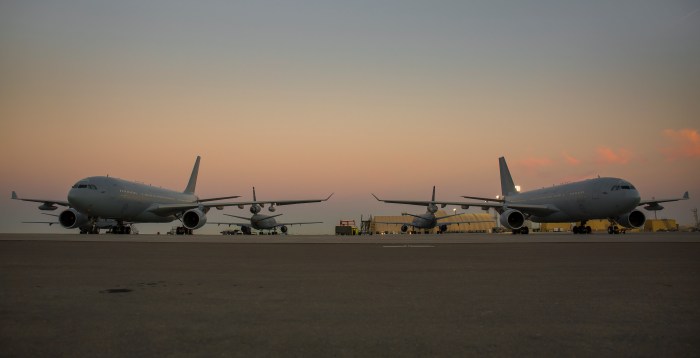
Two KC-30A Multi Role Tanker Transport aircraft sit together at the main air operating base in the Middle East Region on Operation OKRA. (Source: ADF)

Finally, it is worth discussing the book from a military organisational perspective. The book’s forward sets out CAF’s intentions for the series. These are not just laudable but noteworthy in breaking from the last 20 years of RAAF development. In these earlier periods, RAAF and other Australian Service chiefs stressed teamwork, and especially loyalty, over critical thinking.[2] This is a recognised problem for small professional military forces which lack the scale to be able to be ‘broad churches’ that can include disruptors.[3] In this series, and in his new Air Force Strategy, CAF now appears interested in setting off down this path.[4] If so, later books will need to be more analytical, including engaging in constructive criticism. It is uncertain if this will be possible or acceptable.

Armageddon and Okra is an excellent value read that makes a useful contribution to RAAF history. It is particularly important and valuable in breaking new ground on the RAAF’s participation in OKRA against ISIS. Overall Armageddon and Okra will be of interest to the general public, military enthusiasts and undergraduates undertaking strategic studies courses.

Dr Peter Layton is a Visiting Fellow at the Griffith Asia Institute, Griffith University and a RUSI (UK) Associate Fellow. His PhD is in grand strategy, and he has taught on this at the US National Defense University. Author of the book Grand Strategy, his posts, articles and papers may be read here. He was also once a navigator on No.1 Squadron RAAF flying F-111Cs.

Header Image: Centenary tail art on a  F/A-18F Super Hornet of No. 1 Squadron RAAF at the main air operating base in the Middle East Region during Operatyion OKRA. (Source: ADF)

[1] Lewis Frederickson, ‘The Development of Australian Infantry on the Western Front 1916-1918: An Imperial model of training, tactics and technology’ (PhD Thesis, UNSW Canberra, 2015)

[2] Peter Layton, ‘Does Australia need thinking ANZACs?,’ The Strategist,, 27 February 2014.

[3] Peter Roberts and Tony King, ‘Is the Era of Manoeuvre Warfare Dead?,’ Western Way of War: Episode 30, London: RUSI, 24 December 2020.

[4] Royal Australian Air Force, Air Force Strategy (Canberra: Department of Defence, 2020).

#BookReview – Taking Flight: The Nadine Ramsey Story

#BookReview – Taking Flight: The Nadine Ramsey Story

Reviewed by Dr Brian Laslie

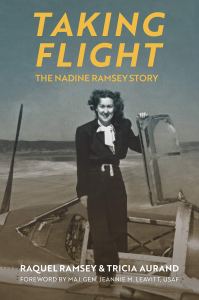
Raquel Ramsey and Tricia Aurand, Taking Flight: The Nadine Ramsey Story. Lawrence, KS: University Press of Kansas, 2020. Images. Notes. Bibliography. Hbk. 320 pp.

As an air power historian, I sometimes wonder what histories and stories have been over told and which have not been told enough. There are times where I feel like certain aspects of air force or air power history which have been given enough treatment, and then there are those stories that are clearly due more attention. This book falls decidedly into the latter category.

Not every member of the Women Airforce Service Pilots (WASP) has had their story told, but every one of them is worthy of a telling. Nadine Ramsay was one of over 1,000 women who answered America’s call to serve their country as pilots during the Second World War, whose history was virtually ignored until the early 2000s when memoirs, biographies and original research into their story began to appear more heavily in print. It took from the end of the war until the 1970s for these women to even be accorded the status of a veteran. Taking Flight is the story of Nadine Ramsey and, more broadly, her family during the Second World War.

In general, women who learned to fly before America entered into the Second World War had certain advantages. Most were middle or upper-middle-class with access to enough spare funds in the 1930s to learn how to fly. These women were lucky enough to stand on the shoulders of the giants of women in aviation, including Amelia Earhart and Jackie Cochran. Thus, when America entered the war, and it became apparent that more pilots were needed, it was not entirely out of the question that women could be called upon to serve and fly. It took likes of Jackie Cochran and Nancy Love to turn this dream into a reality.

Still, the programs created to bring women into their countries service was not met with enthusiastic support, ‘The public had mixed reaction to women pilots.  From the beginning they were under intense scrutiny’ (p. 84). The women who chose to fly faced sexism and discrimination, but through every adversity, they proved beyond a conclusive doubt that they were not only capable of delivering aircraft but that often the ‘women pilots could do the job, usually faster and more safely than the men’ (p. 83).

President Barack Obama signed S.614 in the Oval Office on 1 July 2009. The bill awarded a Congressional Gold Medal to Women Airforce Service Pilots. Source: Wikimedia)

However, this is Nadine’s story rather than that of the WASPs more generally. It becomes clear throughout these pages that Ramsey was a ‘bright, glamorous comet’ (p. 178) and not just during her time in service. Of course, her time as a WASP serves as the linchpin of the book. Ramsey, like so many others of her generation, was inexplicably drawn towards aviation. Hers was not the most direct route to becoming a pilot, but Ramsey’s ‘ready for anything personality’ found her learning to fly in the sky of Wichita, Kansas, in the mid-1030s (p. 28). By the start of the war, she was a reasonably well-known aviatrix and, although again not through a direct route; she joined the women flyers of the Second World War. During her training, Ramsey lost a close friend, Helen Jo Severson, which is deftly demonstrated in these pages and is an incredibly moving passage as Ramsey struggles with this loss. Severson became one of 38 WASPs to lose their lives in service to their country (p. 87, 92).

Ramsey ferried aircraft, learned to fly fighters, and moved these aircraft, including P-51s and P-38s from their factories to their ports of embarkation. After the war, Ramsey, unlike so many of the other WASPs did not give up on flying, going so far as to purchase her own P-38, but I will leave those details for the reader to enjoy.

Taking Flight is an incredibly personal and poignant account of one family’s successes and sacrifices during the Second World War. This book should find a home on the shelves of air power scholars, but a much wider audience will also enjoy it. Ramsey’s story might be hers alone, but it is indicative of all the women whose service to the US and broader Allied war effort should not be overlooked. Instead, it should be embraced by a grateful nation. While writing a book review, I try to attempt to convey what makes the subject matter appealing or why the reader might want to purchase this book. In reading Taking Flight, I was continually struck by one thought, I wish I had known Ramsey.

If you are interested in further reading about the WASPs after reading Ramsey’s story, then the following books are a great place to start. The most recent being Katherine Sharp Landdeck’s superb The Women with Silver Wings (2020) (you can also catch Lanndeck in a future From Balloons to Drones podcast). There is also Molly Merryman’s Clipped Wings: The Rise and Fall of the Women Airforce Service Pilots (WASPS) of World War II (1998). Everything by Sarah Byrn Rickman is worth reading, but perhaps the best is WASP of the Ferry Command: Women Pilots, Uncommon Deeds, The Originals: The Women’s Auxiliary Ferrying Squadron of World War II (2016), and Nancy Love and the WASP Ferry Pilots of World War II (2019). The University of Florida Press also has an excellent (and balanced) biography of the famous aviatrix Jackie Cochran: Pilot in the Fastest Lane by Doris Rich (2007). For a more general history, there is Deborah G. Douglas’ American Women and Flight since 1940 (2004).

Dr Brian Laslie is an Editor at From Balloons to Drones and an US Air Force Historian. He is currently the Deputy Command Historian at North American Aerospace Defense Command (NORAD) and United States Northern Command (USNORTHCOM). A 2001 graduate of The Citadel and a historian of air power studies, he received his PhD from Kansas State University in 2013. His first book The Air Force Way of War (2015) was selected for the Chief of Staff of the Air Force’s and the Royal Air Force’s Chief of the Air Staff professional reading lists. He is also the author of Architect of Air Power: General Laurence S. Kuter and the Birth of the US Air Force.  He lives in Colorado Springs. He can be found on Twitter at @BrianLaslie and at www.brianlaslie.com.

Header Image: WASPs on the flight line at Laredo AAF, Texas, 22 January 1944. (Source: Wikimedia)

#BookReview – Stealth: The Secret Contest to Invent Invisible Aircraft

#BookReview – Stealth: The Secret Contest to Invent Invisible Aircraft

Reviewed by Dr Mike Hankins

Peter Westwick, Stealth: The Secret Contest to Invent Invisible Aircraft. New York: Oxford University Press, 2020. Illustrations. Glossary. Notes. Index. Hbk. 251 pp.

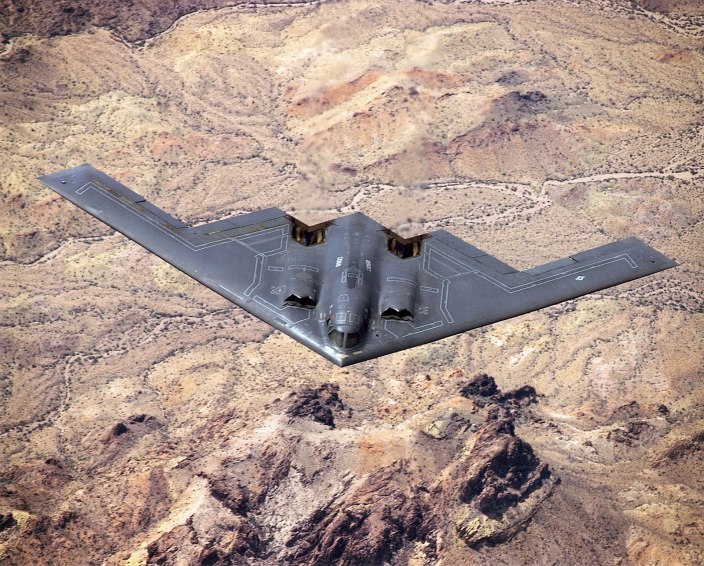
The advent of stealth technology – making aircraft nearly invisible to radar detection – in the 1970s was one of those rare moments in the history of military aircraft technology that seemed to shape much of the development that followed it. Over 40 years later, most new aircraft designed around the world incorporate stealth characteristics in some way or another. Taking a sweeping look at the advent and early development of stealth aircraft within a broad context is the aim of Stealth: The Secret Contest to Invent Invisible Aircraft by Peter Westwick, director of the University of Southern California’s Aerospace History Project. The book is a fascinating look at two companies, Lockheed, and Northrop, that continually competed for stealth projects – each coming at the technology from very different perspectives and methodologies. With this comparative lens, Westwick explores the ways that culture shaped each company’s differing solutions to similar technological problems.

The most significant limitation for any book about stealth is the lack of unclassified sources, and this book is no exception. While much of the material here will be familiar to stealth aficionados, Westwick has conducted a large number of new interviews that shed new light on some familiar events, and reveal new, fresh stories, many that speak to the unique personal experiences of those involved in stealth development.

The Northrop B-2 Spirit stealth bomber on its first flight in 1989. (Source: US Air Force)

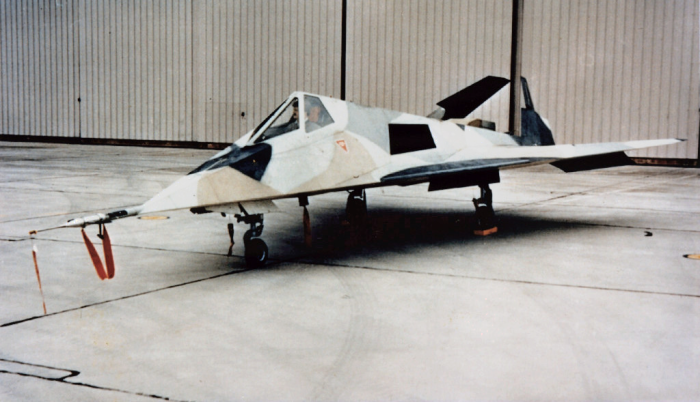
Westwick emphasises that Lockheed’s approach to stealth relied extensively on computer modelling, which was a significant shift for the firm at the time. For decades, successful designs from Lockheed, including the A-12 and SR-71 Blackbird, which each incorporated stealth characteristics, had been grounded in Chief Executive Officer, Clarence ‘Kelly’ Johnson’s adage that planes that look beautiful fly beautiful. When Johnson retired, his replacement Ben Rich allowed radar experts to have a more significant say in the design process. Their creation of powerful computer programs that could calculate radar returns from a variety of shapes fueled their design process. Nevertheless, the limitations of the program influenced the team to rely on flat, faceted surfaces – an approach that was quite successful, winning the company that contract for the aircraft that became the F-117 Nighthawk.

Lockheed’s programs made use of Soviet research that, ironically, had been requested for translation by engineers at Northrop. Although Northrop also incorporated this research and made similar computer modelling programs, their engineers combined them with a more intuitive approach. Northrop designers used their extensive knowledge of radar theory in a more hands-on way, often literally through iterative modelling and moulding. One of the more dramatic moments of Westwick’s narrative involves Northrop engineer Fred Oshiro visiting Disneyland and sitting outside the Tea Cup ride playing with a lump of modelling clay – a common practice at Northrop – until he intuitively developed the idea of using complex curves to minimize radar returns. The Tea Party ride had been designed by Lockheed engineer and stealth pioneer Richard Sherrer.

The Lockheed Have Blue prototype that eventually led to the F-117 Nighthawk stealth fighter. (Source: US Air Force)

This tale of two engineering houses, each with different cultural approaches to designing stealth, forms the backbone of the story, which traces the development of the Have Blue, F-117, Tacit Blue, and B-2 programs. Along the way, Westwick dispels some prevalent misconceptions that frequently crop up in discussions of stealth. For example, some readers might assume that Northrop’s B-2 design was a ‘flying wing’ conception because the company was founded by Jack Northrop, who was obsessed with flying wings and designed several himself. However, Westwick reveals the company had completely abandoned the idea for decades, and only adopted it after Lockheed had submitted their flying wing bomber concept. Another of the more dramatic moments in the book involves the aging Jack Northrop’s heartwarming response to seeing the B-2 designs, which I will not spoil in this review.

Westwick goes beyond the analysis of these companies and attempts to place the development of stealth in a larger context in terms of culture, strategy, and Cold War geopolitics. This includes implying that the inherent creativity around the ‘[i]magineering’ culture of Disney that pervaded California in the 1960s and 70s was a contributing factor to stealth development. On a broader scale, Westwick goes as far as to say that stealth provided an alternative to nuclear deterrence, in some ways making nuclear weapons obsolete. He argues that stealth delivered what President Ronald Reagan’s fanciful Strategic Defense Initiative could only promise. With the ability to essentially defeat the Soviet Union’s massive investment into radar-based air defence networks, stealth broke the foundation of Cold War deterrence theory, and, according to Westwick, pressed the Soviet Union into an unsustainable increase in defence spending that contributed to the nation’s collapse. These ideas are interesting and worthy of consideration, but Westwick’s presentation of them is far too brief; these ideas are not nearly as fully developed as they could be. That does not take anything away from the book as it is. To really make these larger points hit home would probably require a different type of book with a different focus. However, this type of overarching analysis is welcome and thought-provoking, perhaps pointing to further research directions on how stealth technology contributed to the end of the Cold War in specific ways.

Overall, the book is an excellent addition to any air power or history bookshelf. This book manages to be the best starting point for those new to the topic of stealth while also providing new insights and details for the already initiated. Even more impressive, Westwick delivers these contributions while writing in an engaging and personal style that is great to read and sure to be enjoyed by scholars and still easily accessible for enthusiasts and general readers.

Dr Michael Hankins is the Curator of US Air Force History at the Smithsonian National Air and Space Museum. He is a former Professor of Strategy at the USAF Air Command and Staff College eSchool, and former Instructor of Military History at the U.S. Air Force Academy. He earned his PhD from Kansas State University in 2018 with his dissertation, ‘The Cult of the Lightweight Fighter: Culture and Technology in the U.S. Air Force, 1964-1991.’ He completed his master’s thesis at the University of North Texas in 2013, titled ‘The Phantom Menace: The F-4 in Air-to-Air Combat in the Vietnam War.’ He has a web page here and can be found on Twitter at @hankinstien.

Header Image: The Lockheed F-117 Nighthawk stealth fighter flying over Nellis Air Force Base in 2002. (Source: US Air Force)


#BookReview – John Houbolt: The Unsung Hero of the Apollo Moon Landings

#BookReview – John Houbolt:  The Unsung Hero of the Apollo Moon Landings

Reviewed by Dr Brian Laslie

William F. Causey, John Houbolt:  The Unsung Hero of the Apollo Moon Landings. West Lafayette, Indiana: Purdue University Press, 2020. Notes. Bibliography. Index. Hbk. 347 pp.

81lFIEb7VBL

There has been no cooling in the publication of space-related material in the aftermath of the Apollo 11 50th Anniversary. Partially in response to NASA’s returning astronauts to space from American soil this year and partially in response to an undeniable zeitgeist, NASA is enjoying renewed popular support. This provides an excellent opportunity for the publication of further scholarship about the history of the organisation. Academic presses (Florida, Nebraska, and Purdue) have been working hard to expand, and further our understanding of not only crewed exploration of the cosmos, but also the choices made in advance of rockets leaving the launch pad. To that end, Purdue University has recently published John Houbolt:  The Unsung Hero of the Apollo Moon Landings by William F. Causey. Causey’s Houbolt examines NASA’s decision-making process through the lens of an individual. This approach places emphasis on the members of NASA–this is their story and not the story of the astronauts riding rockets. That being said, Causey’s book is no less amazing than the stories of the astronauts themselves and by pulling back the curtain, Causey deftly reveals the backstory and offers a fresh look at how NASA ultimately decided the method that would lead to footprints on the moon.

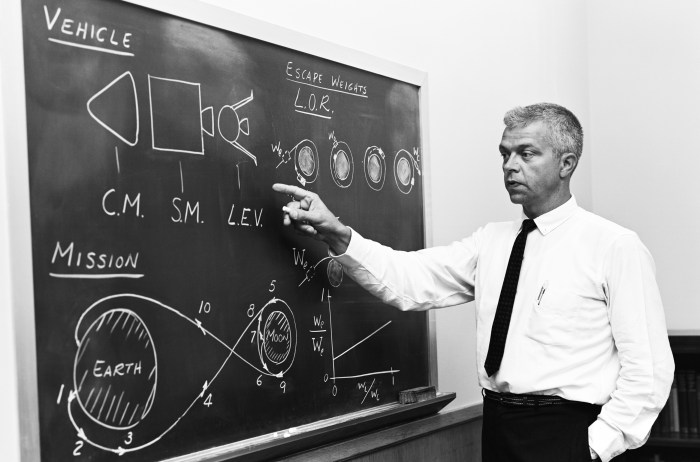
My introduction to the mind of John Houbolt, and I would wager some our readers as well, came in the form of the HBO mini-series From the Earth to the Moon (based in part off the book A Man on the Moon: The Voyages of the Apollo Astronauts by Andrew Chaikin). In the episode ‘Spider,’ Houbolt is shown as the ‘voice in the wilderness’ who bravely stood against senior NASA leaders to preach the gospel of Lunar Orbit Rendezvous (LOR) as the preferred method of sending astronauts to the moon.

Causey’s work demonstrates that the history of LOR is richer than just Houbolt’s contributions and the entire work is as much a history of NASA’s early years and its decision-making process as it is about Houbolt himself. This is a book about how we got to the moon, or rather, about how NASA decided how we would get to the moon. Causey’s work covers the period from roughly 1957 to 1963 and represents a comprehensive and readable history of NASA’s early years, but one that still brings a fresh and nuanced perspective to a familiar story.

3-john_c._houbolt_-_gpn-2000-001274b
On 24 July 1962, Dr John Houbolt explained his lunar orbit rendezvous concept for landing on the Moon. His approach called for a separate lander which saved weight from the ‘direct ascent’ design in which the entire spacecraft landed on the lunar surface. (Source: NASA)

This is a vital book as it refocuses attention on the thousands of people who aided our ascension to deep space for the first time. While the written record has generally favoured the importance of the astronauts themselves in numerous books, biographies, and autobiographies, the recent trend in focus on the individuals behind the scenes has improved our understanding of the golden age of NASA and crewed spaceflight. Causey’s biography of Houbolt now sits alongside other recent publications including Sonny Tsiao’s Piercing the Horizon: The Story of Visionary NASA Chief Tom Paine, Richard Jurek’s The Ultimate Engineer: The Remarkable Life of NASA’s Visionary Leader George M. Low and Rick Houston and Milt Heflin’s Go, Flight! The Unsung Heroes of Mission Control, 1965-1992. This is important for several reasons, but perhaps most of all because these books continue to expand our understanding of NASA as an organisation composed of thousands and not as one whose principal employees are those at the end of propellant-fueled rockets.

Causey writes with a deftness and a flair that keeps the narrative moving forward even when the subject matter is the Space Task Group, the Goett Committee, the New Projects Panel or any number of other bureaucratic organisations in the NASA hierarchy. This work never feels like you are reading the history of an organisational board meeting, but adroitly describes how the workers at the various levels of NASA made the important decisions necessary that made the entire Apollo program possible. If you are picking up this work, there stands a good chance you have more than a passing understanding of NASA’s history and organisation, and while you might be familiar with the LOR story, Causey’s telling through the lens of Houbolt is worth a read even if you think you have read it all already and neither the scholar nor the buff will be disappointed. This is an essential and much-needed addition to the history of the Apollo Program. Causey’s John Houbolt:  The Unsung Hero of the Apollo Moon Landings is a critical and stimulating look at the individual of John Houbolt, but also at NASA writ large.

Dr Brian Laslie is a US Air Force Historian and currently the Deputy Command Historian at North American Aerospace Defense Command (NORAD) and United States Northern Command (USNORTHCOM). A 2001 graduate of The Citadel and a historian of air power studies, he received his PhD from Kansas State University in 2013. His first book The Air Force Way of War (2015) was selected for the Chief of Staff of the Air Force’s and the Royal Air Force’s Chief of the Air Staff professional reading lists. He is also the author of Architect of Air Power: General Laurence S. Kuter and the Birth of the US Air Force.  He lives in Colorado Springs. He can be found online at www.BrianLaslie.com

Header Image: A view of the Apollo 11 lunar module Eagle as it returned from the surface of the moon to dock with the command module Columbia. A smooth mare area is visible on the Moon below and a half-illuminated Earth hangs over the horizon. The lunar module ascent stage was about 4 meters across. (Source: NASA)

#BookReview – Through Adversity: Britain and the Commonwealth’s War in the Air 1939-1945 – Volume 1

#BookReview – Through Adversity: Britain and the Commonwealth’s War in the Air 1939-1945 – Volume 1

Reviewed by Alexander Fitzgerald-Black 

Ben Kite, Through Adversity: Britain and the Commonwealth’s War in the Air 1939-1945 – Volume 1. Warwick: Helion & Company Limited, 2019. Maps. Figures. Photographs. Annexes. Notes. Bibliography. Index. Hbk. 492 pp.

helion1000901

Most military historians take a narrative approach in their works. Even when they seek to prove a specific thesis, they offer the evidence to the reader in chronological order. There are, of course, exceptions – and Ben Kite is a notable one. In 2014, he produced Stout Hearts: The British and Canadians in Normandy 1944, a work that focused not on the narrative of the battles in Normandy, but rather how British and Canadian armies (and air forces) operated there. The result was an outstanding reference work for historians, history buffs, and especially those seeking to understand what it was like for their Commonwealth ancestors who fought there.

In Through Adversity: Britain and the Commonwealth’s War in the Air 1939-1945 Kite has turned his focus to the skies. His primary aim is ‘to capture the main themes and strands of the war in the air as fought by the British Commonwealth’ (p. xiii). Volume 1 includes 20 chapters spread over four parts, each containing one of these themes or strands. These are usually mission types performed by the air force. In each part, Kite takes particular care to explain changes in the Royal Air Force’s (RAF) tactics and operational techniques along with the advancement of technology. He is more interested in how airmen planned and executed missions than in the role of senior commanders and overarching narratives. As such, this book is not a repeat of John Terraine’s The Right of the Line. Consequently, the experiences of aircrew fighting a deadly war in skies across the globe stand out.

In part one, Kite offers readers a background on pre-war RAF policy and preparations for war. He notes that although the 1920s were lean years, the RAF did receive significant investments in the late 1930s due to fears of the growing Luftwaffe in Nazi Germany. Ironically, although RAF doctrine focused on the bomber, the British bomber fleet was ill-prepared to strike at the German war industry. Much would have to change if the force were to have a chance of inflicting the knock-out blow advocated by influential interwar air power theorists Giulio Douhet and the RAF’s own Hugh Trenchard.

The second chapter of part one examines how the RAF mobilized and trained its manpower. Some readers will find this section a little disappointing since it offers a pretty standard focus on the path of pilots (and observers) through the Empire Air Training Scheme. There is comparatively little about the training regimes of other aircrew positions or the ground crew.

As the prerequisite for successful air operations of all types, Kite begins his examination of air combat with air superiority. The author takes a campaign-centric approach after beginning with the pre-war development of RAF Fighter Command. In northwest Europe, he examines the Battle of Britain, the uneconomical Fighter Command air offensive over Fortress Europe, and defence against German night raiders and V-weapons. Kite samples the battles for air superiority in the Mediterranean through the siege of Malta. Finally, he concludes the section with a pair of chapters featuring the rapid loss of air superiority in the Far East and the effort to turn the tide.

IWM K 1117
A Consolidated Catalina MkI of No. 205 Squadron RAF taxies past another aircraft of the Squadron moored in the Strait of Johore off Seletar, Singapore (Source: © IWM K 1117).

The chapter that stands out in part two takes the reader through a Fighter Command mission during the Battle of Britain. Kite takes an end-to-end approach here. He begins with how pilots began their mornings at airfields across Britain and finishes with sortie debriefings by intelligence officers. It was their job to understand what had happened in the air, including the difficult task of sorting victory claims. Kite affords the relatively unsung role of the fighter controller prominent attention, reminding readers the might of the many backed ‘the Few’ at the sharp end. This effectively illustrates the importance of ‘a good early warning capability and an efficient command and control system’ (p. 193) for effective air defence.

From air superiority, the book moves on to discuss Bomber Command’s role in striking back at Nazi Germany. Kite organizes this section into four chapters. The first offers the reader a general overview of how the offensive developed from unescorted, anti-shipping raids suffering unsustainable losses to night bomber raids of growing strength and sophistication. The chapter focuses on Bomber Command strategy and policy, including the creation of No. 6 Group Royal Canadian Air Force (RCAF) in early 1943.

No. 6 Group owed its existence to a desire for a highly visible Canadian air effort in the war. Kite outlines the many unintended disadvantages of forming a separate national group within Bomber Command. Unfortunately, this is where Kite ends the story of 6 Group. Although the group faltered in 1943, 1944 was a much better year. New leadership, the shift from targets deep inside Germany to support the Normandy landings, and the arrival of better aircraft ‘enabled No. 6 Group to exceed the performance of comparable bomber groups in the air and on the ground.’ In fact, according to the RCAF official history, from September 1944 until May 1945 ‘the Canadian group could claim as good an operational record as any.’[1]

Despite Kite’s treatment of No. 6 Group, he does well by Bomber Command as a whole. Kite takes the reader through an end-to-end Bomber Command mission in two chapters. The first chapter covers the route to the target, beginning with the role of armourers in loading the aircraft while the aircrew underwent specialized and team briefings. Crew roles, navigation equipment, the aircraft, and German defences all receive attention. The second chapter takes the reader from the run into the target and through the return leg. Except for memoirists explaining their personal slide of the air war, few resources so comprehensively relate the bomber crew experience.

The concluding strike chapter outlines the development of a precision bombing capability within Bomber Command and No. 2 Group, which operated light and medium bombers over Nazi-occupied Europe.

The final part of volume one covers the war at sea fought by RAF Coastal Command and the Royal Navy’s (RN) Fleet Air Arm (FAA). The first two chapters examine anti-submarine operations during the Battle of the Atlantic. Kite highlights the importance of cooperation between the RN and Coastal Command in intelligence sharing and winning the battle of improving tactics and technology. He concludes that while the Allies heavily reduced the U-boat threat by 1943, the RAF senior leadership’s failure to afford a greater priority to Coastal Command ‘nearly cost the Allies the war.’ (p. 321) This criticism mainly revolves around the delay in giving Coastal Command priority for Very Long-Range aircraft. These aircraft could patrol the mid-Atlantic gap, where U-boats operated beyond the range of most land-based aircraft.

Kite concludes the RAF’s role in the volume with two chapters on anti-shipping operations. He begins with early operations from the United Kingdom, especially those focused on the Dutch and Norwegian coasts. In the war’s early years, strikes were effective against enemy merchant shipping. Coastal Command needed better aircraft, tactics, and armour-piercing bombs to achieve success against the German surface fleet. RAF anti-shipping operations matured over time and in parallel with developments in the Mediterranean and the Far East. Missing from Kite’s history of the RAF’s war at sea are the anti-submarine and anti-shipping efforts that went into supporting the Normandy landings in June 1944. It is unclear whether these elements will appear in Volume 2, which promises to cover air support for the army in detail.

Many readers will be pleased that Kite wrote two chapters on the Fleet Air Arm. Some authors would have left the role of naval aviation out of scope, and it is commendable that Kite has included their experiences.

One general critique is the author’s tendency to rely on lengthy quotations from memoirs and diaries. Letting the veterans speak for themselves is a noble effort, but it also means relying on the quality of another’s writing to tell the story. Kite’s retelling of a harrowing anti-submarine patrol by a Sunderland flying boat crew over the Bay of Biscay was outstanding (p. 309-314). I sometimes found myself wishing that Kite had taken this approach more often rather than relying on lengthy and raw veteran’s accounts.

Through Adversity is a treasure trove of information for its readers. Twenty-five appendices or annexes (with source attributions) offer the reader great quick-reference material. The book is exceptionally well illustrated with thoughtful captions. These captions often include the identity and fate of both the aircraft and its crew, closing an otherwise open loop. Finally, Kite’s use of squadron mottos for most of the chapter titles is a nice touch that adds character to the book.

Overall, Volume 1 of Ben Kite’s work on the British Commonwealth’s war in the air is a great achievement. In the 1980s, John Terraine’s The Right of the Line afforded readers an excellent top-down narrative study of the RAF in the Second World War. Kite’s contribution is to capture the airman’s experience within that broader context. Through Adversity is the first half of an excellent reference work for historians, history buffs, and especially those seeking to understand what the air war was like for their Commonwealth ancestors in skies and at airfields across the world. The military aviation community anxiously awaits the publication of Undaunted: Britain and the Commonwealth’s War in the Air – Volume 2.

Alex Fitzgerald-Black has a Master of Arts in Military History from the University of New Brunswick and a Master of Arts in Public History from the University of Western Ontario. Alex’s research interests include air power in the Second World War, with a particular focus on the Mediterranean, and Canadian military history. He is the author of Eagles over Husky: The Allied Air Forces and the Sicilian Campaign, 14 May to 17 August 1943. Alex operates his blog at alexfitzblack.wordpress.com and can be reached on Twitter @AlexFitzBlack.

Header Image: In the shadow of their Handley Page Halifax, ‘Pride of the Porcupines’ aircrew and groundcrew members of No. 433 ‘Porcupine’ Squadron, No. 6 Group RCAF gang up on the miniature English automobile owned by one of the aircrew members. (Source: DND / LAC / PL-29380)

[1] Greenhous et al., The Crucible of War, 1939-1945: The Official History of the Royal Canadian Air Force Volume III (University of Toronto Press, 1994), pp. 526-7.