By Stephen Robinson
The United States Air Force (USAF) Colonel John R. Boyd’s most enduring idea is his Observation-Orientation-Decision-Action (OODA) loop theory. For example, Antulio J. Echevarria concluded that it ‘became the most memorable aspect of Boyd’s legacy.’[1] The basic idea is to move faster than the enemy through a four-stage cycle.[2] With a relative speed advantage, the victor seizes the initiative while the loser becomes paralysed by disorientation and panic.[3] The winner gets inside their adversary’s OODA loop, and, as Martin van Creveld explained, the loser is in a situation ‘comparable to that of a chess player who is allowed to make only one move for every two made by his opponent.’[4] Towards the end of his life, Boyd refined the OODA loop into a vastly more complex idea involving multiple feedback loops and different pathways between the four stages.[5] While the final version has had little influence, the same cannot be said of the earlier concept.
The OODA loop is applicable outside the military; as Frans P. B. Osinga explained, it ‘has spread like a meme beyond military organizations, infecting business consultants, psychiatrists, pedagogues, and sports instructors.’[6] Why did the OODA loop spread like a meme? What convinced so many that the idea had merit? As Michael W. Hankins explained, ‘something about Boyd’s expression of the OODA loop resonated with a certain audience in a powerful way.’[7] There is one prominent example that may explain this trend. In the early days of his Patterns of Conflict briefing, Boyd used his emerging, but not fully formed, OODA loop idea to explain the remarkable kill ratio F-86 Sabres achieved against MiG-15s during the Korean War (usually given as 10:1).
The example of Sabre versus MiG-15 combat in Korea was a decisive factor in the OODA loop spreading like a meme because it is usually the most prominent and compelling evidence provided in literature advocating the theory. The Korean War air combat example also benefitted from a certain mystique as it touched upon Boyd’s personal experience as an F-86 pilot during that conflict.
In my book The Blind Strategist: John Boyd and the American Art of War (2021), I claimed the OODA loop explained the remarkable 10:1 kill ratio and the air war in Korea.[8] However, I thank Hankins for correcting my error since ‘this “famous” ratio is almost certainly wrong’ and it ‘was more likely much lower, although still in the US’s favor.’[9] I did not realise that the 10:1 kill ratio had been convincingly debunked. Therefore, the relationship between air combat in Korea and the OODA loop must be reconsidered.
The Anomaly
The final Far East Air Forces report from the Korean War stated that ‘it is believed the ten to one victory ratio of the F-86 over the MiG-15 was gained by superior tactics, well-trained, experienced and aggressive pilots, and a superior armament and fire-control system.’[10] Nevertheless, that result seemed odd since both aircraft were roughly equal from a technical perspective and even when acknowledging superior American skill, the level of Sabre success seemed strangely high.
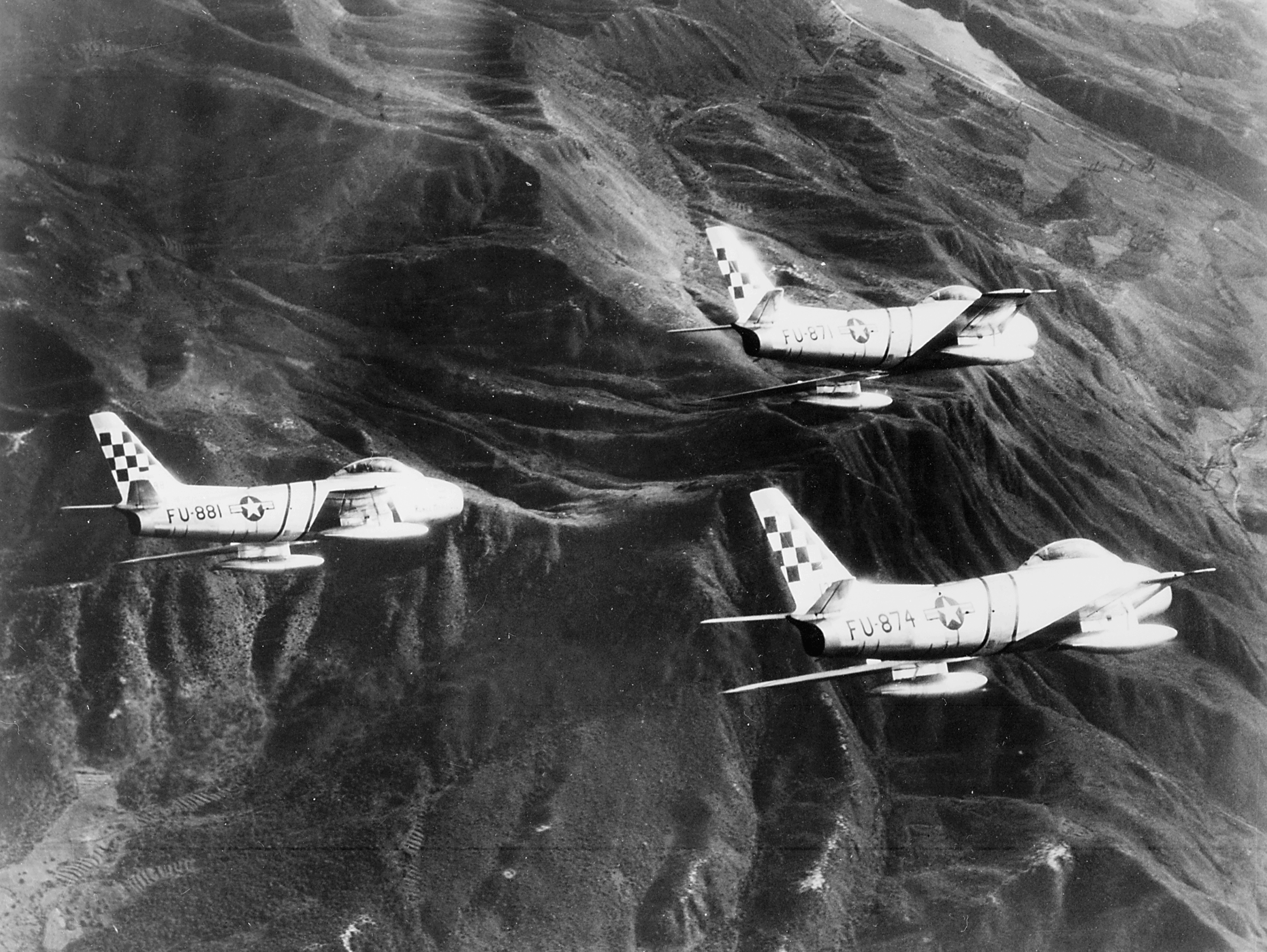
To Boyd, the 10:1 kill ratio was an intriguing anomaly since MiG-15s were faster and could operate at a higher ceiling and make tighter turns.[11] ‘The MiG,’ as he explained, ‘could out-climb, out-accelerate the F-86, throughout the entire envelope, accelerate quite a bit better. Its sustained turn was better, its instantaneous turn in some areas it was better, in other areas it wasn’t as good.’[12] Boyd also noted that the Sabre’s bubble canopy offered pilots superior observation while its hydraulic flight controls made it more responsive ‘just like power steering in a car’.[13] When all those factors were considered, both planes were roughly equal on paper, and a more even result should have occurred.[14] Although American pilots were generally better trained and had greater experience, Boyd did not consider that sufficient to explain the kill ratio.[15] According to Robert Coram in Boyd: The Fighter Pilot Who Changed the Art of War, ‘Boyd made a list of attributes of the MiG and the F-86. For days he went into frequent trances as he groped for the answer.’[16]
Boyd concluded that the F-86’s bubble canopy gave American pilots superior ‘observation’ and ‘orientation’. At the same time, its hydraulic flight controls allowed rapid transition from one manoeuvre to another, making it easier to translate a ‘decision’ into an ‘action’.[17] Therefore, Boyd concluded that American pilots completed OODA loops faster than communist pilots, who accordingly became disoriented and paralysed as they could not keep up. Before this insight, Sabre pilots knew that its bubble canopy and hydraulic flight controls gave them advantages.[18] However, Boyd uniquely explained that these advantages allowed F-86 pilots to achieve OODA loop domination. Superior observation resulted in faster orientation, and hydraulic flight controls resulted in quicker actions that collectively meant faster American OODA loops. In this way, Boyd explained the curious anomaly – or so it seemed at the time. However, with the benefit of hindsight, the anomaly is more convincingly resolved by lowering the inflated kill ratio.
The OODA Loop and the Kill Ratio
In 1977, in the USAF oral history, Boyd stated: ‘We had [an] 11 to 1 exchange rate of 86 over MiG-15; somewhere between 10 and 14 to one rounded off to 11 to 1 – very high.’[19] One year later, during a Patterns of Conflict briefing, he stated that the kill ratio was ‘11 to 1 or somewhere between 10 to 14.’[20] During that briefing, Boyd’s most prominent example of the effectiveness of the ‘observation-decision-action loop’ was Korean War air combat as he explained ‘observation’ concerning the Sabre’s bubble canopy and ‘decision-action’ through its hydraulic flight controls.[21] Therefore, the F-86 versus MiG-15 combat example would have influenced the audience’s mind.
James Fallows’ article ‘The Muscle-Bound Super Power’, published in Atlantic Monthly in 1979, argued that Boyd’s ‘observation-decision-action cycles’ explained why ‘F-86s had consistently gunned down Russian MiG-15s, even though the MiGs were “better” planes.’[22] That example of air combat was his article’s most prominent example of the OODA loop’s effectiveness. Two years later, in National Defense, Fallows insisted that ‘F-86s consistently destroyed the MiGs.’[23] No kill ratios were given in both cases, but his words ‘consistently gunned down’ and ‘consistently destroyed’ indicated a large margin of success.
Rodger Spiller from the United States Army’s Command and Staff College questioned Boyd’s analysis of the Korean air war in an unpublished critique in the early 1980s and sent a copy to Boyd. After Spiller explained that the ‘foundation of the OODA loop is to be found in the aerial combat of the Korean War between the MIG-15 and the F-86,’ he concluded:
The basic data that gave rise to the OODA loop hypothesis has never been openly challenged; however, there apparently is classified information that may call these conclusions to question. During our conversation, Boyd indicated that he was aware of this information, and he discounted the possibility of its adverse impact on his view.[24]
In response, Boyd commented, ‘No – OODA loop came from work and anomalies associated with evolution and flight tests of YF-16/17 [prototypes].’[25] Nevertheless, Boyd knew that people with access to classified information were questioning his ‘basic data’ regarding F-86 versus MiG-15 combat. By ‘basic data’ Spiller may have meant the kill ratio. Boyd did not challenge Spiller’s assessment concerning the ‘basic data,’ and he noted: ‘Information I was referring to were the U[niversity] of Chicago[’s] work on the Korean War.’[26]
Boyd may have meant a report written by John Wester titled ‘Effectiveness of the Gunsight,’ published by the University of Chicago’s Institute for Air Weapons Research in 1954.[27] The F-86E and F-86F variants included new radar-ranging A-1C(M) gunsights, and during the last six months of the war, many Sabre pilots credited the device with helping them shoot down MiG-15s. However, many other pilots considered the gunsight too complex and unreliable to be practical while adding useless extra weight. As Steven A. Fino explained, ‘we see clearly two narratives emerging: one of a “great machine” that incorporates cosmic technologies to simplify pilots’ tasks; the other of a “great pilot” who somehow triumphs in spite of the new and poorly designed machinery.’[28] As Boyd did not praise the gunsight in his briefing and since his Fighter Mafia and Reformers movements preferred simplicity over complex gadgets that reduced manoeuvrability, he almost certainly was in the latter category of sceptical pilots.[29]
Furthermore, Brigadier General Benjamin N. Bellis, head of the F-X project, Boyd ‘hated the complexity and sophistication of an on-board fire control system (radar)’ in the F-15 Eagle.[30] Therefore, it is likely that Boyd also opposed the A-1C(M) gunsight in Sabres. Although the gunsight was not fully automated, pilots who carefully studied its manual and took the time to learn how to incorporate it into their manual processes improved their efficiency in what Fino referred to as ‘a more effective human-machine system.’[31]
Boyd and Spiller may also have discussed Dennis Strawbridge and Nannette Kahn’s ‘Fighter Pilot Performance in Korea’ published in 1955 by the University of Chicago’s Institute for Air Weapons Research. Although this report noted the 10:1 kill ratio, it stressed that many MiG-15 kills were attributed to Sabre pilots who never opened fire, as enemy pilots had lost control and either crashed or bailed out.[32] Therefore, Boyd and Spiller may have discussed the pros and cons of the A-1C(M) gunsight or MiG-15 losses not involving Sabres opening fire. In any case, Boyd knew that Spiller was scrutinising his claims regarding air combat during the Korean War.
In 1985, Lieutenant Colonel Walter Kross, a USAF officer, challenged the kill ratio in Military Reform: The High-Tech Debate in Tactical Air Forces:
The F-86’s 10-to-1 kill ratio also should be examined more closely, say TACAIR [Tactical Air] Planners. In the first part of the war (June 1950–December 1952), when Russian “Honchos” flew with the North Korean MiGs, the kill ratio was only 4.9-to-1 in favour of the F-86. When the Russian pilots were pulled out in January 1953, the kill ratio soared to 20-to-1 in the last six months of the war.[33]
As Kross was a high-profile critic, Boyd probably knew that Kross and TACAIR were questioning the kill ratio. Nevertheless, they were voices in the wilderness, and commentators advocating the OODA loop theory continued to use the 10:1 kill ratio.
Boyd’s acolyte William S. Lind, in his 1985 Maneuver Warfare Handbook, gave the kill ratio as 10:1.[34] Lind repeated that figure a year later in America Can Win: The Case for Military Reform, a book he wrote with Senator Gary Hart.[35] In both books, just before the OODA loop is introduced, the air war in Korea is the most prominent example used to explain Boyd’s conflict theory, as expressed in Patterns of Conflict.
During the 1980s, Boyd stopped citing a kill ratio. For example, in a Patterns of Conflict briefing from the early-to-mid 1980s, he stated:
Now typically today many people or until very recently, people thought the MiG-15 was a more manoeuvrable airplane than the -86 […] I will dispel that myth. I will show you why and make it very compelling and convincing. For one thing we have a new frame of reference with which we can compare those aircraft. We have the OODA loop.[36]
Although Boyd did not cite a kill ratio, he implied that the Sabres achieved remarkable success against MiG-15s.[37] He similarly stated in a 1989 briefing that ‘in a sense the -86 was a better airplane, particularly if you examine them through the OODA loop.’[38] Boyd again implied that Sabres achieved an undefined high level of success without mentioning a kill ratio.[39] Boyd may have been aware that the 10:1 kill ratio was inaccurate. In any case, with the information available in his lifetime, he could not possibly have guessed how far the kill ratio would eventually decline. But before that correction occurred, the 10:1 kill ratio or words indicating remarkable success, continued to be used by others promoting the OODA loop.
In 1994, in The Art of Maneuver: Maneuver Warfare Theory and AirLand Battle, Robert Leonard stated that Boyd ‘had been investigating why American fighter pilots had been consistently able to best enemy pilots in dogfights [in Korea].’[40] F-86 versus MiG-15 combat is the only example he used when explaining the ‘Boyd cycle’.[41] After Boyd died in 1997, the close acolyte of Boyd and defence analyst Franklin C. Spinney, in his tribute ‘Genghis John’, cited the 10:1 kill ratio and air combat in Korea as the most prominent example supporting the ‘observation-decision-action cycle’.[42] In 2001, in The Mind of War: John Boyd and American Security, Grant Hammond similarly gave the kill ratio as 10:1, but it did fluctuate ‘wildly (from 4.9:1 when Russian pilots flew the MiGs to 20:1 in the last six months of the war after the Russian pilots were pulled out in January 1953).’[43]
Although Coram in Boyd questioned the 10:1 kill ratio, he had no basis to challenge it as ‘the ten to one kill ratio remains the number published in histories of Korea.’[44] In Certain to Win: The Strategy of John Boyd, Applied to Business, Chet Richards stated that the ‘Americans won ten air battles for every one they lost’ during the Korean War.[45] Osinga, in Science, Strategy and War: The Strategic Theory of John Boyd, agreed that ‘the kill ratio was 10:1 in favor of the F-86 during the Korean War.’[46] More recently, in 2018, Ian T. Brown noted in A New Conception of War: John Boyd, the U.S. Marines, and Maneuver Warfare that the ‘F-86 had regularly outperformed its MiG-15 counterpart.’[47] Although Brown did not cite a kill ratio, his words indicated an impressive margin of success. Brown also stressed the importance of Boyd’s F-86 versus MiG-15 combat analysis to his theory of conflict because ‘the contrast in performance between Soviet and American fighter aircraft resonated with him, and he would revisit it later as he developed his warfighting theory.’[48]
The kill ratio was also an essential consideration in Colin S. Gray’s endorsement of the OODA loop as a strategic concept in Modern Strategy:
As a fighter pilot and subsequent investigator of the reasons why USAF F-86 Sabre jets achieved such remarkably favourable kill ratios in combat against MiG-15s over North Korea (10 to 1), Boyd found in the OODA loop the essential logic of success in battle […] The OODA loop may appear too humble to merit categorization as grand theory, but that is what it is. It has an elegant simplicity, an extensive domain of applicability, and contains a high quality of insight about strategic essentials, such that its author merits honourable mention as an outstanding general theorist of strategy.[49]
Despite such statements, the famous kill ratio would dramatically deflate.
What was the actual Kill Ratio?
In Red Devils over the Yalu: A Chronicle of Soviet Aerial Operations in the Korean War 1950‑53, the Russian historian Igor Seidov disputed the 10:1 kill ratio. He noted the official USAF claim that of the 224 Sabres lost, only 110 were caused by enemy action before concluding: ‘Isn’t the figure for non-combat losses suspiciously high?’[50] Stuart Britton supported Seidov’s argument, explaining that ‘since the war, the number of USAF MiG-15 claims has been steadily revised downwards, while its admitted losses of F-86s have slowly increased.’[51] Similarly, in Red Wings Over the Yalu: China, the Soviet Union, and the Air War in Korea, the Chinese historian Xiaoming Zhang questioned the ‘astonishing 7:1 kill ratio’ and concluded that American histories tend to ignore or dismiss Chinese sources ‘because American analysts have a tendency to view the other side’s story through their own myths and values.’[52] In Sabres Over MiG Alley: The F-86 and the Battle for Air Superiority in Korea, Kenneth P. Werrell reduced the kill ratio to 8.2:1 but noted that in 1953, it was 13:1.[53]
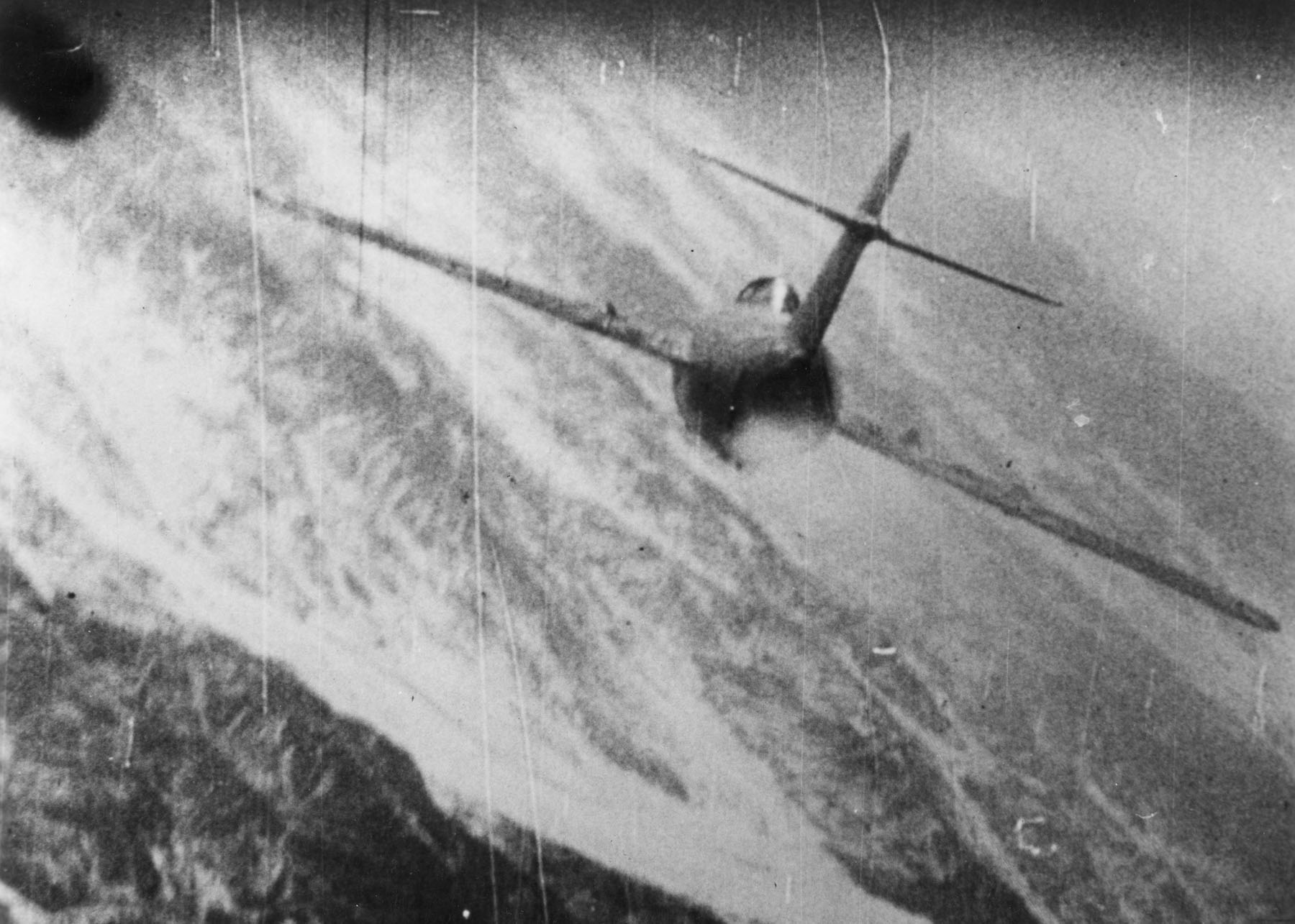
In F-86 Sabre vs MiG-15: Korea 1950-53, Douglas C. Dildy and Warren Thompson concluded that kills tend to be awarded based on political and propaganda needs, while logistics records tend to be more accurate given the necessity of documenting equipment losses.[54] They estimated ‘an overall “kill ratio” of 5.835 MiG-15s destroyed for each Sabre lost.’[55] However, they noted that the F-86s only achieved a 1.4:1 kill ratio against the elite Soviet 303rd and 324th Fighter Aviation Divisions. However, against other Soviet, Chinese, and North Korean MiG-15s, the Sabres achieved a 9.07:1 kill ratio – highlighting the importance of training and experience.[56]
Colonel Walter J. Boyne, a former USAF pilot and historian, frankly stated in his foreword to Thomas McKelvey Cleaver’s MiG Alley: The US Air Force in Korea, 1950-53: ‘Much of what has been recorded as “official history” of the Air Force in the Korean War is little more than recycled wartime propaganda.’[57] Cleaver agreed that the 10:1 kill ratio was ‘propaganda’ and concluded: ‘The “MiG kill” number became the measure of success for commanders of the USAF fighter units in Korea, like the “body count” in Vietnam. As a result, the numbers were increased by lowering the standards for measuring success.’[58] For example, he explained that ‘since any airplane that returned to base, no matter how badly damaged in combat and no matter that it never flew again, was not recorded as a “combat loss”.’[59] He added: ‘By 1952, gun camera film of aircraft not seen to go down, explode, disintegrate, or where the pilot ejected, was accepted as evidence of a “kill” regardless.’[60] Cleaver concluded that the overall kill ratio the Sabres achieved was somewhere between 1.1:1 and 1.5:1.[61] In Korean Air War: Sabres, MiGs and Meteors, 1950-53, Michael Napier agreed that the 10:1 kill ratio ‘does not stand up to scrutiny.’[62] The more recent scholarship cited above demonstrates that Sabre versus MiG-15 combat was attritional, with Sabre pilots achieving a slightly better overall result. However, the OODA loop model does not address many factors contributing to instances of Sabre success.
Beyond OODA Loops
At times, MiG-15s experienced instability at extremely high speeds that the Russians called valezhka, during which the aircraft would flip and go into a dangerous spin. Some Sabre pilots shooting at MiG-15s, experiencing valezhka, likely assumed that their bullets were responsible for the enemy’s demise.[63] The valezhka phenomenon probably explains many of the cases that Strawbridge and Kahn noted of Sabre kills not involving American pilots opening fire. In any case, MiG-15 losses caused by valezhka had nothing to do with OODA loops because they resulted from a design flaw, not communist pilots becoming disoriented or paralysed.
According to Seidov, almost half the MiG-15 losses experienced by the 97th and 190th Fighter Aviation Divisions occurred between January and August 1952 while the aircraft took off or landed.[64] Zhang also made a similar claim regarding MiG-15s taking off and landing, concluding: ‘Many Soviet pilots died before they had a real opportunity to engage their opponents.’[65] Although F-86 pilots could enter Chinese airspace during pursuits in 1952, many pilots exceeded the rules by ‘hawking’ the skies above airfields to swoop down and ambush vulnerable enemy aircraft during takeoffs and landings.[66] The Soviets even withdrew two MiG-15 regiments to rear airfields to provide combat air patrols over the forward airfields as protection against ‘hawking’.[67] As Napier explained, ‘hawking’ increased Sabre success, but ‘it is hardly indicative of the relative performance of aircraft and pilots in air combat.’[68] Therefore, ‘hawking’ had nothing to do with the moves and countermoves of OODA loop-like dogfights, with the loser experiencing psychological defeat.[69]
American pilots were generally more experienced than MiG-15 pilots.[70] However, another factor was Russian unit rotation rather than individual pilot rotation. In early 1952, the elite 324th and 303rd Fighter Aviation Divisions were replaced by the inexperienced 97th and 190th Divisions. The new pilots had to learn the hard way without the benefit of experienced veterans, dramatically reducing combat effectiveness.[71] Werrell also concluded that superior American equipment, such as the A-1C(M) gunsight, flight helmets and “g” suits, contributed to Sabre’s success.[72]
The secrecy of Soviet participation in the conflict prevented their pilots from crossing the coastline or approaching too close to the frontline due to the risk of capture.[73] Therefore, Russian pilots could not chase Sabres over the sea or too far south. ‘A great number of damaged US aircraft,’ Seidov explained, ‘taking advantage of this circumstance, escaped MiG pursuit by crossing the coastline out to sea, and if this restriction hadn’t been in place, then I’m sure the American combat losses would have increased sharply.’[74]
Boyd arrived in Korea on 27 March 1953, four months before the end of the war. Therefore, he had a personal experience that was quite different from earlier F-86 pilots who experienced a far deadlier attritional struggle, such as Captain Dick Becker in 1951:
There was no 14-to-1 kill ratio when I was there. The guys we flew against were good, and they were as committed as we were. Every fight that I was in was decided by the guy in the cockpit who was better able to take advantage of the moments presented by luck. The MiG-15 was a dangerous opponent. We were very evenly matched and I am certain that overall in that first year, we fought them to a draw.[75]
In March 1952, James Jabara, the highest-scoring Sabre ace, stated in a lecture to the Royal Air Force that, on average, one American jet was lost for every MiG-15 shot down.[76] Just before Boyd arrived, F-86 numbers dramatically increased, which helped the pilots gain air superiority.[77] Russian pilots had also become far less aggressive. Following Stalin’s death on 5 March 1953, ceasefire negotiations reopened, and the Soviets began withdrawing MiG-15s. According to MiG-15 ace Nikolay Ivanov, this resulted in the remaining pilots tending ‘to be evasive in their encounters with enemy airplanes to avoid casualties’ as ‘no one wanted to be the last to be killed in action.’[78] Boyd completed 29 missions, roughly one-third of the typical experience of 100 missions. Therefore, given his more limited exposure during a time of Sabre numerical superiority and low communist aggression, his subjective experience did not cause him to question the 10:1 kill ratio. If Boyd had flown 100 missions earlier with Becker or Jabara, he probably would have realised the kill ratio was propaganda. Consequently, he would have had no reason to investigate or explain an intriguing anomaly.
A Wider Lens
Although Napier rejected the 10:1 kill ratio, he decided against offering a corrected figure because doing so would perpetuate a distorted view of the air war as ‘a direct comparison between MiG-15 and F-86 is akin to comparing apples to pears.’[79] Therefore, he looked for a more holistic answer: ‘While the F-86 exclusively fought against the MiG-15, the MiG‑15 fought against the F-51, F-80, F-84, F-86, F-94, Corsair, Banshee, Panther, Skyknight, B-26 and B-29, thus any comparison of air-to-air kills must include these types.’[80] After evaluating the entire air war, Napier concluded ‘almost parity’ existed between United Nations Command and Soviet fighters, while success was greater against Chinese pilots.[81]
Boyd never truly placed himself in the minds of MiG-15 pilots. Therefore, he never considered what they were trying to achieve. Their mission was to defend airspace against air-to-ground strikes by intercepting bombers.[82] Hence, seeking combat with Sabres was not a priority; they could achieve their mission while avoiding Sabres. As Fino explained, ‘Despite the abundance of MiGs in the sky and their occasional bouts of aggressive, offensive action, most days the MiGs chose not to battle the Sabres.’[83]
The Korean War ended in a stalemate, and both sides can claim victory in the air based upon different criteria.[84] The Americans can insist that their pilots achieved air superiority and enemy aircraft, as Werrell pointed out, ‘did not venture far south of the Yalu River.’[85] On the other hand, MiG-15s disrupted bombing operations, as Cleaver concluded: ‘The Soviets sent their units to Manchuria for air defence, and their goal was to deny to the enemy the ability to bomb at will throughout North Korea, as had been the situation for the first nine months of the war. In this, they were successful.’[86]
Mao’s strategy in sending MiG-15s to Korea was not just to affect the outcome of the war – it was also a means of building the People’s Liberation Army Air Force (PLAAF) that would ‘gain live combat experience’ while noting that ‘there will be some losses in combat’.[87] In that way, the Chinese leadership, as Napier explained, ‘sacrificed short-term tactical success for longer-term strategic gain: by rotating all the MiG-15 units through the combat zone, they exposed the maximum number of pilots to combat flying.’[88] That policy allowed the PLAAF to grow from a small force of trainees in 1949 to a large jet-equipped force within four years.[89] Therefore, even when Chinese pilots lost tactically against the Sabres, they were winning strategically.
Conclusion
As is evident in key Boyd-related literature previously mentioned, belief in outstanding Sabre success against MiG-15s, usually quantified as the 10:1 kill ratio, was likely a critical factor in establishing the credibility of OODA loop theory in the minds of prominent commentators. Given the OODA loop’s influence in military and non-military contexts, the perception of outstanding Sabre success was probably a paramount factor in the theory spreading like a meme. However, the 10:1 kill ratio originated from wartime propaganda that was just as dubious as the infamous Vietnam War body count – a metric that Boyd despised.[90]
The myth of the 10:1 kill ratio did have an unintended positive benefit because it was used as a measure to assess air-to-air performance in the Vietnam War. For example, Hammond contrasted the kill ratios of Korea and Vietnam:
The loss ratios against both North Vietnamese and Soviet pilots were not good. In fact, they began at 1:1 in 1965 and overall were far less than the 10:1 ratio in Korea. From 1 April 1965 to 1 March 1968, despite some interludes of great success, the United States had an exchange ratio in air-to-air combat of 2.4:1. Why were U.S. planes and pilots performing so poorly?[91]
Osinga declared: ‘While loss ratios over Korea were 10:1, in the skies over Vietnam F-100, F-105 and F-4 aircraft scored dismal ratios of 1:1, sometimes peaking at 2.4:1.’[92] Of course, we now know that the Korea and Vietnam kill ratios were quite similar. However, the belief that American air-to-air performance had drastically declined resulted in active measures designed to improve performance to restore what was perceived to be lost. The USAF’s Red Flag exercises and the United States Navy’s Top Gun program improved pilot training and combat performance in this context. The post-Vietnam generation fighters – the F-15 Eagle, F-16 Falcon, F-14 Tomcat and F-18 Hornet – have all achieved outstanding success, gaining air superiority with genuinely lopsided kill ratios.[93]
The collapse of the 10:1 kill ratio’s credibility has implications for the OODA loop theory. If the model genuinely reflects the reality of air combat, why did Sabre pilots not achieve ‘decision cycle’ superiority and a lopsided kill ratio in Korea? Why did the F-86’s bubble canopy and hydraulic flight controls not translate into American pilots achieving decisively faster OODA loops? It is important to note that in the more recent histories, Werrell, Dildy, Thompson, Cleaver and Napier do not mention the OODA loop in their detailed studies of Sabre versus MiG-15 combat, which indicates the theory lacks utility in that context. Although the OODA loop is not an adequate model to explain F-86 versus MiG-15 air combat outcomes, it is nevertheless valuable despite its flaws. As Hankins explained: ‘Many fighter pilots, among others, continue to use the OODA loop as a useful tool.’[94] Therefore, as we reevaluate the OODA loop, we should not throw the baby out with the bathwater. However, we need a much wider analytical lens to ensure victory in the air.
Stephen Robinson is an officer in the Australian Army Reserve, currently serving in the Australian Army History Unit. He is the author of False Flags: Disguised German Raiders of World War II (2016), Panzer Commander Hermann Balck: Germany’s Master Tactician (2019), The Blind Strategist: John Boyd and the American Art of War (2021) and Eight Hundred Heroes: China’s Lost Battalion and the Fall of Shanghai (2022).
Header image: Four U.S. Air Force North American F-86E Sabre fighters over Korea in November 1952. Note that the first plane carries only a single drop tank. (Source: Wikimedia)
[1] Antulio J. Echevarria, War’s Logic: Strategic Thought and the American Way of War (Cambridge: Cambridge University Press, 2021), p. 177.
[2] Franklin C. Spinney, ‘Genghis John,’ Proceedings, Vol. 123 (1997).
[3] John R. Boyd, ‘Organic Design for Command and Control’ and ‘The Strategic Game of ? and ?,’ in Grant T. Hammond (ed.), A Discourse on Winning and Losing (Maxwell AFB: Air University Press, 2018), pp. 224 and 302.
[4] Martin van Creveld, Air Power and Maneuver Warfare (Maxwell AFB: Air University Press, 1994), p. 3.
[5] Grant T. Hammond, ‘Appendix – The OODA Loop,’ in A Discourse on Winning and Losing, pp. 383-5.
[6] Frans P. B. Osinga, ‘The Enemy as a Complex Adaptive System: John Boyd and Airpower in the Postmodern Era’ in John Andreas Olsen (ed.), Airpower Reborn: The Strategic Concepts of John Warden and John Boyd (Annapolis, MD: Naval Institute Press, 2015), p. 50.
[7] Michael W. Hankins, Flying Camelot: The F-15, the F-16, and the Weaponization of Fighter Pilot Nostalgia (Ithaca, NY: Cornell University Press, 2021), p. 229.
[8] Stephen Robinson, The Blind Strategist: John Boyd and the American Art of War (Dunedin: Exisle Publishing, 2021), pp. 11 and 30.
[9] Email to author from Michael W. Hankins, 26 July 2023. Hankins also recommended that I read Xiaoming Zhang’s Red Wings over the Yalu: China, the Soviet Union, and the Air War in Korea (College Station, TX: Texas A&M University Press, 2002). I am incredibly grateful for this advice as it was the catalyst for this article. For further consideration regarding the kill ratio, the essential books to read also include Douglas C. Dildy and Warren Thompson’s F-86 Sabre vs MiG-15: Korea 1950-53 (Oxford: Osprey Publishing, 2012), Thomas McKelvey Cleaver’s MiG Alley: The US Air Force in Korea, 1950-53 (Oxford: Osprey Publishing, 2019) and Michael Napier’s Korean Air War: Sabres, MiGs and Meteors, 1950-53 (Oxford: Osprey Publishing, 2021).
[10] Quoted in Kenneth P. Werrell, ‘Aces and -86s: The Fight for Air Superiority during the Korean War,’ in Jacob Neufeld and George M. Watson, Jr. (eds.), Coalition Air Warfare in the Korean War 1950-1953 (Washington DC: US Air Force History and Museums Program, 2005), p. 62.
[11] Grant T. Hammond, The Mind of War: John Boyd and American Security (Washington DC: Smithsonian Books, 2001), pp. 65-6 and Frans P.B. Osinga, Science, Strategy and War: The Strategic Theory of John Boyd (Abingdon: Taylor and Francis, 2006), p. 21. Notably, the F-86F Sabre variant had considerable flight capability improvements over the earlier variants. Therefore, generalising Sabre flight characteristics without reference to specific variants is problematic. Dildy and Thompson, F-86 Sabre vs MiG-15, pp. 140-3.
[12] John R. Boyd, ‘Patterns of Conflict (Transcript),’ in Discourse on Winning and Losing, Marine Corps University, Quantico, 25 April/2 May/3 May 1989, p. 13.
[13] Boyd, ‘Patterns of Conflict (Transcript),’ p. 13.
[14] Hammond, The Mind of War, pp. 65-6.
[15] United States Air Force Historical Research Center, US Air Force Oral History Interview, K239.0512-1066, Colonel John R. Boyd, Corona Ace, 28 January 1977, p. 143.
[16] Robert Coram, Boyd: The Fighter Pilot Who Changed the Art of War (New York: Hachette, 2002), p. 255.
[17] John R. Boyd, ‘Patterns of Conflict (Delivered on 26 May 1978)’, in Proceedings of Seminar on Air Antitank Warfare, Battelle Columbus Laboratories, Columbus, 1978, pp. 7-8; Boyd, ‘Patterns of Conflict (Transcript) ’, pp. 13-4.
[18] The F-86E and F-86F variants had a new flight control system and hydraulics system without a manual backup, which made these models more responsive than the earlier and more common F-86A variant. Therefore, generalising Sabre agility is problematic as different Sabre variants had different hydraulic flight controls. Steven A. Fino, Tiger Check: Automating the US Air Force Fighter Pilot in Air-To-Air Combat, 1950-1980 (Baltimore, MD: Johns Hopkins University Press, 2017), pp. 84-5 and 533-4; Dildy and Thompson, F-86 Sabre vs MiG-15, pp. 35-6.
[19] U.S. Air Force Oral History Interview, p. 141.
[20] Boyd, ‘Patterns of Conflict (Delivered on 26 May 1978),’ p. 8.
[21] Boyd, ‘Patterns of Conflict (Delivered on 26 May 1978),’ pp. 6-8.
[22] James Fallows, ‘Muscle-Bound Superpower: The State of America’s Defense,’ The Atlantic (October 1979).
[23] James Fallows, National Defense (New York: Random House, 1981), p. 28.
[24] Quoted in Ian T. Brown, A New Conception of War: John Boyd, the U.S. Marines, and Maneuver Warfare (Quantico: Marine Corps University Press, 2018), p. 283.
[25] Quoted in Brown, A New Conception of War, p. 283.
[26] Quoted in Brown, A New Conception of War, p. 283.
[27] Werrell, ‘Aces and -86s,’ pp. 57 and 65.
[28] Fino, Tiger Check, p. 88.
[29] Hankins in Flying Camelot provided a comprehensive overview of the Fighter Mafia and Reformers movements and their opposition to ‘an overreliance on complex, expensive weapons.’ Hankins, Flying Camelot, p. 24.
[30] Quoted in Hankins, Flying Camelot, p. 142.
[31] Fino, Tiger Check, pp. 88 and 199.
[32] Michael W. Ford, Air-to-Air Combat Effectiveness of Single-Role and Multi-Role Fighter Forces (MA Thesis, US Army Command and General Staff College, 1984), pp. 51-2 and 121.
[33] Walter Kross, Military Reform: The High-Tech Debate in Tactical Air Forces (Washington DC: National Defence University Press, 1985), p. 97.
[34] William S. Lind, Maneuver Warfare Handbook (Boulder, CO: Westview Press, 1985), p. 4.
[35] Gary Hart and William S. Lind, America Can Win: The Case for Military Reform (Maryland: Adler and Adler, 1986), pp. 5-6.
[36] John R. Boyd, Patterns of Conflict Part 2. Ian Brown concluded that this version of ‘Patterns of Conflict’ available on YouTube dated from the early to mid-1980s: ‘Based on the sign in the background, this version of the brief dates to early-mid 1980s, when Rep. Jim Lightfoot would have been in office.’ Ian Brown, The John Boyd Primer, 25 September 2021.
[37] Boyd, Patterns of Conflict Part 2.
[38] Boyd, ‘Patterns of Conflict (Transcript), p. 13.
[39] Boyd, ‘Patterns of Conflict (Transcript), pp. 13-4.
[40] Robert Leonhard, The Art of Maneuver: Maneuver Warfare Theory and Airland Battle (New York: Random House Publishing Group, 1991), p. 51.
[41] Leonhard, The Art of Maneuver, p. 51.
[42] Spinney, ‘Genghis John.’
[43] Hammond, The Mind of War, p. 66.
[44] Coram, Boyd, p. 55.
[45] Chet Richards, Certain to Win: The Strategy of John Boyd, Applied to Business (Xlibris US 2004), p. 64.
[46] Osinga, Science, Strategy and War, p. 22.
[47] Brown, A New Conception of War, pp. 96-7.
[48] Brown, A New Conception of War, p. 11.
[49] Colin S. Gray, Modern Strategy (Oxford: Oxford University Press, 1999), p. 91.
[50] Igor Seidov, Red Devils over the Yalu: A Chronicle of Soviet Aerial Operations in the Korean War 1950-53 (Solihull: Helion and Company, 2014), pp. 27-8.
[51] Stuart Britton, ‘Editor’s Note,’ in Seidov, Red Devils over the Yalu, p. 20.
[52] Zhang, Red Wings over the Yalu, pp. 70-85.
[53] Kenneth P. Werrell, Sabres Over MiG Alley: The F-86 and the Battle for Air Superiority in Korea (Annapolis, MD: Naval Institute Press, 2005), p. 92.
[54] Dildy and Thompson, F-86 Sabre vs MiG-15, p .148.
[55] Dildy and Thompson, F-86 Sabre vs MiG-15, p. 152.
[56] Dildy and Thompson, F-86 Sabre vs MiG-15, p. 152.
[57] Walter J. Boyne, ‘Foreword,’ in Cleaver, MiG Alley, p. 8.
[58] Cleaver, MiG Alley, pp. 13-4.
[59] Cleaver, MiG Alley, p. 14.
[60] Cleaver, MiG Alley, p. 230.
[61] Cleaver concluded: ‘The USAF policy of “fudging the figures” regarding combat losses makes it difficult to come to a firm number of actual victories versus losses. In fact, for the entire war, researchers now believe that the “victory total” favors the USAF by something between 1.3 and 1.5 to one.’ Cleaver, MiG Alley, p. 14. Cleaver also stated: ‘While the majority of MiG pilots who opposed the Sabres were less-experienced Chinese, a victory/loss ratio of 10:1 as claimed after the war by the US Air Force, which was uncontradicted by information from the other side for 40 years, is not realistic. Researchers believe the figure was between 1.1:1–1.3:1 in favor of the Sabres’. Cleaver, MiG Alley, p. 230.
[62] Napier, Korean Air War, p. 419.
[63] Britton, ‘Editor’s Note,’ in Seidov, Red Devils over the Yalu, p. 21.
[64] Seidov, Red Devils over the Yalu, p. 1046.
[65] Zhang, Red Wings over the Yalu, p. 1878/4020.
[66] Dildy and Thompson, F-86 Sabre vs MiG-15, pp. 134-5
[67] Dildy and Thompson, F-86 Sabre vs MiG-15, pp. 134-5.
[68] Napier, Korean Air War, p. 420.
[69] Osinga explained that Boyd perceived ‘air combat as a contest of moves and countermoves in time, a contest in which a repertoire of moves and the agility to transition from one to another quickly and accurately in regard [to] the opponent’s options was essential.’ Osinga, Science, Strategy and War, p. 28.
[70] Werrell, Sabres Over MiG Alley, p. 221.
[71] Napier, Korean Air War, p. 205-7.
[72] Werrell, Sabres Over MiG Alley, p. 26.
[73] Seidov, Red Devils over the Yalu, p. 1050.
[74] Seidov, Red Devils over the Yalu, p. 1050.
[75] Quoted in Boyne, ‘Foreword,’ in Cleaver, MiG Alley, p. 8.
[76] Napier, Korean Air War, pp. 418-20.
[77] Dildy and Thompson, F-86 Sabre vs MiG-15, pp. 144-5.
[78] Quoted in Dildy and Thompson, F-86 Sabre vs MiG-15, p. 138.
[79] Napier, Korean Air War, p. 419.
[80] Napier, Korean Air War, p. 419.
[81] Napier, Korean Air War, p. 420.
[82] Napier, Korean Air War, p. 420.
[83] Fino, Tiger Check, p. 137.
[84] Cleaver, MiG Alley, p. 230.
[85] Werrell, Sabres Over MiG Alley, p. 219.
[86] Cleaver, MiG Alley, p. 230.
[87] Quoted in Dildy and Thompson, F-86 Sabre vs MiG-15, p. 139.
[88] Napier, Korean Air War, p. 410.
[89] Napier, Korean Air War, p. 410.
[90] Boyd condemned the Vietnam War ‘body count’: ‘They were thinking body count, attrition. That’s what they were thinking. I know exactly what they were thinking.’ Boyd, ‘Patterns of Conflict (Transcript),’ p. 43.
[91] Hammond, The Mind of War, p. 116.
[92] Osinga, Science, Strategy and War, p. 24.
[93] F-15 Eagles have been credited with 104 ‘kills’ without suffering any aerial combat losses. John T. Correll, ‘The Reformers,’ Air Force Magazine (2008), p. 44. F-16 Falcons have tallied 72 ‘kills’ without any air-to-air losses. Michael Sanibel and Dick Smith, ‘Quest to Build a Better Fighter,’ Aviation History, Vol. 21 no. 3 (2011), pp. 48-53.
[94] Hankins, Flying Camelot, p. 319.
Discover more from From Balloons to Drones
Subscribe to get the latest posts sent to your email.

 From Balloons to Drones
Counting down the seconds b4 maniacs like James Stevenson and maybe even Lind descend on this essay like an entire pack of hyenas.
A refreshing breath of fresh air.
LikeLike
I would love to have Bill Sweetman contacted to comment on this essay. He’s a Boyd acolyte but not a maniac like Lind.
LikeLike
The title implies a discussion of the correction to the F-86 to MiG -15 kill ratio in the Korean War. From the first sentence/ first paragraph it is obvious the author really wants to take a shot at Col Johnn Boyd and the evolution of Boyd’s theories related to the OODA Loop. While Boyd certainly was intrigued with the why of the supposed 10:1 ratio and used the advertised numbers to start his inquiries, the remander of this article only flirts with how Boyd evolved his theories and further shows a limited perspective on air-air combat or design of fighter a/c.
This is not the article to enhance knowledge of Boyd, his contributions to either aircraft design, or the decision cycle process, or the OODA Loop itself, air combat, fighter performance, or even the Korean War air-air kill ratio. Unfortunately, the author has spent a lot of time and effort, but has missed the essence of Boyd’s work and misses key points about air combat
LikeLike
I never could figure out what was so profound about Mr. Boyd’s theories, especially the OODA loop. They always seemed to me to be long winded, very long winded descriptions of what good soldiers did naturally and the habits of action good armies tried to teach to good soldiers. So you see something, evaluate it fast, decide fast and act fast. Well no kidding. I don’t think Nathan Bedford Forrest would have done better had he sat though Mr. Boyd’s presentations, nor would have Grant. Those guys just knew. Speaking of Grant and Forrest some of the things they said or are supposed to have said are much more valuable; such as Forrest saying “Keep up the scare” and Grant’s realization that the other guy was just as scared as he was.
This comment is in reference to Mr. Robinson’s article OODA Loop or Coffee Break. John Lundstrom in The First Team described how the U.S. Navy fighter squadrons developed tactics that emphasized accurate shooting, well executed gun passes of different kinds and fighting in a formation, before the war started. These were not move-countermove tactics yet they had great success using them. They developed these tactics by evaluating the nature of the air fighting and the pros and cons of the Wildcat and the Zero. I don’t think OODA looping would have helped them.
LikeLike