By Dr Luke Truxal
Editorial note: On 26 January 2024, Apple TV+ launched the much-anticipated series Masters of the Air. This series follows the actions of the US 100th Bomb Group during the Combined Bomber Offensive in the Second World War. As the series is being aired, our Book Reviews Editor, Dr Luke Truxal, the author of Uniting against the Reich (2023), will critically review each episode.
At halfway through Masters of the Air, we finally reached the culmination point for the Americans during the 1943 air offensive, Black Week. There are a lot of essential storylines that the creators of Masters of the Air needed to nail with the exact right tone. For the first time in a televised depiction of the American air war against Germany, we get two new major themes the series tries to address. First, losing. Black Week, which lasted from 8 to 14 October 1943, was the final straw for the US Eighth Air Force. During the course of the week, American aircrew and bomber losses reached such a level that they could no longer maintain their air offensive. Films such as Twelve O’clock High (1949) and Memphis Belle (1990) depict the mounting casualties, but we never see the Americans lose at the end of the day. Even in Band of Brothers (2001) and The Pacific (2010), Americans perform quite well. The Market-Garden episode was the only episode amongst those previous works that depicted a setback, but it was only for a single episode. Masters of the Air has been building to this point since it began. Another major topic that the series addresses that usually gets overlooked on film is attacks on German civilians. Previous depictions of the air war typically avoid discussing the morality of the air war, but Masters of the Air takes it on. This episode breaks much ground in how the air war is depicted on film. For the first time, audiences are getting to see an American campaign end in a loss, and the United States shift towards attacks against civilians.
The episode begins with Major John Egan drinking in a B-17 Flying Fortress and struggling with losing his good friend, Major Gale Clevan. Egan has been hit hardest by the loss of his good friend. While the group is reeling, they do get some good news with the arrival of Captain Everett Blakely’s crew and navigator Second Lieutenant Harry Crosby. After everyone reconvenes at the bar, we soon learn that Crosby has been promoted to group navigator and Captain Joseph ‘Bubbles’ Payne has been demoted. Crosby is told to report to headquarters when the red light flashes to begin planning the next mission. On cue, the red light starts flashing, and viewers get a behind-the-curtain look at the chaos that occurs as the group plans for its next raid. It is not unheard of for those involved in planning to work nights and sleep during the day. Crosby mentions the stress of planning and briefing his fellow navigators. He feels the weight of the whole group on his shoulders and wonders if something he did wrong could lead to calamity.
During the briefing, the new mission and target are announced. It is Munster. The target is the marshalling yards in the city centre. During the briefing, it was also noted that the bombs would likely also hit German workers living next to the rail yards. The yards are next to the town cathedral, and the mission is flown on Sunday, 10 October 1943. This does not sit well with group members like the veteran Captain Charles Cruikshanks. He and Egan argue over the merits of attacking German civilians, including women and children. Egan argues that it will bring the war to an end earlier, but despite his words, this is really about revenge. As the conversation ends, Cruikshanks is still clearly unhappy with the tenor of the conversation and target selection. This great scene shows the divide among American airmen over the shift to area bombing during the war. American airmen knew attacking civilians through area bombing was both a war crime and morally wrong. Also, this was not how they were trained to prosecute their air offensive. Yet others, like Egan, thought it was a way to hasten the war’s end. It is a great scene that does not seek to justify area bombing but simultaneously exposes the divisions amongst the Americans over the switch in tactics. A lot of television series and movies would have punted on this topic. John Orloff, who wrote this episode, deserves much credit for tackling this subject and writing these scenes well.
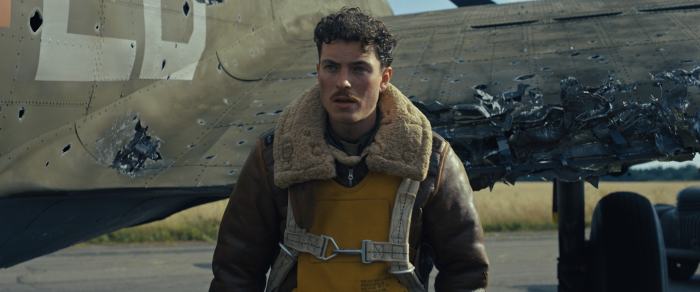
As the bombers take off, we learn that the 100th Bomb Group can only muster 17 B-17s for this raid, many of which are loaned to them by other groups. As the groups formed, we quickly learned that the 100th Bomb Group was too far behind the rest of the 14th Bombardment Wing. Making matters worse, four B-17s had to turn back due to aircraft malfunctions, leaving the strike force with only 13 B-17s. They are too far back from the other groups and short on aircraft. Egan notes that they are a perfect target for the Luftwaffe. As the bombers approached the target, German fighters attacked in massive head-on passes. One can understand why viewers might think this scene is an embellishment of the actual air battle, but it was not. Approximately 200 German fighters attacked the 14th Bombardment Wing, singling out the 100th Bomb Group in the rear of the formation. In a matter of minutes, veterans that we had come to love are shot down. Egan and Brady bail out, Cruikshanks falls out of formation, and his crew bail out, and finally, we see the B-17 with Bubbles on it take a direct hit and collide with another B-17, killing him in the explosion. The perspective has switched to Rosenthal’s aircraft and crew by this point. The combat is so fast and intense that Rosenthal and the viewers experience the same shock when they realize his ship is the last in the formation, still in the air. The music is great here to create a sense of both eeriness and fear as the aircrew comes to grips with the fact that an entire bomb group has been blasted out of the sky for the first time in the air war. During the historical raid, German fighters eliminated the 100th Bomb Group during the first 10 minutes of a 45-minute air battle.[1] The show does a great job of showing how fast and sudden these losses are.
Back at Thorpe Abbotts, everyone waits for the return of the bombers. The first sign that something is wrong occurs when a bomber from the 390th Bomb Group arrives at the airfield. Colonel Neil “Chic” Harding calls the bomber to ask what happened to his bombers and soon finds out that they are all gone. As this occurs, Rosenthal’s plane returns, giving some hope that more might have made it back. That hope is soon dashed as Rosenthal’s crew relates the mission’s events in interrogation. The mood is sombre. The episode ends with Crosby packing up his good friend Bubbles’ foot locker to send home to his family. This is where Crosby finally breaks down and cries. For many of the airmen and ground personnel in the 100th Bomb Group they have reached the end of the line for this campaign physically and emotionally. This is how the 1943 campaign ended for many other groups. This is where we leave the 100th Bomb Group in the next episode. Episodes four and five are the best of the series by far. We have seen the morality of the air war brought into question, and the Americans lost the air war in 1943. Those who worked on this project went on a limb in the last two episodes by depicting sides of the air war that scholars are familiar with but rarely make their way to the big screen. They have created two great episodes that audiences can absorb, and scholars can use to teach about the air war.
Dr Luke Truxal is an adjunct at Columbia State Community College in Tennessee. He completed his PhD in 2018 from the University of North Texas with his dissertation ‘Command Unity and the Air War Against Germany.’ His previous publications include ‘Bombing the Romanian Rail Network’ in the Spring 2018 issue of Air Power History. He also wrote ‘The Politics of Operational Planning: Ira Eaker and the Combined Bomber Offensive in 1943’ in the Journal of Military Aviation History. In addition, Truxal is researching the effectiveness of joint air operations between the Allied air forces in the Second World War. He can be reached on Twitter at @Luke_Truxal.
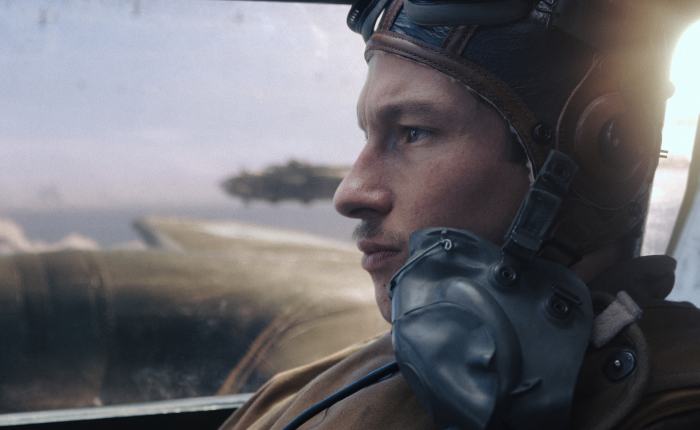
Header image: Callum Turner in Masters of the Air. (Source: Apple TV+)
[1] Donald Caldwell and Richard Muller, The Luftwaffe Over Germany: Defense of the Reich (Barnsley: Frontline Books, 2014), pp. 132-4.
 From Balloons to Drones